Zhipu AI Unleashes AutoClaw on Mobile: The Frictionless New Gateway for Autonomous Agents
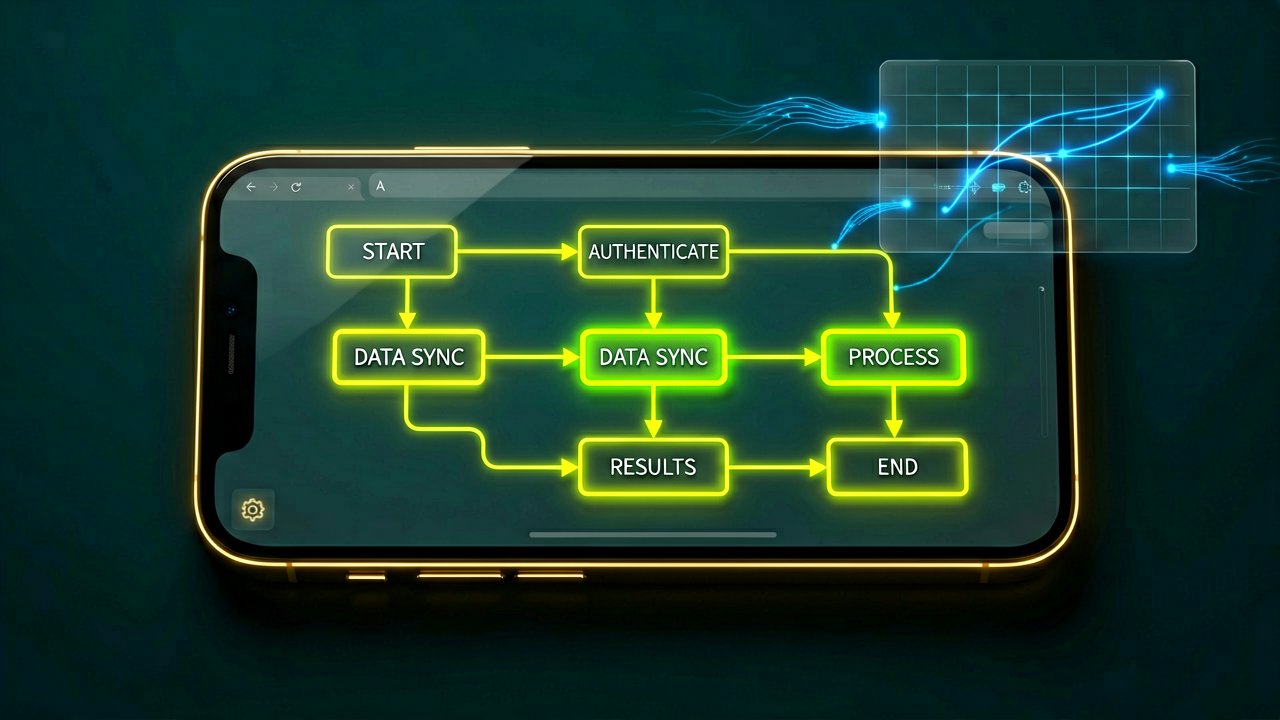
The race to put fully autonomous AI agents into the hands of everyday users just took a massive leap forward. Chinese AI pioneer Zhipu AI has officially extended its agent ecosystem into the mobile arena by launching the iOS version of its highly anticipated AutoClaw app, according to a report by Pandaily . This rollout comes just two months after the company turned heads with its one-click desktop version. It signals a major shift from raw LLM chatting to continuous, practical execution. By packaging complex workflows into an intuitive mobile interface, Zhipu AI is making a play to become the definitive entry point for how we delegate daily digital chores on the go.
For those who have been tracking the space, AutoClaw is essentially Zhipu's streamlined, user-friendly wrapper around the viral OpenClaw open-source agent framework. Previously, running these sorts of multi-step autonomous workers required a fair bit of technical gymnastics, involving terminal commands, heavy API configurations, and cloud server setups. Zhipu blew those barriers apart on personal computers, and now they are condensing that exact capability into a dual-mode smartphone app that fits right in your pocket.
Dual-Mode Execution and Cross-Device Harmony
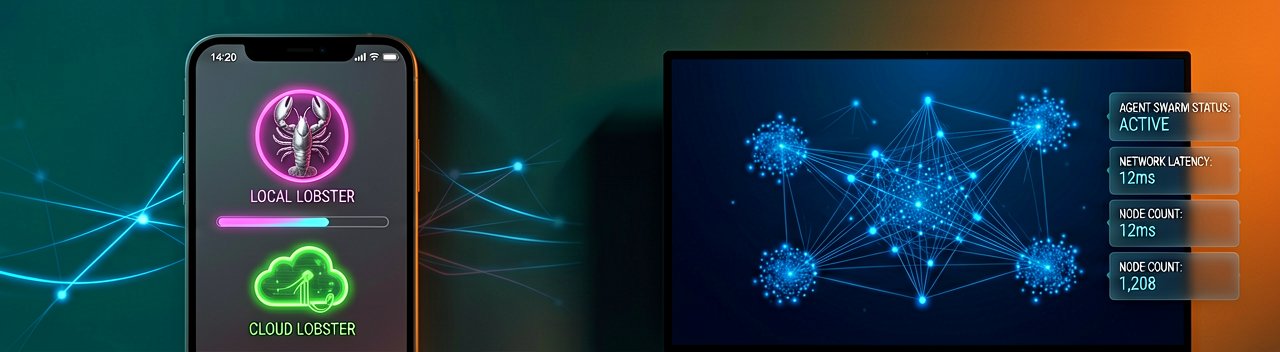
The magic of the mobile AutoClaw release lies in its execution flexibility, offering both a "local lobster" and a "cloud lobster" mode to accommodate different computing realities. Users can handle core execution tasks natively on their mobile devices using natural language commands for data aggregation or scheduling. Alternatively, they can leverage the app as a remote control to orchestrate more intensive, long-running agent swarms operating on their home or office PCs. Real-time account synchronization ensures that your profiles, group chats, and delegated agent workflows transition seamlessly between desktop and mobile environments without missing a beat.
Trimming the Fat for Mobile Efficiency
To deliver a snappy smartphone experience, Zhipu strategically trimmed some of the desktop version's heavier engineering components. The iOS app leaves behind the advanced data dashboards and the third-party IM Skill Store, focusing instead on pure, unadulterated task execution. Powered by specialized internal models like GLM-5-Turbo, the app relies heavily on proprietary browser automation to interact with web interfaces just like a human would. This lets the agent autonomously log into web sessions, fill out forms, and pull research summaries while you are away from your desk. It is a calculated move that trading heavy analytics for mobile agility is precisely what will turn AI agents from an enthusiast hobby into a mainstream daily habit.
Under the Hood: The Strategic Pivot from Chatbots to Action Engines
Beyond the App Store Hype: The launch of AutoClaw on iOS represents a critical tactical pivot in the broader AI landscape, moving past the era of conversational parlor tricks and into the realm of true economic utility. For the past three years, the tech industry has been obsessed with context windows and benchmark scores. Yet, the average consumer remains largely stranded in a chat interface, forced to copy-paste data between tabs manually. By productizing the OpenClaw framework for mobile, Zhipu AI is attempting to bridge this "last mile" problem, shifting the paradigm from an AI that merely talks to an AI that actively does.
Industry insiders view this move as a direct response to the mounting commercial pressure facing large language model providers globally. As raw API costs plummet toward zero and foundational models become increasingly commoditized, the real value capture has migrated to the orchestration layer. Zhipu’s strategy mimics the early days of mobile operating systems: whoever controls the primary application interface that triggers automated workflows effectively controls the user ecosystem. By stripping down the technical friction of agent deployment, AutoClaw aims to become the default consumer dashboard for automation, bypassing traditional app stores' functional limitations through direct web-browser simulation.
However, running autonomous browser agents on a mobile operating system introduces a minefield of engineering and security hurdles that desktop environments rarely face. Mobile operating systems are notoriously aggressive about killing background processes to preserve battery life and memory. Zhipu’s decision to implement a dual-mode hybrid architecture—allowing the phone to act as a lightweight client or a remote control for desktop swarms—is a pragmatic acknowledgement of these hardware constraints. It allows complex, hours-long web scraping or data processing tasks to run uninterrupted on remote hardware while giving the user a real-time notification feed on their lock screen.
From a security standpoint, the stakes could not be higher for this new generation of "computer-use" AI. Traditional software relies on structured APIs and explicit permissions, but AutoClaw operates by visually interpreting web pages and mimicking human clicks. While this enables unmatched flexibility across legacy websites that lack official APIs, it also opens the door to prompt injection vulnerabilities and unintended automated actions. If an agent encounters a malicious payload or a deceptive user interface while autonomously browsing, it could theoretically execute incorrect transactions or compromise sensitive user session data, a risk that enterprise stakeholders are watching with intense scrutiny.
Ultimately, the success of AutoClaw will depend on how reliably it can handle the chaotic, unstandardized web layout of the modern internet. Websites change their code constantly, and a minor redesign that a human easily navigates can completely derail an AI agent relying on visual or structural cues. If Zhipu’s GLM-5-Turbo infrastructure can demonstrate the cognitive flexibility needed to heal from these broken web flows in real time, AutoClaw may well mark the moment that autonomous agents transformed from a developer's playground into an indispensable piece of daily consumer tech.
The Agent Dilemma: Frictionless Utility vs. The Broken Web
Reading Between the Lines: The industry-wide rush to declare the mobile phone the ultimate command center for autonomous agents ignores a fundamental architectural tension. Tech evangelists present a future where complex digital chores vanish into a single voice command, yet they gloss over the fact that today's internet is explicitly built to keep bots out. From aggressive CAPTCHAs to anti-scraping firewalls, the modern web is a hostile environment for automated scripts. Packaging an agent into an elegant iOS wrapper does not magically solve the underlying reality that the systems it interacts with are designed to resist it at every turn.
This creates an awkward paradox for Zhipu AI’s AutoClaw strategy. To make the app truly useful, the underlying GLM-5-Turbo model must behave indistinguishably from a human user—scrolling naturally, pausing between actions, and interpreting visual layouts on the fly. However, simulating human behavior at this level of fidelity is incredibly compute-intensive, which directly contradicts the strict power and data budgets of a mobile device. By stripping out the advanced desktop dashboards and relying on a "cloud lobster" hybrid mode, Zhipu is admitting that the smartphone is less of an autonomous engine and more of a glorified remote control for server-side heavy lifting.
Furthermore, the reliance on proprietary browser automation rather than standardized APIs introduces a fragile dependency layer. An API provides a stable, predictable contract between two software systems; browser automation, by contrast, relies on the visual layout of a webpage remaining static. The moment a travel booking site tweaks its checkout button or an e-commerce platform shifts its layout for a holiday sale, the agent risks breaking entirely. For consumers, an automation tool that fails even ten percent of the time quickly transforms from a time-saver into a source of anxiety, forcing users to constantly babysit their "autonomous" helpers to ensure tasks are actually completed.
There is also a broader economic friction at play that the current enthusiasm overlooks. If apps like AutoClaw successfully scale and begin routing millions of user requests through automated browser sessions, they will fundamentally disrupt the ad-supported revenue models of the websites they visit. Publishers and platforms rely on eyeballs hitting ads and sponsored links; an AI agent that extracts data invisibly destroys that value chain. As a result, we are likely to see an escalating arms race where web platforms implement increasingly draconian measures to block agent traffic, potentially breaking consumer workflows faster than developers can patch them.
"We are rapidly hurtling toward a digital wonderland where your AI personal assistant will spend half its day trying to convince another AI that it is a living, breathing human being just to order you a sandwich, proving that the ultimate destination of cutting-edge computer science is simply a more sophisticated layer of red tape."
Artūras Malašauskas is an AI Systems Integrator with 20+ years of production-grade web engineering experience. He has designed, shipped, and scaled enterprise Python/PHP systems for logistics, SaaS, and public-sector clients. For the past year, he has focused exclusively on AI integrations: deploying open-source LLMs, building generative media pipelines (image, audio, video), and engineering multi-agent workflows for real production environments. His standard: reproducibility, security, cost-efficient inference—no vaporware. He documents and evaluates emerging AI tooling, separating verified capabilities from marketing noise. Technical editor at: muza-ai.eu, ai-verslas.lt, ai-naujinos.lt Connect on LinkedIn
Comments