NASA’s $20 Billion Moon Base Blueprint: 81 Launches to Build a Permanent Lunar Foothold
Forget the brief "flag-and-footprints" expeditions of the Apollo era. NASA has officially laid out an audacious, multi-phase master plan to establish a permanent human settlement on the Moon, transitioning from short-term exploratory visits to continuous habitation. According to an extensive new strategy dubbed the "Moon Base User's Guide," the American space agency plans to coordinate a staggering 81 launches over the coming decades to construct a fully functional, long-term habitat near the lunar South Pole. It is a monumental logistical jigsaw puzzle that turns what used to be science fiction into a concrete engineering roadmap.
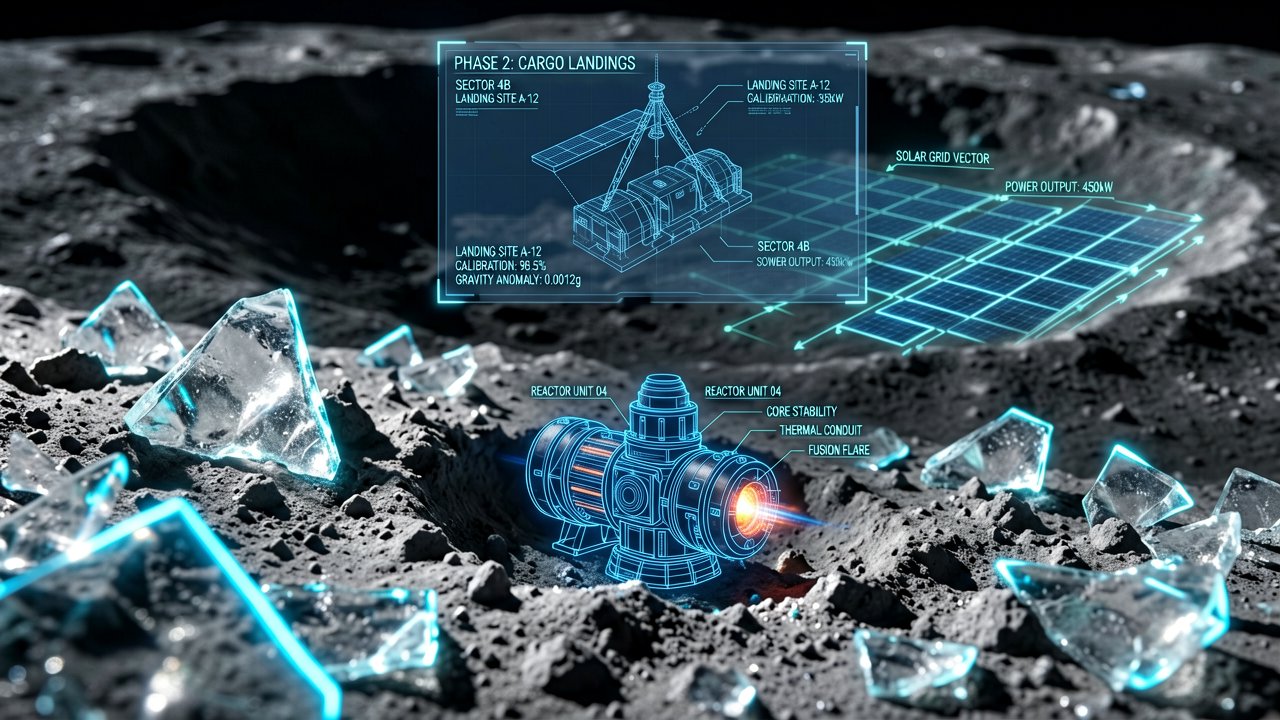
The entire endeavor is structured across three distinct phases designed to systematically scale up human capabilities. Phase 1 focuses heavily on securing reliable access to the surface and experimenting with core survival technologies, such as micro-nuclear reactors and rocket drones. Following this initial groundwork, Phase 2 will kick off around 2029 to construct the base's foundational infrastructure. This critical step relies on 27 launches and 24 individual landings to ferry 60 metric tons of cargo to the surface, deploying solar grids, communication hubs, and a heavy-duty pressurized mobile habitat built in partnership with Japan's Aerospace Exploration Agency. Crew members will finally be able to live and work on the surface for up to two months at a time, moving well beyond the cramped confines of early lunar landers.
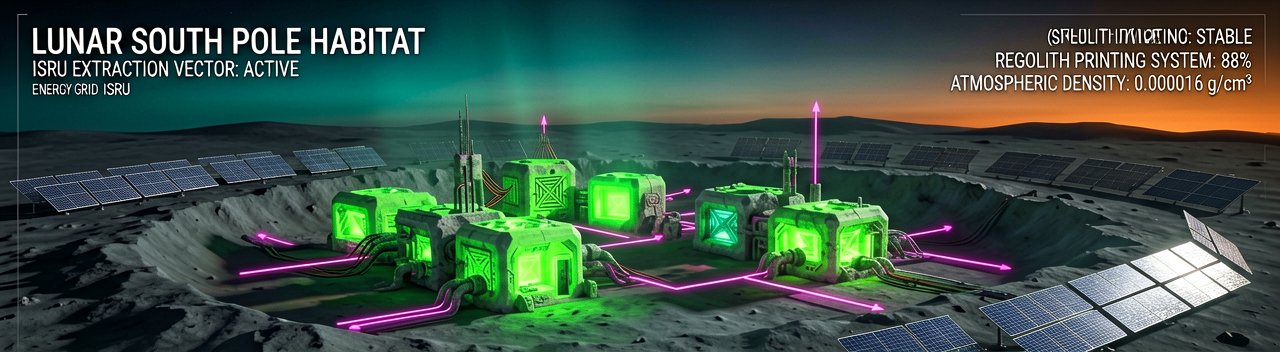
The ultimate goal materializes in Phase 3, which targets true semi-permanent habitation from 2033 onward. By leveraging 29 massive cargo launches, engineers intend to drop another 150 tons of payload onto the lunar regolith. This final push will see interconnected, nuclear-powered habitat modules functioning similarly to an off-world International Space Station. Astronauts will utilize advanced In-Situ Resource Utilization (ISRU) techniques, like extracting water ice from shadowed craters for drinking water and rocket fuel, while using 3D printers to turn harsh lunar dust into protective structures. According to a detailed report from The Indian Express, this permanent outpost will not only support expanding scientific research and commercial lunar activity, but will also serve as the ultimate staging ground and technological blueprint for humanity's next giant leap: crewed missions to Mars.
The Hidden Logistics of a Two-World Supply Chain
Behind the Scenes: The sheer scale of NASA's 81-launch blueprint introduces a logistical nightmare that makes the Apollo program look like a weekend road trip. Unlike the mid-century race to the Moon, which relied on a single, monolithic rocket system, this modern lunar occupation depends on a delicate, highly synchronized ballet of commercial and international partners. A single delayed launch or a hardware malfunction from a private contractor could ripple through the entire manifest, stalling subsequent missions and leaving astronauts stranded without critical supplies or habitats. Space agency planners are effectively forced to operate less like traditional engineers and more like supply-chain managers for an interplanetary freight company.
This massive reliance on the private sector highlights a major shift in how the agency does business. Companies like SpaceX and Blue Origin are no longer just building components; they are providing the foundational transportation architecture, including massive human landing systems and automated cargo freighters. While this commercial approach dramatically slashes development costs for taxpayers, it introduces a layer of geopolitical and corporate risk. Balancing the profit motives of private aerospace firms with the strict safety standards and scientific goals of an international coalition requires a diplomatic tightrope walk that senior officials are still trying to master.
Beyond the orbital mechanics, the true bottleneck for a permanent base lies in the harsh reality of the lunar environment itself. The chosen site at the lunar South Pole offers precious sunlight for solar power alongside deep, permanently shadowed craters that harbor vital water ice. However, extracting that ice is an unproven gamble. The lunar regolith is not soft dirt; it consists of jagged, razor-sharp volcanic glass shards that chew through seals, degrade spacesuits, and destroy moving mechanical parts. Engineers must design robotic excavators capable of operating in absolute darkness at temperatures colder than Pluto, all while ensuring that abrasive dust does not compromise the habitat's life support systems.
Historically, the biggest threat to long-term space exploration has never been engineering, but rather political volatility back on Earth. Congressional budgets shift with election cycles, and ambitious space programs have a habit of being canceled just as they gain momentum. By anchoring this blueprint to deep international partnerships—most notably Japan’s massive investment in the pressurized rover—NASA is deliberately building a project that is politically costly to dismantle. This strategy aims to ensure that the 81-launch blueprint survives the coming decades, establishing a permanent human presence that outlasts the political whims of any single administration.
The Fine Print of the Lunar Balance Sheet
Reading Between the Lines: The dazzling narrative of a multi-phase, 81-launch highway to the Moon conveniently glosses over a glaring operational contradiction: NASA is attempting to build a permanent, infrastructure-heavy base using an architecture that was largely designed for fleeting, episodic missions. The Space Launch System (SLS) and the Orion spacecraft are marvels of engineering, but they are also staggeringly expensive, low-cadence vehicles. Relying on a system that launches roughly once a year to sustain a complex, multi-ton logistical pipeline creates an inherent bottleneck. The math simply does not add up unless the agency pivots far more radically toward fully reusable, high-frequency commercial launch systems than the current blueprint openly admits.
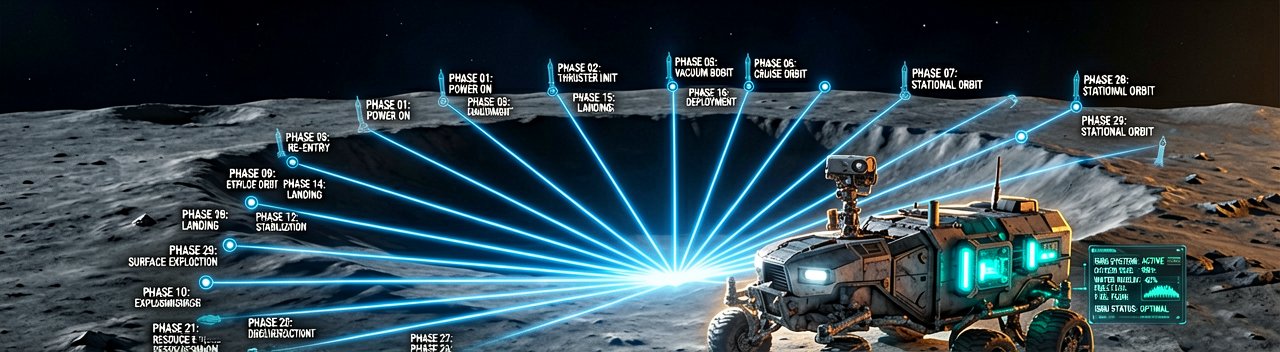
Furthermore, the assumption that In-Situ Resource Utilization (ISRU) will seamlessly solve the base's supply chain issues is a massive, unproven gamble. The blueprint treats the extraction of water ice from permanently shadowed craters as a given cornerstone of Phase 3 operations. Yet, humanity has never mined a single gram of lunar ice, let alone processed it into breathable oxygen and liquid hydrogen rocket propellant on an industrial scale. If the ice turns out to be scarcer, more deeply buried, or far harder to refine than orbital radar data suggests, the entire economic and operational justification for a permanent settlement collapses. The base would transform from a self-sustaining frontier outpost into an incredibly expensive orbital welfare case, entirely dependent on emergency care packages from Earth.
There is also a profound disconnect between the timeline of the blueprint and the harsh realities of aerospace procurement. Projecting a highly coordinated sequence of 29 cargo launches commencing in 2033 assumes a decade of flawless execution devoid of budget cuts, technical failures, or political pivots. Historically, complex space architectures slip by years, if not decades. By setting up such a tightly interconnected, phase-dependent schedule, a delay in a single Phase 2 habitat module inevitably cascades into a multi-year postponement of Phase 3. It raises the distinct possibility that by the time the agency is actually ready to drop these interconnected modules onto the regolith, the underlying technology may already be obsolete compared to rapidly evolving private sector alternatives.
"Building a permanent home on a world with no atmosphere, razor-sharp dust, and freezing two-week nights is undeniably a triumph of the human spirit—just don't ask the accountants to look too closely at the plumbing bills, or the timeline."
Artūras Malašauskas is an AI Systems Integrator with 20+ years of production-grade web engineering experience. He has designed, shipped, and scaled enterprise Python/PHP systems for logistics, SaaS, and public-sector clients. For the past year, he has focused exclusively on AI integrations: deploying open-source LLMs, building generative media pipelines (image, audio, video), and engineering multi-agent workflows for real production environments. His standard: reproducibility, security, cost-efficient inference—no vaporware. He documents and evaluates emerging AI tooling, separating verified capabilities from marketing noise. Technical editor at: muza-ai.eu, ai-verslas.lt, ai-naujinos.lt Connect on LinkedIn
Comments