CTERA InsightAI: Bringing Order and Agentic Intelligence to the Unstructured Data Wild West

For years, enterprise storage administrators have been treating unstructured data like a messy garage—shoving files into the cloud or edge repositories, closing the door, and hoping they never have to dig through the clutter. But with corporate data estates ballooning past human scale, that passive strategy has officially hit a wall. Recognizing this breaking point, data management veteran CTERA dropped a compelling solution: CTERA InsightAI. By embedding an "agentic AI" intelligence layer directly into its global file system fabric, the company is attempting to shift the industry paradigm from static, passive storage tracking to highly automated, self-healing data operations.
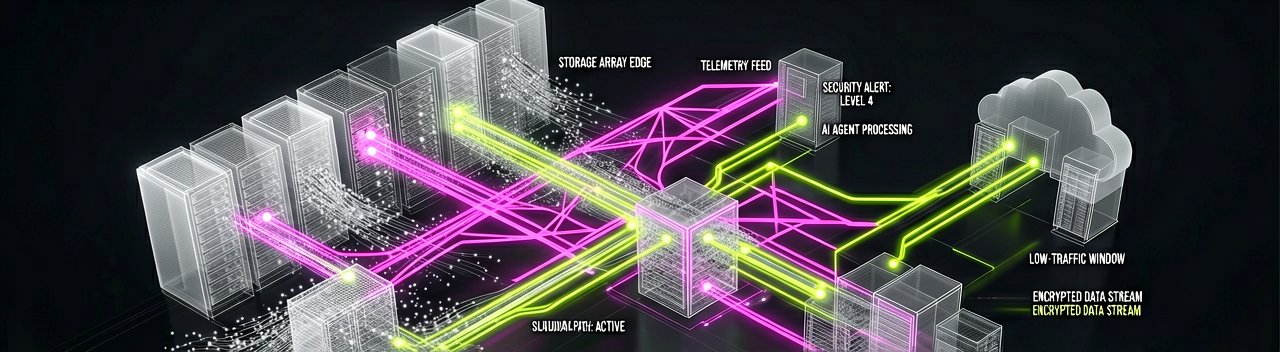
According to a product roll-out report by Help Net Security, this new capability addresses a massive gap in contemporary enterprise tech. Traditional management systems rely heavily on complex, noisy dashboards that require IT teams to actively hunt for anomalies, file leaks, or runaway storage bills. CTERA InsightAI flips the script by leaning on specialized, background AI agents that continuously monitor telemetry, file system activity, and audit logs. It connects these disparate data streams automatically, serving up actionable conclusions instead of just throwing more alerts at overworked IT professionals.
The Rise of the "AI User Interface" in Storage
The most fascinating aspect of this update is how it completely rethinks the way storage admins interact with infrastructure. As reported by tech tracking outlet Blocks & Files, the platform effectively pioneers an "AI User Interface" (AUI), transitioning the enterprise out of the point-and-click GUI era. Rather than building convoluted scripts to find out which files are eating up expensive storage tiers, administrators can simply type a plain-English question like, "Show me all files over 50GB that haven't been touched in two years." The system instantly fishes out the answer along with explicit file ownership context.
This natural language capability proves just as critical for cybersecurity forensics. When a breach occurs, security analysts typically spend hours parsing raw event logs to reconstruct timelines. Under the InsightAI framework, a simple prompt asking who accessed a particular folder or deleted certain files yields an executive-ready incident report in seconds, turning a normally tedious forensic nightmare into a trivial task.
Tackling Cost and Compliance Without Moving Data
Beyond the slick chat interfaces, the update strikes at the core financial and regulatory anxieties plaguing modern CIOs. Unstructured data growth remains one of the largest and least-controlled line items in corporate IT budgets. InsightAI helps curb this by introducing automated visibility into usage trends and stale data, allowing organizations to execute precise chargeback models so individual business units are held financially accountable for the storage they consume.
Crucially, all of this AI-driven indexing and analysis happens directly inside the existing storage environment without copying files to a secondary, external database. This "zero-copy" approach preserves native file permissions and strict access controls. By keeping the processing local, CTERA ensures companies can comfortably satisfy aggressive regulatory frameworks like GDPR or HIPAA without inadvertently leaking sensitive intellectual property to outside large language models.
What Most Reports Miss: The real breakthrough of CTERA InsightAI isn't the integration of a large language model into an administrative dashboard; it is how the company solved the localized compute paradox. For years, the storage industry wrestled with a painful trade-off: to analyze unstructured data at scale, you either had to ship massive amounts of data to an external cloud indexer—incurring eye-watering egress fees and security risks—or build a bloated, resource-heavy computing footprint right next to your files. CTERA managed to sidestep this friction by decoupling the heavy AI indexing logic from the primary data path. By leveraging the company's existing edge-to-cloud caching architecture, the AI agents can quietly crunch system metadata and access patterns during low-traffic windows without dragging down local file performance.
This technical execution highlights a massive shift in corporate data strategies over the last decade. During the initial cloud boom, enterprises operated under a "hoard everything" mentality, fueled by the promise of cheap object storage. Today, those same companies are drowning in dark data—files that are completely unmapped, unclassified, and unmonitored. Industry analysts frequently point out that up to 80 percent of all corporate data is entirely unstructured, and a staggering portion of that consists of redundant, obsolete, or trivial (ROT) files. By turning agentic AI inward, storage platforms are changing their core identity from passive digital warehouses into proactive corporate auditors.
From a stakeholder perspective, this automation shifts the dynamic between IT infrastructure teams and executive leadership. Historically, storage administrators were viewed as cost-center managers whose primary job was to ask for more budget every time a hard drive array filled up. With automated chargeback tracking and autonomous data lifecycle management, these teams can now present clear, data-driven financial insights to the CFO. They can actively prove how much money was saved by automatically archiving stale project files to lower cloud tiers, transforming storage management from a predictable cash-drain into a highly optimized operational discipline.
The Security Calculus of Agentic Storage
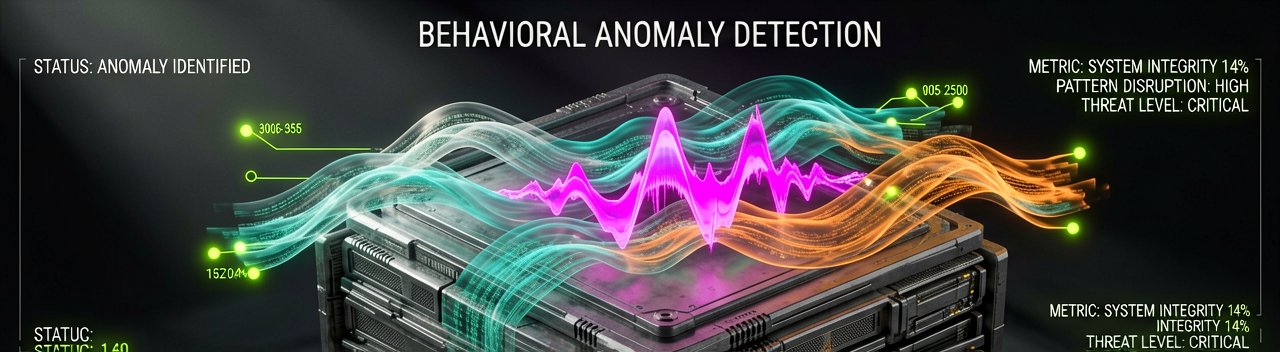
Furthermore, the introduction of autonomous agents into the data storage fabric completely changes the timeline for ransomware mitigation. In a typical cyberattack, early detection is everything, yet legacy security tools often miss subtle, slow-burning file encryption patterns until it is too late. Because these new AI agents live directly inside the global file system, they observe behavioral anomalies at the point of ingestion. If an compromised account suddenly begins altering file extensions or modifying hundreds of documents in a manner inconsistent with historical usage, the system can instantly isolate the blast radius before the infection spreads across the entire corporate network.
Ultimately, the industry is witnessing the birth of self-governing data environments. As regulatory bodies worldwide crack down on data privacy and sovereign cloud compliance, companies can no longer afford a reactive posture toward their data estates. The future of enterprise infrastructure belongs to platforms that don't just store bits and bytes, but actively understand what those files contain, who owns them, and whether they pose a compliance risk. By embedding this contextual awareness directly into the file system layer, the tech sector is finally making unstructured data manageable at human scale.
Reading Between the Lines: While the promise of an "agentic AI" savior for enterprise data is undeniably seductive, a healthy dose of enterprise skepticism is warranted before declaring the end of storage management woes. The tech industry has a long history of rebranding basic automation as groundbreaking artificial intelligence, and CTERA’s pivot pushes right against that boundary. The fundamental contradiction here lies in the trust equation. CIOs are being asked to hand over the keys of their most sensitive, unstructured data estates to autonomous background agents. Yet, the very nature of modern AI models includes a well-documented propensity for hallucination and unpredictable edge-case behavior. Relying on an LLM-driven agent to perfectly parse complex permissions or accurately identify "stale" corporate IP could easily result in accidental data deletion or compliance blind spots if left entirely unsupervised.
Furthermore, the "zero-copy" architectural claim, while brilliant for compliance on paper, creates an inevitable compute tax that vendor marketing rarely addresses. Running continuous telemetry analysis, processing audit logs, and maintaining an ongoing natural language index directly inside the storage fabric requires real hardware horsepower. For edge deployments or resource-constrained remote offices, this means organizations will likely face a hidden infrastructure premium. They will either need to over-provision local compute resources or accept a performance penalty on primary file operations when the AI agents decide it is time to run a massive indexing sweep across millions of corporate documents.
There is also the looming cultural hurdle of the AI User Interface itself. Replacing traditional, predictable administrative dashboards with an open-ended text box assumes that overworked IT staff actually want to converse with their file systems. In reality, a deterministic script that works exactly the same way every Tuesday is often preferred over an AI chat interface that might interpret a prompt slightly differently based on its latest contextual update. For all the talk of replacing the point-and-click GUI, the enterprise market has a stubborn track record of clinging to boring, predictable menus over conversational novelty when millions of dollars in production data are on the line.
The Real-World Cost of Autonomous Oversight
Looking ahead, the true test for CTERA InsightAI will not be its ability to find large files, but its long-term cost efficiency. If the platform successfully lowers the total cost of ownership by pruning redundant data, it wins. However, if the cost of running and licensing these advanced AI capabilities outpaces the actual savings realized from tiering a few terabytes of stale data to cheaper storage, the entire economic argument collapses. Organizations will essentially be paying a premium for an incredibly sophisticated AI mirror to look at a mess they could have cleaned up with standard, legacy data retention policies.
As this technology matures, it will likely spark an unspoken arms race between corporate data hoarders and automated deletion agents. Employees have a notorious habit of finding clever ways to bypass IT restrictions—such as changing file extensions or slightly altering old presentations to keep them "active." An AI system tasked with enforcing strict corporate hygiene will inevitably find itself playing a perpetual game of cat-and-mouse with human behavior, proving that technology can map the unstructured data wild west, but it rarely tames the people who create the clutter in the first place.
"We are officially entering an era where human employees create digital garbage faster than ever, only for autonomous AI agents to spend millions of compute cycles trying to figure out what it all means. In the end, the ultimate metric of success for enterprise storage won't be how smart the file system is, but whether it can survive the unstoppable force of a worker saving 'Final_Version_v4_DELETED_DONT_TOUCH.pdf' into a root directory."
Artūras Malašauskas is an AI Systems Integrator with 20+ years of production-grade web engineering experience. He has designed, shipped, and scaled enterprise Python/PHP systems for logistics, SaaS, and public-sector clients. For the past year, he has focused exclusively on AI integrations: deploying open-source LLMs, building generative media pipelines (image, audio, video), and engineering multi-agent workflows for real production environments. His standard: reproducibility, security, cost-efficient inference—no vaporware. He documents and evaluates emerging AI tooling, separating verified capabilities from marketing noise. Technical editor at: muza-ai.eu, ai-verslas.lt, ai-naujinos.lt Connect on LinkedIn
Comments