Beyond the Chatbot: Why 2026 is the Year AI Learns to Act
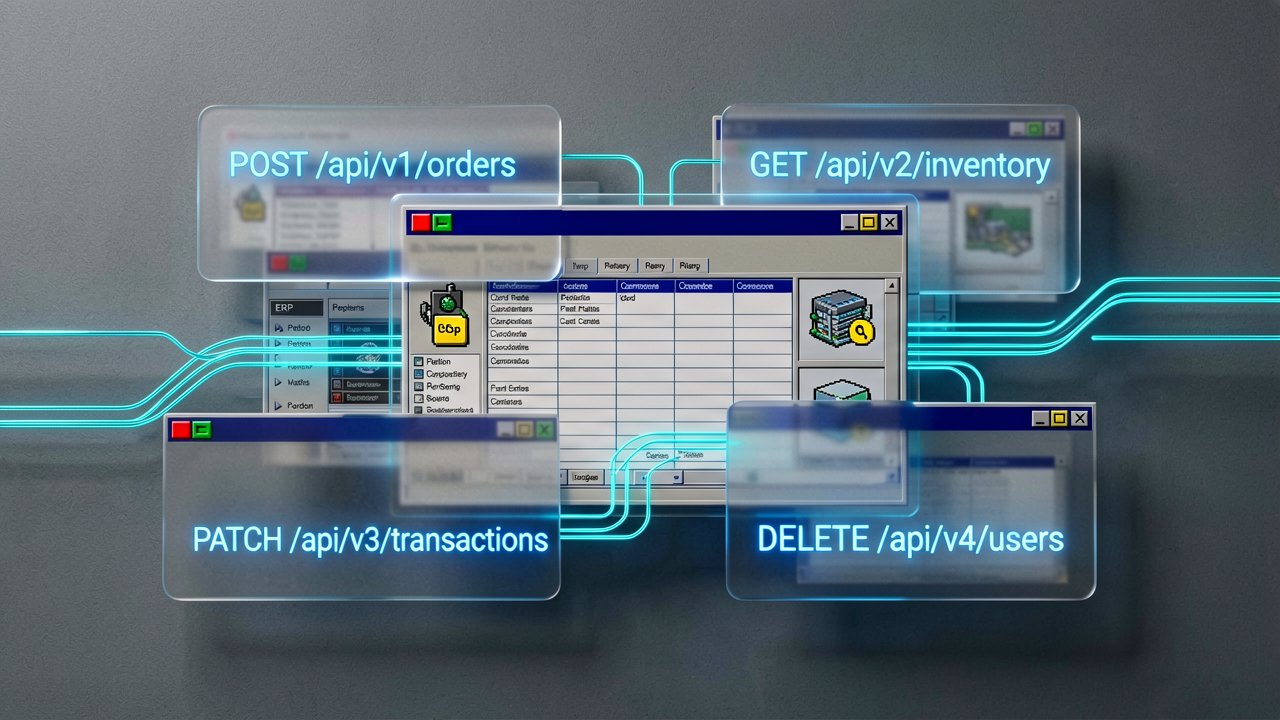
For the past few years, the tech world’s relationship with artificial intelligence felt like an unending game of prompt-and-response. We marveled at chatbots that could draft emails, summarize corporate reports, and mimic human conversation with unsettling accuracy. But the novelty of watching a cursor blink as it regurgitates internet lore has officially worn off. Enterprises spent billions piloting isolated AI projects, only to face deafening silence when asked about tangible, bottom-line returns. The experimental honeymoon phase is over, and it has forced a massive paradigm shift away from simply talking toward actual execution.
We have firmly entered the era of system-level deployment, defined by what insiders call agentic AI. Instead of acting as passive, reactive calculators that require constant human hand-holding, modern systems are evolving into autonomous digital colleagues. This transition is supercharging productivity, allowing small, lean teams to launch massive global campaigns in days. AI is no longer a tool you query; it is a partner you delegate to, capable of orchestrating multi-step workflows across disjointed platforms, calendars, and enterprise databases completely on its own.
The Rise of Multi-Agent Orchestration
The real engineering magic happening right now isn't found in building larger monolithic models, but in getting smaller, specialized agents to talk to one another. Tech giants and startups alike are abandoning the idea of one master algorithm to rule them all. Instead, they're deploying multi-agent systems that mirror a corporate department. One agent might analyze supply chain anomalies, another handles vendor communications, and a third updates the internal registry. According to an industry overview by FPT Software, multi-agent frameworks are already driving massive operational gains, in some cases accelerating development sprints by 30 percent while expanding test coverage to reduce software defects. It turns out that collaboration is just as vital for machines as it is for the humans managing them.
Smarter Infrastructure and Market Reality
This aggressive pivot to autonomous agents requires an eye-watering amount of computational muscle, reshaping the global tech economy in the process. The sheer scale of the hardware boom became undeniable when chip juggernaut Nvidia posted a staggering $58.3 billion quarterly profit, fueled by an insatiable, global hunger for advanced silicon, as reported by Al Jazeera. Yet, building endless, isolated data centers is no longer a viable long-term strategy for everyone else. Organizations are aggressively optimizing their code, leaning on smaller models deployed at the edge, and utilizing interconnected cloud grids to keep energy costs from spiraling out of control.
The Deepening Need for Trust and Security
Naturally, giving software the keys to the kingdom introduces a brand-new chest of security nightmares. When an AI agent can browse the web, execute code, and access sensitive corporate files, the concept of a "hallucination" stops being a minor nuisance and becomes a critical liability. Security experts emphasize that every autonomous agent needs the same rigorous identity verification and access controls as a flesh-and-blood employee. Leaders at Microsoft Source point out that without these built-in safeguards, autonomous digital assistants risk turning into unchecked vulnerabilities that attackers can exploit. The tech industry is quickly learning that trust isn't just a compliance checklist; it's the foundational currency required for this next phase of automation to succeed.
What Most Reports Miss: The Hidden Architectural Friction
The glossy press releases coming out of Silicon Valley make the transition to an agentic workforce sound as simple as flipping a switch. They paint a picture of frictionless digital ecosystems where software agents effortlessly pass tasks back and forth like seasoned executives. But step inside the engineering bays of any Fortune 500 company attempting this transition, and a far messier reality emerges. The true bottleneck holding back the autonomous economy isn't the intelligence of the large language models themselves. Instead, it is the deeply entrenched, fragmented infrastructure of modern corporate software that was never built for machine-to-machine communication.
For decades, enterprise applications were designed explicitly for human eyes and human fingers. Databases rely on complex graphical user interfaces, legacy APIs require rigid formatting, and internal security policies are built entirely around human identity verification. When an autonomous AI agent attempts to log into a legacy ERP system to adjust inventory levels, it doesn't navigate a streamlined data pipeline. It encounters the digital equivalent of a brick wall, often triggering automated fraud alerts or getting trapped in endless loops because a data field lacked a standardized label. Seasoned system architects are finding that before they can deploy advanced AI agents, they must first spend months building "wrapper" environments just to make their existing software readable to a machine.
This architectural friction has sparked a quiet but fierce philosophical debate among top-tier software engineers and enterprise leaders. One camp argues that we need to rebuild the enterprise tech stack from scratch, creating a parallel ecosystem of apps optimized purely for AI interaction. The opposing camp, wary of the astronomical costs and disruptions of total system overhauls, believes the solution lies in training AI agents to use software exactly like humans do—by literally looking at the screen pixels and clicking virtual mouse buttons. This division has created a gold rush for middleware startups that promise to act as the cognitive glue, translating the chaotic mess of corporate data into something an agent can actually execute on.
Beyond the technical hurdles, a deeper cultural shift is rattling middle management, a group that has historically derived its value from orchestrating human workflows. When multi-agent systems begin handling the routine coordination, data verification, and reporting, the traditional role of the manager changes overnight. Early data from pioneering firms suggests that successful deployments don't necessarily eliminate human teams, but they fundamentally redefine them into "agent supervisors." Humans are moving away from doing the work and shifting toward auditing the outcomes, managing edge cases where the AI lacks context, and setting the ethical guardrails for automated decision-making.
Ultimately, the transition to agentic AI is exposing the massive delta between raw technological capability and institutional readiness. The organizations winning this race aren't necessarily the ones buying the most expensive compute cycles or the largest models. They are the ones doing the unglamorous, tedious work of cleaning up their data architectures, rewriting their access protocols, and retraining their workforces to think like editors rather than creators. As 2026 progresses, the dividing line between AI hype and true economic value will be defined entirely by who managed to build the strongest bridge between legacy operations and autonomous code.
Reading Between the Lines: The Illusion of Total Autonomy
The tech industry’s current infatuation with agentic AI rests on a comfortable assumption: that giving software the agency to act will naturally lead to greater efficiency. We are told that autonomous agents will liberate humans from the tyranny of administrative minutiae. However, a glaring contradiction sits at the heart of this narrative. While these systems are designed to minimize human intervention, their actual deployment is creating an entirely new class of digital overhead. Instead of eliminating tedious management, organizations are discovering that autonomous workflows require continuous, high-stakes babysitting to prevent minor software glitches from cascading into enterprise-wide systemic failures.
This dynamic exposes a fundamental flaw in how we measure the productivity of artificial intelligence. In a traditional software environment, a bug is predictable and repeatable. In an ecosystem governed by probabilistic AI agents, errors are non-linear and unpredictable. An agent tasked with optimizing a marketing budget might interpret a minor market fluctuation as a mandate to reallocate millions of dollars across ad networks in milliseconds. The financial and operational risks are no longer contained within a single text box; they are live in the wild. Consequently, companies are forcing highly paid engineers to pivot away from core product development just to monitor, audit, and patch the autonomous systems that were supposed to save them time.
Furthermore, the economic math of the agentic boom is beginning to look increasingly precarious for everyone except the hardware providers. Silicon Valley promises that smaller, fine-tuned models running at the edge will democratize this technology and lower costs. Yet, the reality of multi-agent orchestration involves a compounding tax on computing power. When Agent A must consult Agent B, which then cross-references its findings with Agent C before returning an answer to the human supervisor, the API token costs and energy bills multiply exponentially. We are rushing toward an ironic inflection point where the cost of compute required to automate a desk job could comfortably exceed the salary of the human worker it is meant to replace.
This economic reality will likely trigger a sharp correction in market expectations before the decade is out. The enterprise world is rapidly dividing into tech realists and automation tourists. The tourists will continue to scatter isolated agents across their organizations, chasing short-term headlines while accumulating staggering amounts of technical debt. The realists, conversely, are realizing that true autonomy is a mirage. The future of enterprise tech is not a friction-free utopia of self-managing code, but rather a tightly controlled, highly supervised digital assembly line where humans spend less time typing and far more time acting as high-wire safety nets.
"We spent forty years teaching humans how to think like computers so they could operate software efficiently, only to spend the next five years desperately trying to teach software how to think like humans. The ultimate irony of the autonomous age is that we may finally achieve the paperless, fully automated office, only to realize we now need a brand-new department of human engineers just to make sure the software doesn't accidentally fire the CEO."
Artūras Malašauskas is an AI Systems Integrator with 20+ years of production-grade web engineering experience. He has designed, shipped, and scaled enterprise Python/PHP systems for logistics, SaaS, and public-sector clients. For the past year, he has focused exclusively on AI integrations: deploying open-source LLMs, building generative media pipelines (image, audio, video), and engineering multi-agent workflows for real production environments. His standard: reproducibility, security, cost-efficient inference—no vaporware. He documents and evaluates emerging AI tooling, separating verified capabilities from marketing noise. Technical editor at: muza-ai.eu, ai-verslas.lt, ai-naujinos.lt Connect on LinkedIn
Comments