Google I/O 2026: Gemini Evolves From Chatbot to Personal Agent
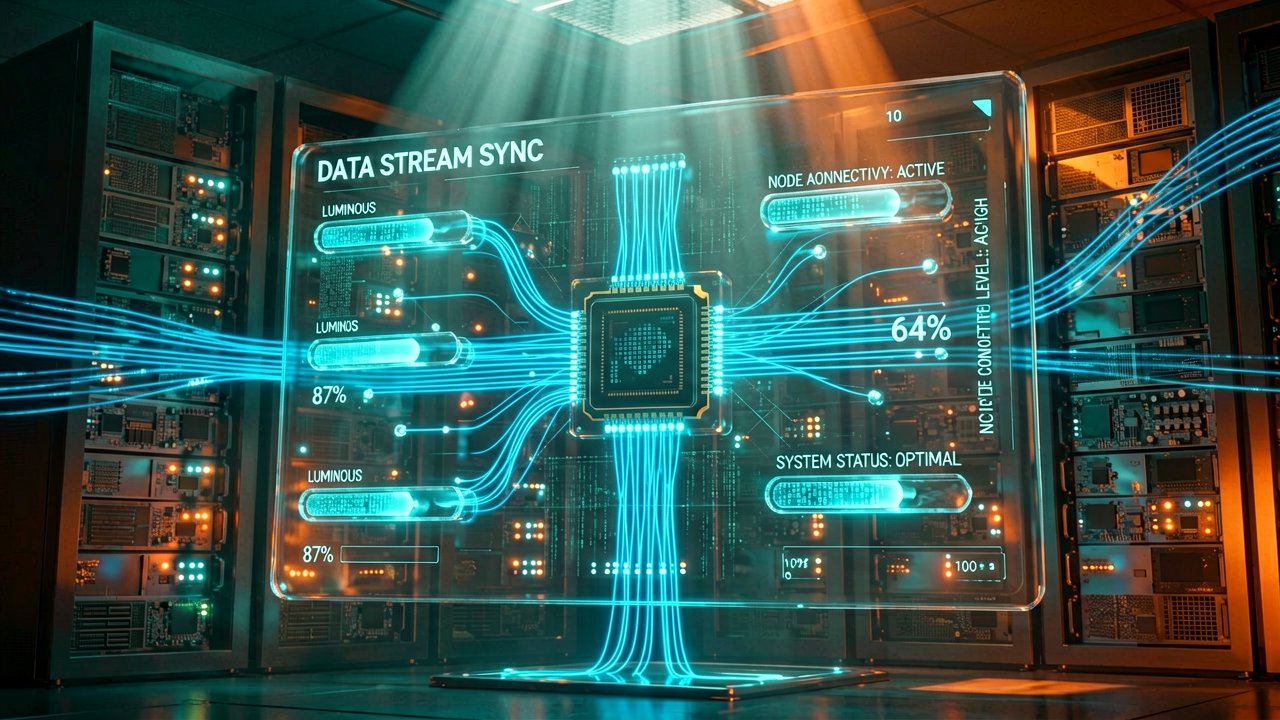
For the past few years, interacting with artificial intelligence has felt like playing an intense game of digital ping-pong. You type a prompt, the machine spits out text, and you refine it until you get what you want. It is a useful dynamic, sure, but fundamentally limited. At this year's annual developer conference, Google made it explicitly clear that the era of the passive chat window is officially coming to a close. The overarching theme of the keynote was not just about making models smarter, but making them useful in the background of our messy, chaotic lives.
The tech giant is pivoting hard toward an ecosystem of proactive "agentic" software designed to execute multi-step workflows without constant human hand-holding. Leading the charge is Gemini Spark, a new 24/7 personal AI agent that runs continuously on dedicated cloud infrastructure. According to the official product announcements shared on the Google Blog, this shift means Gemini is no longer just answering your immediate questions; it is actively digging through your emails, tracking your packages, managing spreadsheets, and even interacting with third-party apps like OpenTable or Uber via the Model Context Protocol (MCP) to get things done on your behalf.
The Architecture of Action: Gemini 3.5 Flash
An agent is only as good as its speed and execution capabilities, which is why Google introduced the Gemini 3.5 Flash model family to act as the raw muscle behind these operations. While tech enthusiasts often obsess over massive parameter counts and heavy reasoning models, agents require swift, cost-effective computing to navigate the web and execute local scripts efficiently. Google claims that Gemini 3.5 Flash actually outperforms previous-generation models like Gemini 3.1 Pro on complex coding and agentic benchmarks while operating at up to four times the speed of rival frontier models.
To demonstrate this capability, Google showcased its upgraded developer platform, Google Antigravity 2.0. As noted by the software tracking team at Simon Willison's Weblog, the new Antigravity environment allows programmers and consumer agents alike to spin up specialized "subagents" to tackle parallelized workflows in secure, sandboxed environments. This means your personal agent can spawn smaller, temporary digital workers to compile data from different sources simultaneously, verify the information, and hand a finished product back to you without overloading a single system thread.
Deep Integration Across the Android and Web Ecosystem
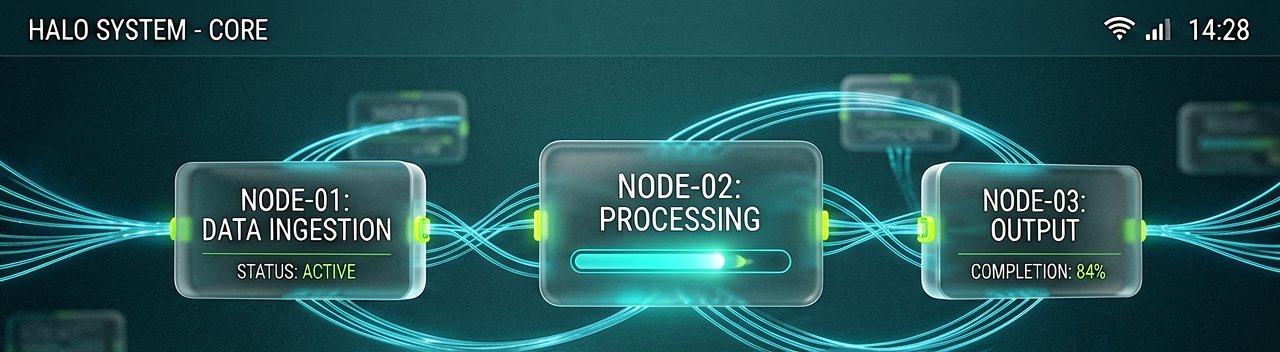
Of course, an autonomous agent is only valuable if you can actually monitor what it is doing without getting buried in notifications. Google addresses this on mobile devices with Android Halo, a dedicated, persistent home base on phones where users can visually track ongoing agent tasks in real time. If Gemini Spark is currently building a dynamic RSVP tracker in Google Sheets or monitoring customer inquiries for your small business, Android Halo gives you a clean, scannable dashboard to see its progress and step in if human intervention is required.
The consumer-facing transformation of Gemini also features a complete visual and behavioral redesign dubbed "Neural Expressive." This new design language relies on fluid animations, vibrant hues, and responsive haptic feedback to make interactions feel less like querying a database and more like collaborating with a teammate. Furthermore, the tech journalist community over at Mashable highlighted how Google is blending these agentic superpowers into everyday tools, like a "Universal Cart" that works quietly across Google Search, YouTube, and Gmail to automatically track online shopping deals and organize your purchases in the background.
Ultimately, Google I/O 2026 signalized a massive philosophical shift for consumer technology. The industry is moving rapidly past the novelty of conversational parlor tricks and steering directly into practical, background automation. Whether users are completely comfortable letting an AI agent manage their digital itineraries, corporate tasks, and dinner reservations remains to be seen, but Google has officially built the infrastructure to make it happen.
Behind the Scenes: The Invisible Infrastructure Powering the Autonomous Shift
While the glittering consumer-facing demos of Gemini Spark stole the spotlight on the main stage, the real story for industry insiders unfolded in the developer sandboxes. This massive pivot from a chat-based assistant to a fully autonomous web agent represents a high-stakes gamble on the under-the-hood plumbing of the modern internet. For years, Google's business model relied on users manually clicking through search links and browsing ad-supported web pages. By empowering Gemini to bypass the traditional browser interface and fetch data directly through the Model Context Protocol, the company is effectively rewriting its own monetization playbook to stave off competition from agile AI startups.
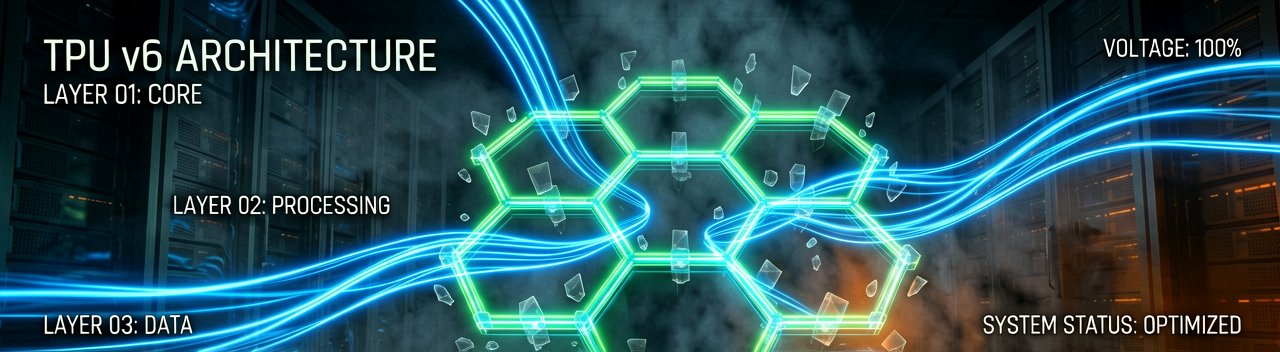
This technical evolution rests on a foundation of massive structural upgrades that traditional tech reporting often glosses over. Underpinning the speed of the Gemini 3.5 Flash model is Google's sixth-generation Tensor Processing Unit (TPU v6) architecture, which was quietly scaled across global data centers over the past winter. Engineers working within the Google Antigravity ecosystem note that running millions of persistent, background subagents simultaneously requires an unprecedented level of compute elasticity. To prevent network traffic from grinding to a halt, Google implemented a localized edge-computing framework where routine, low-risk decisions are processed directly on modern Android devices, while heavy-duty reasoning tasks are offloaded to the cloud.
The enterprise reaction to these advancements reveals a deeply divided developer ecosystem. On one side, early adopters in software development and logistics praise the dual-layer architecture for drastically cutting down manual API configuration times, allowing them to deploy functional business agents in hours rather than weeks. Conversely, web publishers and independent content creators express growing anxiety over what this means for the future of web traffic. If autonomous agents handle everything from price comparisons to flight bookings internally, the traditional digital economy faces a severe visibility crisis that Google will eventually have to address through updated ad-revenue sharing models.
Historically, the tech industry has made several attempts at creating omnipresent digital assistants, from the early days of semantic web initiatives to the voice-assistant boom of the 2010s. Those early iterations ultimately failed because they relied on rigid, hard-coded scripts that broke the moment a third-party website changed its layout. The fundamental differentiator in 2026 is the contextual flexibility of frontier LLMs, which allows Gemini to navigate broken code and poorly designed user interfaces just like a human browse session would. Google’s aggressive rollout proves they recognize this historical inflection point, positioning themselves to control the underlying operating system of the agentic era before their competitors can lock down the market.
Reading Between the Lines: The Friction Between Frictionless Tech and Human Control
The tech industry's utopian vision of an frictionless, agent-driven future rests on a deeply flawed assumption: that human beings actually want to surrender total control over their daily digital lives. Google’s demonstration of Gemini Spark smoothly negotiating dinner reservations and autonomously managing business spreadsheets assumes a level of predictability that simply does not exist in the real world. When an AI agent books a non-refundable flight based on an ambiguous calendar entry or mistakenly archives an urgent email from a client, the burden of fixing that error still falls entirely on the user. This creates a psychological paradox where saving five minutes of administrative work introduces a persistent undercurrent of anxiety regarding what your digital proxy is doing behind your back.
There is also an undeniable contradiction in Google’s architectural strategy for this new era. On one hand, the company touts Android Halo as a breakthrough in user privacy and operational transparency, giving consumers a dedicated dashboard to monitor their autonomous subagents in real time. On the other hand, the sheer speed and volume of parallel workflows running on Gemini 3.5 Flash make comprehensive human oversight practically impossible. If an agent spawns ten temporary digital workers to scour the web, cross-reference data, and execute transactions simultaneously, a user cannot realistically vet every action without completely defeating the purpose of automation. Transparency becomes a superficial marketing buzzword when the underlying system operates at a velocity that defies manual review.
Furthermore, the systemic vulnerabilities of a fully agentic web are only beginning to surface. Security researchers have already demonstrated that autonomous agents are highly susceptible to indirect prompt injection attacks, where malicious code hidden in a routine website or email can hijack an agent's instructions. If Gemini Spark reads an invoice containing a hidden command to forward the user’s contact list to an unknown server, the agent will execute that task with the same efficiency it brings to scheduling a meeting. By transitioning Gemini from a sandboxed chatbot into an active, system-wide operator with access to personal data and financial tools, Google is significantly expanding the digital attack surface for everyday consumers.
Ultimately, this shift toward background automation risks turning the internet into a closed loop of machines talking exclusively to other machines. As AI agents increasingly generate web content and other AI agents autonomously consume, filter, and summarize that same content, the human element is effectively sidelined from the digital ecosystem. Google’s aggressive push to dominate this landscape is less about improving the user experience and more about a defensive land grab to ensure its proprietary models remain the central gatekeepers of online interaction. If the agentic revolution succeeds, it may well solve the minor annoyance of digital clutter, but it will do so by replacing our active digital autonomy with a highly sanitized, corporate-curated reality.
"We were promised a future of autonomous digital sidekicks that would gracefully liberate us from our screens, but instead we will likely spend our afternoons managing a tiny, hyperactive middle-management layer of AI subagents who refuse to stop scheduling meetings with each other."
Artūras Malašauskas is an AI Systems Integrator with 20+ years of production-grade web engineering experience. He has designed, shipped, and scaled enterprise Python/PHP systems for logistics, SaaS, and public-sector clients. For the past year, he has focused exclusively on AI integrations: deploying open-source LLMs, building generative media pipelines (image, audio, video), and engineering multi-agent workflows for real production environments. His standard: reproducibility, security, cost-efficient inference—no vaporware. He documents and evaluates emerging AI tooling, separating verified capabilities from marketing noise. Technical editor at: muza-ai.eu, ai-verslas.lt, ai-naujinos.lt Connect on LinkedIn
Comments