Speaking Out: Artificial Intelligence in an Age of Unintelligence
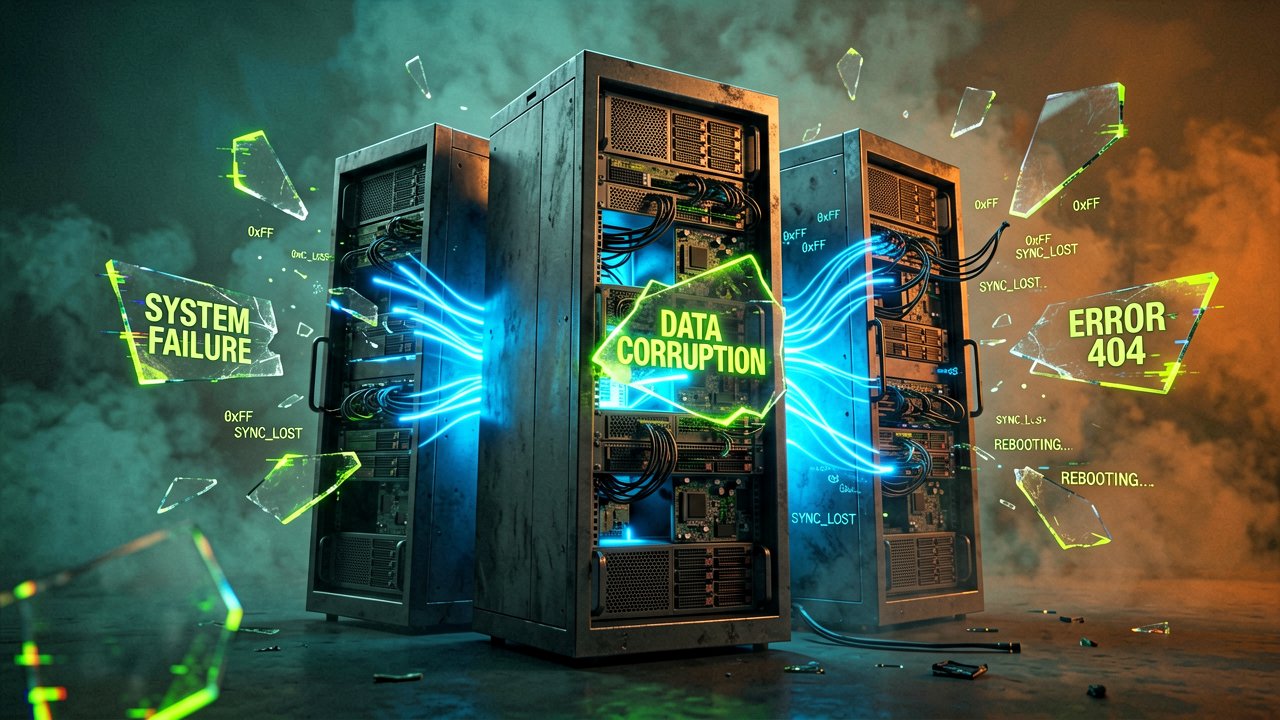
We’ve reached a bizarre inflection point where the tech elite expects us to bow down to "superintelligence," yet our daily digital interactions feel increasingly brainless. Silicon Valley keeps promising that the next massive neural network will cure diseases and solve climate change, but right now, it’s mostly busy ruining search engines and writing corporate apology emails. We’re drowning in a sea of synthetic mediocrity, trading genuine human insight for a slick, automated approximation of it. It’s a classic bait-and-switch where the volume of content goes up, but the actual intelligence of our cultural ecosystem plummets.
The core of the issue is that today’s generative models don't actually know anything; they’re just world-class guessers playing a massive game of statistical autocomplete. They don't understand the truth, they understand probability, which is why they confidently invent historical facts, legal precedents, and medical advice with absolute certainty. According to a comprehensive research assessment by the Stanford Institute for Human-Centered Artificial Intelligence, hallucination rates across top frontier models remain shockingly high, with some systems collapsing in accuracy when confronted with complex, user-believed premises. This isn't just a minor glitch in the machine; it’s a structural flaw inherent to how these models process information.
The High Cost of Automated Noise
Worse still, this flood of synthetic nonsense is extracting a massive, tangible toll on our physical infrastructure. Every time someone asks a chatbot to write a joke or summarize a basic recipe, a data center somewhere guzzles water and strains the power grid. Figures tracked by the International Energy Agency show that data center electricity demand skyrocketed by 17% in 2025 alone, driven relentlessly by tech giants pouring hundreds of billions into AI infrastructure. We’re burning real-world resources to generate fake insight, a trade-off that looks worse by the day. If we keep prioritizing automated filler over human critical thinking, we risk building a world that is technologically advanced but intellectually bankrupt.
Behind the Scenes: The current AI gold rush is quietly hitting a wall that tech executives rarely discuss during quarterly earnings calls. For years, the prevailing wisdom in Silicon Valley was that scaling up—simply feeding larger models more data and compute power—would inevitably yield true artificial general intelligence. However, a growing faction of researchers and industry insiders now admit that we are hitting a ceiling of diminishing returns. The internet is effectively tapped out of high-quality, human-written text, forcing companies to train new models on synthetic data generated by older AI models. This creates a dangerous feedback loop, a digital inbreeding that causes newer systems to degrade, lose diversity, and amplify existing errors.

The Real Stakeholders Paying the Price
While venture capitalists chase the dream of automated workforces, the actual burden of keeping these systems functional falls on a massive, invisible class of underpaid human laborers. Across the Global South, thousands of data annotators spend long hours filtering out horrific content, labeling images, and correcting chatbot errors for pennies per task. It is a striking historical irony that technology marketed as autonomous actually requires a sprawling, manual assembly line of human minds to keep it from spiraling into total incoherence. Without this constant human intervention and curation, the illusion of machine intelligence quickly shatters, exposing the brittle nature of statistical prediction models.
Meanwhile, the creative and journalistic industries are facing an existential crisis as their intellectual property is scraped without consent to power their own replacement. Major publishers and artist coalitions have launched a wave of copyright lawsuits, arguing that tech companies are committing systemic theft on an unprecedented scale. The tech industry counters with claims of fair use, arguing that machines learn just like humans do. This defense misses a fundamental truth: a human writer reads to find inspiration, whereas an AI model ingests a database to systematically mimic and dilute the commercial value of the original creators.
Chasing Hype over Utility
The historical parallel here is the mid-20th-century obsession with automation, where factories rushed to replace skilled artisans with rigid machinery, only to realize that nuance and adaptability could not be easily mechanized. Today, enterprise software buyers are discovering that deploying generative AI across corporate workflows introduces unpredictable liabilities rather than meaningful efficiency. A customer service bot that hallucinates a fake refund policy or a medical intake system that misinterprets patient history is a massive legal and financial risk. Despite the trillions of dollars added to tech valuations, the actual utility of these systems remains confined to low-stakes administrative tasks and software coding assistance.
Ultimately, the crisis of the AI age is not that machines are becoming too smart, but that our institutions are becoming comfortable with things being too dumb. We are lowering our standards of accuracy, art, and public discourse just to accommodate the limitations of our new digital tools. By accepting software that is merely "good enough," we risk institutionalizing a form of collective ignorance, where the speed of content generation matters far more than its truth or artistic merit.
Reading Between the Lines: The tech industry is currently trapped in a profound contradiction, screaming from the rooftops about the existential dangers of artificial general intelligence while simultaneously begging the public to trust these same systems with the keys to global infrastructure. We are told these algorithms are powerful enough to destroy humanity, yet we must blindly deploy them to manage electricity grids, write legislation, and diagnose illnesses. This apocalyptic marketing strategy serves as a brilliant misdirection, framing a flawed software product as an omnipotent force to avoid mundane, regulatory scrutiny regarding labor exploitation, data theft, and antitrust monopolization.
The Paradox of Efficiency
Furthermore, the corporate promise of unprecedented economic productivity through automation is actively cannibalizing the very environment it claims to optimize. The modern corporate ecosystem operates on the belief that replacing human writers, analysts, and designers with cheap synthetic data generators will drastically cut costs and maximize efficiency. However, this logic ignores the long-term systemic cost of a degraded information ecosystem, where finding verified, trustworthy data becomes a luxury good. As enterprise networks clog with AI-generated white papers, automated code repositories, and synthetic legal briefs, organizations will end up spending more time and capital auditing, debugging, and correcting machine output than they would have spent paying human experts from the start.
This reality exposes a glaring vulnerability in the financial valuation of the entire artificial intelligence sector. Tech giants are justifying unprecedented capital expenditure on hardware infrastructure by projecting exponential growth that relies on businesses paying premium subscriptions for these tools indefinitely. Yet, as the novelty fades and the realization sinks in that these systems are fundamentally sophisticated plagiarism engines prone to costly errors, corporate enthusiasm is bound to cool. When the venture capital subsidization inevitably dries up, the market will face a harsh reckoning, exposing a massive infrastructure bubble built on the back of automated mediocrity.
"We were promised a digital revolution that would liberate the human mind from drudgery; instead, we got a trillion-dollar industry dedicated to ensuring that a computer can write bad poetry in three seconds flat while humans are left to do the hard work of double-checking its math."
Artūras Malašauskas is an AI Systems Integrator with 20+ years of production-grade web engineering experience. He has designed, shipped, and scaled enterprise Python/PHP systems for logistics, SaaS, and public-sector clients. For the past year, he has focused exclusively on AI integrations: deploying open-source LLMs, building generative media pipelines (image, audio, video), and engineering multi-agent workflows for real production environments. His standard: reproducibility, security, cost-efficient inference—no vaporware. He documents and evaluates emerging AI tooling, separating verified capabilities from marketing noise. Technical editor at: muza-ai.eu, ai-verslas.lt, ai-naujinos.lt Connect on LinkedIn
Comments