The Automation Pivot: Why Intuit’s Global Layoffs Sound a Warning Bell for Silicon Wadi

When a tech giant trims its sails, the ripples are felt worldwide, but the latest restructuring at Intuit hits differently. The financial software powerhouse behind QuickBooks and TurboTax announced it is slicing away roughly 1,7% of its global workforce, a move that translates to about 3,000 lost jobs. While the headline figures focus on corporate streamlining, the local fallout has arrived squarely on Israel’s shores. The company's research and development center in Israel, which employs around 500 professionals, is now absorbing its share of the blow as reported by Calcalistech.
There is a fascinating bit of doublespeak happening at the executive level. Intuit CEO Sasan Goodarzi quickly took to the airwaves to insist that the massive staff reduction has absolutely nothing to do with artificial intelligence replacing human labor. Instead, the company claims the objective is to reduce internal complexity and build a faster, more effective "builder culture." Yet, it is impossible to ignore the context of these cuts. The restructuring arrives just months after Intuit signed massive integration deals with leading artificial intelligence pioneers, making it clear that while AI might not be pulling the trigger on these jobs directly, it is definitely rewriting the corporate blueprint.
A Strategy of Aggressive Re-allocation
This is not a story of financial distress. Intuit is cutting from a position of relative strength, choosing to aggressively reallocate its capital rather than simply lowering expenditures. The technology landscape has fundamentally shifted, and firms are discovering that keeping legacy operational structures alive is too expensive when massive investments in infrastructure and specialized engineering are required to stay competitive.
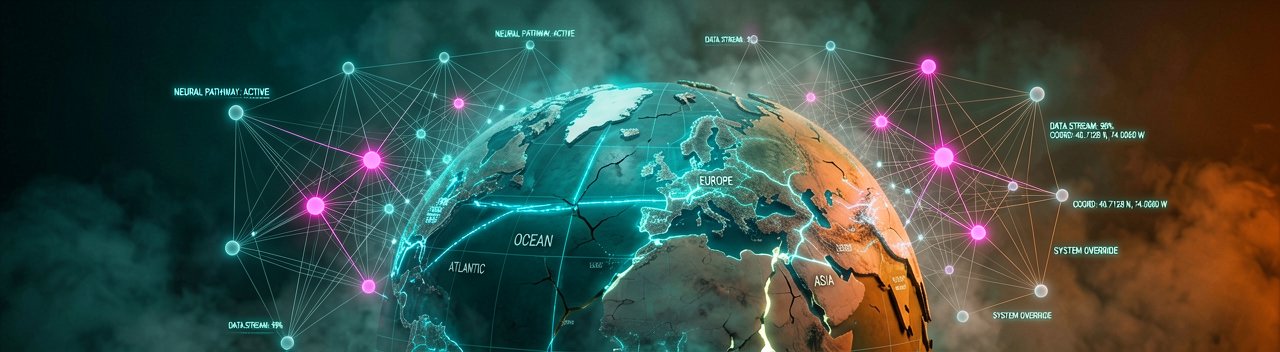
Silicon Wadi has long considered itself insulated from standard corporate downsizings due to its high-concentration of elite engineering talent. However, this global restructuring shows that even the most robust innovation hubs are subject to the cold math of global corporate realignment. The impacted employees in Israel are part of a broader group of over 111,000 tech workers laid off across the sector this year as enterprises pivot toward automation and intelligence-driven workflows.
The Real Price of the AI Frontier
What we are witnessing is the high structural cost of building the automated future. Training generative models, partnering with top-tier AI providers, and hiring niche machine learning engineers requires immense capital. Traditional roles in support, middle management, and legacy product lines are routinely sacrificed to fund these expensive engineering initiatives.
For the departing talent in Tel Aviv, the transition will be cushioned by generous severance packages, but the broader message to the local market is unmistakable. The tech sector is no longer just expanding its headcount to chase raw growth. It is actively trading operational scale for automated velocity, and every engineering hub on Earth will have to adapt to this leaner reality.
Behind the Scenes of the Automation Shift
The transition happening inside Intuit reflects a deeper structural anxiety vibrating through the entire software industry. For years, massive tech companies relied on a playbook of hyper-hiring to signal health and institutional dominance to Wall Street. Now, that era of labor hoarding has officially ended, replaced by an aggressive obsession with efficiency per employee. By shifting capital away from traditional product maintenance and re-routing it into advanced intelligence infrastructure, executives are fundamentally redefining what a software company looks like from the inside out.
Historically, Israel’s tech ecosystem thrived by acting as the elite R&D engine for American tech giants, often insulated from cyclical corporate trimmings due to the highly specialized nature of its output. However, the current wave of automation targets the exact core of software engineering that once felt untouchable. When automated tools can generate functional code and streamline software deployment, the demand for mid-level developers drops sharply, leaving even highly regarded regional hubs exposed to the harsh realities of corporate optimization.
Insiders suggest that the mood within the Tel Aviv offices is one of frustrated resignation rather than shock. Employees have watched the tech landscape shift over the past two years, recognizing that corporate messaging about "streamlining" is almost always code for structural displacement. While generous severance packages offer a soft landing for those affected, the real challenge lies ahead as hundreds of displaced, highly skilled professionals enter a regional job market that is simultaneously contracting and rethinking its own talent needs.
The broader economic implications for Silicon Wadi are significant, as this restructuring coincides with a period of heightened geopolitical and domestic economic tension within Israel. Local startups and multinational hubs alike are forced to defend their operating budgets to overseas boards who are increasingly risk-averse. When an anchor tenant like Intuit scales back its footprint, it signals to other global boards that trimming Israeli operations is no longer a corporate taboo, potentially triggering a chain reaction across competing research facilities.
Ultimately, this pivot exposes the true cost of entering the artificial intelligence frontier. The narrative that automation will seamlessly create as many jobs as it destroys is being thoroughly tested in real-time, and the initial data points are brutal for traditional tech workers. As corporations trade human headcounts for algorithmic velocity, the burden shifts entirely to the workforce to rapidly re-skill, proving that in the modern tech economy, past success offers very little protection against the demands of the automated future.
Reading Between the Lines of the Corporate Pivot
The corporate insistence that these mass layoffs are entirely unrelated to the rise of artificial intelligence strains credulity. Management circles have adopted a carefully sanitized vocabulary, preferring to discuss "organizational velocity" and "delayering" rather than admitting that algorithmic efficiency minimizes the need for human hands. By framing the reduction as a cultural reboot rather than a technological replacement, executives manage to satisfy shareholders demanding lean operations while avoiding the public relations nightmare of being labeled job destroyers.
This strategic positioning reveals a glaring contradiction in how modern tech firms value expertise. For a decade, companies aggressively outbid one another for premium engineering talent in regions like Tel Aviv, touting human ingenuity as their ultimate competitive advantage. Today, that same ingenuity is being institutionalized into proprietary machine learning models, effectively using the workers' own past output to justify their future obsolescence. It is a cynical loop where the reward for building scalable, highly efficient software architectures is a pink slip delivered via a corporate video call.
The long-term risk for companies adopting this lean, automated framework is an acute loss of institutional memory and creative friction. Silicon Wadi built its reputation on a culture of defiance, where engineers routinely challenged product specifications to build fundamentally better systems. Replacing this chaotic, human-driven innovation with predictable, automated workflows might look excellent on a quarterly balance sheet, but it risks turning vibrant technology powerhouses into stagnant utilities that can optimize existing products but can no longer invent entirely new categories.
Furthermore, the belief that displaced tech workers will easily transition into newly minted AI roles overlooks the massive skill mismatch inherent in this economic shift. A senior developer specialized in legacy cloud infrastructure cannot transform into a machine learning researcher overnight, regardless of how many online retraining courses a human resources department offers. As more multinational corporations mimic this consolidation strategy, the tech ecosystem risks creating a permanent underclass of highly skilled but technologically displaced professionals fighting over a rapidly shrinking pool of traditional software roles.
"We were promised a future where artificial intelligence would free us from the drudgery of administrative tasks so we could focus on pure creativity; instead, it turns out the algorithms are quite content taking over the creative engineering, leaving humans with the incredibly creative task of rewriting their resumes."
Artūras Malašauskas is an AI Systems Integrator with 20+ years of production-grade web engineering experience. He has designed, shipped, and scaled enterprise Python/PHP systems for logistics, SaaS, and public-sector clients. For the past year, he has focused exclusively on AI integrations: deploying open-source LLMs, building generative media pipelines (image, audio, video), and engineering multi-agent workflows for real production environments. His standard: reproducibility, security, cost-efficient inference—no vaporware. He documents and evaluates emerging AI tooling, separating verified capabilities from marketing noise. Technical editor at: muza-ai.eu, ai-verslas.lt, ai-naujinos.lt Connect on LinkedIn
Comments