Elon Musk’s 10,000-Launch Target Is Classic SpaceX—And a Bureaucratic Nightmare
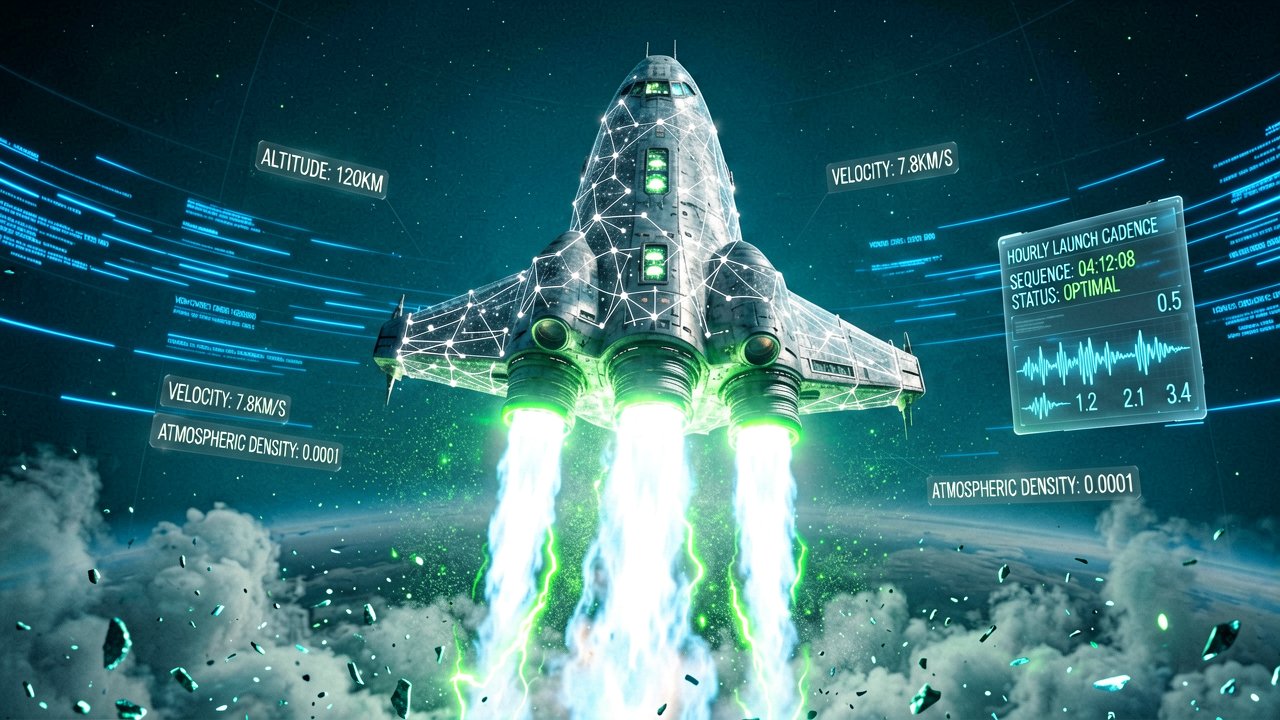
SpaceX wants to turn rocket launches into something resembling a commercial flight schedule, aiming to hit an astonishing 10,000 launches annually within the next five years. According to details shared by Federal Aviation Administration (FAA) Administrator Bryan Bedford following a frank discussion with SpaceX President Gwynne Shotwell, the company is looking to scale its operation at a pace that breaks every traditional aerospace model. While the company managed 170 launches in 2025, scaling that figure up by several orders of magnitude means we are no longer talking about standard aerospace logistics; we are looking at an unceasing, hourly barrage of hardware tearing through the upper atmosphere.
The sheer logistics of this "stretch goal" are mind-boggling when contrasted against today's regulatory landscape. The FAA currently licenses commercial space operations and must carefully clear flight paths, grounding regional air traffic to ensure passenger jets do not cross paths with falling rocket boosters or debris fields. To secure a future where a rocket leaves Earth roughly every hour, SpaceX will have to solve more than just its own manufacturing bottlenecks. They need to completely rewrite how the government manages national airspace, all while the underfunded regulatory teams scramble to keep pace. According to a report by Reuters , Bedford candidly noted that while the agency isn't the limiting factor today, it easily could be tomorrow if funding for its dedicated space division stagnates.
The Reality Check: Reliability Meets Bureaucracy
It is no secret that Elon Musk likes to design the future with a sledgehammer, but regulators prefer a scalpel. The FAA made it perfectly clear that before anyone signs off on thousands of annual flight paths, SpaceX must demonstrate pristine operational reliability. Right now, the company has roughly 10,000 Starlink satellites operating in low Earth orbit, yet their ultimate ambition involves launching a massive 1-million-satellite constellation designed to harness solar energy for AI data centers. Pushing the boundaries of infrastructure at this scale requires absolute perfection, especially with an administration explicitly demanding a return to the Moon before 2028. To hit these aggressive timelines, the public and private sectors will have to find a rare, harmonious rhythm.
An Eye on the Public Markets
This explosive operational roadmap comes at a fascinating financial junction for the aerospace giant. The aggressive operational targets hit the public eye just as SpaceX filed its highly anticipated S-1 prospectus with the Securities and Exchange Commission, paving the way for what could be a historic initial public offering. For the first time in its 24-year history, the corporate curtain has been pulled back to reveal $18.7 billion in revenue alongside a $2.6 billion operating loss for 2025, driven by massive investments in next-generation rockets and artificial intelligence infrastructure. Musk is betting the house on vertical integration and staggering volume, counting on the public markets to bankroll a relentless manifest that targets a jaw-dropping $1.75 trillion valuation upon listing.
Behind the Scenes: The Invisible Friction of Rocket Exhaust
What most headlines overlook is that scaling to 10,000 annual launches is not a manufacturing problem for SpaceX; it is a chemistry and atmospheric physics problem for the planet. A cadence of nearly 30 launches a day means the upper atmosphere will face a continuous, unprecedented injection of soot, alumina particles, and water vapor. Climate scientists are already sounding alarms about the long-term impact of mega-constellations on the stratosphere, pointing out that rocket emissions at high altitudes behave differently than commercial jet exhaust. As the aerospace giant accelerates toward its goal, it will inevitably collide with global environmental scrutiny that no amount of vertical integration can easily bypass.
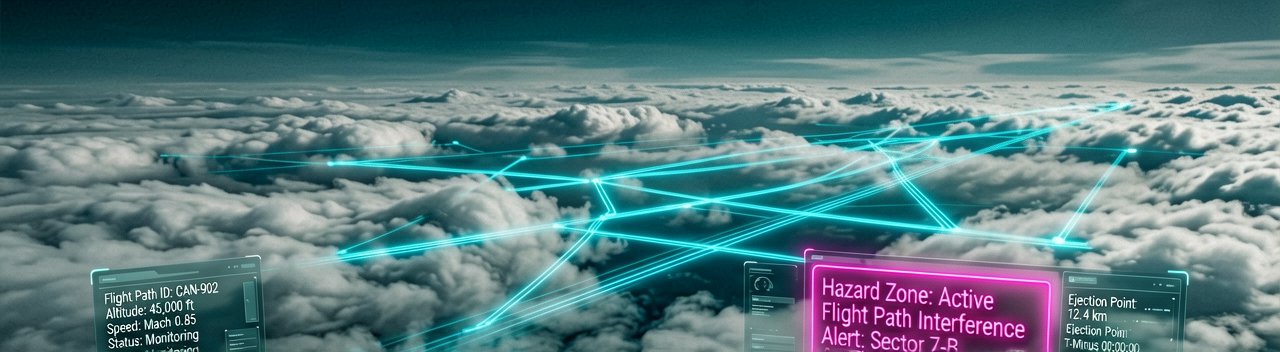
From the perspective of commercial aviation, this proposed launch frequency represents an existential threat to traditional flight routing. Every time a rocket breaks atmosphere from Cape Canaveral or Starbase, thousands of square miles of airspace must be cordoned off, forcing commercial airlines to fly inefficient, fuel-heavy detours. While the FAA has made strides with its NextGen space integration tools to shrink these hazard zones in real-time, the tech is not built for hourly disruptions. Airline trade groups are quietly lobbying Washington, arguing that prioritizing Elon Musk’s satellite manifest should not come at the expense of millions of daily airline passengers who face compounding delays.
Historically, the aerospace industry operated on a doctrine of extreme risk aversion, where a single anomaly could ground a fleet for a year. SpaceX flipped this script by embracing "productive failure," intentionally blowing up early Starship prototypes to iterate rapidly. However, a 10,000-launch annual cadence leaves zero margin for institutional learning through catastrophic failure. If a Falcon or Starship vehicle suffers a critical malfunction over a populated area or compromises a vital orbital corridor, the resulting regulatory freeze would paralyze not just SpaceX, but the entire American space economy, including NASA’s flagship Artemis program.
There is also an intense geopolitical undercurrent to this logistical push. European and Asian competitors view SpaceX's frantic acceleration as a deliberate move to monopolize low Earth orbit before international regulatory bodies can update orbital real estate laws. By occupying the most desirable orbital planes with tens of thousands of active nodes, SpaceX creates a de facto monopoly where newcomers must navigate a literal minefield of existing hardware. This frantic race for operational dominance explains why the company is willing to absorb billions in short-term operating losses to secure a permanent, unassailable lead in global telecommunications infrastructure.

Reading Between the Lines: The Illusion of Infinite Capacity
The math behind a 10,000-launch annual target reveals a glaring disconnect between visionary ambition and physical reality. To hit this number, SpaceX would need to maintain a relentless cadence of roughly 27 launches every single day, every day of the year. Even if we assume the rapidly reusable Starship replaces the Falcon 9 entirely, the sheer turnaround time for refurbishing pads, reloading propellants, and clearing orbital debris pathways makes this timeline highly improbable. The aerospace giant has built its reputation on defying skeptics, but this specific target feels less like a firm operational milestone and more like an aggressive rhetorical anchor designed to keep regulators moving quickly.
Furthermore, this frantic push exposes a massive contradiction in the company's ultimate business model. SpaceX justifies this unprecedented launch volume by pointing to its upcoming solar-powering satellite network for AI data centers and its expanding Starlink empire. Yet, the company is building an infrastructure capable of launching payloads far faster than the global market can actually produce them. Unless SpaceX intends to manufacture every single satellite, space station module, and deep-space probe internally, it will find itself operating a hyper-efficient highway system that leads to an empty desert, waiting for an immature commercial space economy to catch up.
The financial math also demands a healthy dose of skepticism. Flooding the market with unlimited launch capacity will inevitably trigger a race to the bottom for launch pricing, cannibalizing the very revenues SpaceX needs to offset its staggering capital expenditures. Wall Street loves a growth story, especially on the heels of a massive IPO filing, but public markets are notoriously hostile to companies that burn billions on infrastructure while aggressively depressing their own pricing power. If the broader economy takes a downturn, the public market's appetite for funding Musk’s multi-planetary manifest could vanish overnight, forcing a dramatic scale-back of these orbital ambitions.
Ultimately, the biggest bottleneck is not technological, but bureaucratic and political resistance. As the night sky becomes increasingly crowded, astronomy groups, international rivals, and local communities are pushing back against the normalization of a permanent rocket barrage. A future where a rocket breaks the sound barrier every thirty minutes over the Gulf Coast will inevitably trigger unprecedented legal challenges regarding noise pollution and environmental degradation. SpaceX may be able to out-engineer the laws of physics, but it cannot out-engineer the legal system, making the five-year timeline look more like a regulatory fantasy than an actionable blueprint.
"We used to measure space programs by the decade, but SpaceX wants to measure them by the hour—which is fantastic news for anyone who enjoys the soothing, ambient sound of a sonic boom with their morning coffee."
Artūras Malašauskas is an AI Systems Integrator with 20+ years of production-grade web engineering experience. He has designed, shipped, and scaled enterprise Python/PHP systems for logistics, SaaS, and public-sector clients. For the past year, he has focused exclusively on AI integrations: deploying open-source LLMs, building generative media pipelines (image, audio, video), and engineering multi-agent workflows for real production environments. His standard: reproducibility, security, cost-efficient inference—no vaporware. He documents and evaluates emerging AI tooling, separating verified capabilities from marketing noise. Technical editor at: muza-ai.eu, ai-verslas.lt, ai-naujinos.lt Connect on LinkedIn
Comments