The Pragmatic Shift: Microsoft Showcases AI Moving From Boardroom Hype to the Front Lines
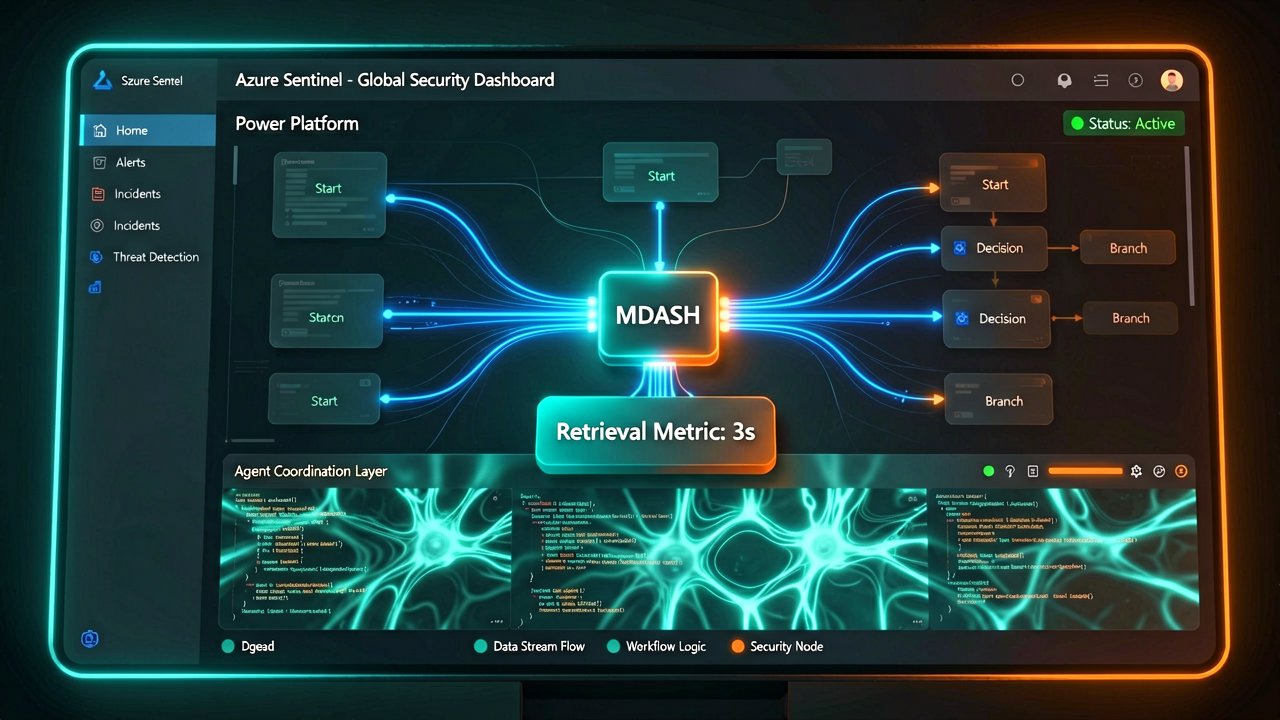
For the past few years, the tech world has suffered from a bad case of artificial intelligence fatigue, driven by high-flying promises that rarely seemed to land on the factory floor. However, tech giant Microsoft has just unveiled a fresh batch of global enterprise deployments that signal a massive shift from speculative hype to blue-collar reality. In its latest showcase of commercial readiness, Redmond highlighted how legacy heavyweights and high-stakes operations, spanning from major international railway operators to front-line cyber defense firms, are embedding generative models directly into their core workflows. These aren't minor proof-of-concept experiments anymore; they are foundational overhauls designed to solve localized, highly specific operational bottlenecks.
Take the transit sector, where Hong Kong’s MTR Corporation has fully embraced corporate-wide modernization by blending Microsoft 365 Copilot and the Power Platform to automate tedious administrative oversight, including complex document drafting, summarization, and data analysis. Similarly, transport operators like Brazil's railway logistics giant Rumo have completely revolutionized front-line safety and compliance by building "RUTI Maquinista," an AI-backed operational co-pilot. According to official telemetry, this specialized application slashed frontline information retrieval times for train engineers from a cumbersome four minutes to a staggering three seconds, entirely eliminating kilograms of physical, slow-to-update manuals from the locomotive cabs. These deployments reveal an enterprise landscape that is quickly learning to treat large language models as highly practical industrial utilities rather than magical, all-knowing entities.
The defensive security landscape is experiencing an even more urgent transformation, catalyzed by the reality that malicious actors are weaponizing automated infrastructure at machine speed. Security specialist ContraForce illustrated this evolution by deploying an enterprise-grade security platform that fuses Microsoft Sentinel, Defender XDR, and Azure OpenAI to automate over 90 percent of the time traditionally required to triage and mitigate intrusion incidents. By delegating the initial fire-fighting to autonomous workflows, the company expanded its 24-hour security operations without the typical, cost-prohibitive requirement of hiring a small army of scarce analyst talent. As detailed in the comprehensive overview published by Digital Today, these diverse use cases demonstrate that the true commercial victory for AI isn't happening in Silicon Valley laboratories, but in the less glamorous world of corporate efficiency and automated infrastructure protection.
What Most Reports Miss: The Industrial Realities of the "Agentic" Shift
Behind the glossy corporate press releases lies a far more gritty, complicated transition that seasoned industry analysts are watching closely. The initial phase of generative adoption was largely passive, defined by chatbots waiting around for human prompts to summarize an email or clean up a spreadsheet. What this latest wave of deployments reveals is the quiet birth of the autonomous workforce, a phenomenon where interconnected AI agents interact across enterprise systems without a human holding their hand at every step. While this boosts productivity to unprecedented heights, it introduces an entirely new playbook of structural friction, especially within heavy industries where a digital glitch can have catastrophic physical or financial consequences.

For infrastructure operators like railways and financial firms, the biggest hurdle isn't coding the software; it's the cultural and regulatory headache of data governance. When an organization like MTR or a regional cooperative bank connects an internal model to its entire document repository, it accidentally creates a powerful internal entity with sweeping visibility. If an autonomous agent can access legacy maintenance logs, employee schedules, and sensitive financial tables simultaneously, a compromised prompt or an unmapped permission exploit could trigger widespread data leakage. This internal friction has forced chief information security officers to rethink access control entirely, moving away from simple user passwords to dynamic, zero-trust architectures specifically tailored for artificial entities.
Furthermore, tech journalists tracking this space note an ironic double-edged sword regarding infrastructure platforms. Earlier this spring, security researchers at Huntress surfaced a massive global device code phishing campaign that heavily weaponized the PaaS cloud hosting provider known as Railway to target and exploit Microsoft 365 tokens across hundreds of corporate accounts. The sophisticated adversaries used automated container infrastructure to spin up unique, AI-generated credential-harvesting lures at rapid scale, as meticulously detailed by CyberScoop. This highlights the ongoing arms race where the exact same automated cloud efficiency championed by enterprise defenders is simultaneously being utilized by opportunistic digital extortionists to bypass traditional security filters.
To combat this hyper-scaled threat landscape, Microsoft has had to move beyond basic endpoint protection toward autonomous, multi-model defensive harnesses. The tech giant recently highlighted its own internal breakthrough with "MDASH," an agentic security scanning platform that orchestrates over 100 specialized AI agents working together to proactively discover and prove exploitable bugs across the Windows kernel before malicious actors can find them. This collaborative defensive strategy, which achieved a historic top score on industry benchmarks as noted in the research shared via Microsoft Security, underscores the ultimate reality facing modern IT departments. In a corporate environment where software agents are rapidly multiplying, the only viable way to defend an enterprise network is to build a smarter, more resilient army of digital defenders to watch over them.
Reading Between the Lines: The Hidden Costs of the Automated Safety Net
While tech executives celebrate slashing four-minute manual lookups down to three seconds, a critical look at this rapid automation reveals a deeply troubling paradox. The tech industry loves to pitch these systems as the ultimate corporate safety net, but they are simultaneously introducing an entirely new class of digital dependencies. By replacing physical compliance manuals and veteran human intuition with algorithmic lookups, companies are quietly deskilling their workforce. The immediate productivity gains are obvious, but the long-term systemic risks remain unmeasured. Organizations risk creating an operational environment where front-line workers lose the capacity to troubleshoot complex system failures the moment the cloud connection drops or an algorithmic model experiences an unexpected hallucination.
This reliance becomes particularly dangerous when analyzing the massive contradictions in current cybersecurity marketing. Enterprise tech providers frequently boast about using multi-model agentic networks to scan millions of lines of code and automatically block automated threats at machine speed. Yet, the brutal reality of modern infrastructure is that the defensive perimeter is only as strong as its weakest human link. A security firm can deploy a sophisticated cluster of defensive agents, but those systems are still completely vulnerable to basic social engineering, session hijacking, and token theft. The industry is trapped in a perpetual cycle of buying increasingly expensive software to patch the systemic vulnerabilities introduced by the last wave of automation, creating a highly profitable loop for tech vendors while corporate IT departments assume all the operational risk.
Looking ahead, the widespread projection that these autonomous systems will permanently lower operational expenditures is likely a mirage. While companies might initially avoid hiring entry-level analysts or administrative staff, those savings will inevitably be eaten up by skyrocketing compute costs, specialized model maintenance fees, and the premium salaries required to hire elite engineers who actually understand how to debug interconnected agentic pipelines. The financial burden isn't disappearing; it is simply being shifted from predictable human payroll to highly volatile, consumption-based cloud infrastructure billing. Ultimately, the true test of this enterprise migration won't be measured by the speed of a polished corporate rollout, but by how these systems hold up during a catastrophic, multi-system network outage when there are no longer any physical manuals left in the building.
"We are rapidly approaching a corporate utopia where hundreds of highly sophisticated software agents will tirelessly cross-reference automated data streams to instantly catch the vulnerabilities created by other software agents, leaving human managers with absolutely nothing left to do except explain to the board why the cloud computing bill now equals the gross domestic product of a medium-sized European nation."
Artūras Malašauskas is an AI Systems Integrator with 20+ years of production-grade web engineering experience. He has designed, shipped, and scaled enterprise Python/PHP systems for logistics, SaaS, and public-sector clients. For the past year, he has focused exclusively on AI integrations: deploying open-source LLMs, building generative media pipelines (image, audio, video), and engineering multi-agent workflows for real production environments. His standard: reproducibility, security, cost-efficient inference—no vaporware. He documents and evaluates emerging AI tooling, separating verified capabilities from marketing noise. Technical editor at: muza-ai.eu, ai-verslas.lt, ai-naujinos.lt Connect on LinkedIn
Comments