SAP Unveils Joule Work as AI Control Plane at Sapphire, But Stock Rally Hits Overbought Ceiling

At its recent Sapphire conference, enterprise software titan SAP took a decisive leap past the standard tech-industry AI hype, repositioning itself from a legacy ERP vendor into what CEO Christian Klein frames as a "business AI company." The crown jewel of this transformation is Joule Work, a reimagined interface that transforms the Joule assistant into a comprehensive AI control plane for the enterprise. Instead of jumping through endless menus, employees can now steer workflows via natural language, prompting specialized teams of AI agents to manage intricate tasks. To ensure widespread adoption, SAP even backed this vision with a fresh €100 million fund to help partners deploy these intelligent agents, proving it wants this automated ecosystem running sooner rather than later.
Yet, while the product roadmap looks sharper than ever, the financial markets are telling a more complicated story. SAP’s stock has suffered a brutal year-to-date decline, shedding nearly 28 percent of its value. Despite this deeper slump, a sudden post-conference spike triggered a puzzling technical paradox: the stock's Relative Strength Index (RSI) rocketed to a blistering 92.7. In the lexicon of technical analysis, that is deep in overbought territory, suggesting the sudden rush of enthusiasm has pushed short-term valuations ahead of technical sanity. Wall Street is caught in a tug-of-war, balancing long-term optimism against immediate macroeconomic friction.
The Agentic Stack and the Autonomous Enterprise
The core announcement in Orlando and Madrid centers on the SAP Autonomous Suite, an operational layer powered by hundreds of out-of-the-box AI agents mapped to specific business functions. According to details shared in the SAP Sapphire 2026 Innovation News Guide, these agents do not just offer advice; they execute complex tasks autonomously under human oversight. For instance, the Financial Closing Assistant coordinates multiple agents to handle real-time journal validations and accruals, which drastically shrinks the time it takes a CFO to close the books. By integrating protocols that allow Joule to communicate with rival platforms like Microsoft Copilot and Salesforce Agentforce, SAP is positioning Joule Work as the overarching dashboard where corporate decisions turn into automated actions.
Wall Street Vibrations: Upgrades Versus Technical Limits
Market analysts are working overtime to parse the divergence between SAP's depressed share price and its overbought technical indicator. As reported by Aktiencheck, big institutional players are largely looking past the near-term chart distortion. Jefferies recently upgraded the stock to a "Buy" with a bold €230 price target, viewing the autonomous agent framework as a logical extension of SAP’s unmatched data gravity. Deutsche Bank echoed this bullishness, maintaining its own €200 target on the belief that embedding AI directly into ERP core processes creates stickier, higher-margin cloud subscriptions.
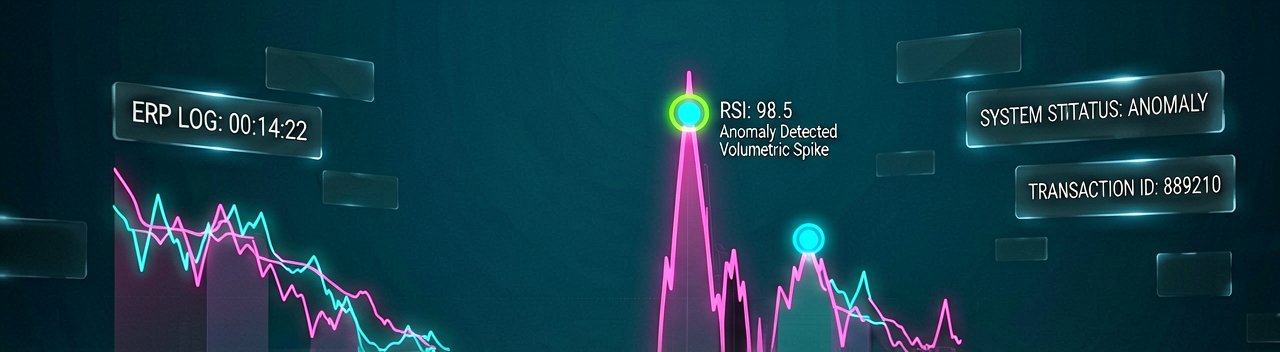
The skepticism holding back a sustained breakout stems from monetization timelines. While investment banks like BMO Capital remain bullish on SAP’s long-term growth durability, researchers at Goldman Sachs pointed out that near-term AI monetization remains hazy. Many legacy customers have actually slowed down their cloud migrations while trying to figure out exactly how these new AI tools fit into their existing IT budgets. SAP has laid out a compelling blueprint for the automated future of corporate work, but it still needs to prove to anxious investors that these autonomous agents can deliver immediate, measurable savings to the bottom line.
Reading Between the Lines: The Friction in SAP’s Frictionless Vision
Reading Between the Lines: The tech industry's sudden pivot toward agentic AI is frequently pitched as a seamless transition to an autonomous future, but the reality on the ground for legacy enterprise resource planning systems is far more chaotic. SAP’s rollout of Joule Work aims to act as an orchestrator of intelligent agents, yet this software architecture assumes a level of data cleanliness that simply does not exist inside most multinational corporations. For decades, companies have built deeply customized, highly fragmented on-premise ERP setups. Expecting autonomous financial or supply chain agents to instantly navigate these heavily modified digital landscapes without hallucinating or hitting integration walls ignores the historical baggage of enterprise IT infrastructure.
There is also a glaring contradiction between SAP's aggressive AI marketing and its actual financial performance. Executives enthusiastically tout a future of automated efficiency, but the stock's year-to-date collapse of nearly 28 percent reveals that investors are prioritizing macro realities over futuristic roadmaps. High interest rates, tight corporate tech budgets, and a general exhaustion with artificial intelligence hype have left buyers skeptical. The extreme, short-term overbought technical signal—the RSI hitting 92.7 amid a broader downward trend—indicates a speculative frenzy among algorithmic traders reacting to headline keywords rather than a sustainable wave of fundamental institutional buying.
Furthermore, the long-term economic model of the SAP Autonomous Suite introduces highly complex compliance and liability challenges that the software giant has yet to fully untangle. If a specialized, autonomous AI agent miscalculates real-time journal validations or accidentally flags a valid supplier as fraudulent, the financial fallout falls squarely on the customer, not the platform provider. While investment banks praise the potential for high-margin cloud subscriptions, corporate risk officers are quietly putting the brakes on full autonomy. SAP's grand vision of an AI control plane will likely face a prolonged bottleneck as corporate legal teams, rather than developers, dictate just how much control they are truly willing to cede to an algorithm.

"We are told the future of corporate work is a beautifully automated symphony where software agents do the heavy lifting and humans simply nod in approval. Just remember that before these digital workers can successfully balance a multi-billion-dollar corporate ledger by themselves, someone still has to spend three years cleaning up the spreadsheet formulas left behind by an intern in 2014."
Artūras Malašauskas is an AI Systems Integrator with 20+ years of production-grade web engineering experience. He has designed, shipped, and scaled enterprise Python/PHP systems for logistics, SaaS, and public-sector clients. For the past year, he has focused exclusively on AI integrations: deploying open-source LLMs, building generative media pipelines (image, audio, video), and engineering multi-agent workflows for real production environments. His standard: reproducibility, security, cost-efficient inference—no vaporware. He documents and evaluates emerging AI tooling, separating verified capabilities from marketing noise. Technical editor at: muza-ai.eu, ai-verslas.lt, ai-naujinos.lt Connect on LinkedIn
Comments