The Accelerator Pedal: Inside New South Wales’ Record-Breaking Renewable Energy Push
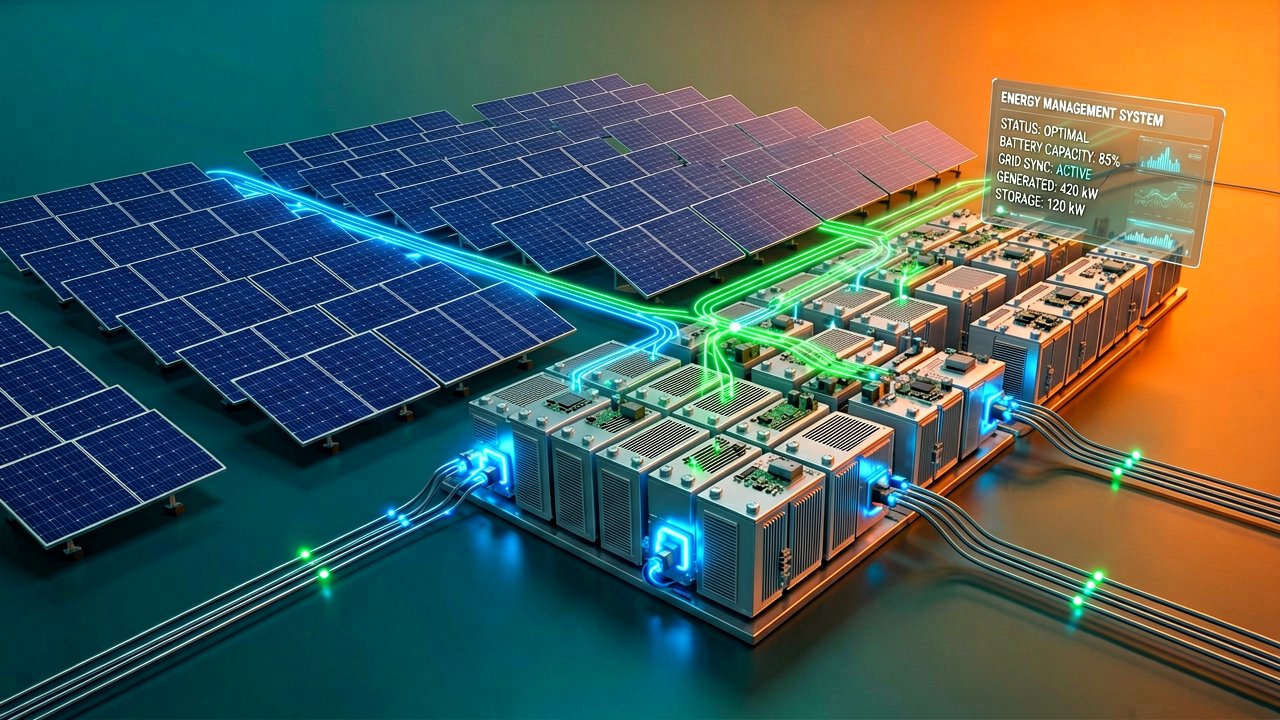
If you thought Australia’s energy transition was moving quickly, New South Wales just shattered the speed limit. The state government has officially opened the floodgates on the grandest procurement round its power grid has ever seen. Framed as a double-barreled policy blitz known as Tender 8 and Tender 9, the state is hunting for 2.5 gigawatts of fresh wind and solar capacity alongside a staggering 12 gigawatt-hours of long-duration energy storage. It is an aggressive, high-stakes infrastructure play explicitly engineered to plug the massive gaps looming on the horizon as the state's remaining coal-fired power stations steadily march toward retirement.
According to updates published by pv magazine Australia, this massive campaign aims to future-proof a grid under immense pressure. State Energy Minister Penny Sharpe didn’t mince words, noting that Tender 8 alone packs enough punch to keep the lights on for about one-third of the homes across New South Wales. But it isn't just about throwing up more solar panels and hoping for the best. Industry insiders know that the real genius—and the real challenge—lies in the underlying mechanics of how these assets will integrate into a highly volatile energy market.
The Dawn of the Solar-Battery Hybrid
The standout feature of this historic rollout is the introduction of a new financial tool designed to change developer behavior. For the first time, New South Wales is offering a specialized Hybrid Generation Long-Term Energy Service Agreement (LTESA). This revenue-support mechanism allows developers to bundle solar or wind infrastructure with co-located battery storage into a single commercial bid. It is a necessary tactical shift. The National Electricity Market is already heavily saturated with midday solar, which frequently tanks wholesale power prices into negative territory. By incentivizing hybrid systems that boast at least four hours of storage capacity, the state is effectively instructing developers to dodge the daytime glut and dispatch their power when demand peaks in the evening.
Chasing the Storage Target
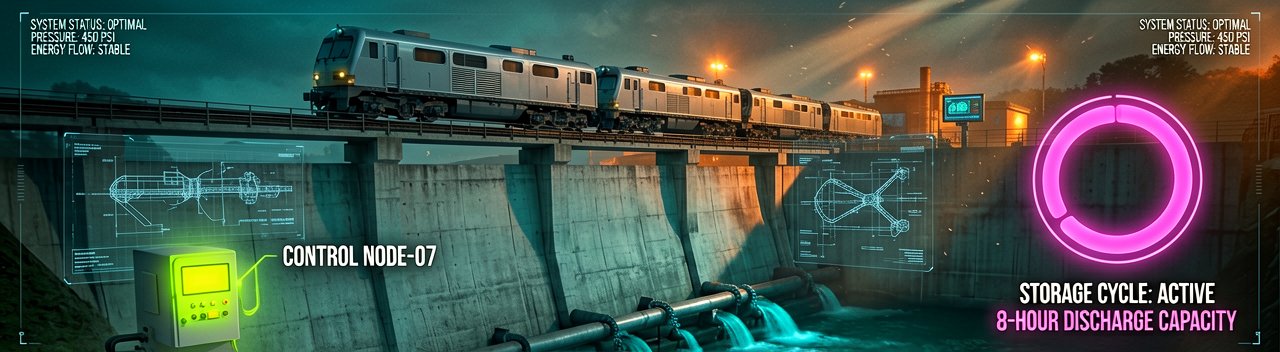
While Tender 8 handles generation, Tender 9 focuses entirely on the muscle needed to back it up. Independent consumer trustee AusEnergy Service Limited is steering the ship, seeking 12 gigawatt-hours of long-duration storage that can continuously discharge electricity for a minimum of eight hours. The mandate welcomes everything from advanced chemical batteries to pumped hydro and compressed air systems. The state is already performing well on its baseline green storage targets, but policymakers aren't resting on their laurels. They are deliberately over-allocating to unlock 50 percent more capacity than their original 2030 benchmarks to insulate consumers from sudden supply crunches.
As detailed by independent energy outlet Renew Economy, the countdown is formally ticking for commercial energy players. Registrations are set to snap shut toward the tail end of next month, leaving proponents with a tight window to finalize their financial models before final bids close in July. With successful projects slated for reveal in late 2026, the transition is no longer a distant line item on a political manifesto. It is a rapidly approaching commercial reality that will fundamentally restructure how the country generates, stores, and prices its electricity.
Deep Dive: Grid Realities and the Investor Gamble
What Most Reports Miss: This colossal tender is less about celebrating a green future and more about managing a looming, industrial-scale anxiety. The engineering reality of the New South Wales grid is reaching a critical inflection point. For decades, massive coal generators provided the synchronous inertia that kept the entire state’s electrical frequency stable. As those physical turbines prepare to spin down for the last time, replacing them requires an unprecedented level of technical precision, not just a raw increase in megawatt capacity. The market has plenty of energy during peak sunlight hours, but it desperately lacks the structural stability needed to survive a dark, still winter evening.
This structural gap explains why institutional investors are viewing the long-duration storage targets with equal parts excitement and caution. Building a massive battery or a pumped hydro facility requires vast upfront capital with a payout timeline that stretches across decades. While the government-backed revenue floor offered by the consumer trustee reduces some market volatility risk, developers still face massive global supply chain constraints. High costs for specialized components and a localized shortage of specialized electrical engineers mean that bidding on these projects is a high-stakes calculus where a minor misstep in inflationary modeling can ruin a project's profitability before ground is even broken.
Simultaneously, the physical architecture of the grid introduces severe geographical hurdles. The prime regions for capturing wind and solar power are often located hundreds of kilometers away from the major industrial and urban load centers of Sydney, Newcastle, and Wollongong. Connecting these remote Renewable Energy Zones to the main network demands massive transmission line expansions that are already facing stiff pushback from regional communities and agricultural landowners. If the state cannot build out these high-voltage pathways fast enough, newly constructed hybrid farms risk being constrained, meaning their clean energy will be trapped in the countryside instead of powering homes.
The state government is betting that this record-breaking tender will create enough scale to iron out these systemic kinks. By packaging generation and storage together, policymakers are attempting to force a rapid evolution in how private capital approaches energy infrastructure. The success of this massive experiment will ultimately be measured by whether it can lower power bills for consumers while maintaining absolute grid reliability during the chaotic final years of the coal era.
The Reality Check: Market Signals and Political Math
Reading Between the Lines: A tender this massive is a double-edged sword that exposes the deep tension between political ambition and market economics. While the government eagerly touts the headline capacity figures, the immediate consequence of dropping 2.5 gigawatts of generation into an already congested grid is a phenomenon known as economic curtailment. In plain terms, during peak production hours, electricity prices frequently plunge into the negative, meaning developers are forced to pay the market to take their power, or simply switch off. The new hybrid subsidies are a desperate attempt to patch this design flaw, but they essentially ask private capital to fix a systemic market failure that the regulators themselves helped create.
There is also a glaring contradiction in the state’s timelines. The government is dangling lucrative long-term contracts to incentivize eight-hour storage systems, yet the physical reality of building pumped hydro or massive chemical battery arrays lags far behind the fast-approaching closure dates of Australia's largest coal plants. Eraring, for instance, has already had its lifespan extended via taxpayer-funded lifelines to prevent blackouts. This creates a perverse game of chicken where the state must pretend the transition is seamless, while simultaneously keeping a checkbook ready to subsidize old, polluting fossil-fuel assets because the shiny new replacements are stuck in the planning and approvals bottleneck.
Furthermore, relying entirely on competitive auctions assumes the supply side of the economy can actually deliver. In a hyper-inflationary global market where every developed nation is competing for the exact same wind turbines, copper wiring, and utility-scale inverters, New South Wales is not bidding in a vacuum. A tender does not magically conjure up the thousands of specialized electrical technicians or the physical shipping containers needed to move components through congested ports. Without a massive, parallel injection of workforce development and regulatory streamlining, these historic procurement rounds risk yielding nothing more than highly ambitious pieces of signed paper.
"Building the green grid of the future is an admirable pursuit, right up until you realize it requires convincing global supply chains, regional farmers, and weather patterns to all cooperate simultaneously. If history is any guide, New South Wales may discover that while it is remarkably easy to legislate a revolution, it is significantly harder to get the physical hardware to show up on time without paying a double premium."
Artūras Malašauskas is an AI Systems Integrator with 20+ years of production-grade web engineering experience. He has designed, shipped, and scaled enterprise Python/PHP systems for logistics, SaaS, and public-sector clients. For the past year, he has focused exclusively on AI integrations: deploying open-source LLMs, building generative media pipelines (image, audio, video), and engineering multi-agent workflows for real production environments. His standard: reproducibility, security, cost-efficient inference—no vaporware. He documents and evaluates emerging AI tooling, separating verified capabilities from marketing noise. Technical editor at: muza-ai.eu, ai-verslas.lt, ai-naujinos.lt Connect on LinkedIn
Comments