The Grand Plan: Germany's Aggressive New Tech Roadmaps Aim to Reclaim Its Industrial Edge

For years, Europe's largest economy has faced uncomfortable questions about its digital future. Critics loved to point out that while Germany could build the world's finest combustion engines, it was falling behind in the software-driven era. The German government just delivered a massive, detailed response to those skeptics. In a coordinated push to accelerate the nationwide High-Tech Agenda Germany, Berlin officially unveiled concrete technology roadmaps targeting six pivotal industries designed to transform raw research into pure economic muscle.
The timing isn't accidental. While the overarching policy framework secured cabinet approval back in July 2025, these newly dropped blueprints provide the actual engineering schematics for implementation. It's a pragmatic shift away from lofty political declarations toward strict, milestone-driven execution. Federal ministers aren't just throwing money at the wall; they're setting hard deadlines that sound surprisingly aggressive for a country traditionally known for its methodical, slow-moving bureaucracy.
Six Pillars to Secure Sovereignty
The newly formalized roadmaps don't try to fix everything at once. Instead, they hyper-focus on six sectors deemed critical for future survival: artificial intelligence, quantum technologies, microelectronics, biotechnology, fusion and climate-neutral energy, and sustainable mobility. By narrowing the scope, Berlin wants to ensure its domestic supply chains can withstand global shocks while building what officials call technological sovereignty. Major state-backed institutions, including Forschungszentrum Jülich, are already deeply embedded in the design process, contributing heavily to chip design architecture and scalable industrial AI application frameworks.
Aggressive Deadlines and the Bureaucracy Problem
What makes this rollout noteworthy is the sheer specificity of its goals. According to details tracked by Xinhua , Germany aims to have at least two error-corrected quantum computers operational by 2030. On the biotech front, the roadmap explicitly targets the domestic approval of its first individually tailored mRNA cancer immunotherapy by 2028. These aren't safe, distant targets; they're right around the corner.
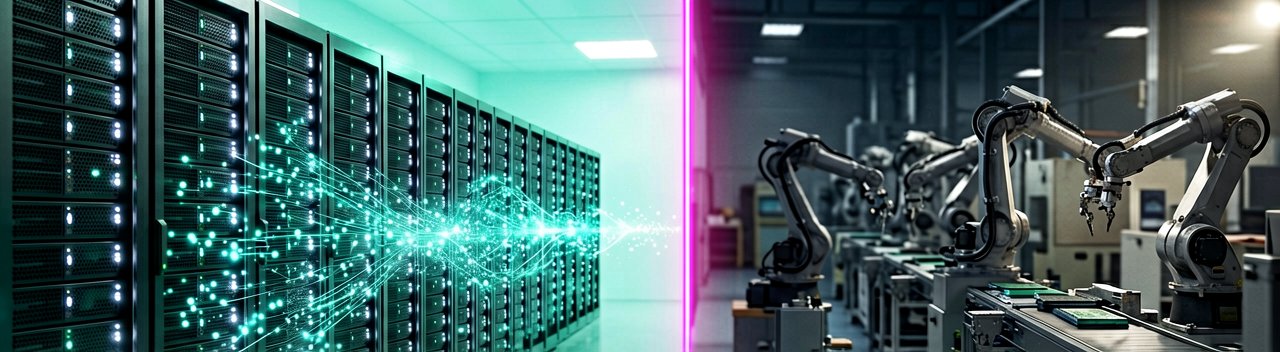
Of course, writing a roadmap is the easy part. The real battle lies in the "how." Recognizing that Germany's notorious red tape has long been a graveyard for local startups, the plan outlines deliberate levers to slash bureaucratic hurdles and radically accelerate the commercialization of lab research. Federal leaders admit that the country needs to translate innovation into industrial strength much faster if it wants to stay competitive against aggressive tech ecosystems in the US and Asia. An online consultation process is already live, inviting industry stakeholders and the public to poke holes in the strategy and refine the execution paths before the concrete fully sets.
What Most Reports Miss: The High-Stakes Gamble Behind Germany's Tech Pivot
Behind the Scenes: While the public presentation of these roadmaps focuses on scientific milestones, industrial insiders acknowledge a much more desperate subtext. Germany is executing a high-stakes pivot away from its historical comfort zone of hardware engineering. For decades, the nation relied on incremental modifications to mechanical systems. This new strategy marks a forceful admission that future industrial dominance belongs entirely to software layers, quantum logic, and genetic code. It is an expensive gamble to prevent the country's economic core from becoming an outdated relic in a hyper-digitized global marketplace.
This massive shift creates a distinct friction between the federal government and Germany's famed Mittelstand—the thousands of small-to-medium-sized family enterprises that form the backbone of the nation's economy. While massive research organizations effortlessly absorb state funding, smaller industrial manufacturers openly worry about being left behind. Industry representatives argue that a quantum computing breakthrough in 2030 does little to solve the immediate talent shortages and high energy costs crushing mid-tier factory floors today. Berlin is attempting to bridge this gap by establishing regional transfer hubs, but matching the fast pace of cutting-edge research with the traditional cycles of family-owned factories remains an uphill battle.
Furthermore, Germany's aggressive push for technological sovereignty is exposing deep geopolitical vulnerabilities within the broader European framework. By funding domestic semiconductor and quantum initiatives, Berlin is prioritizing its own industrial survival, which occasionally ruffles feathers in neighboring Paris and Brussels. Critics suggest that a fragmented, country-by-country approach to advanced tech funding weakens Europe's collective ability to compete effectively against corporate monopolies in the United States and state-backed giants in China. German policymakers counter that a strong industrial core in Berlin is essential to anchor the entire continent's supply chain stability.

The success of this ambitious initiative will ultimately be measured by its ability to break the infamous "German paradox"—the country's long-standing failure to convert world-class academic research into commercial market leaders. MP3 technology was invented in Germany, yet American corporations captured the financial rewards of the digital music boom. By establishing strict, milestone-driven development frameworks and embedding industrial partners early in the scientific process, Germany is trying to rewrite its old innovation playbook. Whether a culture built on methodical perfection can adapt to the rapid, iterative cycles of modern tech commercialization will determine the country's economic standing for the next half-century.
Reading Between the Lines: The Structural Paradox of Top-Down Innovation
Reading Between the Lines: Berlin’s sudden obsession with agility highlights a fundamental contradiction at the heart of Germany’s industrial identity. The federal government is attempting to legislate a culture of rapid innovation, using rigid, bureaucratic frameworks to mandate entrepreneurial risk-taking. There is a deep irony in watching ministries issue highly structured, milestone-driven blueprints designed to foster "disruptive" breakthroughs. True tech disruption is famously chaotic, messy, and unpredictable—traits that do not easily align with a political culture that expects every euro of taxpayer money to be accounted for in a five-year fiscal plan.
This structural rigidity is especially evident in the roadmap for artificial intelligence. Berlin wants to build sovereign AI systems that adhere to the highest standards of European data privacy and ethical compliance. While noble in theory, this approach places German developers on a track where they must comply with dense regulatory hurdles from day one. Meanwhile, their global competitors in freer regulatory environments are training models at breakneck speeds. Germany is essentially trying to win a global drag race while keeping its seatbelt fastened, its speed limiter engaged, and its hazard lights blinking.
The financial math behind these roadmaps also invites a heavy dose of skepticism. While the policy documents list impressive milestones, they are rolling out during a period of intense budgetary constraint and political fragmentation within Germany. State-backed research funding is always the first target when austerity measures hit or coalition governments shift. For these roadmaps to succeed, private venture capital must step in to carry the heaviest financial burdens. However, European venture capital remains notoriously risk-averse compared to the deep pockets of Silicon Valley, meaning many of these heavily subsidized lab concepts risk starving before they ever reach commercial scale.
If these blueprints fail to spark a commercial renaissance, the implications for Germany's economic model are grim. The country cannot sustain its high standard of living by simply remaining the world’s most meticulous supplier of specialized factory valves and luxury car chassis. If the software and quantum layers powering those industries are entirely controlled by foreign entities, Germany risks being downgraded to a mere low-margin assembly line for foreign intellectual property. Berlin’s aggressive timelines are not a sign of immense confidence; they are a direct reflection of a government that knows it has run out of time to fix its digital deficit.
"Germany has finally realized that the future cannot be built entirely out of premium stainless steel and beautifully stamped paperwork. Of course, the real test of these tech roadmaps will be whether a bureaucracy that still occasionally requires a physical fax machine can successfully usher in the era of error-corrected quantum computing."
Artūras Malašauskas is an AI Systems Integrator with 20+ years of production-grade web engineering experience. He has designed, shipped, and scaled enterprise Python/PHP systems for logistics, SaaS, and public-sector clients. For the past year, he has focused exclusively on AI integrations: deploying open-source LLMs, building generative media pipelines (image, audio, video), and engineering multi-agent workflows for real production environments. His standard: reproducibility, security, cost-efficient inference—no vaporware. He documents and evaluates emerging AI tooling, separating verified capabilities from marketing noise. Technical editor at: muza-ai.eu, ai-verslas.lt, ai-naujinos.lt Connect on LinkedIn
Comments