Sui Scraps the Gas Tax: Why Its New Stablecoin Framework Changes the Game
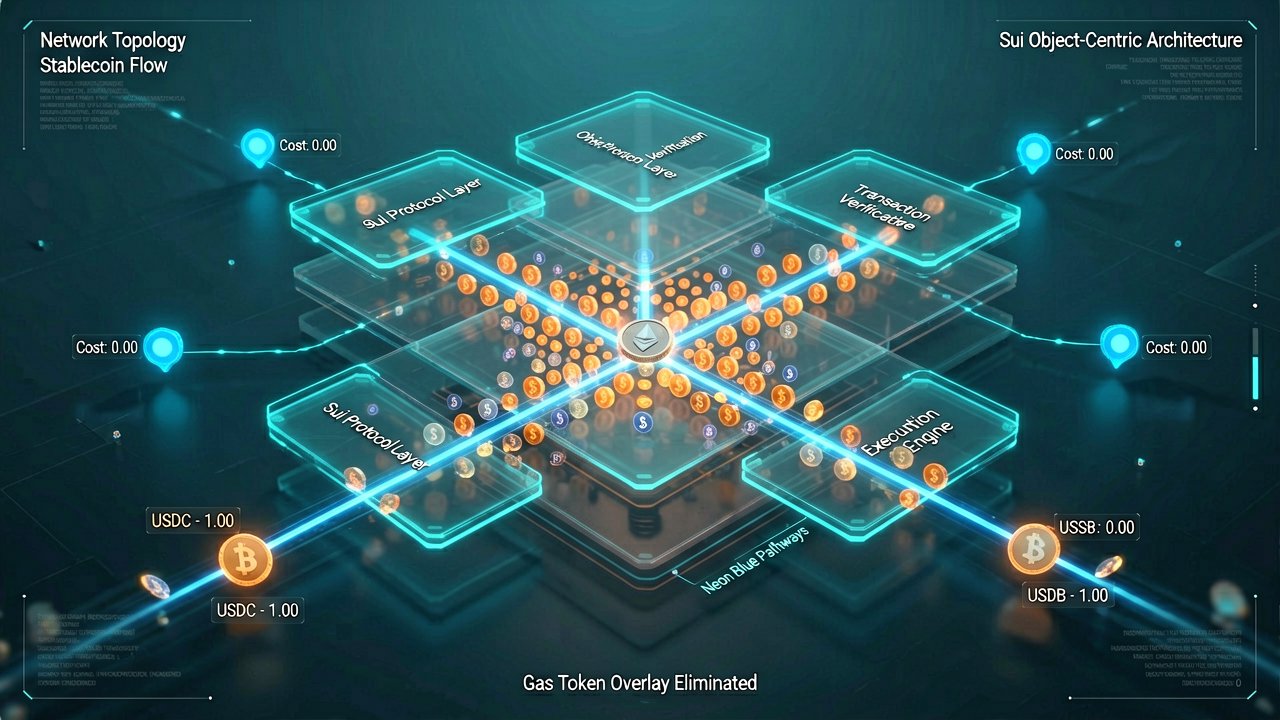
For years, the biggest joke in crypto payments has been the gas token hurdle. Imagine trying to buy a $4 coffee with digital dollars, only to be told you cannot complete the transaction unless you also happen to own a hyper-volatile native blockchain token to cover the network fee. It is a user-experience nightmare that has choked real-world adoption outside of speculative trading circles. Yesterday, Sui officially put a dagger in this archaic design, rolling out native, protocol-level gasless stablecoin transfers that slash transaction fees for supported digital dollars down to exactly $0.00. The infrastructure update is not some temporary promotional stunt or a subsidized marketing campaign; it is a permanent structural rewrite of how assets move across the network, according to details shared by TradingView .
The network is not going at this alone. Enterprise infrastructure giant Fireblocks, which secures massive digital asset transaction pipelines globally, integrated the zero-gas framework directly into its platform ahead of the public launch. Right out of the gate, validators are activating support for a heavyweight lineup of major stablecoins, including USDC, FDUSD, USDB, AUSD, USDY, and native variants like USDsui and suiUSDe. By allowing these fiat-pegged assets to function as entirely standalone payment mechanisms, Sui is effectively positioning itself as the frictionless baseline infrastructure for modern digital commerce, eliminating the operational headaches of treasury management and pre-funded gas wallets entirely.
What Most Reports Miss: The Structural Versus Promotional Shift
Behind the Scenes: While the broader market frequently glazes over tech updates as standard protocol maintenance, what Sui is pulling off here is a fundamental reconfiguration of blockchain tokenomics. In typical decentralized applications, "gasless" features are merely a clever illusion orchestrated by developers who use relayer nodes or abstract account gas-tanks to pay the network fees on behalf of the user. That model is an expensive, centralized band-aid that shifts the financial burden onto the enterprise or application builder. Sui's implementation stands apart because it embeds the exemption directly into the base protocol logic. By utilizing its unique object-centric architecture and horizontal scaling capabilities, the network can process these transactions natively without forcing anyone—neither the sender, the receiver, nor the app developer—to source and risk holding volatile native gas assets just to trigger a transfer.
The Real Target: Enterprise Rails and Autonomous AI Agents
The business case for this architecture extends far beyond saving a retail user a few pennies on a peer-to-peer transaction. Managing digital asset operations at the corporate level introduces an administrative nightmare when accounting teams are forced to track, purchase, and rebalance volatile utility tokens simply to pay for cross-border treasury settlements. Institutional custodians and financial institutions cannot easily scale payment flows when a random spike in network congestion unpredictably alters their operational overhead. By driving transfer costs to zero, Sui eliminates the friction that has historically scared corporate treasuries away from onchain settlement rails. Corporate clients utilizing enterprise platforms can now move digital dollars with the same predictable, fixed-cost structure they expect from legacy payment networks like SEPA or FedNow.
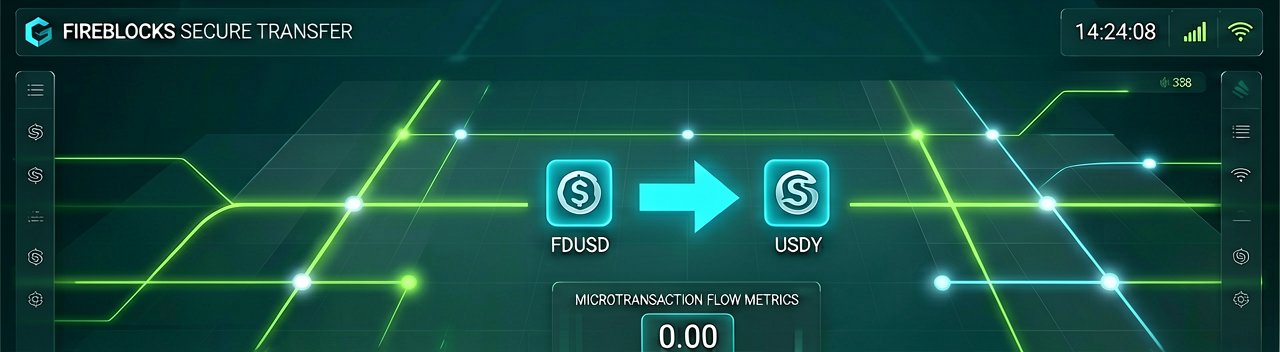
This zero-friction design also unlocks the nascent economy of autonomous AI agents. Unlike human users who might tolerate an occasional step of swapping tokens out of sheer curiosity, programmatic algorithms are entirely rational cost-cutters that will objectively choose the absolute path of least resistance. An autonomous agent tasked with executing micro-payments or handling high-frequency machine-to-machine data marketplaces will naturally migrate to a rail where transaction friction is non-existent. When micropayments are completely unencumbered by base fees, machine-driven commerce becomes viable at a hyper-fractional scale that legacy banking networks simply cannot sustain.
The Race for Global Payments Dominance
This aggressive protocol overhaul arrives at a moment of soaring momentum for the network's financial ecosystem. The platform has already cleared substantial milestones, processing massive stablecoin transfer volumes and drawing significant institutional attention through globally launched exchange-traded products. Yet, the real battlefield remains the multi-trillion-dollar global payments market, where incumbents charge hefty settlement fees and alternate Layer 1 blockchains still grapple with unpredictable fee spikes. By formalizing a protocol architecture where stablecoins move as freely as internet text messages, Sui is actively trying to out-compete alternative chains and legacy payment processing giants simultaneously.
Of course, protocol-level changes do not happen in a vacuum, and the technical documentation notes that during periods of extreme, unprecedented network congestion, validators will prioritize standard fee-paying transactions to maintain network security. However, given the network's inherent capability to scale horizontally by adding validation capacity on demand, the baseline expectation remains clear. If digital dollars are truly destined to replace aging financial rails, the underlying networks must mirror the friction-free internet experiences users take for granted, a shift that starts by permanently separating the concept of stable money from the erratic pricing of underlying blockchain gas tokens.
Reading Between the Lines: The Hidden Costs of Free Transfers
Reading Between the Lines: The tech industry loves the word "free," but seasoned system architects know that computation always carries a cost. While eliminating the gas hurdle for stablecoins removes a massive psychological barrier for the average user, it introduces a delicate game of economic whack-a-mole behind the scenes. In any decentralized system, gas fees exist primarily as a spam-deterrence mechanism. If triggering a transaction costs absolutely nothing, the economic incentive to flood the network with junk traffic drops to zero. Sui’s defense relies heavily on its horizontal scaling and object-oriented architecture to swallow the load, but treating ledger space as an infinite, costless resource risks testing the upper limits of validator hardware and state storage over the long haul.

There is also a glaring structural paradox in making the native gas token optional for the network's most popular use case. Layer 1 blockchains traditionally derive their underlying economic value from the mandatory utility of their native asset; investors buy the token because users must burn it to interact with the ledger. By decoupling stablecoin velocity from native token demand, the network risks hollow growth—hyper-inflated transaction metrics that look phenomenal on a marketing deck but fail to accrue tangible value back to the native token holders who secure the ecosystem. It is a calculated gamble that prioritizes market-share acquisition over immediate tokenomics, betting that the resulting developer lock-in will eventually find other ways to monetize the traffic.
Furthermore, enterprise adoption is rarely just a technical problem; it is a regulatory and psychological one. Corporate treasuries might celebrate the elimination of volatile gas asset management, but compliance departments will still look askance at the underlying public ledger infrastructure. A frictionless payment rail matters very little if a business cannot cleanly navigate the evolving global compliance frameworks surrounding stablecoins and decentralized custody. For all the institutional credibility that a partner like Fireblocks brings to the table, the transition from legacy banking rails to protocol-level zero-gas transfers will likely be bottlenecked not by code, but by the cautious pace of corporate legal teams who view any public blockchain as an inherent operational risk.
"We have finally achieved the holy grail of crypto utility: moving digital dollars across the globe in seconds without needing to buy a speculative utility token first. Now, we just have to hope the validators enjoy processing billions of micro-transactions for the sheer love of the game, or that corporate compliance officers suddenly develop a profound passion for decentralized infrastructure."
Artūras Malašauskas is an AI Systems Integrator with 20+ years of production-grade web engineering experience. He has designed, shipped, and scaled enterprise Python/PHP systems for logistics, SaaS, and public-sector clients. For the past year, he has focused exclusively on AI integrations: deploying open-source LLMs, building generative media pipelines (image, audio, video), and engineering multi-agent workflows for real production environments. His standard: reproducibility, security, cost-efficient inference—no vaporware. He documents and evaluates emerging AI tooling, separating verified capabilities from marketing noise. Technical editor at: muza-ai.eu, ai-verslas.lt, ai-naujinos.lt Connect on LinkedIn
Comments