DataXight Launches protoXell: Bridging the Gap from Massive Perturbation Data to True Biological Mechanism
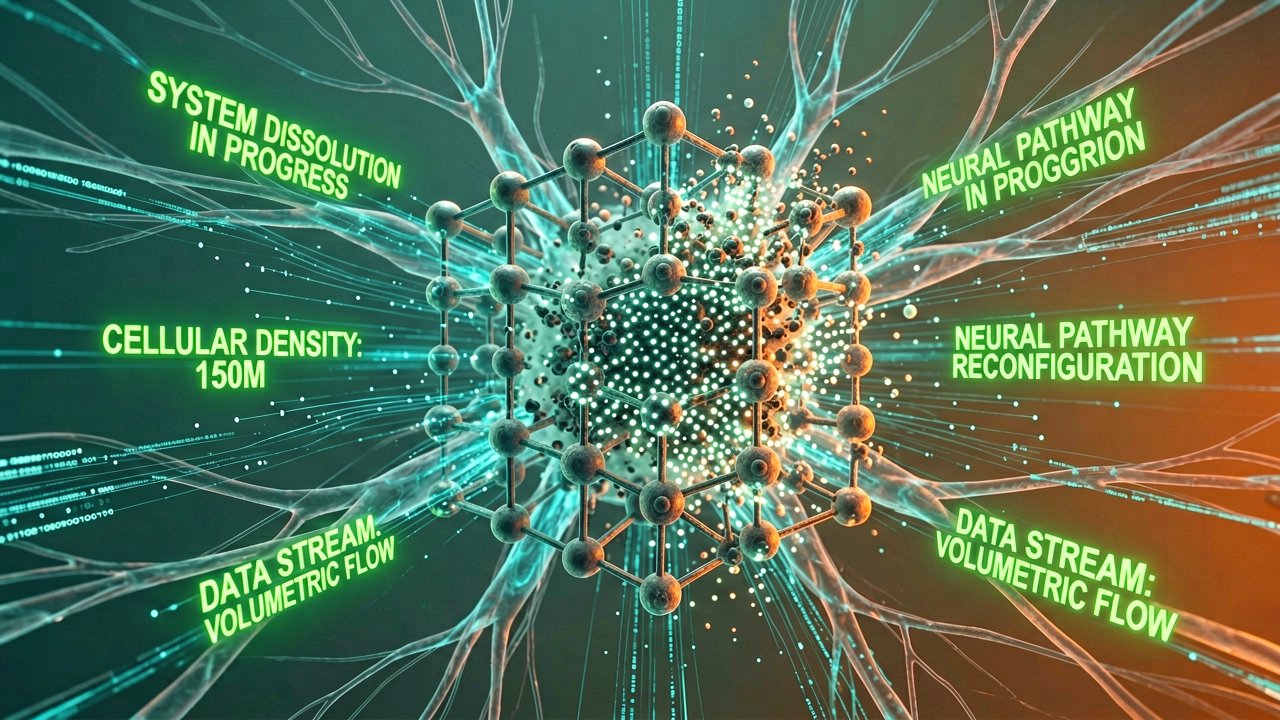
Generating biological data used to be the main bottleneck in drug discovery, but modern single-cell technologies have flipped the script completely. Today, researchers routinely generate massive datasets spanning hundreds of millions of cells, yet extracting actual mechanistic intent from this avalanche of information remains incredibly tedious. Addressing this operational headache, biological software maker DataXight officially launched protoXell on May 19, 2026. The new cell response discovery platform made its formal debut at the Bio-IT World Conference & Expo, targeting the technical friction points that leave high-throughput exploration feeling entirely impractical for all but the most elite computational labs.
According to an announcement syndicated by Yahoo Finance , protoXell acts as a specialized software environment that bypasses conventional, fractured code pipelines in favor of a responsive point-and-click interface. Instead of dedicating months of development time to harmonizing erratic experimental formats, scientists can cross-examine genetic and chemical perturbations natively. For example, noted that protoXell can quickly expose hidden similarities between drugs with radically different classical pharmacologies, such as surfacing unexpected shared transcriptional responses between the HIV protease inhibitor Saquinavir and beta-adrenoceptor agonists. This ability to instantly connect disparate data points simplifies complex mechanism-of-action studies and accelerates drug repurposing efforts.
Unlocking Scale Without Infrastructure Friction
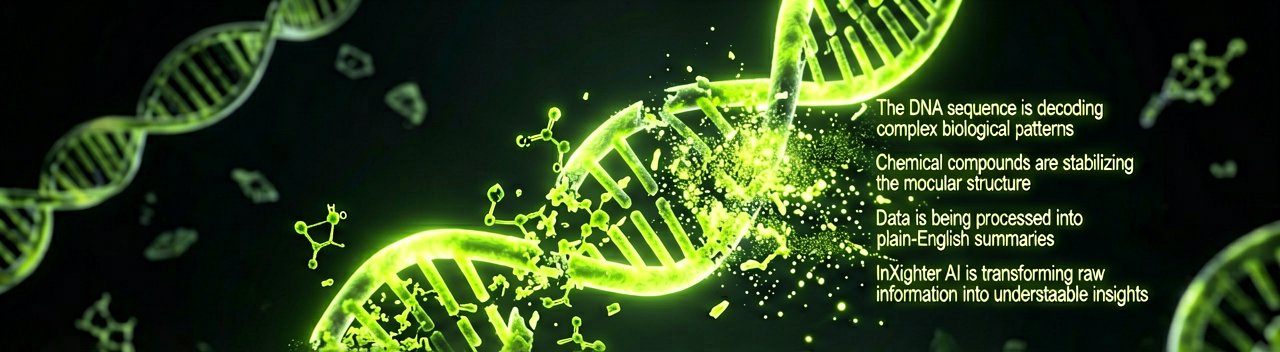
The core engine behind protoXell features a curated catalog holding more than 150 million harmonized single cells across varied tissues, compound classes, and CRISPRi screens. Rather than relying heavily on specialized data engineers to preprocess these vast libraries, drug hunters use built-in comparative analytics to isolate pathway responses across different experimental groups on the fly. Furthermore, the platform integrates a native AI engine called inXighter, which parses the molecular signals generated during digital trials and translates them into plain-English biological summaries linked directly to peer-reviewed scientific literature.
DataXight's platform strategy deliberately cuts out the infrastructure overhead that usually cripples computational biology timelines. As detailed on HPCwire, protoXell supports flexible deployment models, allowing enterprise teams to run the application securely within public cloud environments or inside local, on-premise infrastructure. Looking forward, the company plans to broaden its accessibility by launching directly on the DNAnexus ecosystem in June 2026, offering a friction-free tier alongside traditional commercial licenses to let discovery teams experiment with the tooling before committing to a full deployment.

What Most Reports Miss: The Hidden Architectural Bottleneck of Perturbation Biology
The tech industry frequently hypes AI breakthroughs in protein folding and digital biology, yet the unglamorous reality of data preparation remains the single largest bottleneck in modern therapeutic discovery. High-throughput perturbation screens—where millions of cells are systematically disrupted using CRISPR or diverse chemical compounds—produce raw data that is fundamentally noisy and disparate. For years, computational biology teams have spent upwards of eighty percent of their operational timelines simply normalizing these datasets, correcting for batch effects, and aligning varying experimental formats before a single line of actual discovery code could be executed. protoXell’s primary value proposition isn't just its sleek graphical interface; it is the underlying data harmonization architecture that eliminates this preparatory friction entirely.
Industry insiders note that the traditional, highly centralized approach to bioinformatics has created an accidental gatekeeping effect within major pharmaceutical pipelines. Bench scientists, who possess the deepest qualitative understanding of cellular biology, routinely find themselves waiting weeks for data engineering departments to return custom code scripts just to view basic perturbation responses. By democratizing access to massive single-cell libraries through a code-free platform, DataXight is effectively shifting the analytical gravity back to the domain experts. This decentralization allows wet-lab researchers to pivot their experimental hypotheses in real-time, drastically reducing the traditional months-long feedback loop of target validation.
From an enterprise scalability perspective, the decision to launch protoXell across both public clouds and local infrastructure addresses an increasingly paranoid intellectual property landscape. Pharmaceutical companies are fiercely protective of their proprietary chemical structures and unique CRISPR screen parameters, making fully public cloud-based software architectures a hard sell for legal departments. By offering an on-premise footprint alongside an upcoming DNAnexus deployment, DataXight is playing a sophisticated dual game. They are offering the agility needed by agile biotech startups while meeting the stringent data-sovereignty mandates of massive, established global pharma enterprises.
Historically, drug discovery has relied heavily on broad phenotypic observations, such as watching whether a cell lives or dies when exposed to a specific compound, without fully understanding the underlying molecular cascading events. The sheer scale of protoXell's 150-million-cell database signals an industry-wide transition toward true mechanistic drug hunting. By integrating the inXighter AI engine to tie these digital perturbation trials directly to peer-reviewed scientific literature, the platform prevents researchers from chasing false positives. This systematic anchoring ensures that statistical anomalies in the data are filtered out in favor of robust, reproducible biological mechanisms that can confidently progress into clinical pipelines.
Reading Between the Lines: The Friction Between Automated Synthesis and Biological Chaos
The pharmaceutical industry loves a good technological panacea, and protoXell arrives riding a familiar wave of computational optimism. The promise of utilizing 150 million harmonized single cells to instantly map cellular responses sounds revolutionary on paper, but it subtly downplays the inherently chaotic nature of biological systems. While DataXight’s platform can effortlessly surface unexpected transcriptomic similarities between a protease inhibitor and a beta-adrenoceptor agonist, correlation in a simulated data pipeline does not automatically equate to a viable clinical pathway. The harsh reality is that biological networks are notoriously nonlinear, and historical drug discovery is littered with computational models that looked flawless on a monitor but completely fell apart when introduced to a living, breathing complex organism.
There is also an intriguing operational contradiction embedded within protoXell's democratized, point-and-click design philosophy. By intentionally bypassing conventional code pipelines to allow bench scientists to run high-level comparative analytics, DataXight risks creating a false sense of analytical security. Code-free interfaces often act as black boxes, masking the intricate statistical assumptions, normalization protocols, and filtering thresholds that happen beneath the surface. If wet-lab researchers lack the deep data-science training required to critique these hidden automated parameters, they may inadvertently over-interpret marginal signals, leading to expensive, wild-goose chases in downstream laboratory validation.
Furthermore, relying on the platform's inXighter AI engine to translate complex molecular signals into plain-English summaries introduces a different flavor of technological vulnerability. Generative text models, even when strictly anchored to peer-reviewed scientific literature, remain prone to subtle synthesis errors and confirmation biases. If an AI engine is tasked with finding a biological rationale for a weak data signal, it will almost certainly find a way to stitch together abstract literature references to construct a convincing narrative. Instead of entirely eliminating human bias, these automated summaries might simply wrap computational anomalies in an authoritative, highly persuasive linguistic package.
Ultimately, protoXell's true test will not be its technical elegance or the speed of its interface, but its practical hit rate in moving viable drug candidates into human trials. If DataXight's upcoming DNAnexus integration in June 2026 merely democratizes the generation of interesting academic hypotheses rather than genuinely trimming years off the preclinical timeline, it will eventually be viewed as just another expensive, shiny instrument in the bioinformatics toolbox. Until a drug designed or repurposed via protoXell clears phase-two clinical trials, a healthy dose of skepticism remains the most scientific posture an observer can maintain.
"We seem determined to replace the agonizingly slow pace of traditional laboratory failure with the hyper-efficient, instantaneous generation of computational false positives, proving that while biology remains infinitely complex, our desire to find a software shortcut is equally boundless."
Artūras Malašauskas is an AI Systems Integrator with 20+ years of production-grade web engineering experience. He has designed, shipped, and scaled enterprise Python/PHP systems for logistics, SaaS, and public-sector clients. For the past year, he has focused exclusively on AI integrations: deploying open-source LLMs, building generative media pipelines (image, audio, video), and engineering multi-agent workflows for real production environments. His standard: reproducibility, security, cost-efficient inference—no vaporware. He documents and evaluates emerging AI tooling, separating verified capabilities from marketing noise. Technical editor at: muza-ai.eu, ai-verslas.lt, ai-naujinos.lt Connect on LinkedIn
Comments