The Ghost in the Voting Booth: How Algorithmic Persuasion Quietly Reshaped Modern Politics
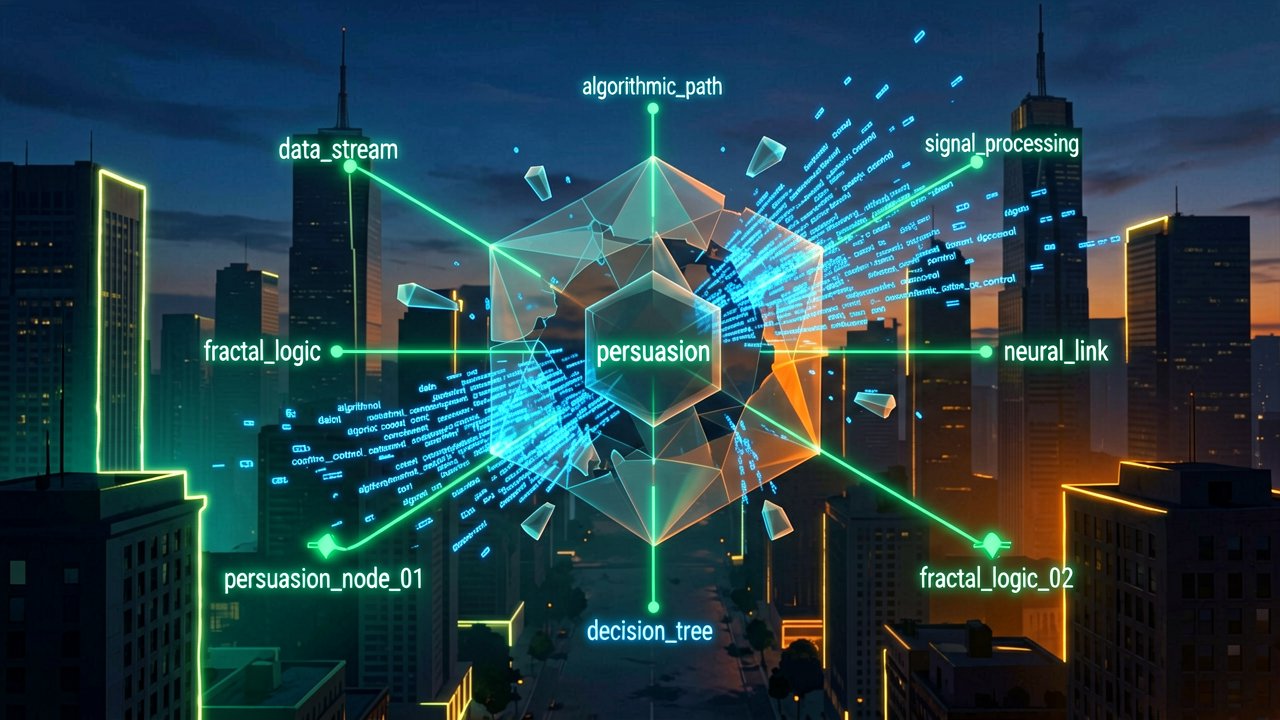
For years, the nightmare scenario peddled by tech pundits was a cinematic explosion of deepfakes—the kind of sudden, catastrophic digital forgery that could topple a frontrunner the night before an election. But reality has proven to be far more subtle, and arguably much more insidious. We are not seeing a sudden collapse of truth; instead, we are witnessing the steady, algorithmic erosion of the political landscape. Generative artificial intelligence has matured from a novelty tool into an industrial-scale engine for political persuasion, changing how campaigns communicate, how dissent is manufactured, and how voters perceive reality itself.
The real shift lies in efficiency and personalization. Rather than relying on a handful of highly polished, expensive television ads, modern political operations use advanced large language models to pump out thousands of variations of targeted text, images, and audio clips. It is a hyper-fragmented approach to influence. As a deep dive by the King's College London highlights, the true power of generative AI in politics is its ability to facilitate persuasion at an industrial scale, generating massive volumes of authoritative-sounding information designed to nudge specific voting demographics without ever triggering traditional regulatory alarm bells.
The Regulation Patchwork
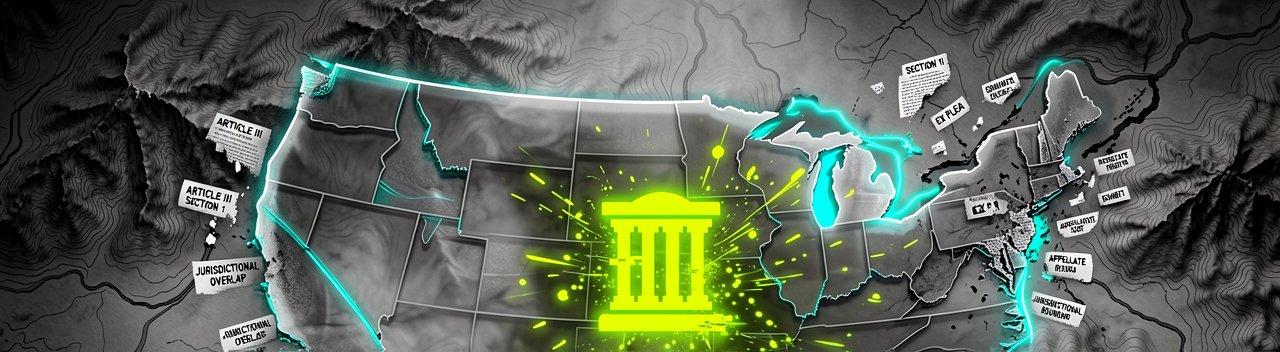
While the technology moves at an exponential pace, the legislative response remains painfully fragmented. In the United States, federal agencies have spent years locked in jurisdictional disputes. This policy vacuum has forced individual states to take matters into their own hands, creating a chaotic regulatory landscape. According to tracking data compiled by the National Conference of State Legislatures, dozens of states have enacted piecemeal laws mandating disclosures for AI-manipulated campaign materials, but these frameworks vary wildly in scope, enforcement, and timing. What is legally permitted in one state during a campaign cycle could fetch a hefty civil penalty just across the state line.
The Illusion of Agreement
Beyond individual ads, the underlying infrastructure of the internet is shifting under the weight of synthetic activity. Automated "astroturfing" campaigns—where networks of AI bots mimic grassroots political movements—can instantly distort public perception on crucial policy issues. When thousands of unique, seemingly human accounts flood a digital forum to support a specific piece of legislation, lawmakers and media outlets take notice. This creates a feedback loop where synthetic consensus drives real-world political decisions. The danger is no longer just about believing a fake video; it is about trusting a democratic process that is increasingly mediated by algorithms designed to maximize engagement over objective truth.
Deep-Dive: The Silent Subversion of the Digital Commons
Beyond the Headlines: The public fixation on deepfakes overlooks a far more potent mutation in algorithmic warfare: the automation of institutional trust. Early political manipulation relied on crude, easily detectable bot farms that repeated identical phrases. Today's political operators deploy LLM-driven personas that maintain distinct backstories, adapt their vocabulary to specific regional dialects, and pivot fluidly mid-conversation. These digital chameleons infiltrate hyper-local community forums, school board groups, and niche hobby networks, building social capital over months before subtly introducing polarizing political narratives.
Veteran campaign strategists privately admit that the target has shifted from mass persuasion to micro-friction. By injecting highly specific, mildly conspiratorial doubts into localized online discourse, campaigns can suppress voter turnout among a rival's base without firing a single public shot. This tactic exploits the psychological phenomenon of social proof. When a user sees three seemingly independent local residents questioning a candidate's record in a neighborhood group, that collective skepticism carries far more weight than an official attack ad broadcast on prime-time television.
The burden of policing this decentralized chaos has fallen squarely on trust and safety teams at major tech platforms, but these departments are fighting a losing battle of economic attrition. While generating millions of lines of convincing political text costs pennies, detecting and verifying the authenticity of that content requires immense computational power and human oversight. Following waves of corporate restructuring across the tech sector, many platforms have scaled back the exact engineering teams tasked with monitoring coordinated inauthentic behavior, leaving the digital perimeter wide open.
Historically, the antidote to political propaganda was investigative journalism, but AI is systematically starving the local news ecosystems that traditionally debunked local disinformation. AI-generated "pink slime" websites—automated platforms designed to look like legitimate local newspapers—now outnumber actual, human-staffed local news outlets in several media markets. These sites automatically scrape real local sports and weather data to build an illusion of community presence, then intersperse that content with highly partisan, AI-generated hit pieces designed to swing local municipal elections.
This dynamic has forced a radical rethink among cybersecurity experts, who now view cognitive security as a branch of national defense. The threat landscape is no longer defined by foreign adversaries hacking into voting machines, but rather by the subtle manipulation of the data streams voters use to comprehend reality. Until the economic incentives of the attention economy are decoupled from automated outrage, the democratic process will remain vulnerable to an invisible, algorithmic veto power that operates entirely in the shadows.
The Paradox of Technical Absolute Power
Reading Between the Lines: The prevailing consensus among tech reformers suggests that the antidote to algorithmic chaos is better technological containment—namely, digital watermarking and cryptographic provenance. But this assumption relies on a fundamental misunderstanding of the modern voter. Proponents of standard frameworks like the Coalition for Content Provenance and Authenticity assume that once a piece of media is flagged as synthetic, the public will rationally discount it. In reality, partisan audiences actively weaponize the ambiguity; a warning label on a piece of damaging political media is frequently interpreted not as a badge of falsehood, but as evidence of institutional censorship by a hostile tech elite.
This creates a bizarre contradiction where the tools designed to restore trust actually accelerate its collapse. When everything can be faked, public figures gain what researchers call the "liar's dividend." Real, verified footage of political corruption or hypocrisy can now be easily dismissed by a politician simply claiming the evidence is an AI-generated deepfake. The defense requires no proof; the mere existence of generative technology provides plausible deniability, allowing bad actors to escape accountability for real-world transgressions by exploiting the ghost of synthetic media.
Furthermore, the rush to deploy automated AI detectors to clean up social feeds has triggered a secondary crisis of false positives. These defensive algorithms routinely flag non-native English speakers or neurodivergent writers whose naturally precise, structured syntax closely mimics the output of large language models. By inadvertently silencing genuine human voices in the name of digital hygiene, platforms risk turning the political internet into a sterile landscape where only the most sophisticated, human-mimicking AI operations possess the agility to bypass automated censors undetected.
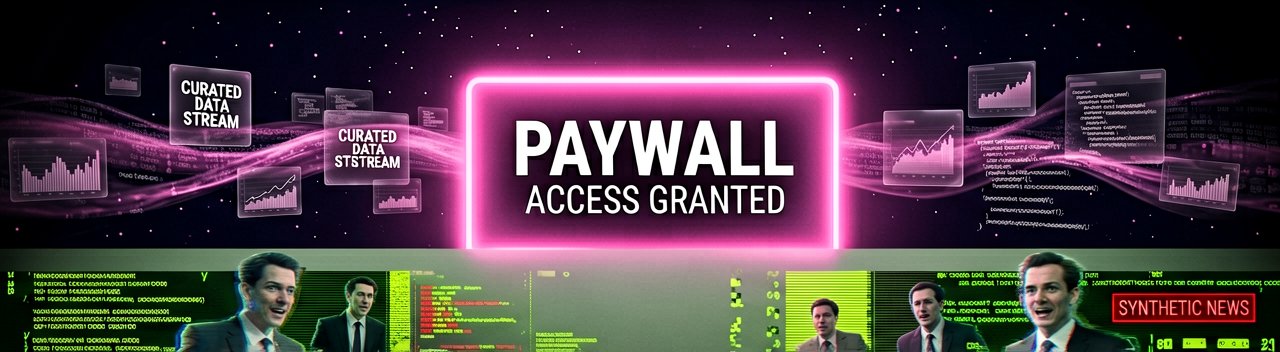
Looking ahead, the long-term implication is a bifurcation of reality based on socioeconomic status rather than ideological leaning. Wealthier, highly educated demographics will increasingly retreat behind expensive, heavily curated, human-verified paywalls to consume their political information. Meanwhile, the broader electorate will be left to navigate a free tier of the internet that is essentially a generative landfill—an unmonitored Wilderness of Mirrors where synthetic news anchors read automated scripts to an audience of simulated accounts, completely severing the connection between democratic debate and objective reality.
"We spent decades worrying that an artificial intelligence might pass the Turing test by successfully convincing a human that it was one of us. It turns out the joke was on us: the real victory for the algorithms was convincing humans to spend their election cycles arguing like poorly programmed bots."
Artūras Malašauskas is an AI Systems Integrator with 20+ years of production-grade web engineering experience. He has designed, shipped, and scaled enterprise Python/PHP systems for logistics, SaaS, and public-sector clients. For the past year, he has focused exclusively on AI integrations: deploying open-source LLMs, building generative media pipelines (image, audio, video), and engineering multi-agent workflows for real production environments. His standard: reproducibility, security, cost-efficient inference—no vaporware. He documents and evaluates emerging AI tooling, separating verified capabilities from marketing noise. Technical editor at: muza-ai.eu, ai-verslas.lt, ai-naujinos.lt Connect on LinkedIn
Comments