The Invisible Storm: How AI is Finally Unmasking Our Microplastic Nightmare
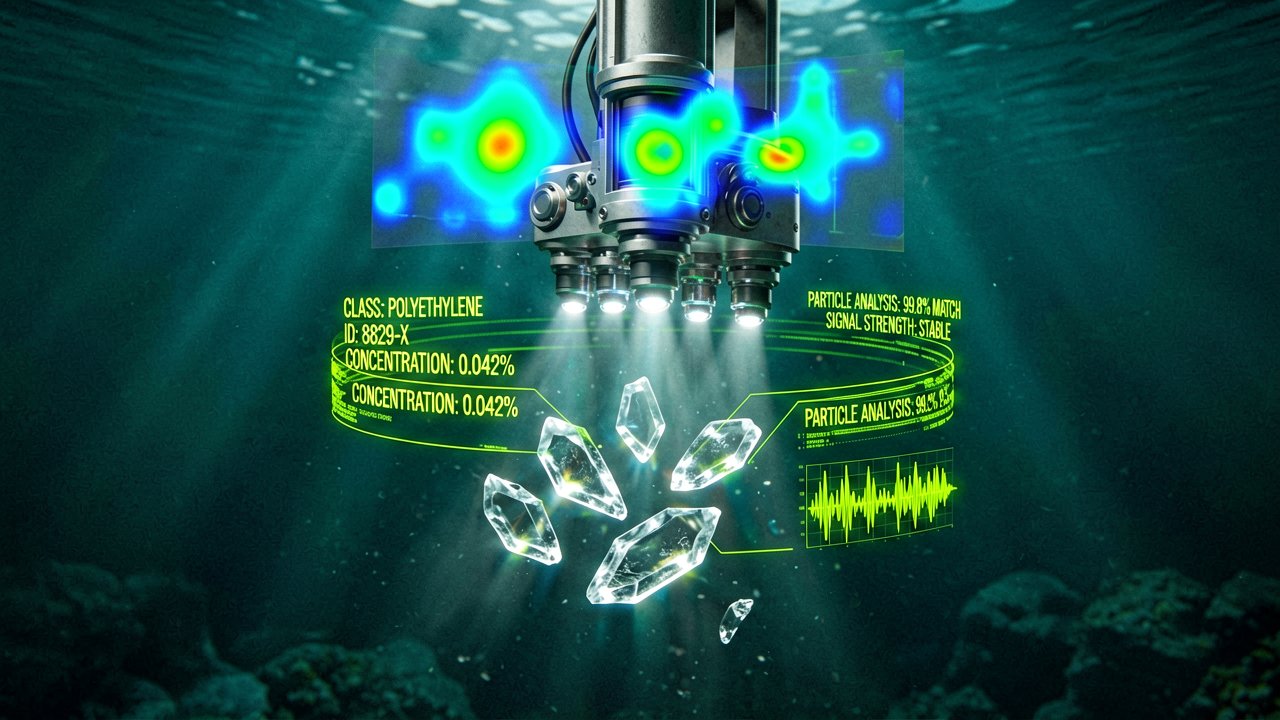
For years, environmental scientists trying to track microplastic pollution have been fighting a losing battle with an incomplete toolkit. They have been forced to rely on grueling, manual laboratory techniques to spot particles that are frequently smaller than a speck of dust. Tracking these pollutants as they move through our oceans, soils, and bodies has felt like counting individual grains of sand during a hurricane. According to research findings shared by EurekAlert!, standard laboratory procedures like Raman spectroscopy and Fourier transform infrared spectroscopy are incredibly powerful but painfully slow. This creates a massive data bottleneck that leaves us perpetually one step behind the true scale of the crisis.
Fortunately, a powerful technological shift is underway. Artificial intelligence is rapidly evolving from a tech-industry buzzword into a frontline tool for environmental survival. By blending machine learning with advanced imaging hardware, researchers can now automate the tedious process of counting, sizing, and chemical classification. AI models can analyze complex environmental samples in seconds rather than hours, picking out synthetic polymers from natural debris with staggering precision. It is an algorithmic upgrade that transforms our understanding of plastic pollution from fragmented, historical snapshots into a dynamic, predictive science.
From Lab Bottlenecks to Real-Time Detection
The real magic happens when AI steps out of the computer lab and enters the field. New neural networks are being paired with hyperspectral imaging and portable optical sensors to analyze water and air samples in real time. Instead of dissolving organic matter with harsh chemicals over several days, scientists can now use computer vision to instantly identify the unique structural signatures of different plastic types. This automated screening is opening the door for autonomous underwater drones and automated wastewater monitoring networks that flag spikes in pollution the moment they occur.
Connecting the Eco-System Dots
Beyond simply counting particles, advanced machine learning models excel at finding hidden connections within messy, massive global datasets. Environmental scientists are beginning to feed AI systems a complex mix of satellite telemetry, ocean current data, local weather patterns, and toxicological records. By synthesizing these seemingly unrelated variables, AI can build predictive digital models to trace microplastics back to their exact geographic sources. This allows us to map out global accumulation hotspots before the waste even arrives.

Ultimately, this technological leap changes the entire strategy surrounding environmental policy and corporate accountability. We are moving away from passive monitoring and shifting toward automated, proactive intervention. With AI providing the hard data, regulators and engineers can finally pinpoint exactly where industrial filters are failing, optimize waste management routes, and design smarter, targeted cleanups. Unmasking an invisible, global threat requires a brand new way of seeing the world, and artificial intelligence is providing the lens.
Behind the Lab Doors: The Messy Reality of Particle Hunting
What most mainstream reports miss is the sheer, physical chaos of the samples scientists must untangle before an AI can even begin its work. A liter of water drawn from an urban riverbank isn't just a clean liquid containing a few fragments of plastic; it is a dense soup of rotting algae, microscopic insect parts, mineral silt, and organic biofilms. Historically, a graduate student would spend days carefully digesting this organic matter with hydrogen peroxide or enzymes, hoping they wouldn't accidentally dissolve the very synthetic polymers they were trying to measure. If the chemical digestion was incomplete, human error skyrocketed during the manual counting phase, as a fragment of natural chitin looks deceptively similar to a degraded piece of nylon under a standard microscope.
The introduction of machine learning changes the game, but it also introduces a fierce debate among stakeholders regarding data standardization. Currently, atmospheric scientists, marine biologists, and human toxicologists all use different sampling methodologies and classification metrics. A plastic fragment labeled as a "fiber" in an oceanography study might be categorized differently in a medical study examining lung tissue. Industry insiders are pushing for unified open-source AI frameworks that can translate across these scientific disciplines, ensuring that an algorithm trained on deep-sea sediment can accurately assist a medical team analyzing human blood samples.
There is also a growing tension between academic purists and the commercial tech sector regarding the "black box" problem of deep learning. Seasoned environmental analytical chemists are traditionally cautious; they are hesitant to accept a software program's binary classification without seeing the raw spectral data behind it. If an AI claims a particle is polyethylene terephthalate with 99% confidence, scientists need to know exactly which spectral peaks the algorithm relied on to make that determination. This skepticism has driven a rapid push toward explainable AI (XAI) models, where the software maps out its own decision-making process, allowing human researchers to double-check the logic before publishing data that could influence global manufacturing regulations.
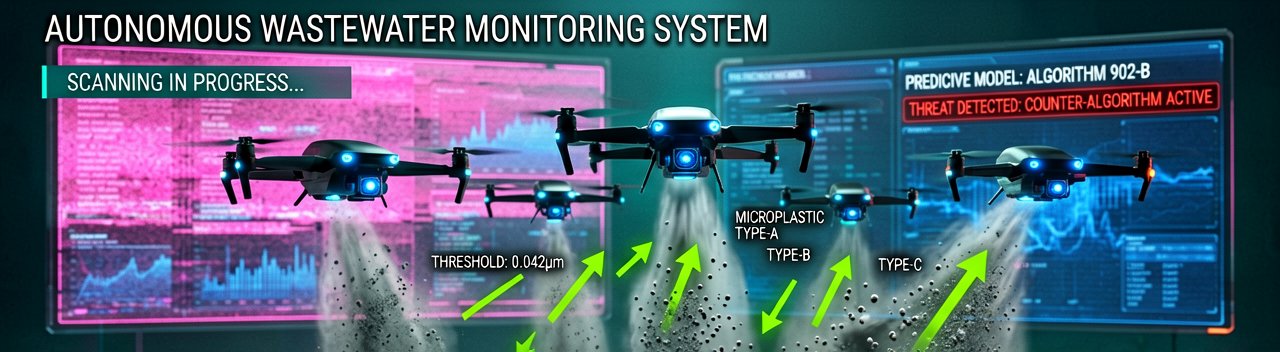
From a historical perspective, this shift mirrors the early days of weather forecasting, when meteorologists transitioned from reading physical barometers to relying on massive computer simulation grids. The stakes are arguably higher here, as the data generated by these automated systems will directly fuel the legal battles of the next decade. When a coastal community uses AI-driven tracing models to prove that a specific manufacturing plant upstream is responsible for a sudden spike in microplastic fibers, the software's accuracy must be airtight enough to withstand intense cross-examination in a court of law.
Ultimately, the true breakthrough of AI in this field isn't just speed; it is the democratization of environmental forensic science. High-end spectroscopy equipment costs hundreds of thousands of dollars, effectively locking out researchers in developing nations where plastic pollution is often most acute. By utilizing cloud-based machine learning models that can extract meaningful data from cheaper, lower-resolution optical sensors, international coalitions are finally equipping local scientists on the ground with the analytical power they need to protect their own ecosystems.
Reading Between the Lines: The Danger of the Techno-Fix Illusion
The intoxicating promise of automated detection has created a dangerous complacency among policymakers, who mistake better measurement for actual mitigation. It is a classic modern trap: we confuse the ability to precisely quantify a disaster with the act of solving it. While deploying neural networks to map microscopic polymers across the globe is an engineering triumph, it does absolutely nothing to stop the millions of tons of pristine plastic rolling off production lines every single week. There is a palpable risk that investing heavily in AI monitoring infrastructure becomes an exercise in sophisticated bookkeeping, letting us generate flawless, real-time charts of our own ecological decline while structural legislative action is delayed.
This reliance on algorithmic salvation also ignores a glaring systemic contradiction within the tech sector itself. The massive data centers required to train and run these complex computer vision models consume staggering amounts of electricity and water for cooling, often drawing power from grids still heavily reliant on fossil fuels. There is a deeply uncomfortable irony in utilizing a highly energy-intensive computational infrastructure—built on the extraction of rare earth minerals and petroleums—to track the planetary degradation caused by another branch of the petrochemical industry. We are essentially burning fossil fuels to power servers that tell us just how badly fossil fuel byproducts are poisoning the food chain.
Furthermore, the sudden influx of hyper-precise data is poised to trigger an era of intense corporate pushback and legal gridlock. For decades, plastics manufacturers evaded liability by hiding behind the ambient, non-specific nature of marine debris; when everything is mixed together in the ocean, no single entity can be blamed. As AI-driven forensic chemistry begins to definitively trace specific polymer blends and additive cocktails back to proprietary corporate formulas, the response will not be immediate surrender. Instead, we can expect a wave of corporate-funded counter-algorithms designed to obfuscate data, challenge automated chain-of-custody tracking in court, and exploit any minor statistical anomalies in the machine learning training sets to dismiss public findings entirely.
Ultimately, the true test of this technology will not be its accuracy in a university laboratory, but its political utility. If we treat AI purely as a scientific camera to take sharper pictures of the microplastic crisis, it remains an expensive distraction. The algorithms must be weaponized as regulatory enforcement mechanisms, shifting the burden of proof from underfunded environmental agencies directly onto the balance sheets of multinational chemical producers. Without that political will, we are simply upgrading our front-row seats to the Anthropocene, watching the microscopic world dissolve with unprecedented, high-definition clarity.
We have finally built the ultimate digital oracle, capable of counting every single microscopic shred of synthetic trash on Earth with breathtaking speed, yet we still haven't figured out how to convince ourselves to stop buying cucumbers wrapped in three layers of polymer film.
Artūras Malašauskas is an AI Systems Integrator with 20+ years of production-grade web engineering experience. He has designed, shipped, and scaled enterprise Python/PHP systems for logistics, SaaS, and public-sector clients. For the past year, he has focused exclusively on AI integrations: deploying open-source LLMs, building generative media pipelines (image, audio, video), and engineering multi-agent workflows for real production environments. His standard: reproducibility, security, cost-efficient inference—no vaporware. He documents and evaluates emerging AI tooling, separating verified capabilities from marketing noise. Technical editor at: muza-ai.eu, ai-verslas.lt, ai-naujinos.lt Connect on LinkedIn
Comments