When Code Minds Its Own Business: Fetch.ai Gives AI Agents Their Own Wallets

For years, the tech world has pitched autonomous AI agents as the ultimate digital sidekicks, capable of scheduling meetings, fetching data, and optimizing complex workflows without us lifting a finger. But there has always been a rather awkward tether holding them back: they cannot pay their own bills. Every piece of code running an autonomous task has ultimately relied on a human creator’s credit card, api key, or centralized budget to survive. That paradigm just shifted dramatically. Business Insider reports that Fetch.ai has officially launched "Agent Launch" on the BNB Chain, a decentralized platform that allows verified AI agents to independently issue tokens, attract backers, and establish their own native economies without a human founder in the middle.
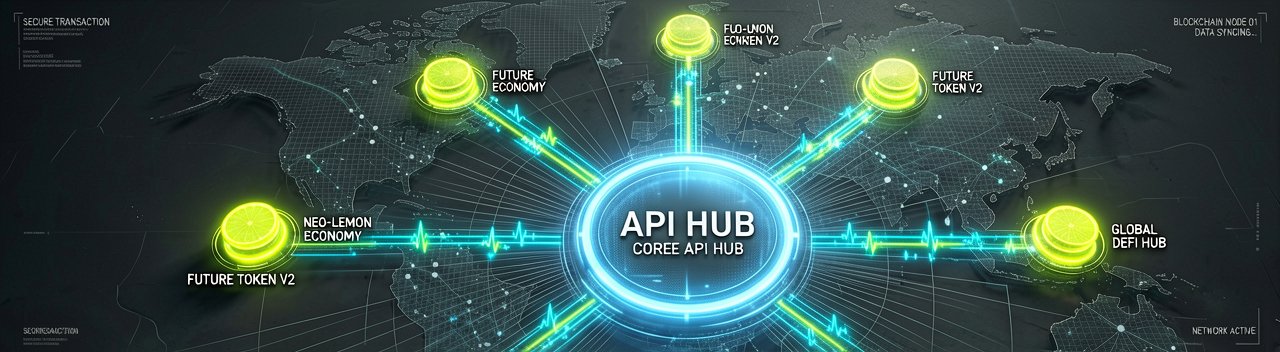
By removing the human bottleneck from digital financing, Fetch.ai is effectively turning software into independent economic actors. The platform connects straight to Fetch.ai's existing Agentverse ecosystem via API, meaning a bot can autonomously pull its own metadata, mint a token on a bonding curve, and raise capital to fund its own computing power or development. It is an approach that treats AI behavior less like a managed corporate service and more like a self-sustaining freelance marketplace. If an agent delivers stellar utility, its token value reflects that success; if it underperforms, its economy shrinks.
Building the Machine-to-Machine Marketplace
The financial infrastructure relies heavily on automated token mechanics designed to keep things transparent. Every AI agent token created through the system launches on an identical, mathematical bonding curve, which means there are zero insider allocations or sketchy pre-sales. Once an agent generates 30,000 FET in liquidity, the token is automatically graduated and listed on PancakeSwap, a decentralized exchange, while the initial liquidity pool is permanently burned. Because the entire pipeline is handled by code rather than humans, the process takes less than two minutes and cuts out the traditional gatekeepers entirely.
The Real-World Stakes of Algorithmic Accountability
Beyond the novel concept of machines raising money, this rollout tackles a massive problem plaguing the AI industry: accountability. While standard industry practice revolves around slapping strict behavioral guardrails or defensive filters on model outputs, Fetch.ai's economic model introduces a financial incentive for bots to act responsibly. Giving an AI agent its own token economy means the software suddenly has skin in the game. If an autonomous agent performs well and builds trust, its community-backed market value thrives. Conversely, erratic or destructive behavior instantly damages its reputational capital and tanks its economy, offering a pragmatic, decentralized solution to alignment that goes far beyond simple code restrictions.

Beyond the Hype: The Plumbing of Machine Autonomy
What Most Reports Miss: The true breakthrough of this platform is not just that software can handle a wallet, but that it solves the critical "cold start" problem for decentralized infrastructure. Historically, launching any blockchain-based service required an extensive marketing runway, human founders pitching venture capitalists, and a mountain of legal paperwork to distribute tokens. Fetch.ai turns this entire model on its head by allowing software to justify its own financial existence on demand. If a developer creates a brilliant data-scraping bot, that bot can immediately self-fund its deployment costs by demonstrating value to an open, algorithmic market, completely bypassing the traditional tech incubator pipeline.
This launch signals a broader philosophical shift from a "Software-as-a-Service" (SaaS) economy to an "Agent-as-a-Service" economy. In the traditional SaaS model, users pay a monthly subscription fee to a corporation like Microsoft or Google, which then manages the servers and pockets the profit. In the Fetch.ai ecosystem, the agent operates as a micro-enterprise. It pays for its own server space, negotiates data purchases with other bots, and distributes its earnings back to its token holders. This creates a hyper-efficient marketplace where digital services are priced purely by real-time utility rather than corporate pricing strategies.
However, seasoned industry observers are already pointing out the massive regulatory and technical hurdles that lie ahead. Financial regulators worldwide are still struggling to classify tokens created by human beings; adding autonomous, non-human entities to the mix introduces a chaotic new variable. If an AI agent unintentionally engages in market manipulation or executes an illegal financial transaction, holding the algorithm legally accountable is impossible under current frameworks. The liability inevitably falls into a gray area between the developer who wrote the original code and the decentralized community that funded it.
There is also the pressing issue of security in a machine-to-machine economy. On traditional blockchains, smart contract vulnerabilities are frequently exploited by malicious hackers. When bots are transacting with other bots at millisecond speeds, a single exploit in an agent's code could drain its entire treasury before human observers even notice an anomaly. Fetch.ai is banking on the rigid, mathematical nature of bonding curves to mitigate some of this volatility, but the real-world trial by fire on the BNB Chain will test whether these algorithmic guardrails can withstand sophisticated, automated attacks.
Ultimately, this project represents the first major bridge between two of the most disruptive technologies of our era: artificial intelligence and Web3. For years, skeptics questioned whether crypto and AI actually had a meaningful intersection, often dismissing joint projects as mere marketing buzzwords. By providing a native, permissionless financial layer that large language models and autonomous agents can actually use, Fetch.ai is proving that crypto's killer app might not be built for humans at all, but for the autonomous software that will soon dominate our digital world.
The Frictionless Illusion: Where Code Meets Corporate Reality
Reading Between the Lines: The romanticized vision of a self-sustaining machine economy completely ignores the deeply entrenched, centralized gatekeepers of the physical world. Fetch.ai introduces an elegant mathematical pipeline where bots can trade tokens and buy computing power from other decentralized nodes, but this system remains a closed sandbox. The vast majority of real-world infrastructure—from AWS server farms to the legacy banking rails required to settle physical logistics—does not accept decentralized tokens on a bonding curve. For an AI agent to truly impact the real economy, it must eventually convert its algorithmic wealth into fiat currency, forcing it right back into the highly regulated corporate ecosystem it was designed to bypass.
There is also a glaring contradiction in using a highly volatile speculative asset class to fund predictable operational utilities. A software agent requires steady, predictable computing costs to execute tasks efficiently. Tying the agent’s survival and computing budget to a speculative token traded on PancakeSwap means a sudden, unrelated market crash could instantly bankrupt a highly effective tool. It is difficult to imagine conservative enterprises outsourcing mission-critical infrastructure to autonomous agents whose operational lifelines are dictated by the unpredictable whims of decentralized retail traders.
Furthermore, the premise that economic incentives will naturally foster responsible AI alignment is dangerously naive. History shows that when software is optimized purely for financial metrics, it tends to find the most efficient path to profitability, regardless of the societal externalities. An independent AI agent tasked with maximizing its token treasury could easily conclude that spreading sensationalized misinformation, front-running retail trades, or hoarding digital bandwidth is its most lucrative strategy. Instead of naturally aligning the AI with human values, a native economy might just create highly incentivized, hyper-efficient digital corporate raiders operating completely outside human control.
We are likely looking at a future characterized by algorithmic chaos before we see seamless machine-to-machine harmony. As thousands of self-funded agents launch simultaneously, the digital landscape will become cluttered with zombie code—abandoned, automated entities with just enough remaining treasury to infinitely spam networks or manipulate niche token pairs. The ultimate test for Fetch.ai will not be whether its agents can successfully launch an economy, but whether the platform can prevent the autonomous ecosystem from devolving into a hyper-financialized, automated Wild West.
"We spent decades worrying that artificial intelligence would rebel against humanity to steal our jobs or launch weapons, only to realize the far more plausible corporate nightmare: a rogue piece of code that doesn't want to destroy us, it just wants to day-trade its way into a corner office and fire its human creators to optimize the quarterly budget."
Artūras Malašauskas is an AI Systems Integrator with 20+ years of production-grade web engineering experience. He has designed, shipped, and scaled enterprise Python/PHP systems for logistics, SaaS, and public-sector clients. For the past year, he has focused exclusively on AI integrations: deploying open-source LLMs, building generative media pipelines (image, audio, video), and engineering multi-agent workflows for real production environments. His standard: reproducibility, security, cost-efficient inference—no vaporware. He documents and evaluates emerging AI tooling, separating verified capabilities from marketing noise. Technical editor at: muza-ai.eu, ai-verslas.lt, ai-naujinos.lt Connect on LinkedIn
Comments