Desert Code and Digital Brains: Inside Arizona State’s Half-Century AI Obsession
Long before Silicon Valley started treating generative models like a newly discovered element, researchers in the Sonoran Desert were quietly laying the bricks for our automated future. Arizona State University did not just stumble into the current hype cycle; they have been actively building toward it for nearly fifty years. While the rest of higher education frequently treats large language models like an existential crisis, ASU treats them like an old friend who finally grew up. It is a persistent, half-century obsession with computing that has evolved from niche logic labs into massive, campus-wide infrastructure.
They are not just playing with the tech; they are scaling it. Looking back at the historical arc reveals that the university’s recent headline-grabbing moves are just the latest chapters of a deeply rooted institutional playbook. From early pioneering work in neurosymbolic reasoning and expert systems to modern, high-stakes collaborations with corporate tech giants, the university has steadily positioned itself as a primary sandbox for digital transformation. This long-term bet on intelligent systems is paying off, transforming the school into a living lab where the line between academic research and commercial deployment is intentionally blurred.
From Logic Labs to OpenAI Partnerships
The groundwork started decades ago, far from the polished corporate interfaces we use today. Early computer science pioneers at the university spent the late 20th century grappling with the core limitations of symbolic computation, trying to teach early machines how to reason through strict logic. It was tedious, unglamorous work, but it fostered a unique campus culture that viewed technology not merely as an administrative aid, but as an active collaborator. Fast forward to the present day, and that foundation has enabled rapid, massive adaptations, such as the university's landmark, first-of-its-kind institutional partnership with ASU News in the generative space.
This integration is explicitly evident in how the university structures its latest academic programs. Rather than confining the technology to the computer science department, they have spread it across disciplines to capture its commercial and structural utility. For instance, the business school launched the Master of Science in Artificial Intelligence in Business, representing the first specialized graduate degree of its kind from an accredited business school in the United States. This cross-pollination ensures that future executives understand the mathematical realities of automated systems, moving far beyond superficial buzzwords.

Deploying the Walled Garden
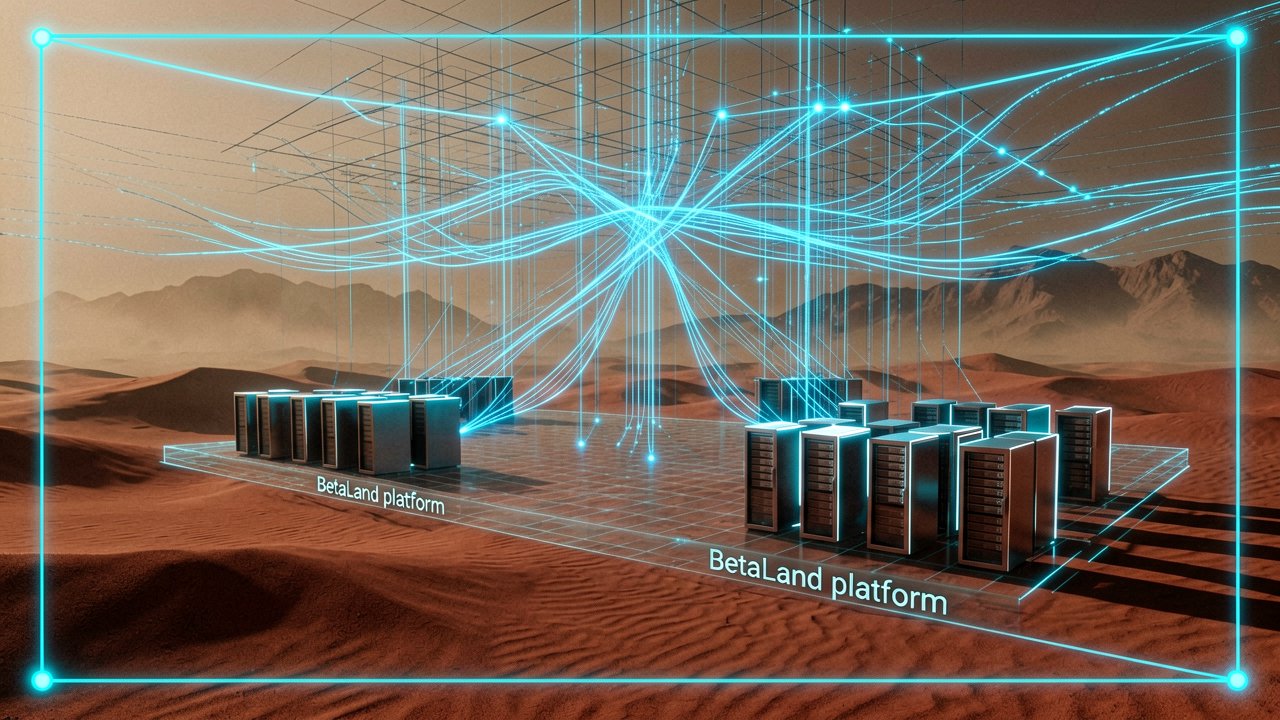
The true measure of the university’s continuous experimentation lies in its internal development strategies, specifically how it builds proprietary environments to test new models safely. Enterprise Technology teams at the university constructed a secure, custom application platform known as BetaLand. This platform acts as a digital walled garden where educators and researchers can build, test, and compare prototype models without exposing sensitive institutional data to external commercial servers. This sandboxed environment allows for rapid prototyping, letting the university safely experiment with advanced chatbots and automated grading tools before deploying them to the wider student population.
By balancing this aggressive deployment with a long-term historical perspective, the university demonstrates that navigating the future of technology requires a deep understanding of its past. The current phase of automation is not a sudden disruption, but rather the continuation of an ongoing, fifty-year evolution. This sustained focus ensures that the institution remains an active participant in shaping technological tools, rather than a passive observer trying to adapt to them after the fact.
Behind the Scenes of the Desert Tech Boom
The acceleration of Arizona State University's digital ecosystem is not an accident of geography, but the result of a deliberate, decades-long administrative pivot. For years, traditional Ivy League institutions viewed computational experimentation through a strictly theoretical lens, isolating complex code within mathematics and engineering departments. Meanwhile, administrators in Tempe realized early on that the true power of automation lay in its mass application across messy, real-world scenarios. This philosophy turned the entire multi-campus system into a massive testbed, long before the phrase "living lab" became a trendy corporate buzzword.
Veteran faculty members recall the skepticism that greeted early attempts to automate student advising and class registration systems in the late 1990s and early 2000s. Critics argued that outsourcing human guidance to rudimentary algorithms would sanitize the university experience and alienate struggling students. However, those early predictive analytics models laid the cultural foundation for the school's current reliance on automated infrastructure. By proving that data-driven systems could actively improve retention rates, the university normalized the presence of advanced computing in daily campus life, setting the stage for more invasive corporate partnerships later on.

This history explains why modern tech giants frequently choose this desert institution over more traditional prestige schools when they need to test enterprise-grade tools at scale. For a corporation looking to stress-test a model, a massive, economically diverse student body of over 140,000 learners provides a far more accurate reflection of the global marketplace than an elite, insular student cohort. The university essentially offers tech companies a massive, built-in demographic sample size, turning academic enrollment into a powerful asset for training and refining modern enterprise models.
However, this aggressive integration has sparked nuanced debates among the university's own researchers regarding the long-term impact on academic freedom and data privacy. Some faculty members quietly express concern that relying heavily on proprietary, closed-source commercial models could eventually bind the university's infrastructure to a handful of private tech monopolies. They point out that when academic institutions rely on commercial APIs for core educational tools, they inherently cede a degree of intellectual autonomy to the corporate boardrooms controlling those algorithms.
To counter these concerns, internal development teams have placed greater emphasis on projects like BetaLand, aiming to maintain a degree of architectural independence. By building internal sandboxes that can swap out underlying commercial engines for open-source alternatives, the university tries to shield its students and proprietary research from corporate data harvesting. This tension between rapid commercial adoption and data sovereignty remains the central, unwritten challenge for the institution's tech architects as they push deeper into the next decade of automation.
The Friction of a Fully Automated Academy
Reading Between the Lines: The university's aggressive push into widespread automation risks confusing sheer deployment velocity with pedagogical success. There is an undeniable irony in a public institution rushing to automate the very human-centric processes—like writing, critical thinking, and student mentorship—that higher education has traditionally claimed to protect. While marketing materials frequently celebrate these deployments as a democratic triumph that frees up human instructors for deeper engagement, the systemic reality on the ground often looks like an exercise in administrative cost-cutting and scale optimization.
This structural push highlights an uncomfortable paradox at the center of the modern university model. Institutions are simultaneously warning students against using automated generation tools to cheat on assignments, while proudly partnering with the very tech conglomerates that profit from building those automated tools. This institutional double standard places educators in the impossible position of acting as automated-use police in the classroom, even as their own department heads are incentivized to integrate commercial language models into the curriculum to prove the school is forward-thinking.
Furthermore, the long-term economic calculation of these private-public partnerships remains highly speculative. Entrusting core educational infrastructure to external tech monopolies creates a dangerous systemic dependency on proprietary systems whose licensing fees can change at corporate whim. If a university bases its administrative workflows, grading assistance, and student outreach on specialized commercial models, it effectively locks its budget into an endless subscription cycle, trading old-school bureaucratic overhead for permanent technological rent.
Ultimately, the true test of this fifty-year computational experiment will not be measured by the number of active enterprise accounts or specialized business degrees launched. The real metrics will emerge from how well the institution can protect the intellectual independence of its researchers when their work is inevitably funded, hosted, and evaluated on corporate servers. As the university enters its next half-century of digital experimentation, the primary challenge shifted from merely making the systems smart to ensuring the institution itself remains something more than a glorified training ground for big tech.
"The ultimate irony of the fully automated campus is that we are spending millions of dollars to teach machines how to think like humans, while simultaneously requiring students to write exactly like machines just to bypass the institutional plagiarism filters."
Artūras Malašauskas is an AI Systems Integrator with 20+ years of production-grade web engineering experience. He has designed, shipped, and scaled enterprise Python/PHP systems for logistics, SaaS, and public-sector clients. For the past year, he has focused exclusively on AI integrations: deploying open-source LLMs, building generative media pipelines (image, audio, video), and engineering multi-agent workflows for real production environments. His standard: reproducibility, security, cost-efficient inference—no vaporware. He documents and evaluates emerging AI tooling, separating verified capabilities from marketing noise. Technical editor at: muza-ai.eu, ai-verslas.lt, ai-naujinos.lt Connect on LinkedIn
Comments