Bridging the Lab Gap: Why QIAGEN’s New AI Assistant Is More Than Just Another Chatbot

The modern laboratory is practically drowning in data, and frankly, keeping track of interconnected workflows is becoming a logistical headache for scientists. QIAGEN wants to fix that. The molecular testing giant has officially rolled out QIA Agent, an AI-powered digital assistant built right into its online platform to connect experiment planning, product discovery, and lab management. Reported by Investing News Network, the tool leverages a natural-language interface to help researchers cut through the digital noise and manage their entire "Sample to Insight" routine without endlessly jumping between disjointed software applications.
What makes this launch notable is how it shifts away from traditional, siloed search tools. Instead of looking up a protocol on one tab and checking product availability on another, researchers can iron out their methodologies directly within a single conversation. It is a smart play by QIAGEN. By embedding a smart layer over its digital ecosystem, the company is aiming to inject some serious efficiency into academic and pharmaceutical R&D spaces, effectively shortening the time it takes to get from a biological sample to an actionable scientific conclusion.
Streamlining Science From Protocol to Purchasing
Under the hood, QIA Agent is engineered to tackle both the scientific and operational sides of running a lab. Users can ask complex questions to get direct, context-aware advice tied back to specific QIAGEN protocols and products. For the 260,000 users already registered on the "My QIAGEN" portal, the experience gets even more personalized. When logged in, the assistant taps into account-specific details, allowing scientists to instantly track orders, view individual pricing, and check local inventory. It is an impressive mix of technical guidance and e-commerce convenience that targets the everyday friction points holding back laboratory productivity.
A Broader Push Into Intelligent Lab Environments
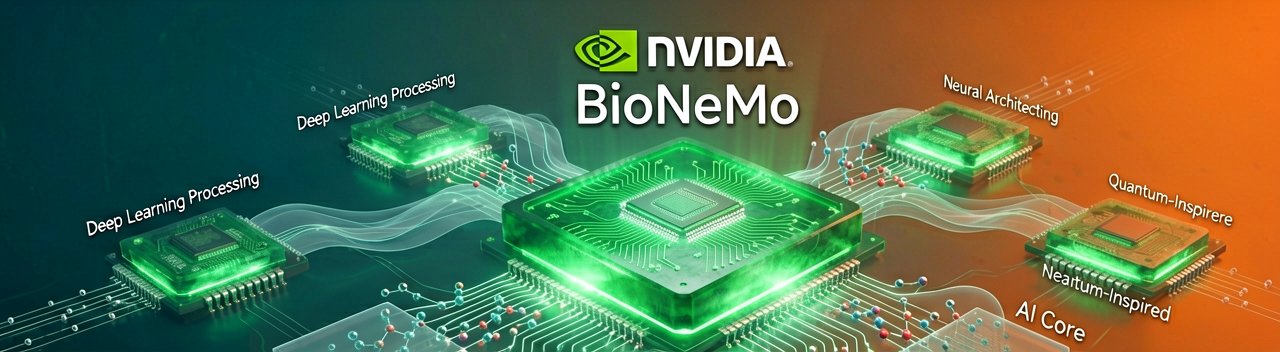
While the assistant represents a big win for web-based convenience, it is only one piece of QIAGEN's current technology roadmap. The company has been aggressively pushing into advanced computation, recently making waves at the 2026 Bio-IT World Conference by announcing a heavyweight partnership with NVIDIA. That separate collaboration integrates accelerated hardware and the NVIDIA BioNeMo platform to supercharge drug discovery through massive, graph-based AI models. Between those high-end bioinformatics pipelines and the practical, everyday utility of QIA Agent, the company is systematically positioning itself as an AI-first partner in the life sciences sector. For now, the new conversational assistant is available globally for research use only, offering a glimpse into a future where lab work feels less like data management and more like actual discovery.

Deep Dive: The AI Stakes in Molecular Diagnostics
Behind the Corporate Press Release: The launch of QIA Agent is not just an incremental web update; it represents a calculated counter-offensive in the highly competitive life sciences supply chain. For years, major biotech players have competed primarily on the biochemical fidelity of their assays and the speed of their sequencing hardware. However, as molecular workflows have grown increasingly complex, the battleground has shifted from the wet lab to the digital user interface. Researchers are no longer just buying reagents; they are investing in entire ecosystems that dictate how efficiently they can run their operations, making digital friction a major point of user churn.
Historically, navigating proprietary scientific databases and procurement portals has been notoriously clunky. A scientist attempting to troubleshoot a degraded RNA extraction protocol would traditionally have to comb through static PDFs, cross-reference product catalogs, and then log into a separate procurement portal to check lead times. By consolidating these steps into a single, context-aware conversational stream, QIAGEN is attempting to lock researchers into its ecosystem early in the experimental design phase. Once a scientist maps out a protocol using the agent, the commercial transition to ordering specific QIAGEN kits becomes the path of least resistance.
This strategy addresses a growing pain point among lab managers who face tightening R&D budgets and persistent labor shortages. Training junior technicians on hyper-specific protocols represents a massive time sink for principal investigators. An AI assistant that acts as an on-demand, specialized technical support representative lowers the barrier to entry for complex workflows. Furthermore, by integrating account-specific pricing and localized inventory data, the tool removes the administrative bureaucracy that frequently stalls critical research timelines.
However, the real value proposition for QIAGEN lies in the massive influx of behavioral data this tool will generate. Every query entered into the interface provides a real-time window into current research trends, emerging technical bottlenecks, and purchasing intent long before an order is placed. If hundreds of labs suddenly query the agent about specific modifications to a viral extraction protocol, QIAGEN gains immediate, actionable market intelligence. This allows the company to optimize its supply chain, adjust production schedules, and tailor its future product development to match actual market demand well ahead of its competitors.
There are, of course, broader industry anxieties regarding the deployment of generative AI in regulated scientific environments. While QIA Agent is currently restricted to research use only, the long-term vision for these technologies inevitably inches toward clinical diagnostics. In those high-stakes settings, the risk of AI hallucinations or slightly inaccurate protocol interpretations carries severe consequences. QIAGEN has mitigated this by anchoring the assistant’s knowledge base strictly within its own verified documentation, but maintaining absolute data accuracy while scaling the tool's capabilities will remain a critical tightrope walk for the company’s engineering teams.
The Friction Between Automation and Accuracy
Reading Between the Lines: The tech sector’s current obsession with conversational interfaces has officially infected the life sciences, but treating a molecular biology lab like a customer service desk comes with inherent contradictions. QIAGEN’s framing of QIA Agent as a seamless bridge across the "Sample to Insight" workflow assumes that scientists actually want to talk to their software. In reality, the primary metric for lab productivity is reproducibility, not conversational flair. While a natural-language assistant sounds progressive, seasoned researchers are historically protective of their precise methodologies and may view a chat interface as an unnecessary layer of abstraction over raw, verifiable documentation.
There is also a palpable tension between the open-ended nature of generative AI and the rigid, zero-tolerance environment of molecular diagnostics. QIAGEN asserts that the agent is tightly anchored to its proprietary databases, presumably to eliminate the "hallucinations" that plague broader commercial language models. Yet, the tech industry has repeatedly demonstrated that contextual constraints are not foolproof. If an AI erroneously suggests a slight variation in a wash step or misinterprets a reagent compatibility matrix, the result isn't just a broken webpage—it is thousands of dollars in ruined biological samples and weeks of wasted laboratory labor.
Furthermore, the heavy emphasis on combining technical guidance with instant e-commerce purchasing exposes the true corporate motive behind the deployment. QIA Agent is, at its core, a highly sophisticated upselling engine disguised as a digital lab assistant. By making it incredibly simple to check account-specific pricing and local inventory within the troubleshooting flow, QIAGEN is banking on behavioral inertia. The tool creates a closed loop where the solution to every scientific bottleneck happens to be a proprietary QIAGEN product, raising valid questions about whether the advice offered will always be in the best interest of the science, or merely the best interest of the quarterly sales target.
Ultimately, the long-term success of this initiative will not be measured by how many of the 260,000 "My QIAGEN" users click on the chat bubble, but by whether it genuinely reduces the operational overhead of modern science. If the assistant merely acts as a glorified search bar for existing PDFs, users will quickly abandon it. However, if it successfully anticipates supply chain shortages and catches protocol errors before pipettes touch liquid, it could set a new baseline for digital laboratory ecosystems. Until then, the scientific community is likely to maintain its trademark skepticism, treating the AI as an unproven lab tech who speaks confidently but still needs to earn their keep at the bench.
"We are rapidly approaching a future where a scientist can design an entire genetic sequencing experiment through a casual chat window, which is incredibly liberating—right up until the moment you realize your digital lab assistant has the same confident smile whether it is saving your project or accidentally ordering five thousand dollars worth of the wrong wash buffer."
Artūras Malašauskas is an AI Systems Integrator with 20+ years of production-grade web engineering experience. He has designed, shipped, and scaled enterprise Python/PHP systems for logistics, SaaS, and public-sector clients. For the past year, he has focused exclusively on AI integrations: deploying open-source LLMs, building generative media pipelines (image, audio, video), and engineering multi-agent workflows for real production environments. His standard: reproducibility, security, cost-efficient inference—no vaporware. He documents and evaluates emerging AI tooling, separating verified capabilities from marketing noise. Technical editor at: muza-ai.eu, ai-verslas.lt, ai-naujinos.lt Connect on LinkedIn
Comments