Silicon in the Soil: Why AI’s Future is Being Plowed into Modern Fields
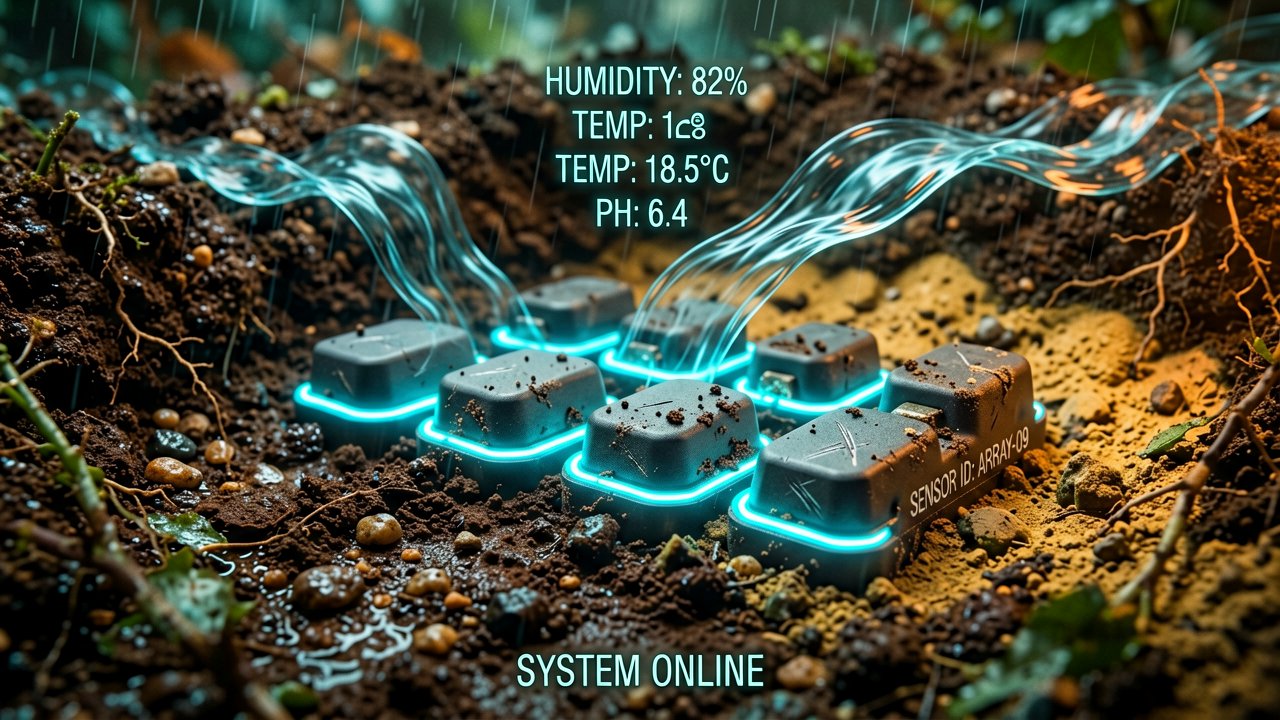
For decades, tech journalists have watched Silicon Valley try to disrupt every conceivable corner of human life, often fixing things that weren't broken. But when you look at modern agriculture, the narrative flips completely. Farmers aren't looking for trendy gimmicks; they're staring down a brutal cocktail of shrinking labor pools, chaotic weather patterns, and razor-thin profit margins. It's exactly why artificial intelligence is quietly transitioning from an expensive luxury into an absolute necessity for survival on the modern farm.
Forget the sci-fi tropes of autonomous androids driving tractors. The real agricultural AI revolution is happening at the microscopic and algorithmic level. Today, we're seeing specialized machine learning systems processing massive, multi-source datasets from soil sensors, satellites, and drones to optimize operations in real time. According to data published by the , these tailored AI solutions are directly tackling workforce shortages by automating repetitive, manual tasks, freeing up growers to focus their energy on high-value operational decisions.
Precision on the Micro-Scale
The old way of farming treated entire fields as single units, drowning acres in identical amounts of water and chemical inputs. AI changes the math entirely by introducing "per-plant" management. Deep learning models can now identify specific weed species and pinpoint fungal infections before they visibly destroy a crop. In fact, comprehensive field studies published via IEEE Xplore reveal that AI-driven precision agriculture can slash pesticide usage by up to 50% while simultaneously boosting overall crop yields by 15% to 30%. It turns out that when you only spray the weeds instead of the entire field, everyone wins—except the chemical companies.
The ROI Reality Check
Of course, farmers are notoriously pragmatic businesspeople, and they have every right to be skeptical of tech industry hype cycles. High upfront costs and rural connectivity dead zones remain very real friction points. However, the financial equation is shifting rapidly as cloud computing and edge-AI hardware costs continue to plummet. The economic impact is no longer theoretical, with insights from the World Economic Forum indicating that AI-amplified digital agriculture could boost the agricultural GDP of low- and middle-income nations by over $450 billion annually. AI isn't going to replace the generational wisdom of an experienced grower, but it's quickly becoming the most powerful tool in their arsenal.
Behind the Scenes: The Invisible Friction in the Smart Field
While the tech sector loves to celebrate the seamless integration of algorithms and agriculture, seasoned farm operators are dealing with a messy reality on the ground. The transition to artificial intelligence isn’t just about buying a new piece of software; it requires a radical overhaul of generational farm habits. For decades, farming relied on intuition, physical touch, and localized weather lore. Forcing a multi-generational farming family to hand over critical irrigation or fertilization decisions to a black-box machine learning model creates an immense psychological and cultural hurdle that Silicon Valley often underestimates.
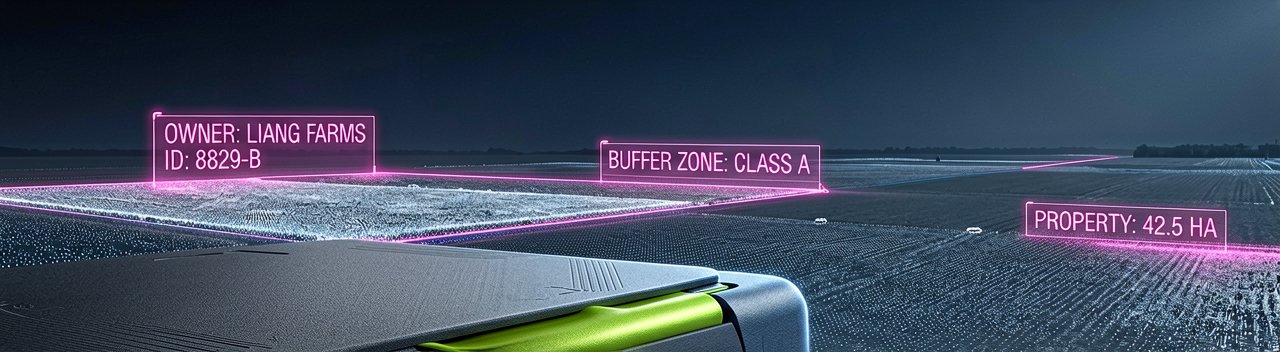
Data ownership has emerged as the quietest battlefield in rural communities today. When an AI-powered tractor sweeps across a field, it isn’t just harvesting grain—it is harvesting proprietary agronomic data. Agronomists and independent farmers are increasingly vocal about who actually owns this hyper-local information. If a machinery manufacturer uses a farmer's field telemetry to train their proprietary AI models, should that farmer pay a premium to access the resulting insights? This tension has sparked a quiet but fierce pushback, fueling right-to-repair movements and demanding transparent data governance policies.
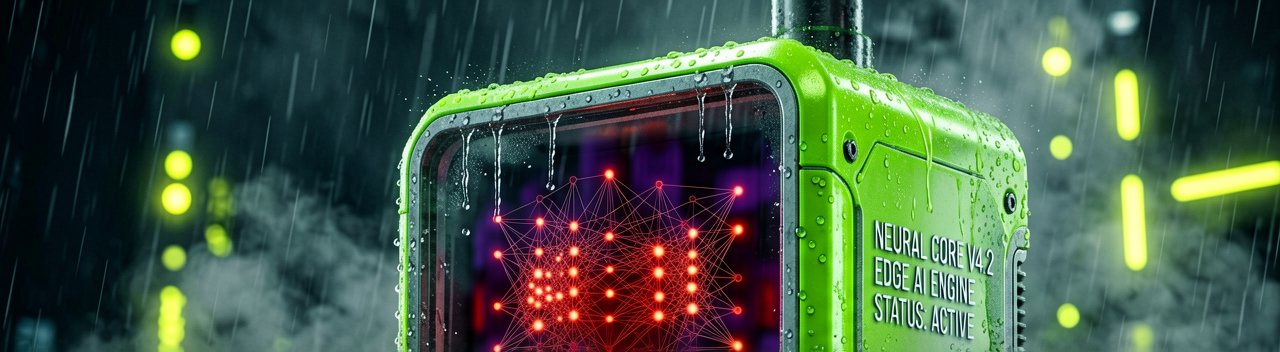
The hardware itself faces environmental challenges that don't exist in a pristine climate-controlled server farm. Delicate optical sensors, advanced LiDAR systems, and edge-computing units must endure corrosive fertilizer dust, extreme vibration from heavy machinery, torrential rains, and sub-zero winters. A sensor failure during a critical three-day harvest window can cost a grower hundreds of thousands of dollars. Consequently, equipment manufacturers are finding that ruggedizing the physical housing of AI components is just as complex and expensive as writing the neural network code itself.
From a macroeconomic perspective, there is a growing disparity between massive corporate agribusinesses and independent family farms regarding tech adoption. Industrial operations can easily absorb the multi-million dollar capital expenditure required to deploy a fleet of AI-driven autonomous implements and drone networks. Smaller operations, however, risk being priced out of these efficiency gains, which could accelerate the consolidation of independent farmland into corporate hands. The true test of agricultural AI will not be its peak capabilities on a heavily subsidized pilot farm, but its accessibility and financial viability for the average grower trying to break even.
Reading Between the Lines: The Automation Paradox
The tech industry frequently pitches agricultural AI as a silver bullet for sustainability, arguing that hyper-precise chemical application protects local ecosystems. Yet, a glaring contradiction lies at the heart of this narrative. By slashing the per-acre cost of pesticide and herbicide application through targeted automation, AI may actually incentivize farmers to maintain intensive monoculture farming systems rather than transitioning to more ecologically diverse crop rotations. Technology designed to minimize chemical dependency could inadvertently end up subsidizing and prolonged the lifespan of industrialized, chemical-heavy farming models.
Furthermore, the promise of AI solving the agricultural labor crisis is built on a fundamental misunderstanding of rural demographics. While autonomous weeders and robotic harvesters reduce the need for seasonal field hands, they simultaneously create a desperate demand for highly specialized labor that simply does not exist in rural communities. A farm cannot easily replace a crew of fruit pickers with a robotic system if there is no local robotic technician available within a three-hour radius to fix a software glitch during a harvest crunch. This shift doesn't eliminate labor dependency; it merely swaps a low-cost, flexible workforce for an incredibly scarce, expensive technical elite.
There is also an unsettling irony in relying on predictive AI models during an era of unprecedented climate volatility. Machine learning relies heavily on historical data to predict future outcomes, from rainfall patterns to pest migrations. However, as shifting global weather systems render historical meteorological baselines obsolete, these algorithms are increasingly forced to operate in unprecedented territory. Relying too heavily on a predictive model that assumes the next decade will look like the last one introduces a systemic vulnerability that could lead to catastrophic crop failures if the math misses a single black swan weather event.
"Ultimately, Silicon Valley is learning that the earth doesn't care about your software update schedule. You can build the most sophisticated neural network on the planet, but if a rogue thunderstorm turns a field into three feet of thick mud, your million-dollar autonomous rover becomes nothing more than a very shiny, incredibly expensive lawn ornament."
Artūras Malašauskas is an AI Systems Integrator with 20+ years of production-grade web engineering experience. He has designed, shipped, and scaled enterprise Python/PHP systems for logistics, SaaS, and public-sector clients. For the past year, he has focused exclusively on AI integrations: deploying open-source LLMs, building generative media pipelines (image, audio, video), and engineering multi-agent workflows for real production environments. His standard: reproducibility, security, cost-efficient inference—no vaporware. He documents and evaluates emerging AI tooling, separating verified capabilities from marketing noise. Technical editor at: muza-ai.eu, ai-verslas.lt, ai-naujinos.lt Connect on LinkedIn
Comments