Beyond the Average: How AI is Quietly Rewriting the Rules of Special Education
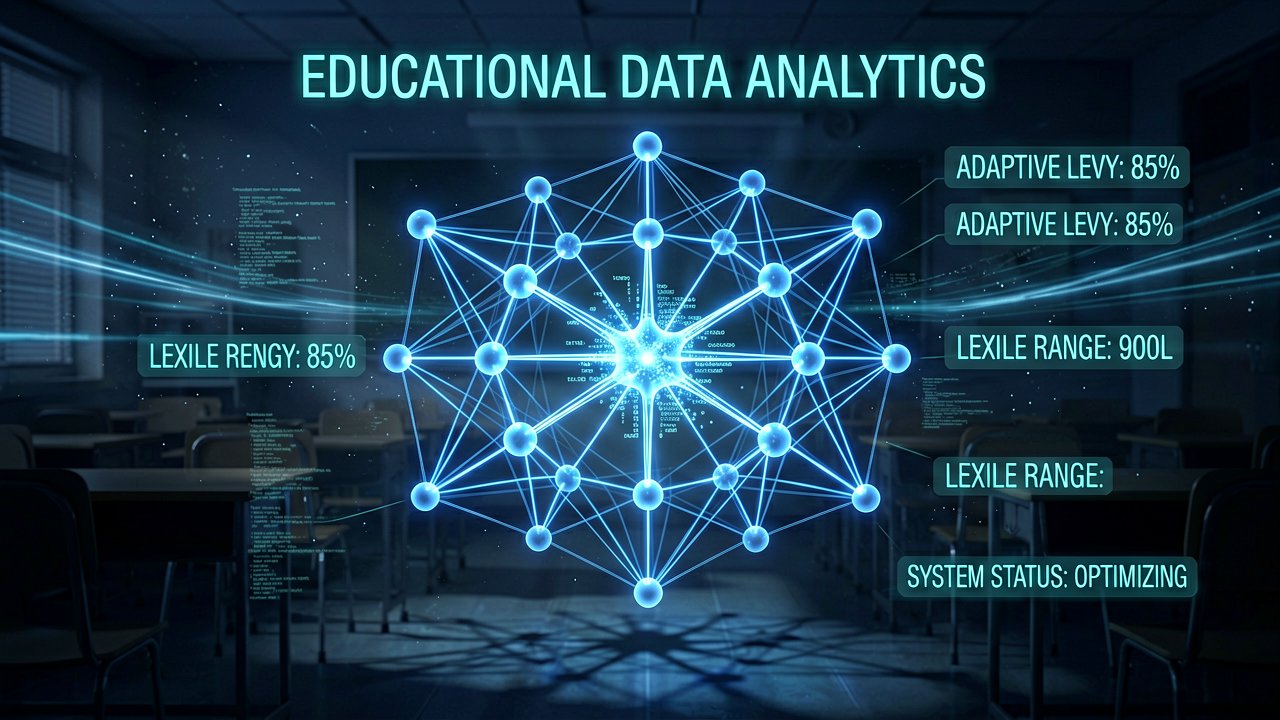
For decades, the holy grail of special education has been the truly individualized education program—the IEP. It is a beautiful concept on paper, but a logistical nightmare in a real-world classroom. Teachers routinely drown in compliance paperwork, struggling to split their attention between twenty different learning profiles at once. Enter artificial intelligence. While the tech world bickers over chatbots and deepfakes, a quieter, far more consequential revolution is unfolding in classrooms where learning looks a little different. AI isn't replacing teachers here; it is acting as a highly specialized cognitive exoskeleton, turning universal design for learning from a theoretical ideal into a daily reality.
The magic lies in automated, real-time adaptation. Traditional assistive tech was rigid—a screen reader just read text, and a speech-to-text tool just transcribed words. AI-driven platforms, however, adapt to the student's shifting frustration levels. If a neurodivergent student struggles with a dense history passage, an AI tool can instantly adjust the lexile reading level, swap out abstract metaphors for concrete examples, or generate a visual storyboard on the fly—all without altering the core curriculum or drawing embarrassing attention to the student's struggles. By analyzing subtle patterns in how a child interacts with software, these systems catch learning gaps before they trigger a behavioral meltdown.
The Administrative Lifeline
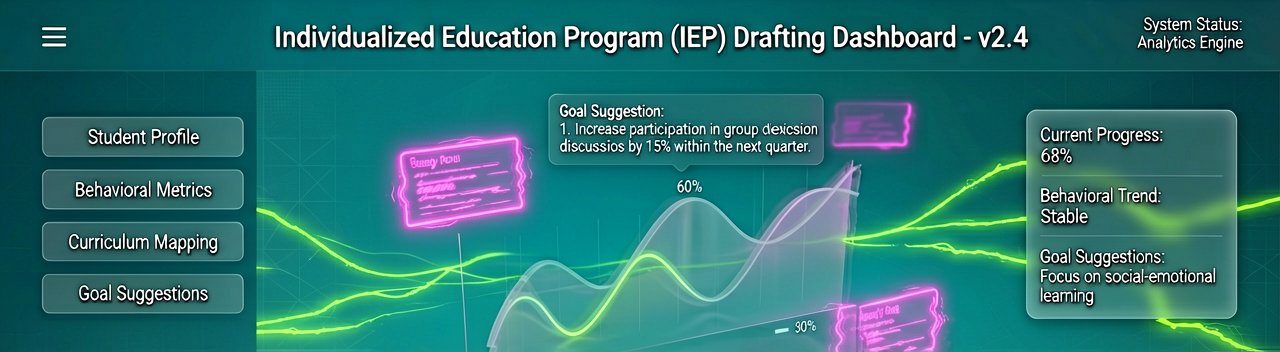
Ask any special education teacher about their biggest professional hurdle, and they will tell you it isn't the students—it is the administrative crushing weight. Writing an effective IEP requires synthesizing months of behavioral data, test scores, and specialist reports. It is tedious, exhausting work that keeps educators staring at screens instead of interacting with children. Researchers writing for the Frontiers in Education portal have highlighted how AI-assisted tools can analyze student performance metrics to draft foundational IEP goals and suggest targeted pedagogical interventions. This shifts the teacher's role from a burnt-out data entry clerk to an expert editor, freeing up hundreds of hours for direct human connection.
Breaking Communication Barriers
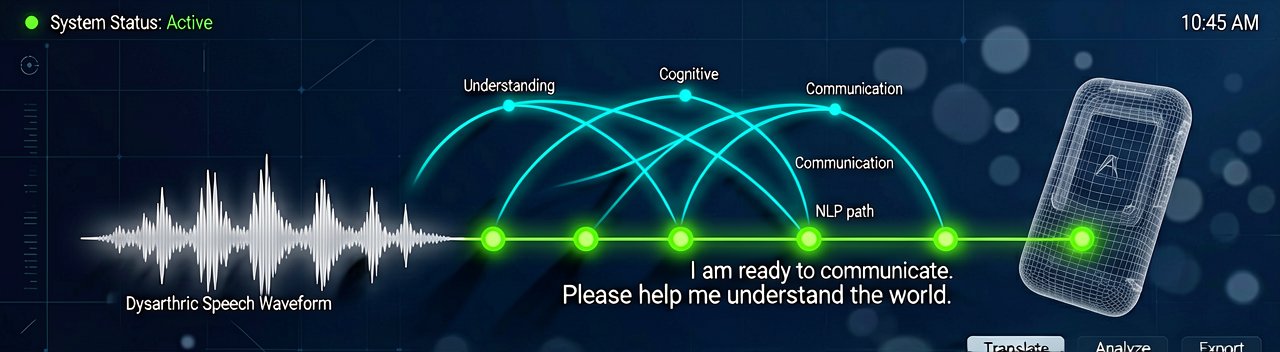
For non-verbal students or those with profound speech sound disorders, the impact is even more profound. Traditional Augmentative and Alternative Communication (AAC) devices are notoriously slow, requiring users to laboriously tap out words icon by icon. Modern generative AI changes the game by predicting intent based on context, location, and past conversations, allowing students to communicate at the speed of natural peer interactions. Furthermore, natural language processing tools are getting incredibly good at decoding dysarthric speech—speech that is difficult to understand due to muscle weakness. By training models on diverse speech patterns, AI can translate a student's unique vocalizations into clear text or synthesized speech, giving them a reliable voice in the classroom for the very first time.
The Human Element remains Irreplaceable
Of course, this technological leap brings justifiable anxiety. EdTech history is littered with overpromised solutions that ended up isolating students behind glowing screens. There is a real risk that over-reliance on automated tutoring could inadvertently rob vulnerable students of crucial human socialization. Biased algorithms and data privacy vulnerabilities also present massive ethical hurdles, especially when dealing with sensitive student medical records. AI cannot offer the empathy, emotional regulation, or breakthrough moments of human intuition that define a great special educator. The goal isn't an automated classroom, but an augmented one where technology handles the cognitive heavy lifting of data analysis, leaving teachers free to do what they do best: connect, inspire, and care.
The View from the Trenches: Classroom Reality vs. Silicon Valley Promise
What Most Reports Miss is the massive gulf between a shiny product demonstration in a Silicon Valley boardroom and the chaotic, hyper-stimulating reality of a self-contained special education classroom. EdTech developers frequently build tools under the assumption of a linear learning curve, but neurodivergent development is inherently non-linear. Veteran educators are understandably wary of sudden technological shifts, having watched generations of overhyped software collect digital dust. For these teachers, a new tool is not a solution unless it can withstand the unpredictable daily rhythm of a student experiencing sensory overload or navigating a profound communication barrier.
Recent qualitative data regarding preservice teachers reveals a cautious but palpable shift in perspective. According to a study published on the ResearchGate platform, early-career educators are actively leveraging generative models to map out evidence-based practices and design highly customized lesson structures. This grassroots adoption highlights a critical nuance: younger teachers view AI not as a pedagogical replacement, but as an advanced brainstorming partner. By inputting specific learning standards alongside generalized behavioral profiles, they can generate multiple creative ways to explain a single concept in minutes, a process that used to take an entire weekend of manual planning.
However, an institutional bottleneck threatens to stall this momentum before it fully takes hold in public school districts. A recent report in the Journal of Special Education Technology notes that while teachers are eager to implement these tools, a vast majority are forced to completely self-educate without structured training or administrative oversight. This lack of formal scaffolding creates a dangerous disparity between affluent districts with dedicated tech coordinators and underfunded schools where teachers must guess their way through complex software prompts. Without systematic professional development, the digital divide in specialized settings will only widen.
From a policy standpoint, the deployment of machine learning in special education triggers intense legal and ethical scrutiny. School administrators face strict regulatory frameworks regarding student data protection, which frequently clash with the data-hungry nature of modern large language models. Redacting personally identifiable information before utilizing AI platforms remains a critical, high-stakes chore for districts aiming to stay compliant with federal privacy laws. The challenge moving forward is not just engineering smarter algorithms, but establishing robust governance that protects vulnerable learners while still allowing them to benefit from cutting-edge accommodation tools.
The Algorithmic Paradox: Personalized Learning or Standardization in Disguise?
Reading Between the Lines: The grand promise of AI in special education contains a fundamental logical contradiction. We are told these tools will deliver unprecedented personalization, yet the core engines of modern artificial intelligence run on large language models trained to predict the most mathematically average response. By their very design, these algorithms look for standard patterns across massive datasets. When an AI system encounters a student with a rare, highly complex combination of neurodivergent traits, its instinct is to pull that student back toward the statistical mean. There is a quiet, dangerous irony in using an automated consensus engine to dictate the highly non-conforming education of a child who defies the norm.
This structural bias creates an invisible threat to equity. As policy experts at UNESCO frequently warn, rapid technological deployment in classrooms often outpaces crucial regulatory guardrails, threatening to widen existing educational divides rather than bridge them. Because the vast majority of consumer AI models are trained on data gathered from neurotypical populations, the resulting software struggles to interpret atypical inputs. A non-verbal student using an AI-powered voice generator might find their unique phrasing constantly "corrected" by a model that misunderstands them, substituting authentic personal expression for sanitized, predictable syntax.
Furthermore, the long-term cognitive costs of outsourcing specialized pedagogy to machines remain entirely unquantified. Data published in the OECD Digital Education Outlook 2026 indicates that while generic generative tools can artificially boost a student's immediate performance on a specific task, they often fail to produce genuine, lasting learning gains. When software continuously smooths over every rough edge and eliminates every moment of cognitive friction, it risks fostering a state of developmental passivity. For special education students, learning how to navigate frustration and build intrinsic coping mechanisms is just as important as mastering the academic material itself.
Ultimately, the rush to automate the administrative and instructional burdens of the classroom treats the symptoms of a broken system rather than the disease. Proponents argue that automating IEP drafts is a victory for overextended educators, but this framing ignores why those educators are drowning in paperwork in the first place. Turning teachers into proctors who monitor automated dashboards might look efficient on a district budget spreadsheet, but it threatens to erode the deeply human, relational foundation that special education relies upon. True progress will not come from building smarter algorithms to manage overwhelmed classrooms, but from using technology to handle compliance so humans can return to the irreplaceable work of hands-on teaching.
"We are rapidly approaching a future where a highly sophisticated, multi-million-dollar neural network will meticulously draft a flawless hundred-page individualized education plan, only for it to be handed to a lone, exhausted teacher who is currently trying to stop a student from eating a box of crayons. Efficiency is nice, but a chatbot still can't wipe a runny nose or celebrate a breakthrough smile."
Artūras Malašauskas is an AI Systems Integrator with 20+ years of production-grade web engineering experience. He has designed, shipped, and scaled enterprise Python/PHP systems for logistics, SaaS, and public-sector clients. For the past year, he has focused exclusively on AI integrations: deploying open-source LLMs, building generative media pipelines (image, audio, video), and engineering multi-agent workflows for real production environments. His standard: reproducibility, security, cost-efficient inference—no vaporware. He documents and evaluates emerging AI tooling, separating verified capabilities from marketing noise. Technical editor at: muza-ai.eu, ai-verslas.lt, ai-naujinos.lt Connect on LinkedIn
Comments