The Human Cost of the Compute Boom: Meta Cuts 8,000 as AI Reallocations Bite

The tech industry’s transition from a human-first labor market to a machine-first computational powerhouse just claimed its biggest sacrificial offering yet. On Wednesday, May 20, 2026, Meta began executing a companywide restructuring that eliminates roughly 8,000 jobs, or 10 percent of its workforce, according to a recent report by The New York Times . The notifications began landing via email at 4:00 AM local time in Singapore before rolling out globally across regional offices, plunging staff into a digital scavenger hunt as they checked internal directories to see who survived. This isn't a story of a struggling social media giant starved for cash; Meta is deeply profitable, but it's deliberately choking its payroll to fund a historic capital expenditure pivot toward data centers, custom silicon, and artificial intelligence infrastructure.
To put this corporate reshaping in perspective, Meta’s capital expenditures are projected to swell to between $125 billion and $145 billion this year, fueled by massive computing clusters and data center investments. The savings realized from cutting 8,000 mid-level or engineering salaries are merely a drop in that capital bucket. Instead, what we’re witnessing is a structural realignment where tech workers are systematically being urged—or forced—to train the very automated systems designed to replace them. In a particularly grim detail, internal unrest recently spiked over a mandatory employee program known as the Model Capability Initiative, which logs keystrokes and mouse movements to train AI agents, leaving remaining workers with the distinct impression that they are documenting their own obsolescence.
The Realignment Paradox
Mark Zuckerberg’s recent strategic communications have framed the job losses as a necessary component of shifting to a flatter, nimbler organizational setup built around specialized AI "pods." Yet, while rank-and-file workers navigate a highly anxious job market, the compensation landscape at the executive level remains incredibly lucrative. Securities disclosures from early 2026 revealed that top executives, excluding Zuckerberg, were granted massive new stock option programs tied to aggressive market valuation targets, as highlighted by Reuters. For the thousands of engineers, recruiters, and operational staff receiving their 16-week severance packages, the corporate narrative that "efficiency" requires shared sacrifice feels deeply hollow when contrasted with eye-popping compensation packages for elite AI researchers and C-suite leadership.
A Broader Silicon Valley Contagion
Meta is far from an isolated case in this structural tech downturn, which has seen tens of thousands of roles evaporated by executives who openly credit artificial intelligence for their sudden ability to operate with lighter headcounts. Industry data reported by CNBC underscores that AI-driven workforce reductions have spiked dramatically in the first half of 2026, forcing a profound re-evaluation of what a sustainable tech career looks like. Major players from Microsoft to specialized fintech giants are following a matching playbook: trimming general operational staff while aggressively bidding up the cost of machine learning talent. The harsh reality for white-collar knowledge workers is that the AI wave isn't just changing the tools they use; it's fundamentally rewiring who gets to keep a seat at the table.
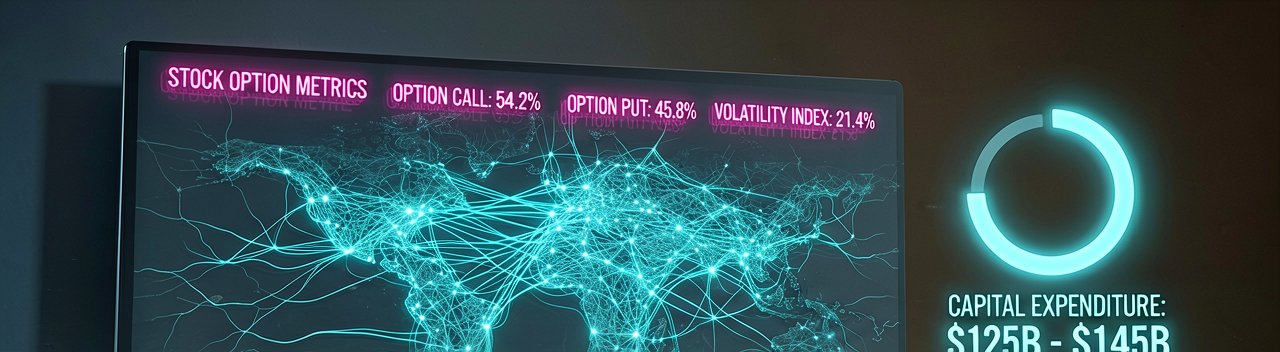
Behind the Scenes: The Invisible Machinery of Corporate Churn
The math driving this workforce reduction reveals a stark departure from the traditional Silicon Valley playbook. In previous tech downturns, layoffs were defensive measures intended to shore up bleeding balance sheets during macroeconomic slowdowns. Today, Meta is operating in an environment of historic profitability, meaning these 8,000 terminated positions represent a proactive, structural liquidation of human capital. The capital freed up by eliminating these salaries is immediately redirected into Nvidia graphics processing units and localized energy grid investments required to power massive cluster nodes. This shift proves that the cost of computing power has officially surpassed human talent as the primary constraint on corporate growth.
Inside the company's Menlo Park headquarters, the psychological toll of this transition has fundamentally altered the corporate culture. Employees describe a bifurcated campus where engineering teams working on legacy social media architecture face constant scrutiny, while newly formed artificial intelligence pods operate with seemingly blank checks. The rollout of the Model Capability Initiative exacerbated this internal rift, as veteran engineers realized their routine code reviews and optimization tasks were being ingested by machine learning models. This tracking has created an environment where staff feel they are actively building the automation that will eventually render their own departments obsolete.
From an executive standpoint, the decision to downsize during a period of financial strength is seen as a fiduciary duty to shareholders who demand immediate AI monetization. Wall Street has aggressively rewarded tech firms that show aggressive cost-cutting alongside massive capital expenditures on infrastructure, viewing a leaner workforce as a sign of operational discipline. However, this strategy carries significant long-term risks, particularly the erosion of institutional knowledge and the loss of mid-tier management capable of steering complex product updates. By prioritizing short-term algorithmic capabilities over human infrastructure, leadership is betting entirely on the premise that software can self-correct and scale without the traditional layers of human oversight.
The broader labor market in Silicon Valley is already feeling the ripple effects of Meta’s structural realignment. Recruiting pipelines that once absorbed thousands of university graduates have completely dried up, replaced by hyper-focused talent wars for elite machine learning PhDs who command multi-million dollar signing bonuses. For the general software engineer or product manager, the traditional career ladder has been severed, forcing a rapid pivot toward specialized prompt engineering and AI integration workflows. This talent glut is driving down average compensation packages for non-AI roles, marking the end of an era where a general computer science degree guaranteed lifetime economic security in the tech sector.
Reading Between the Lines: The Fallacy of the Infinite Scale
The prevailing corporate orthodoxy insists that substituting human labor with algorithmic infrastructure will inevitably yield unprecedented operational efficiency. This assumption, however, ignores the compounding technical debt and systemic fragility that occurs when complex, multi-layered platforms are stripped of human oversight. While a machine learning model can optimize ad placement matrices at speeds no human team could match, it remains notoriously incapable of navigating novel regulatory environments, content moderation crises, or subtle shifts in cultural nuance. By hollowing out the teams responsible for platform integrity and user experience to fund raw compute power, Meta is trading resilient, adaptable human intelligence for brittle, predictable automation.
A glaring contradiction lies in Silicon Valley's public rhetoric versus its internal resource allocation. For years, tech executives have evangelized about how artificial intelligence would liberate workers from mundane tasks, freeing them to focus on high-level creative problem-solving. Yet, the reality of these layoffs demonstrates that creative, strategic, and operational roles are precisely the ones being eliminated to bankroll the physical server farms. Instead of elevating the workforce, the AI boom is concentrating immense corporate power and compensation into the hands of a microscopic elite of machine learning researchers, while effectively commoditizing or discarding the broader labor pool that built the ecosystem.
Projecting this trajectory forward suggests an industry-wide stagnation disguised as innovation. As Meta and its peers rely increasingly on automated code generation and synthetic data to maintain their sprawling digital empires, they risk creating a closed-loop echo chamber. Software trained on existing software naturally tends toward regression to the mean, potentially stifling the erratic, accidental breakthroughs that human engineers generate through unorthodox trial and error. The long-term cost of this pivot may not be measured in data center utility bills, but in the slow death of genuine technological novelty, leaving users with perfectly optimized, yet utterly uninspired, digital experiences.
"We were promised a future where machines would do our laundry so we could write poetry, but instead we got a reality where machines write the poetry so we can spend our days updating our resumes for algorithms to reject."
Artūras Malašauskas is an AI Systems Integrator with 20+ years of production-grade web engineering experience. He has designed, shipped, and scaled enterprise Python/PHP systems for logistics, SaaS, and public-sector clients. For the past year, he has focused exclusively on AI integrations: deploying open-source LLMs, building generative media pipelines (image, audio, video), and engineering multi-agent workflows for real production environments. His standard: reproducibility, security, cost-efficient inference—no vaporware. He documents and evaluates emerging AI tooling, separating verified capabilities from marketing noise. Technical editor at: muza-ai.eu, ai-verslas.lt, ai-naujinos.lt Connect on LinkedIn
Comments