Silicon Prairie Upgrade: Why Big Tech’s New Missouri Community Bets Matter

The Midwest isn't just catching up to the coastal tech hubs; in many ways, it's starting to outpace them in foundational infrastructure. Big Tech is no longer just dropping massive server farms into the cornfields and calling it a day. Instead, we're seeing a distinct shift toward hyper-local economic integration. This is evidenced by the latest wave of localized investments designed to appease wary neighbors and secure the regional workforce of tomorrow.
The momentum has been building rapidly, particularly with Meta taking its massive $1 billion Kansas City data center live. But the real story right now is how these tech giants are desperately trying to weave themselves into the civic fabric of the Show-Me State. It’s a calculated charm offensive, blending multi-million dollar infrastructure upgrades with direct injections of cash into local schools and workforce training systems. They've realized that building a digital fortress requires keeping the surrounding community happy and highly skilled.
From Server Racks to School Desks
Take the recent drama and development in Montgomery County. Gov. Mike Kehoe and corporate executives recently gathered to detail community projects tied to Google’s sprawling "Project Spade" campus, as reported by ABC 17 News. By throwing its weight behind localized training centers, the company is attempting to rewrite the old narrative that data centers are just automated, water-guzzling tax shelters that offer zero long-term employment for locals. They are betting big on regional goodwill, complementing existing initiatives like their skilled trades readiness programs designed to pull underrepresented communities straight into the high-tech workforce.
The Massive AI Infrastructure Rush
Missouri's geography has made it the ultimate battleground for the next generation of computing. Aside from the traditional heavyweights, AI cloud contender Nebius just broke ground on a flagship, gigawatt-scale AI factory campus in Independence. This massive project promises to bring over a thousand jobs and substantial tax revenues to the area. It underscores exactly why these community investments are so vital. When companies scale this fast, the strain on local power grids and public resources is immense. Pouring capital back into the community isn’t just good PR; it’s an operational necessity to keep the local ecosystem stable.
Behind the Scenes: The Power Grid and Local Friction
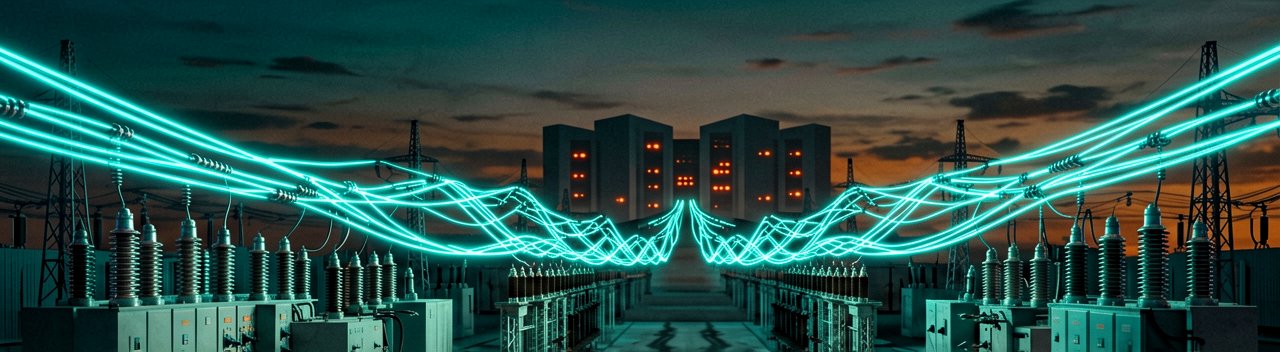
The glossy press releases surrounding Missouri’s newfound tech boom rarely account for the intense municipal friction brewing just outside the boardroom glass. While elected officials enthusiastically slice through ceremonial ribbons, local utility boards and rural cooperatives are quietly scrambling to accommodate the sheer physical demands of these facilities. A gigawatt-scale footprint or a billion-dollar server cluster requires an astronomical amount of juice, often forcing tense, closed-door negotiations over who foots the bill for upgraded substations and high-voltage transmission lines. The tech giants are discovering that dropping cash into local school districts is the most effective way to offset the simmering anxiety of residents worried about their spiking monthly electric bills and strained water tables.
This regional anxiety is precisely why corporate giving has shifted from arbitrary philanthropic donations to highly targeted civic infrastructure. When a company funds a new community filtration system or subsidizes a municipal broadband loop, it isn't just acting out of corporate altruism. It is a strategic hedge against future regulatory pushback and zoning disputes. Veteran industry observers recognize this pattern from the early days of the Pacific Northwest tech expansion, where unmitigated data center growth eventually led to severe public backlash and stringent environmental caps. By proactively embedding themselves into the local budget, these tech firms are effectively insulating their multi-decade capital investments from local political shifts.
Furthermore, the nature of the labor market in the Silicon Prairie presents a unique paradox that these community funds are specifically engineered to solve. A completed data center is notoriously lonely, often requiring fewer than a couple hundred full-time staff to monitor thousands of automated racks. To combat the persistent criticism that they don't generate enough permanent local employment, tech companies are heavily prioritizing regional labor pools during the intensive multi-year construction phases. Funding localized vocational pipelines and union apprenticeship programs ensures a steady supply of specialized pipefitters, electricians, and HVAC technicians who will remain vocal advocates for future campus expansions.
The long-term geopolitical bet on Missouri hinges entirely on this delicate balance of corporate ambition and local appeasement. If these tech firms can successfully navigate the regional infrastructure hurdles while keeping neighboring communities feeling valued and economically upwardly mobile, the Show-Me State will solidify its position as the undisputed backbone of the domestic AI revolution. However, if the strain on the state's resources begins to outpace the tangible benefits felt by ordinary citizens, the current regulatory red carpet could quickly transform into a wall of bureaucratic resistance.

Reading Between the Lines: The Illusion of the Permanent Tech Boom
The prevailing narrative suggests that Missouri is transforming into a self-sustaining tech utopia, but a colder look at the economics reveals a glaring contradiction. Silicon Valley’s sudden affection for the Midwest is born out of desperation for cheap land and massive power allocations, not a sudden desire for civic enrichment. The immediate economic spike during the construction phase creates a temporary illusion of prosperity, flooding local towns with transient contracting crews and short-term hospitality revenue. Once the concrete cures and the servers flicker to life, however, the reality of the automated economy sets in, leaving towns with massive, humming fortresses that employ remarkably few local residents.
This stark reality exposes the true motive behind the sudden influx of hyper-local community investments. By funding school STEM programs and upgrading local parks, tech companies buy a social license to operate while shifting the long-term risk onto the public ledger. The massive tax abatements routinely granted to secure these projects mean that local municipalities are often trading away decades of future revenue in exchange for a handful of specialized engineering roles that are usually imported from out of state anyway. It is a classic asymmetric trade, where the immediate political victory of a groundbreaking ceremony masks the long-term erosion of the local tax base.
Moreover, the environmental equation remains a deeply precarious gamble for the state. While AI factories and data campuses promise to be the engines of tomorrow's economy, their insatiable demand for electricity is keeping legacy, carbon-heavy power plants online far longer than originally planned. This creates an ironic paradox where the ultra-modern digital frontier is effectively subsidized by burning mid-century coal right in the backyard of the communities being praised for entering the future. The long-term implication is a heavily strained regional grid that may ultimately force a choice between keeping the cloud running or keeping the lights on for regular citizens during peak seasonal weather.
Ultimately, Missouri's tech gamble will serve as a definitive case study in whether localized corporate philanthropy can truly offset the structural strains of heavy digital infrastructure. If these investments fail to catalyze a broader, independent ecosystem of homegrown tech startups and secondary businesses, the state risks becoming little more than a digital colony. For now, the corporate cash flow provides a comfortable buffer against public skepticism, but the real test will come when the initial tax holidays expire and the true cost of hosting the internet's brain becomes due.
"In the end, the Show-Me State is showing the world that you can build the future out of cornfields, provided you offer enough tax breaks and don't mind a landscape dominated by windowless warehouses that consume enough electricity to power a small nation just to generate better autocomplete algorithms."
Artūras Malašauskas is an AI Systems Integrator with 20+ years of production-grade web engineering experience. He has designed, shipped, and scaled enterprise Python/PHP systems for logistics, SaaS, and public-sector clients. For the past year, he has focused exclusively on AI integrations: deploying open-source LLMs, building generative media pipelines (image, audio, video), and engineering multi-agent workflows for real production environments. His standard: reproducibility, security, cost-efficient inference—no vaporware. He documents and evaluates emerging AI tooling, separating verified capabilities from marketing noise. Technical editor at: muza-ai.eu, ai-verslas.lt, ai-naujinos.lt Connect on LinkedIn
Comments