Google I/O 2026: 100 Ways Mountain View Is Re-Engineering the Tech Universe

Google’s recent developer showcase solidified a shift from generative AI experimentation to a proactive, agentic ecosystem, with a massive focus on software that acts on behalf of the user. Sundar Pichai highlighted a move toward autonomous agents that manage digital tasks, pulling everything from Android to web searches into a more interconnected, proactive experience.
Key announcements, detailed by The Verge and Mashable, include the Gemini 3.5 model family (Flash, Pro, and Omni) optimized for speed and multimodal comprehension, along with Gemini Spark, a 24/7 personal cloud agent. Key consumer and development updates include AI-driven Search, Universal Cart shopping, and the Antigravity 2.0 app for managing agentic workflows.
Hardware and mobile advancements featured prominently, with Android 17 focusing on ecosystem continuity, and partnerships bringing intelligent eyewear to market. Security and content provenance were also reinforced through SynthID expansion and the CodeMender agent, signaling a rapid, ongoing re-engineering of the digital landscape toward autonomous compute.
Every spring, Google attempts to condense its sprawling corporate consciousness into a single, cohesive narrative. This year, the tech giant eschewed its usual slow-drip product reveals in favor of a relentless, 100-announcement barrage that left even seasoned industry observers suffering from severe analytical whiplash. By flooding the zone with updates ranging from foundational quantum computing breakthroughs to micro-optimizations for mobile operating systems, Mountain View made one thing abundantly clear: they are no longer just building software tools, they are attempting to construct the invisible, omnipresent operating fabric of daily human life.

Behind the Scenes: The sheer volume of this year's keynote was not an accident of a highly productive fiscal quarter, but a calculated geopolitical and market maneuver. Inside the amphitheater, the atmosphere hummed with the nervous energy of an incumbent fighting a multi-front war against agile startups and aggressive regulatory scrutiny. Executive presentations deliberately sidelined theoretical science in favor of immediate, deployable consumer utility, signaling a massive internal pivot from speculative research to aggressive commercialization. This shift reflects intense pressure from institutional investors who have grown weary of costly lab experiments and are demanding concrete monetization strategies for Google's massive artificial intelligence infrastructure investments.
The Realignment of Human-Machine Interfaces
The most profound shift visible across the centenary of announcements is the quiet death of traditional search syntax. For nearly three decades, humanity adapted its communication style to fit Google's indexing algorithms, mastering keyword combinations to extract the web’s hidden knowledge. The new models unveiled at I/O turn this dynamic on its head, forcing the software to adapt to the chaotic, context-dependent nuances of natural human dialogue. This is not merely an upgrade to an existing app ecosystem; it is a fundamental rewriting of the contract between user and machine, where intent matters far more than precise phrasing.
This technical evolution introduces significant friction within the broader digital economy, particularly for independent content creators and traditional publishers. As Google's systems evolve to synthesize information and deliver definitive answers directly within the user interface, the economic engine of the web—the classic outbound hyperlink—risks becoming an artifact of the past. Longtime industry analysts note that this shift essentially transforms Google from a helpful librarian into an assertive author, a transition that raises thorny questions about copyright, intellectual property rights, and the long-term survival of the open web.
Predictive Ecosystems and the Illusion of Choice
Beyond the linguistic upgrades, the conference highlighted an aggressive push into proactive computing, where devices anticipate user needs before they are consciously formulated. New ambient intelligence layers seamlessly connect home automation, personal transport, and workplace productivity tools into a single predictive loop. While the technical orchestration required to achieve this level of synchronicity is undeniably impressive, it nudges society closer to a reality where human agency is subtly guided by algorithmic recommendations disguised as helpful convenience.
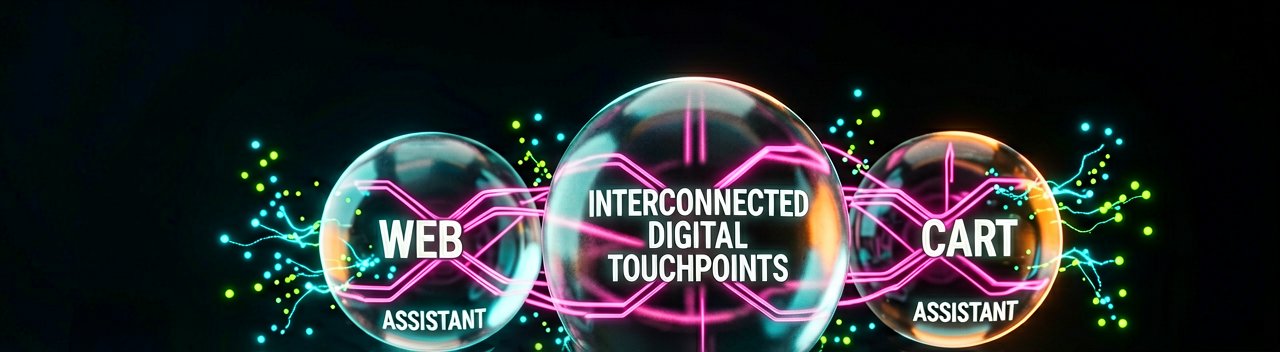
Ultimately, the true legacy of I/O 2026 lies not in any single standalone gadget or flashy software feature, but in the overarching web being woven around the global consumer. By embedding cognitive assistants into every conceivable digital touchpoint, Google is securing its position as the indispensable intermediary of modern life. As these technologies integrate further into schools, hospitals, and corporate boardrooms, the boundary between human thought and algorithmic assistance will continue to blur, leaving society to navigate a world engineered by a singular corporate vision. For a comprehensive breakdown of the specific product rollouts and hardware specifications that drove this year's keynote presentation, readers can explore the detailed live coverage provided by The Verge.
The Hidden Cost of Frictionless Living
Reading Between the Lines: The tech industry’s obsession with a "frictionless" existence deliberately glosses over a fundamental truth about human cognition. Friction is not always a bug; it is often a feature that forces deliberation, critical thinking, and intentional decision-making. By automating away the minor inconveniences of scheduling, drafting, and navigating, Google’s latest ecosystem risks creating a form of cognitive atrophy among its user base. When the machine always provides the path of least resistance, the human capacity for handling ambiguity and complex problem-solving inevitably begins to degrade.
A glaring contradiction lies at the heart of this multi-layered product strategy. Google pitches these ambient, omnipresent upgrades as tools that will liberate users from their screens, granting them more time to engage with the physical world. Yet, the architectural reality of an all-enveloping digital assistant requires constant, uninterrupted telemetry of a user's environment, biometrics, and social interactions to function effectively. To get closer to the real world, users must allow the corporation to dig its sensory roots deeper into every facet of their private lives, creating an ironic dependency where freedom is bought with total surveillance.
Furthermore, the economic viability of maintaining this massive, power-hungry infrastructure remains highly suspect. The computational cost of running billions of real-time, context-aware AI queries is orders of magnitude higher than serving standard indexing links, a reality that clashes sharply with the company's public carbon-neutrality pledges. As data centers strain local power grids, the gap between environmental marketing and corporate reality widens. This suggests that the immediate rush to saturate the market is less about sustainable utility and more about establishing an early monopoly before the soaring costs of computing power force a drastic scaling back of these ambitious features.
"We were promised a future where technology would quietly handle the mundane chores so we could paint masterpieces and ponder philosophy; instead, we got an artificial intelligence that writes our poetry and schedules our meetings while we spend our days managing the infrastructure that keeps it alive."
Artūras Malašauskas is an AI Systems Integrator with 20+ years of production-grade web engineering experience. He has designed, shipped, and scaled enterprise Python/PHP systems for logistics, SaaS, and public-sector clients. For the past year, he has focused exclusively on AI integrations: deploying open-source LLMs, building generative media pipelines (image, audio, video), and engineering multi-agent workflows for real production environments. His standard: reproducibility, security, cost-efficient inference—no vaporware. He documents and evaluates emerging AI tooling, separating verified capabilities from marketing noise. Technical editor at: muza-ai.eu, ai-verslas.lt, ai-naujinos.lt Connect on LinkedIn
Comments