The Human Stopgap: North Carolina Slams the Brakes on Algorithmic Healthcare
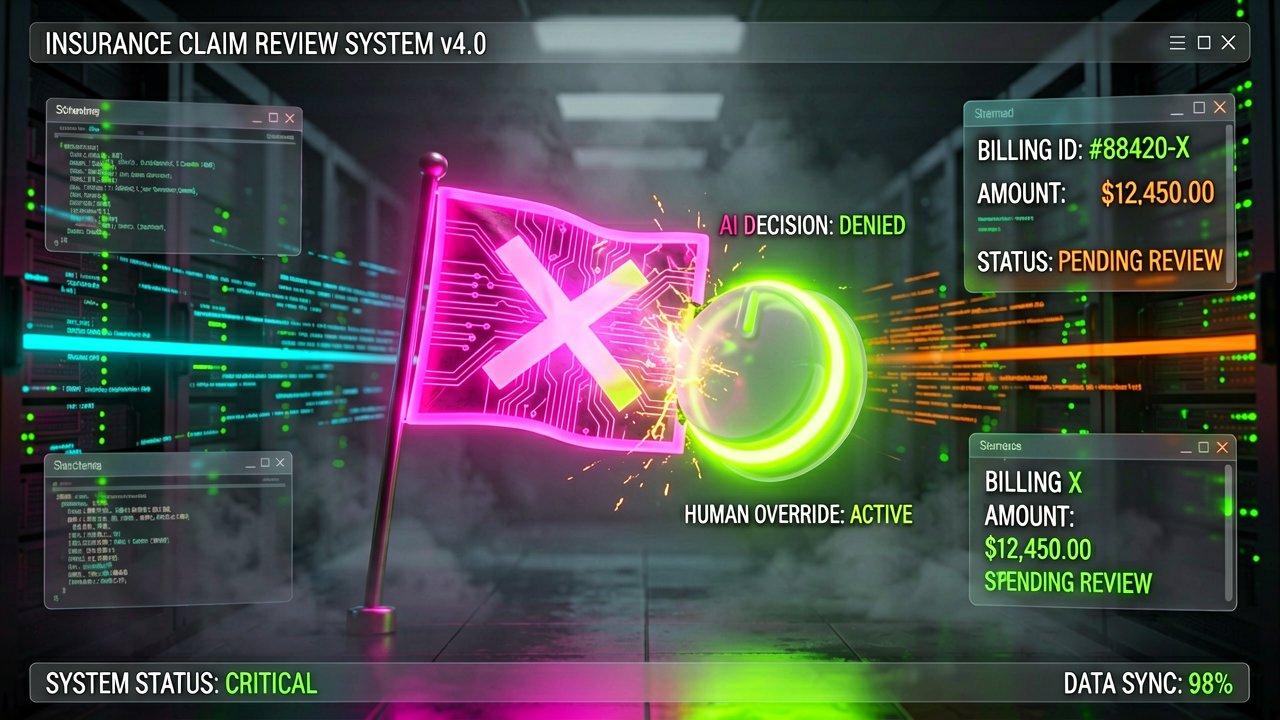
Artificial intelligence is brilliantly effective at pushing the envelope of medical research, but letting it decide whether you get coverage for a medical procedure is another story entirely. Lawmakers in Raleigh are aggressively confronting the reality of automated healthcare administration. A newly proposed legislative substitute to House Bill 565, introduced by Senator Amy Galey, takes aim at the increasingly automated mechanisms used by health insurance companies and hospital systems across North Carolina. The core mission of the bill is delightfully straightforward: prevent algorithms from acting as the final, unappealable judge of patient care.
According to comprehensive reporting by States Newsroom, the legislation explicitly prohibits health insurance providers from denying patient claims based solely on artificial intelligence. Under this framework, if an algorithm triggers a flag to deny coverage, the file must immediately route to a living, breathing human reviewer. It is an acknowledgment that while code is spectacular at spotting high-level patterns, it lacks the nuanced clinical empathy required to evaluate individual human suffering. The bill addresses a growing anxiety that corporate bottom lines, optimized by relentless machine learning algorithms, are systematically displacing individualized physician oversight.
Cracking Down on Automated Inflation and Upcoding
The debate in the Senate Health Committee goes much deeper than just claims denials; it cuts straight to how hospitals charge for their services. The proposed legislation introduces strict guardrails on AI-driven medical billing and coding. Major healthcare networks have increasingly turned to AI optimization tools to maximize their reimbursement rates. However, these tools frequently border on algorithmic "upcoding," a practice that inflates billing complexity and drives up out-of-pocket costs for ordinary patients. This particular provision has triggered heavy pushback from local healthcare groups who worry that the definition of fraud could ensnare well-intentioned institutions.
As detailed by NC Newsline , Senator Natalie Murdock noted that major hospitals within her district are deeply concerned about the ambiguity of these definitions, stressing that providers must not face unfair fraud accusations for simply utilizing advanced operational technology. Industry groups like the North Carolina Healthcare Association are actively lobbying for a seat at the table to refine the language before it hits the floor. The tension highlights a fundamental systemic challenge: drawing a clear line between technological efficiency and automated exploitation.

A Broader Rebellion Against Black-Box Decisions
North Carolina is far from an isolated pocket of resistance in this legislative landscape. States across the country are facing a growing consumer backlash against what many call "black-box" medical determinations. When an algorithm rejects an authorization, it rarely provides a transparent, localized explanation of its reasoning. This leaves patients and clinicians navigating an incredibly opaque corporate bureaucracy, often fighting automated denials with their own makeshift AI tools.
This push for state-level regulation comes at a highly volatile moment. National policy shifts, including a sweeping federal executive order aiming to preempt localized AI restrictions, have put state insurance commissioners on high alert. State leaders argue that local oversight remains the absolute last line of defense for consumer protection. By insisting on mandatory human intervention, North Carolina lawmakers are attempting to codify a simple ethical baseline: when a life is on the line, a real person must always be accountable for the final decision.
Behind the Scenes: The battle over House Bill 565 is not merely a debate about bureaucratic red tape; it is a fundamental clash over who controls the clinical narrative. While the public face of the debate centers on the fairness of automated claims denials, tech-focused policy analysts recognize a much deeper structural shifts occurring in corporate medicine. For years, health insurance giants have quietly deployed proprietary algorithms—frequently trained on historic denial data rather than holistic patient outcomes—to optimize profit margins under the guise of administrative efficiency. By mandating a human stopgap, North Carolina lawmakers are attempting to dismantle a system where automated efficiency acts as a shield against corporate accountability.
The resistance from the healthcare industry reveals a fractured coalition with competing anxieties. On one side, insurance executives argue that artificial intelligence is the only tool capable of processing millions of complex medical claims without causing catastrophic systemic backlogs. They contend that stripping away algorithmic tools will inevitably slow down approval times, ironically delaying patient care in the process. On the other side, hospital administrators find themselves caught in the middle. They rely heavily on automated billing software to stay financially solvent against tightening insurance reimbursements, yet their own frontline physicians are the ones constantly fighting the automated insurance denials that harm patient health.
The Algorithmic Arms Race in Clinical Care
What many oversight committees fail to grasp is that this legislation lands in the middle of a high-tech arms race between payers and providers. As insurance companies leverage AI to find any plausible technicality to deny a claim, major hospital networks are counter-deploying their own specialized AI tools to write flawless, un-deniable medical justifications. This creates a bizarre, closed-loop ecosystem where algorithms argue with other algorithms over the validity of human illnesses, while actual clinicians spend hours acting as referees instead of treating patients. The North Carolina bill aims to disrupt this cycle by forcing a human reviewer to shoulder the legal and ethical burden of a final denial.
Historically, medical billing code adjustments, or "upcoding," required deliberate human manipulation to inflate costs, making it relatively easy for state regulators to investigate and penalize fraud. The introduction of machine learning completely muddies these waters because generative algorithms can subtly optimize billing codes across thousands of patient files simultaneously, maximizing revenue through patterns too distributed for traditional audits to catch. Hospital groups are terrified that the strict anti-fraud language in the proposed substitute could criminalize standard software updates, penalizing institutions for using commercial software that operates in an algorithmic black box beyond their control.
Ultimately, the legislative friction in Raleigh highlights the limitations of treating healthcare like a pure data-optimization problem. A machine learning model operates entirely on statistical probabilities and historical precedents, meaning it is fundamentally incapable of accounting for the medical anomalies or unique socioeconomic realities that define real-world patient care. As North Carolina moves closer to a vote, the state is setting a critical precedent for how local governments can reclaim regulatory authority over an increasingly automated private sector, asserting that technological progress must never outpace human empathy.
Reading Between the Lines: The legislative rush to mandate human oversight assumes that human reviewers are inherently more compassionate and less error-prone than the code they are tasked with checking. This is a comforting bit of political theater, but it ignores the brutal economic realities of modern healthcare administration. In practice, human medical reviewers at major insurance firms are already subjected to crushing quotas, often given only a few minutes—or even seconds—to evaluate incredibly complex patient files. Forcing a human to sign off on an algorithmic recommendation frequently results in a rubber-stamp process, where overworked employees simply ratify the machine's decision to keep up with their daily performance metrics.
Furthermore, the bill creates a glaring regulatory paradox by attempting to police the tools rather than the outcomes. If an insurance provider uses an unrefined, archaic spreadsheet to systematically deny coverage to cancer patients, it remains perfectly legal under this framework, provided a human pushes the final button. By hyper-focusing on the presence of artificial intelligence, lawmakers are inadvertently implying that old-fashioned, human-driven corporate greed is somehow more palatable than the automated variety. True consumer protection would focus on strict, software-agnostic caps on denial rates and mandatory transparency protocols, regardless of whether a machine or a committee engineered the policy.
The Illusion of the Unbiased Reviewer
We must also confront the uncomfortable reality of what happens when these cases push past the initial denial into the state appeals process. The legislation implicitly trusts that human intervention will strip away algorithmic bias, yet human reviewers carry their own deeply ingrained biases, subjective clinical fatigue, and institutional pressures. A physician reviewing a claim on a Friday afternoon after a fifty-hour workweek may yield a wildly different determination than an algorithm operating on cold, unwavering logic. By legally prioritizing human intuition over automated data analysis, the state might inadvertently exchange the predictable, auditable biases of a machine learning model for the chaotic, unpredictable biases of human exhaustion.
The long-term economic fallout of this bill could also trigger an intense game of whack-a-mole for North Carolina regulators. If hospital networks are legally restricted from using automated billing optimizers, the administrative cost of manual coding will inevitably skyrocket. Hospitals will not simply absorb these massive overhead costs; they will pass them directly down to patients in the form of higher facility fees and inflated self-pay rates. The bitter irony of this consumer-protection initiative is that in the rush to save patients from the cold hand of artificial intelligence, lawmakers may inadvertently price those very same patients completely out of the local healthcare market.
Ultimately, this legislative push exposes a broader societal anxiety about the loss of human agency in an increasingly automated world. Raleigh is attempting to draft a analog map for an undeniably digital territory, trying to legislate a return to a bygone era of personalized medicine that corporate consolidation killed off decades ago. Algorithms are not invading a pristine healthcare system; they are merely accelerating the bureaucratic inefficiencies and profit-maximizing strategies that have defined American medicine for half a century. Passing this bill might make voters feel safer, but it does little to fix the underlying machinery of a system that treats human wellness as a volume-based transaction.
"We are witnessing a truly spectacular moment in legislative history: lawmakers passing bills to ensure that when your lifesaving medical coverage is inevitably denied, you at least have the profound comfort of knowing a fellow human being signed the paperwork."
Artūras Malašauskas is an AI Systems Integrator with 20+ years of production-grade web engineering experience. He has designed, shipped, and scaled enterprise Python/PHP systems for logistics, SaaS, and public-sector clients. For the past year, he has focused exclusively on AI integrations: deploying open-source LLMs, building generative media pipelines (image, audio, video), and engineering multi-agent workflows for real production environments. His standard: reproducibility, security, cost-efficient inference—no vaporware. He documents and evaluates emerging AI tooling, separating verified capabilities from marketing noise. Technical editor at: muza-ai.eu, ai-verslas.lt, ai-naujinos.lt Connect on LinkedIn
Comments