RapDev Unveils Agentic Platform Operator: Putting Guardrails on Autonomous ServiceNow Management
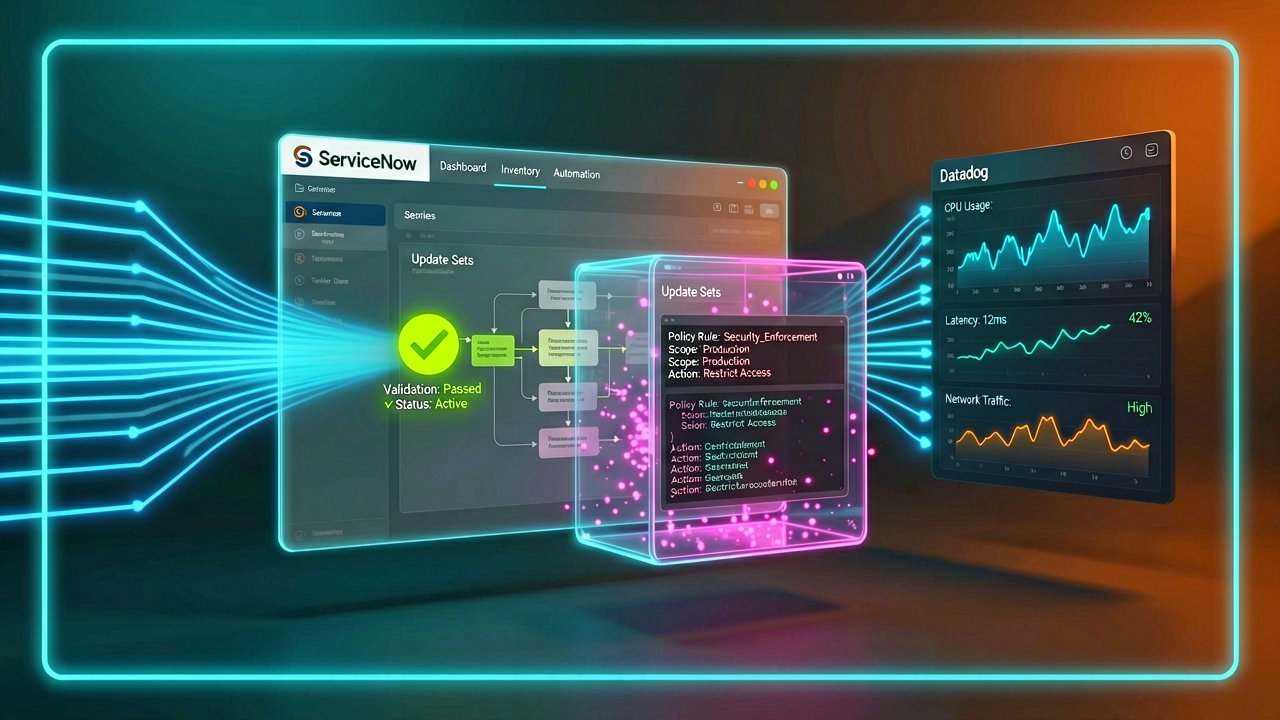
The enterprise software ecosystem has spent the last couple of years drowning in marketing buzz surrounding AI agents, with every vendor promising autonomous magic but offering very little on actual, day-to-day corporate guardrails. Cutting right through that noise, ServiceNow Elite Partner RapDev has dropped a fascinating new tool that tackles the automation headache from an operator’s perspective. The company officially launched its Agentic Platform Operator (APO), a semi-supervised managed service designed specifically to run ServiceNow environments at scale using policy-bound AI agents, according to a press release carried by PR Newswire. Instead of just suggesting code or answering basic queries, these agents are built to take action—handling configuration tasks and decomposing operational requests while keeping enterprise oversight rigidly intact.
What makes RapDev’s approach stand out in a crowded market is its clear emphasis on governance. Rather than allowing an autonomous agent to run wild in a production system, APO acts as a deeply controlled environment where AI agents process requests, validate actions against strict corporate policy rules, and track changes within Update Sets. Crucially, the platform stops short of absolute autonomy; it bundles these changes into promotion packages that must be reviewed by a human engineer before anything goes live. It is a pragmatic compromise for risk-averse IT leaders who want the speed of artificial intelligence but cannot afford the catastrophic blast radius of an unvetted algorithm making system-level modifications.
Continuous Health and Isolated Infrastructure
Operationally, the platform relies on what RapDev calls its "Vitals" capability, which runs an initial health check during customer onboarding and continues executing regular scans to establish a clear platform performance baseline. Enterprise observability is handled via telemetry streams fed directly into Datadog, allowing teams to cross-reference performance against defined service level objectives (SLOs) from the very first day. Security architecture has clearly been prioritized here, as well; each customer environment functions inside an entirely dedicated namespace. This setup includes scoped secrets, isolated per-customer AI keys, and an explicit per-tenant kill switch to ensure that a flaw in one pipeline cannot leak or trigger an automated failure across other enterprise tenants.
Redefining the Managed Services Model
This release isn’t RapDev’s first foray into the world of autonomous operations, as the platform expands upon the company’s existing AI engineering portfolio, which includes Arlo, their specialized agentic AI assistant. However, moving from an assistant model to an active platform operator marks a fundamental shift in how large organizations are expected to scale their digital infrastructure moving forward. By taking repetitive, manual backlog management away from engineering teams and pushing it onto policy-bound agents, the tool actively alters the traditional human-only delivery framework that has historically limited how fast complex, highly regulated IT environments can evolve.

Beyond the Buzzwords: The Hard Reality of Autonomous Enterprise Workflows
What Most Reports Miss: The true bottleneck in enterprise software scaling has never been a lack of developer imagination; it has always been the terrifying complexity of governance. In large organizations, a single misplaced line of configuration in a tool like ServiceNow can bring global IT service desks, HR onboarding pipelines, or critical customer support portals to a grinding halt. Because of this, traditional managed service providers have historically thrown legions of human engineers at platform maintenance, relying on slow, manual peer reviews to catch mistakes before code migrates to production. By introducing the Agentic Platform Operator, RapDev is attempting to break this reliance on human labor by digitizing the governance process itself, a move that fundamentally changes how risk is managed in the modern enterprise.
This pivot toward semi-supervised autonomy reflects a broader, systemic shift happening across the tech sector. For years, companies treated AI as an informational assistant—a tool to summarize text or generate code snippets that a human would then copy, paste, and test. However, enterprise leaders quickly realized that checking an AI's homework can sometimes take just as long as doing the work from scratch. RapDev’s architecture tackles this friction point by shifting the AI from a passive advisor to an active, policy-bound builder that operates entirely inside an isolated, auditable framework. By confining the agent's work to scoped Update Sets and requiring an explicit human sign-off before deployment, the platform essentially turns human engineers from line-by-line coders into high-level system editors.
From a stakeholder perspective, this setup addresses a massive pain point for Chief Information Officers who are under intense pressure to adopt artificial intelligence but are terrified of compliance failures. In highly regulated sectors like banking or healthcare, allowing an unmonitored LLM to make changes directly to an operational system is a compliance non-starter. By embedding telemetry into Datadog and keeping per-tenant kill switches handy, RapDev is speaking the language of risk management. It gives security teams the exact structural separation and audit trails they need to approve the deployment, effectively bridging the gap between cutting-edge engineering and old-school corporate compliance requirements.
Looking back at how corporate IT infrastructure has evolved, this transition mirrors the early days of automated cloud deployment and infrastructure-as-code. When tools like Terraform first emerged, there was widespread skepticism about letting scripts provision physical or virtual servers automatically. Over time, strict policy engines and pull-request workflows turned that skepticism into standard practice. RapDev is betting that application platform management will follow the exact same trajectory, transforming what is currently a chaotic frontier of experimental AI agents into a disciplined, predictable, and highly repeatable automated science.

The Autonomy Paradox and the Future of IT Overhead
Reading Between the Lines: The promise of stripping out manual labor via autonomous agents ignores a fundamental contradiction inherent to enterprise software: automation rarely eliminates work; it merely shifts where that work happens. While RapDev’s platform successfully eliminates the tedious backlog of writing repetitive configurations, it simultaneously creates a new, highly demanding role for the human engineer as a full-time reviewer. Reviewing code generated by a machine requires a unique, exhausting type of mental vigilance. Engineers must hunt for subtle, logic-defying hallucinations hidden inside perfectly formatted code packages, a task that can often induce a form of review fatigue that traditional, human-to-human code reviews rarely suffer from.
Furthermore, this shift toward policy-bound AI agents highlights a delicate tension between platform speed and corporate bureaucracy. The platform is designed to decouple operational requests and bundle them into promotion packages at unprecedented speeds, yet these packages ultimately pile up at the exact same human bottleneck they were meant to bypass. If an enterprise lacks the internal engineering velocity to quickly audit and approve these automated packages, the system simply moves the traffic jam down the highway. The organizational velocity remains capped not by how fast the AI can build, but by how fast a risk-averse management layer is willing to click the "approve" button.
There is also the matter of long-term technical debt and platform tribal knowledge to consider. When human engineers spend years manually configuring a ServiceNow environment, they develop an instinctual understanding of its quirks, legacy dependencies, and undocumented edge cases. If an AI agent abstracts away that foundational labor, organizations risk raising a generation of platform administrators who understand how to validate the AI's output, but lack the deep, first-principles knowledge required to fix a catastrophic system failure when the automation breaks down. Over-reliance on managed autonomous platforms could inadvertently create a skills gap that makes organizations more dependent on vendor ecosystem support than ever before.
Ultimately, RapDev’s architectural choices—specifically the isolated namespaces and the strict reliance on Datadog telemetry—prove that the company is fully aware of these systemic risks. They are not selling a utopian vision of a self-running corporate machine; they are selling a highly controlled conveyor belt. It is a necessary and remarkably realistic evolutionary step for enterprise software management, but companies adopting it must realize that onboarding an AI operator means they are changing the nature of their IT team's workload, rather than shrinking the IT department itself.
"We are rapidly approaching an enterprise future where AI agents will relentlessly write code that other AI agents will tirelessly audit, leaving human managers to sit comfortably in the middle, staring at dashboards and wondering why fixing a simple printer routing rule still somehow requires three meetings and a vice president's sign-off."
Artūras Malašauskas is an AI Systems Integrator with 20+ years of production-grade web engineering experience. He has designed, shipped, and scaled enterprise Python/PHP systems for logistics, SaaS, and public-sector clients. For the past year, he has focused exclusively on AI integrations: deploying open-source LLMs, building generative media pipelines (image, audio, video), and engineering multi-agent workflows for real production environments. His standard: reproducibility, security, cost-efficient inference—no vaporware. He documents and evaluates emerging AI tooling, separating verified capabilities from marketing noise. Technical editor at: muza-ai.eu, ai-verslas.lt, ai-naujinos.lt Connect on LinkedIn
Comments