BriteCore Unveils AI Strategy for P&C Insurers, Launches First Wave of Embedded AI Copilots

Core system vendor BriteCore has announced a comprehensive enterprise AI strategy designed specifically for property and casualty (P&C) insurers, headlined by the rollout of its first wave of eight embedded AI copilots. Announced by Chief Executive Officer Ray Villeneuve, this move marks a deliberate shift from standalone generative AI tools toward deeply integrated, operational intelligence built directly into the Insurance Innovation Reporter-tracked ecosystem. The platform’s initial copilot release targets high-friction, manual workflows across underwriting, claims, billing, and policy administration to accelerate decision-making while keeping human oversight central to the process.
What Most Reports Miss: The Architectural Shift to Agentic Workflows
Behind the Scenes: While the broader market frequently defaults to treating artificial intelligence as a conversational layer slapped onto the front end of legacy systems, BriteCore’s strategy tackles the systemic bottleneck: core operational infrastructure. P&C carriers routinely struggle with legacy IT debt, meaning that standard AI pilots rarely make it past the proof-of-concept graveyard. By natively engineering these copilots within an API-first framework using Python, BriteCore bypasses the traditional middleware nightmare, giving mid-sized carriers and managing general agents (MGAs) the ability to automate complex logic without rewriting their core codebase.
The true technical differentiator of this launch is the implementation of a governed Model Context Protocol (MCP) service layer. This orchestrator functions as a security surface that safely exposes BriteCore’s policy, billing, and claims APIs to native, carrier-built, or third-party AI agents. Instead of giving an LLM unfiltered access to database pools, the MCP layer enforces authentication, rate-limiting, compliance monitoring, and strict human-in-the-loop oversight. Industry consensus, shared by analytics firm GlobeNewswire via Celent’s research, confirms that long-term enterprise value stems strictly from embedding intelligence natively into operational workflows rather than relying on external web plug-ins.
From a practical deployment standpoint, the first wave includes specialized tools like the Submission Intake & Readiness Copilot, which reportedly slashes manual intake work by up to 90% by structuring messy, multi-format documentation automatically. Other rolled-out tools, including the Rate Change Copilot and Rules Intelligence Copilot, let operators adjust complex rating tables and referral triggers using natural language prompts. This framework shifts operational paradigms by turning time-intensive IT tickets into simple conversational tasks that business analysts can securely execute.
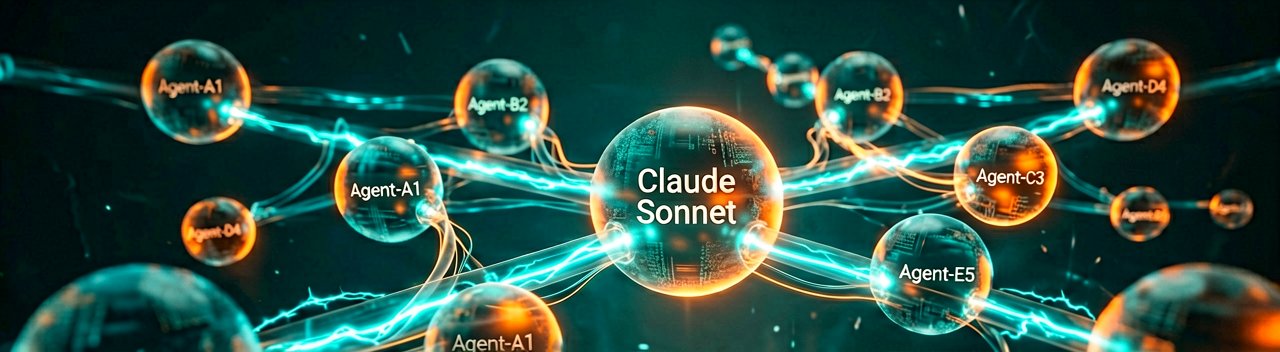
Looking at the broader strategic horizon, this strategy lays the groundwork for what the vendor calls agent-to-agent (A2A) communication standards. As frontier models evolve, BriteCore’s design remains model-flexible, maintaining support for top-tier systems like Anthropic’s Claude Sonnet while staying ready to ingest emerging open-source and task-specialized small language models. For an industry historical for its risk-aversion, providing a sandbox where disparate carrier and third-party AI agents can coordinate multi-step workflows under automated guardrails represents a massive step toward mature, agentic insurance operations.
Reading Between the Lines: The Reality of Risk and ROI
Reading Between the Lines: The tech industry’s collective infatuation with "agentic architecture" often glosses over the cold, hard realities of the actuarial world. While slashing submission intake times by 90% sounds spectacular on a quarterly earnings call, the underlying data structures of mid-market P&C carriers are rarely pristine. Embedding highly advanced LLM pipelines into core systems assumes that the historical data feeding them is structured, consistent, and clean. In reality, decades of unstructured underwriter notes, legacy migration patches, and inconsistent claims coding risk creating a "garbage in, automated garbage out" pipeline that could quietly skew risk accumulation profiles before human compliance teams even notice.
Furthermore, the promise of model flexibility reveals an inherent tension between vendor neutrality and operational stability. BriteCore rightly points out that carriers can pivot between top-tier frontier models like Anthropic's Claude or hyper-specialized small language models. However, swapping models in a core insurance environment isn't as simple as changing a software skin; different models exhibit varying degrees of drift, subtle reasoning differences, and distinct hallucination profiles. A natural language prompt that safely adjusts a rating table in one model version might interpret a complex reinsurance exclusion completely differently in another, forcing carriers to become AI testing labs just to maintain baseline underwriting compliance.
The long-term economic model also remains a critical variable that the initial hype conveniently sidesteps. Processing multi-format document packages through advanced token-heavy models introduces a recurring operational cost structure that looks vastly different from traditional fixed-fee software licensing. For mid-sized mutual insurers operating on razor-thin combined ratios, the efficiency gains of automated triage must heavily outweigh the unpredictable, volume-driven API compute bills. Ultimately, BriteCore's architectural strategy is undeniably robust, but its triumph will not be measured by the sophistication of its Model Context Protocol; it will be judged by whether conservative insurers trust a machine-learning algorithm to safeguard their balance sheets when the next catastrophic loss cycle hits.

"In the insurance tech sandbox, the only thing moving faster than the automated workflows is the speed at which carriers realize that giving an AI 'human-in-the-loop' veto power still means someone has to stay awake during the loop."
Artūras Malašauskas is an AI Systems Integrator with 20+ years of production-grade web engineering experience. He has designed, shipped, and scaled enterprise Python/PHP systems for logistics, SaaS, and public-sector clients. For the past year, he has focused exclusively on AI integrations: deploying open-source LLMs, building generative media pipelines (image, audio, video), and engineering multi-agent workflows for real production environments. His standard: reproducibility, security, cost-efficient inference—no vaporware. He documents and evaluates emerging AI tooling, separating verified capabilities from marketing noise. Technical editor at: muza-ai.eu, ai-verslas.lt, ai-naujinos.lt Connect on LinkedIn
Comments