The Speed of Survival: Why Move On 2026 is Betting the House on AI and Leadership

The tech industry doesn't do patience well, and if the early buzz surrounding the return of Cable & Wireless Business’s Move On 2026 conference proves anything, it is that the window for mere experimentation has officially slammed shut. Returning for its ninth edition on May 21 at the Megápolis Convention Center, the summit lands right in the middle of a massive global narrative shift. We are no longer talking about speculative roadmaps or dazzling, hollow tech demos. Instead, this year's focus zeroes in on turning raw technological speed into a distinct corporate advantage. It is a pragmatic, slightly bruised industry realization that layering artificial intelligence over broken corporate structures yields nothing but faster mistakes.
What makes Move On 2026 compelling is its refusal to treat connectivity and AI as isolated IT projects. The event arrives precisely as global enterprise strategy pivots hard toward large-scale execution, a trend underscored by recent data from Financial Times Live outlining the corporate race to master deep infrastructure integration. For the executives and tech visionaries gathering this week, the challenge isn't acquiring the tools. It is building the modern network architecture capable of feeding them without crashing under the weight of immense data demands.
The Agentic Shift and the Connectivity Backbone
We are currently watching the birth of the "agentic enterprise," a concept where autonomous AI agents plan, act, and optimize workflows across entire operations. But these digital colleagues cannot function on dial-up logic. They place brutal, real-time demands on network capabilities. This reality is taking center stage at major tech forums worldwide, where legacy networks are aggressively transitioning. Industry leaders like Ericsson are actively pushing AI-native infrastructure to deliver the bounded latencies and programmable APIs required to keep these autonomous workflows from stalling. Move On’s expansive exhibition floor looks to mirror this push, connecting hardware capabilities directly to localized business operations.
Why True Leadership Means Betting on Humans
The most refreshing element of the conversation is the heavy emphasis on leadership. For the past couple of years, short-sighted executives viewed AI simply as a tool for aggressive headcount reduction. That strategy is hitting a hard wall. Silicon Valley is littered with companies that slashed staff for quick margin expansion, only to spend the next 18 months frantically trying to rehire the human judgment they lost. Think-tanks and analysts at Forbes note that tech-first approaches are far more likely to fail to realize actual returns compared to human-centered models. True leadership in 2026 means using AI to amplify workforce capability, not eliminate it.

The speaker lineup emphasizes this intersection of humanity and technology, featuring global experts like Andrea Iorio, author of Between You and AI, alongside regional business leaders and cybersecurity consultants. They are addressing a world where a teenager with a jailbroken model can weaponize known software vulnerabilities in minutes. In this environment, defensive corporate teams must embed AI into triage and response just to keep up. Speed is no longer a luxury or a line item on a quarterly report. It is the baseline for basic corporate survival.
Behind the Scenes: The Hidden Infrastructure Tax of the AI Boom
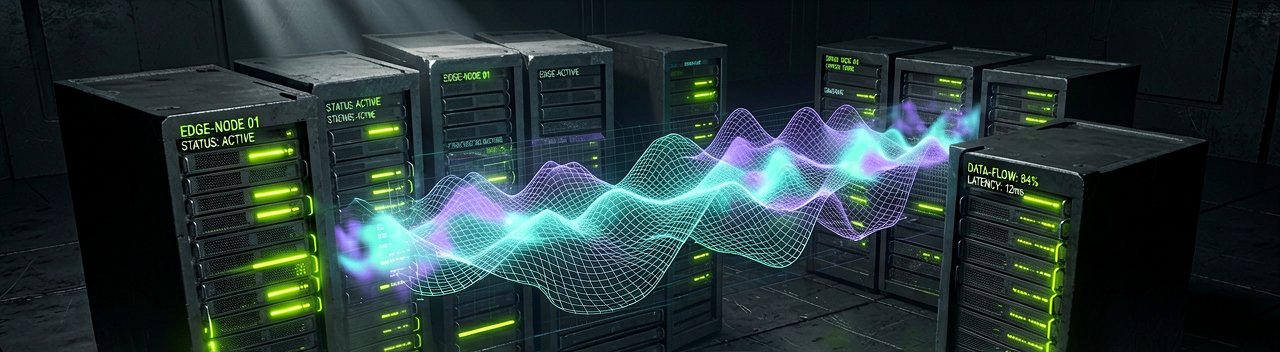
While keynote speakers lean heavily into the transformative promise of autonomous systems, the engineers on the ground are wrestling with a much grimier reality: the sheer physics of modern data delivery. The industry is silently shifting from centralized cloud architectures to a decentralized approach, a pivot born out of sheer necessity. Autonomous AI models require local, low-latency processing to handle instantaneous decision-making without waiting for data to travel to a distant server farm and back. For enterprise leaders, this realization is triggering a massive wave of capital expenditure to upgrade regional edge networks, turning what was once advertised as a software revolution into a very expensive hardware race.
This localized data crunch is fundamentally redefining relationships between major telecommunications providers and the enterprise market. Legacy corporate networks designed for simple web browsing and cloud storage are buckling under the constant telemetry streams required by machine learning pipelines. Chief Technology Officers are increasingly forced to negotiate dedicated fiber loops and custom network slicing agreements just to keep their pilot programs from choking regular business operations. The underlying narrative of the moment is not just about choosing the smartest model, but ensuring that your local network provider actually has the capacity to feed it.
From a regional perspective, the stakes are particularly high for markets outside traditional Silicon Valley hubs, where infrastructure can vary wildly. Local business conglomerates often operate on a mix of modern cloud systems and decades-old legacy databases, creating complex integration bottlenecks that cannot be solved by simply deploying an off-the-shelf AI agent. Industry consultants frequently point out that the companies finding the most success are those willing to spend the first six months auditing and cleaning their data pipelines before ever touching an algorithmic model. This methodical preparation avoids the common pitfall of feeding messy, contradictory corporate records into an automated system that will simply hallucinate incorrect business strategies at lightning speed.
Furthermore, the cultural friction within the executive suite is reaching a boiling point as the true costs of these technologies become clear on the corporate balance sheet. Financial officers are increasingly skeptical of vague promises regarding future productivity gains, demanding immediate, measurable returns on investment to justify soaring IT budgets. This internal tension is forcing tech leaders to pivot away from sweeping, company-wide transformations in favor of hyper-specific, narrow use cases like automated customer routing or automated predictive maintenance. By focusing on these concrete, verifiable wins, operational teams can secure the political capital and funding necessary to sustain long-term infrastructure modernization plans.
Reading Between the Lines: The Fallacy of the Infinite Return
The collective corporate rush to adopt artificial intelligence rests on a deeply flawed assumption: that efficiency is infinitely scalable. The current narrative implies that by automating administrative, analytical, and operational workflows, organizations can achieve a state of frictionless growth. This logic ignores a fundamental law of organizational dynamics, which is that removing one bottleneck merely exposes another, often more complex bottleneck down the line. A firm that uses autonomous agents to increase its software output tenfold will quickly find its legacy quality-assurance pipelines completely overwhelmed, trading an engineering problem for a management nightmare.
We are also witnessing a glaring contradiction in how tech leadership views human capital. While conference panels celebrate human-centric design and the irreplaceable nature of emotional intelligence, actual corporate spending patterns tell a very different story. Venture funding and internal budgets remain aggressively skewed toward tools that aim to abstract the human element away from the workflow entirely. This creates a bizarre paradox where companies invest heavily in software to mimic human empathy in customer relations, while simultaneously starving the actual human employees who understand the nuance of those customer relationships in the first place.
Furthermore, the long-term economic model of enterprise AI remains highly speculative. The initial wave of adoption has been heavily subsidized by massive venture capital injections and tech giants willing to run infrastructure at a loss to capture early market share. As these vendor pricing models inevitably shift toward true cost-recovery and profitability, the return-on-investment calculations for middle-market enterprises will change dramatically. Organizations that built their entire operational strategies around artificially cheap computing power will face sudden, agonizing margin compression when those subscription costs finally align with the harsh realities of data center energy consumption.
Ultimately, the true dividing line in the coming years will not be between the tech-savvy and the tech-resistant, but between those who understand the limits of automation and those who do not. The real danger is not that artificial intelligence will fail to deliver on its promises, but that it will succeed just enough to convince leaders they can manage an enterprise by numbers alone. Stripping out the messiness, the redundancy, and the intuitive guesswork of human operation leaves a company optimized for a predictable world, and entirely defenseless against the next unpredictable crisis.
"We are spending millions to teach machines how to think like executives, which seems like an extraordinarily expensive way to find out what happens when you completely run out of common sense."
Artūras Malašauskas is an AI Systems Integrator with 20+ years of production-grade web engineering experience. He has designed, shipped, and scaled enterprise Python/PHP systems for logistics, SaaS, and public-sector clients. For the past year, he has focused exclusively on AI integrations: deploying open-source LLMs, building generative media pipelines (image, audio, video), and engineering multi-agent workflows for real production environments. His standard: reproducibility, security, cost-efficient inference—no vaporware. He documents and evaluates emerging AI tooling, separating verified capabilities from marketing noise. Technical editor at: muza-ai.eu, ai-verslas.lt, ai-naujinos.lt Connect on LinkedIn
Comments