Why AI and Data Science Practitioners Are Studying JRPG Battle Systems as Algorithmic Case Studies

For decades, the tech industry looked to chess and Go as the ultimate proving grounds for artificial intelligence. We all watched as deep learning models mastered these perfect-information board games, executing mathematically flawless strategies that left human grandmasters in the dust. But in 2026, the vanguard of data science has quietly pivoted to a different, far more chaotic sandbox: the humble Japanese Role-Playing Game (JRPG).
It turns out that building an enterprise AI to navigate supply chain disruptions or optimize multi-cloud infrastructure looks a lot less like a pristine chess match and a lot more like a high-stakes boss battle in Persona 5 Royal or Final Fantasy. Tech researchers aren't playing these games for nostalgia; they're dissecting their combat engines. Turn-based JRPGs represent complex, state-driven environments packed with asymmetric information, probabilistic constraints, and layered dependencies that mirror real-world data pipelines beautifully.
The Anatomy of the State Machine
At the core of any classic JRPG is a highly sophisticated state machine. Unlike real-time action games where twitch reflexes dominate, turn-based combat forces a system to pause and evaluate the weight of every single variable before making a move. In a typical encounter, an algorithm must account for a staggering matrix of conditions: character statistics, elemental vulnerabilities, turn-order manipulation, and fluctuating status effects.
According to an analysis on the mechanics of modern turn-based systems by Icicle Disaster, mechanics like the "One More" system require players—and now, machine learning models—to chain specific elemental exploits to completely dictate the flow of the battle state. For data scientists, this isn't just game design; it's a masterclass in predictive modeling under dynamic constraints. Training a Reinforcement Learning (RL) agent to maximize its turn efficiency while mitigating risks teaches the network how to handle sequential decision-making environments where one bad prediction can trigger a catastrophic failure cascade.
Simulating High-Stakes Risk and Resource Allocation
What makes a JRPG battle such an alluring case study for algorithmic training is its mathematical transparency paired with intense resource scarcity. Every action point spent on an attack is a point not spent on a defensive buff or a healing spell. In machine learning, this maps directly to the classic exploration-exploitation dilemma. Academic research into game automation, such as the frameworks discussed by the ACM Digital Library , highlights how combining deep neural networks with gradient-boosted decision trees allows an AI to memorize feature interactions while generalizing unseen strategies during combat.
By forcing AI models to compete against scripted, unfair boss mechanics—where the opponent might have five times the health pool and entirely different rules of engagement—practitioners are learning how to build more resilient enterprise software. The asymmetric warfare of a JRPG forces an algorithm to adapt to unpredictable environments, a trait that is desperately needed as corporate AI moves away from static datasets and enters live, volatile market simulations.
What Most Reports Miss: The Hidden Legacy of Logic Engines
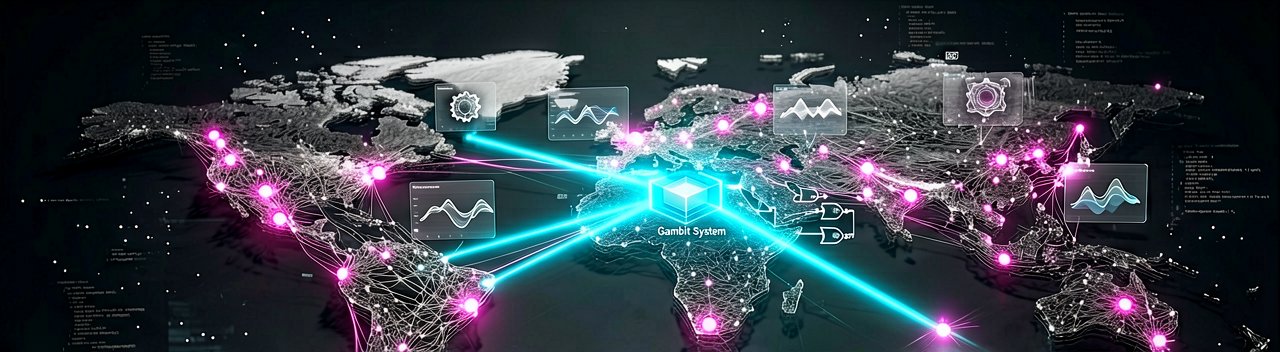
The sudden academic obsession with JRPGs isn't a random trend; it is the logical evolution of how we train predictive systems. While mainstream tech outlets focus entirely on modern generative AI, veteran data engineers are looking backward to the rigid, rule-based systems of the late 1990s and early 2000s. Early titles like Final Fantasy XII introduced the "Gambit System," which was essentially an accessible, visual interface for conditional logic routing. Long before developers were arguing over Python syntax in corporate boardrooms, millions of players were actively programming rudimentary automation pipelines, setting up complex "if-then-else" loops to handle team behavior during encounters.
Modern machine learning practitioners are realizing that these vintage, deterministic systems offer an invaluable blueprint for AI alignment and guardrails. In 2026, enterprise software faces massive scrutiny over the unpredictability of Large Language Models and neural networks. By wrapping these black-box models in structural frameworks inspired by JRPG logic gates, engineers are finding ways to enforce strict operational boundaries. A corporate automated system, for instance, can utilize a neural net to interpret messy customer data, but rely on a rigid, turn-based logic matrix to execute transactions, preventing the AI from hallucinating incorrect financial decisions.

This intersection of old-school logic and new-school learning has shifted stakeholder perspectives within major research labs. Lead engineers are no longer just looking for computer science graduates who can write clean code; they are actively recruiting game designers to build simulation environments. The goal is to move past boring, synthetic bench tests and push algorithms into hyper-dense, simulated stress environments. If an AI agent can successfully balance resource management, prioritize threats, and adapt to shifting status penalties in a multi-hour tactical simulation, it is infinitely better prepared to manage live logistics networks or automated stock trading floors.
Historically, AI training focused on winning or losing, a binary framework that works well for chess but fails miserably in real-world economics. JRPGs introduce the concept of "pyrrhic victories" and long-term sustainability, where winning a single fight at the expense of all your healing items ensures a game over three rooms later. Teaching an algorithm to value its future state over immediate, short-term optimization rewards is the holy grail of modern data science. By studying how these game engines force players to think ten steps ahead under constant resource drain, researchers are finally building AI that understands the true cost of a sloppy victory.
Reading Between the Lines: The Cost of Gamifying Reality
The tech industry's sudden infatuation with JRPG frameworks smells suspiciously like a classic silicon valley distraction tactic. For all the high-minded talk about state machines and sequential decision-making, there is a fundamental contradiction at play. A video game, no matter how complex or packed with status ailments, is ultimately a closed system designed by a human architect with an intentional path to victory. Real-world data ecosystems enjoy no such luxury; they are fundamentally open, chaotic, and completely indifferent to whether the user wins or loses. Pretending that mastering a scripted boss fight translates seamlessly to stabilizing a crumbling global supply chain assumes a level of order that simply does not exist in the wild.
Furthermore, this methodology exposes a deeper skepticism regarding the current trajectory of deep learning. By retreating to the rigid, predictable boundaries of turn-based combat, data scientists are quietly admitting the limitations of pure, unadulterated neural networks. For years, the promise was that if we just threw enough compute power and parameters at a problem, the AI would figure it out. Now, engineers are forced to build artificial training wheels using thirty-year-old game mechanics just to keep their models from hallucinating. It suggests that our most advanced corporate systems are far more fragile than tech evangelists care to admit, requiring highly structured, simulated playpens just to learn basic risk aversion.
The long-term implications of this approach could also introduce dangerous biases into enterprise automation. JRPG systems heavily reward min-maxing—the practice of completely ignoring narrative context to hyper-optimize specific mathematical builds. When applied to algorithmic trading or healthcare logistics, an AI trained exclusively in this environment will inherently look for exploits within the rules. It will sacrifice secondary, unquantifiable human factors to maximize its primary metric, potentially triggering systemic glitches that look perfectly rational to the algorithm but prove disastrous for the humans relying on it.
"We spent billions of dollars trying to build a digital god that could predict the future, only to realize the poor thing couldn't handle a sudden shift in interest rates without us mapping its logic to the combat engine of a 1997 PlayStation game. It turns out the cutting edge of tech infrastructure isn't a sleek, sci-fi superintelligence; it is just a very expensive, highly stressed gamer trying to survive a boss fight it didn't ask to play."
Artūras Malašauskas is an AI Systems Integrator with 20+ years of production-grade web engineering experience. He has designed, shipped, and scaled enterprise Python/PHP systems for logistics, SaaS, and public-sector clients. For the past year, he has focused exclusively on AI integrations: deploying open-source LLMs, building generative media pipelines (image, audio, video), and engineering multi-agent workflows for real production environments. His standard: reproducibility, security, cost-efficient inference—no vaporware. He documents and evaluates emerging AI tooling, separating verified capabilities from marketing noise. Technical editor at: muza-ai.eu, ai-verslas.lt, ai-naujinos.lt Connect on LinkedIn
Comments