BriteCore’s New AI Playbook: Moving Past the Hype of ‘Bolt-On’ Insurance Tech

The property and casualty (P&C) insurance industry has a notorious reputation for treating modern software like a fresh coat of paint on a crumbling house. For years, legacy carriers have grabbed headlines by slapping third-party generative AI tools onto decades-old core systems, resulting in clunky, disconnected workflows that rarely move the needle on real operational efficiency. Breaking away from this superficial trend, cloud-native vendor BriteCore has officially unveiled a native enterprise AI strategy designed to deeply embed automation directly where the actual work happens.
At the center of this rollout is the simultaneous launch of eight specialized, embedded AI copilots tailored to tackle the high-friction bottlenecks that plague underwriting, claims, billing, and system configuration. Rather than forcing risk adjusters or billing teams to jump between separate applications, BriteCore has baked these capabilities straight into its central policy lifecycle. According to the company, tools like the Submission Intake & Readiness Copilot can ingest unstructured, messy submission files and automate data structuring, slashing manual intake workloads by an impressive 80 to 90 percent. Other rollouts include an Invoice Explanation Copilot that translates confusing technical line items into plain language for policyholders, and a Rate Change Copilot that lets users update pricing configurations via simple natural language commands instead of waiting on intensive IT cycles.
But the real news for tech-forward insurers isn't just the individual copilots; it's the underlying infrastructure supporting them. BriteCore is introducing a secure Model Context Protocol (MCP) service layer that allows regional carriers and managing general agents (MGAs) to deploy advanced large language models inside their own private environments. This architecture enables insurers to leverage external processing power for complex logical reasoning and summarization without ever exposing sensitive policyholder data to the public web. By pairing this localized security with an open framework ready for future agentic workflows, the vendor is positioning itself as a foundational operating system for an increasingly automated insurance ecosystem.
What Most Reports Miss: The Structural Trap of Legacy Core Systems
What most reports miss is that the current bottleneck in insurance automation isn't the sophistication of large language models, but the absolute rigidity of the underlying databases they are forced to query. While a standalone chatbot can easily draft a generic email, it cannot independently recalculate a premium, verify a regional underwriting rule, or trigger a claims payout without direct, deep integration into an insurer's system of record. Many mid-market carriers rushing to adopt AI find themselves trapped in expensive integration projects, attempting to connect modern APIs to rigid, decades-old green-screen mainframes. This technical debt creates massive data latency, turning what should be an instantaneous automated decision into an fragmented process that still requires human intervention to manually copy and paste data across screens.
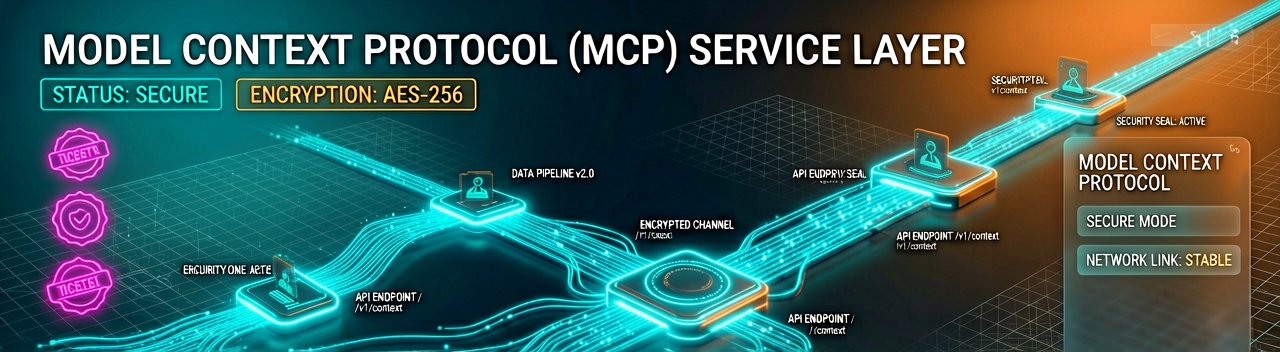
By building an API-first core architecture from scratch, BriteCore bypasses this integration trap entirely, giving its native copilots immediate, zero-latency access to complete policy histories, billing ledgers, and complex claims workflows. As Karlyn Carnahan, Head of North America Insurance at tech research firm Celent pointed out, long-term industry value stems from embedding intelligence directly into operational workflows rather than loosely coupling generative tools onto legacy backends. This structural distinction is exactly why early adopters like Great Bay Insurance have noted immediate improvements in operational speed; their teams can generate comprehensive risk summaries and business reports instantly because the AI isn't pulling data through an unstable external pipeline.
This launch arrives at a critical juncture for the broader market, as highlighted by the Capgemini Research Institute, which revealed that a staggering 42 percent of P&C insurers fail to track any performance metrics for their AI investments, leaving the vast majority stuck in permanent pilot mode. While a small group of elite market leaders are successfully converting early automation into tangible market share gains, the average carrier remains frozen by security concerns and ambiguous returns on investment. BriteCore’s decision to implement the Model Context Protocol directly addresses this industry-wide hesitation by providing a highly governed, localized data framework that keeps strict compliance and executive decision-making firmly in human hands.
Looking further down the road, these eight initial copilots merely represent the first stage of an evolutionary pipeline shifting the industry from passive digital assistants toward autonomous, multi-agent coordination. BriteCore’s stated roadmap outlines an ecosystem where specialized, independent AI agents will securely collaborate using emerging agent-to-agent (A2A) communication standards to handle complex, multi-step processes like commercial renewals and premium operations without human handoffs. For the mid-size carriers and fast-growing MGAs utilizing this platform, this architecture provides a practical, highly secure bridge to competitive modern operations, proving that the future of insurance isn't about chasing tech headlines, but mastering core execution.
Reading Between the Lines: The Reality of Autonomous Insurance
Reading between the lines reveals that the true battleground for insurance technology isn't the dazzling promise of autonomous AI agents, but the boring reality of dirty data. While BriteCore’s Model Context Protocol (MCP) architecture elegantly solves the plumbing problem of data transport, it assumes the data moving through those pipes is clean, consistent, and standardized. In the real world, the mid-market property and casualty carriers and managing general agents targeted by this rollout operate on a messy patchwork of unstructured PDF binders, poorly transcribed claims notes, and localized underwriting exceptions. No matter how sophisticated a native copilot is, forcing it to ingest flawed legacy data will simply automate bad decisions at an unprecedented scale, turning localized data quality into a massive operational vulnerability.

Furthermore, a glaring contradiction sits at the heart of the current insurtech narrative regarding efficiency and risk management. Vendors frequently boast about cutting manual intake and administrative workloads by 80 to 90 percent, yet industry executives simultaneously emphasize that human-in-the-loop oversight remains mandatory for compliance and ethical reasons. If an underwriter is forced to meticulously audit every single risk summary, data extraction, and automated rate configuration generated by an AI tool, the promised time savings evaporate into a new kind of cognitive fatigue. The industry is effectively substituting the tedious manual labor of data entry for the equally exhausting mental labor of continuous system auditing, making it highly debatable whether mid-sized insurers will see the explosive productivity gains promised by marketing departments.
There is also a deeper, systemic risk that the widespread democratization of AI copilots will inadvertently trigger a race to the bottom for risk pricing. As multiple regional carriers adopt identical cloud-native core platforms and pull from similar generalized large language models, their underwriting logic, risk appetites, and premium calculations will naturally begin to converge. This technological homogenization threatens to erode the unique, localized underwriting expertise that has traditionally allowed nimble mid-market players to outperform massive national carriers in specific geographic niches. When every MGA uses the same embedded copilots to instantly ingest and analyze submissions, the market risks shifting toward an undifferentiated commodity model where the only remaining competitive lever is unsustainable price cutting.
Ultimately, the long-term viability of BriteCore’s ambitious multi-agent roadmap depends entirely on how regulatory bodies react when automated systems inevitably make mistakes. State insurance commissioners are already intensifying their scrutiny of algorithmic bias and black-box decision-making, demanding absolute transparency in how policies are priced and claims are denied. An autonomous ecosystem where independent AI agents trade data and adjust coverages behind closed doors presents a massive regulatory target. The insurers who successfully navigate this transition will not be those who blindly automate every workflow, but those who maintain an ironclad, auditable paper trail that proves a human expert was steering the machine every step of the way.
"Ultimately, upgrading an insurance company with generative AI is a lot like putting a rocket engine on a golf cart; it’s undeniably impressive in a straight line, right up until you realize the steering wheel is still made of plastic and the brakes require a notarized signature in triplicate."
Artūras Malašauskas is an AI Systems Integrator with 20+ years of production-grade web engineering experience. He has designed, shipped, and scaled enterprise Python/PHP systems for logistics, SaaS, and public-sector clients. For the past year, he has focused exclusively on AI integrations: deploying open-source LLMs, building generative media pipelines (image, audio, video), and engineering multi-agent workflows for real production environments. His standard: reproducibility, security, cost-efficient inference—no vaporware. He documents and evaluates emerging AI tooling, separating verified capabilities from marketing noise. Technical editor at: muza-ai.eu, ai-verslas.lt, ai-naujinos.lt Connect on LinkedIn
Comments