The Ultimate Minimalists: Generative AI Redefines Peptide Design with Fewer Letters
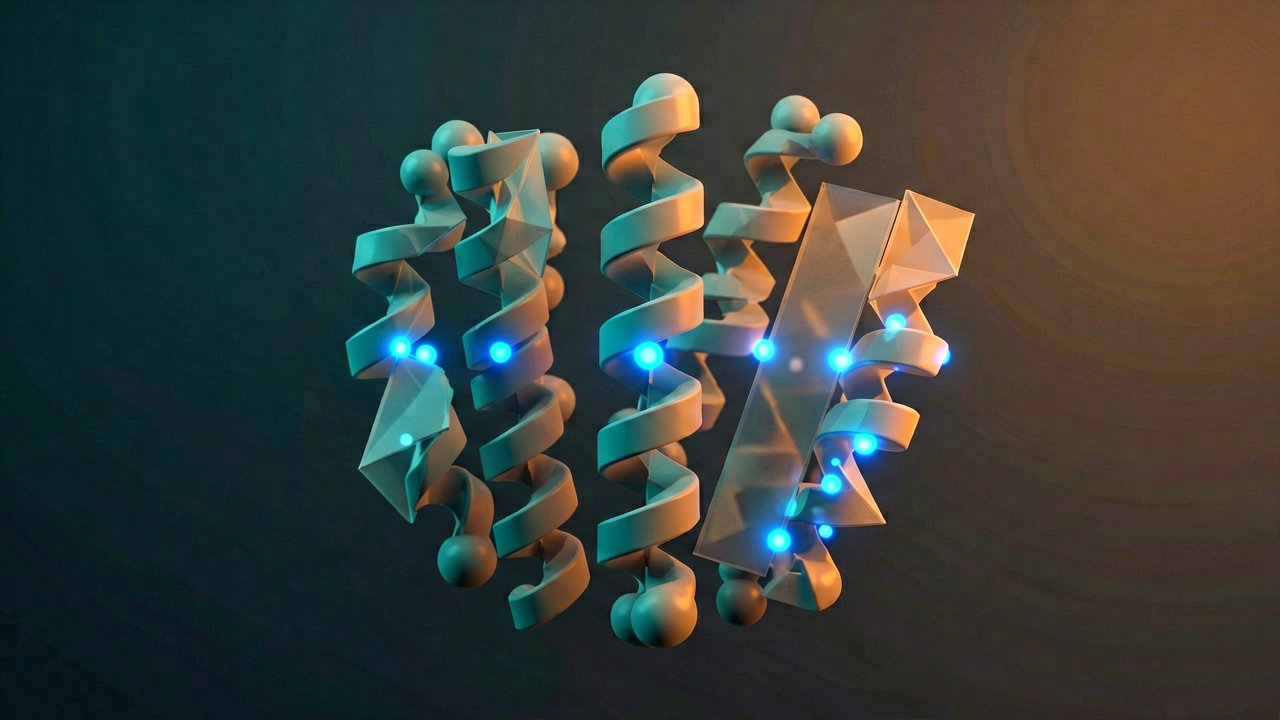
For decades, structural biology operated under a dogmatic rule of twenty. Nature settled on a twenty-character amino acid alphabet to construct every intricate molecular machine keeping us alive. Try tinkering with that alphabet, and you would expect the language of life to fall apart. Yet, a fascinating study published on bioRxiv challenges this complex paradigm. Researchers successfully deployed a generative artificial intelligence model to engineer novel peptides utilizing vastly reduced amino acid alphabets while still locking down custom secondary structure motifs with striking precision.
This development bridges contemporary biological theory with generative machine learning. Trained on hundreds of thousands of proteins from the RCSB Protein Data Bank, the AI model bypasses the typical reliance on rigid evolutionary templates. Instead, it targets foundational physicochemical sequence spaces and secondary structure assignments. The results are turning heads in lab corridors. The system repeatedly generated entirely new, highly simplified proteins that cleanly adopted target shapes like alpha-helices and beta-sheets. Surprisingly, it often managed to capture the broader three-dimensional tertiary structures too, despite lacking explicit exposure to them during its primary training phase.
Trimming the Molecular Noise
Why should we care about paring down amino acids? In standard computer models, treating proteins at the single-residue level across the full canonical alphabet creates immense computational noise and dimensional explosion. It slows down processing speeds and demands heavy hardware. By compressing these twenty residues into specialized, smaller groups based on shared physical properties, researchers essentially filtered out the background static. The AI focuses purely on what matters for structural formation. This approach shifts tokenization from a complex jigsaw puzzle to a streamlined map, dramatically accelerating design loops without losing predictive accuracy.
From Ancient Evolution to Next-Gen Medicine
The implications of this architectural leap stretch far beyond making algorithms run faster on a server rack. For astrobiology and evolutionary biology, this framework offers a literal playground to test how life might have functioned in a prebiotic world before the current twenty-letter code solidified. It lets scientists ask what minimum chemical kit is required to spark functional structures. On the industrial side, synthesized peptides built with fewer, more predictable building blocks are vastly easier and cheaper to manufacture. This paves a smooth highway for customized biomaterials and highly targeted therapeutics, transforming de novo design from an unpredictable art into a precise, efficient engineering discipline.
Deep-Dive: Inside the Structural Downsizing
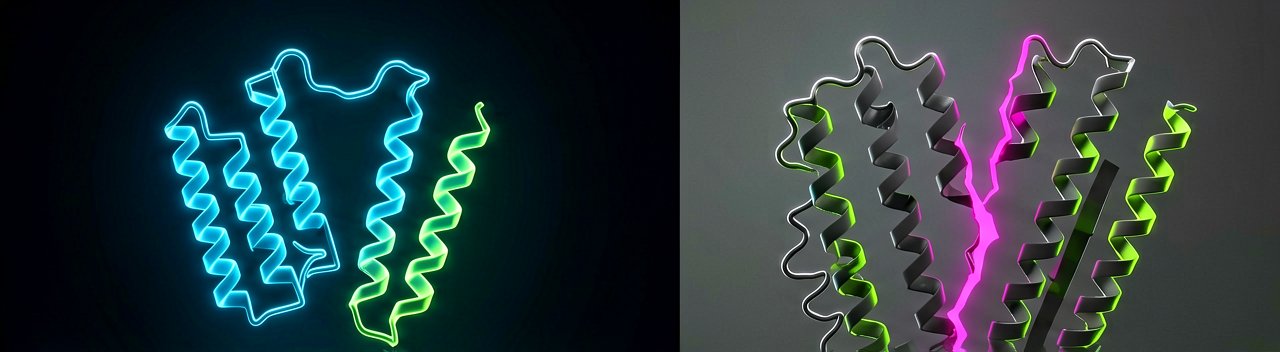
Beneath the Algorithmic Hood: The real magic of this breakthrough lies in how the AI uncouples a protein's shape from its evolutionary lineage. Traditional de novo design has long been a hostage to history. Software typically scavenged existing nature-made configurations, tweaking a few letters here and there while praying the overall fold wouldn't collapse. By forcing the generative model to work with a stripped-back alphabet, researchers effectively cut the umbilical cord to natural evolution. The AI couldn't rely on memorized sequence motifs because the letters it wanted to use simply weren't there anymore. It had to learn the fundamental physics of folding from first principles, discovering entirely novel geometric pathways to arrive at familiar structural destinations.
This radical simplification directly addresses a long-standing bottleneck in biophysics known as Levinthal’s paradox. The paradox notes that if a protein folded by sequentially sampling every possible configuration, it would take longer than the age of the universe to find its correct shape. By compressing the amino acid alphabet, the researchers fundamentally altered the math of the folding landscape. They smoothed out the rugged, energy-rich traps that typically cause synthetic proteins to misfold into useless, gooey aggregates. The AI essentially created a shortcut across the landscape, proving that complex molecular architecture doesn't require a complex vocabulary.
However, the transition from silicon to the wet lab is exposing a fascinating rift among stakeholders. While computational biologists are celebrating the massive reduction in processing overhead, traditional protein chemists remain cautiously skeptical about the real-world stability of these minimal structures. A protein in a living organism doesn't just need to fold; it must withstand fluctuating pH levels, dodge cellular degradation machinery, and maintain its shape under thermal stress. Early feedback from synthesis trials suggests that while these simplified peptides lock into alpha-helices with remarkable ease, they sometimes lack the structural rigidity required for complex enzymatic functions where every angstrom matters.
Looking ahead, the race is on to see how low this alphabet can actually go before the structural integrity completely degrades. Current experiments are successfully hovering around a handful of distinct chemical groups, but pushing the envelope further remains a high-stakes game of molecular Jenga. If the alphabet is trimmed too aggressively, the language of life loses its nuance, rendering the AI incapable of programming the fine-tuned interactions needed for advanced drug delivery. The coming months of rigorous laboratory testing will determine whether these streamlined designs can truly hold their own in the messy, chaotic environment of a living cell.

The Friction Between Theory and Reality
Reading Between the Lines: There is a distinct danger in conflating a beautiful computational model with a robust biological reality. The AI’s ability to generate custom secondary structure motifs using an abbreviated alphabet is a triumph of pattern recognition, but it highlights a glaring contradiction in modern structural biology. We are celebrating the minimization of protein language as a breakthrough, yet nature spent billions of years doing the exact opposite. Evolution actively expanded and retained a twenty-amino-acid toolkit despite the immense metabolic cost of synthesizing complex residues like tryptophan or methionine. This suggests that the "noise" the AI is filtering out might actually contain the subtle, non-linear interactions required for a protein to do anything useful beyond looking pretty on a computer screen.
Furthermore, evaluating success based purely on whether a peptide forms an alpha-helix or a beta-sheet is a remarkably low bar for a technology billed as a paradigm shift. Secondary structures are merely the static scaffolding of the biological world. The real magic—and the real difficulty—lies in function, which requires dynamic flexibility, precise allosteric motion, and highly specific binding pockets. A simplified alphabet might easily map out a rigid cylinder, but it lacks the chemical vocabulary to coordinate a transition metal ion or respond to subtle changes in cellular voltage. By stripping down the alphabet to optimize computational speed, we may inadvertently be engineering sterile molecular statues that are structurally perfect but functionally inert.
Projecting this technology into the commercial pipeline reveals a looming bottleneck that the tech community largely ignores. Scaling up the production of these minimalist peptides presents a massive regulatory and manufacturing hurdle. Current high-throughput biomanufacturing relies on cellular factories like E. coli or yeast, which are hardwired to use the standard twenty amino acids. Forcing these organisms to express proteins with restricted or non-canonical alphabets requires extensive metabolic engineering, effectively transferring the complexity from the digital design phase straight into the physical fermentation vat. Until the wet-lab infrastructure catches up with the generative algorithms, these streamlined designs will likely remain expensive boutique curiosities rather than mass-market therapeutics.
"We have officially taught computers to write breathtaking poetry using only five words, which is a magnificent technical achievement, right up until the moment someone asks the program to actually go out and order a complicated dinner."
Artūras Malašauskas is an AI Systems Integrator with 20+ years of production-grade web engineering experience. He has designed, shipped, and scaled enterprise Python/PHP systems for logistics, SaaS, and public-sector clients. For the past year, he has focused exclusively on AI integrations: deploying open-source LLMs, building generative media pipelines (image, audio, video), and engineering multi-agent workflows for real production environments. His standard: reproducibility, security, cost-efficient inference—no vaporware. He documents and evaluates emerging AI tooling, separating verified capabilities from marketing noise. Technical editor at: muza-ai.eu, ai-verslas.lt, ai-naujinos.lt Connect on LinkedIn
Comments