Beyond the Buzzwords: The Board of Regents’ Systemwide Blueprint for the AI Era

Higher education has a reputation for moving at a glacial pace, but the sheer velocity of commercial artificial intelligence development is forcing a massive culture shift. In a decisive bid to stay ahead of the curve, the South Dakota Board of Regents has officially stepped up to the plate. The leadership team rolled out a comprehensive set of systemwide strategic objectives explicitly designed to turn its public universities into active, AI-ready laboratories rather than passive observers of a changing economy. This isn't just about tweaking a few computer science syllabi; it's a structural overhaul aimed at making students, faculty, and administrative operations fundamentally fluent in the technologies reshaping our reality.
According to an announcement detailing the initiative on South Dakota News, the BOR's new vision is organized around five foundational pillars. The strategy addresses everything from infrastructure deficits and programmatic shifts to the practical utilization of agentic AI. It also heavily targets workforce integration, ensuring that graduates aren't left behind by regional employers who now expect baseline algorithmic literacy as a standard requirement. BOR President Jeff Partridge made the stakes clear, noting that higher education simply must evolve as rapidly as the economy itself, framing the entire rollout as a direct investment in the long-term competitiveness of the state.
Balancing Code and Curriculum
The real test of this framework lies in how seamlessly it bridges abstract administrative policies with daily academic life. By putting significant emphasis on the optimization of agentic tools and pushing for advanced AI research, the Board is explicitly moving away from outdated, restrictive models that merely treat AI as an engine for academic misconduct. Instead, university leaders like University of South Dakota President Sheila Gestring are advocating for a robust, campus-wide support system that builds real digital confidence, ensuring both educators and students can utilize these platforms ethically, securely, and effectively.
This macro-level pivot aligns with a broader national trend in higher education governance, where regional academic networks are discovering that siloed campus policies no longer cut it. Similar structural frameworks have been popping up across various university networks, such as the Universities of Wisconsin, where regents recently endorsed their own targeted AI integration plan prioritizing critical thinking alongside standard technological fluency. For South Dakota, the challenge will be turning this elegant five-part framework into tangible classroom practices, proving that public institutions can adapt quickly enough to lead a tech transformation instead of merely reacting to it.
Decoding the Playbook: The Reality of Academic Tech Infrastructure
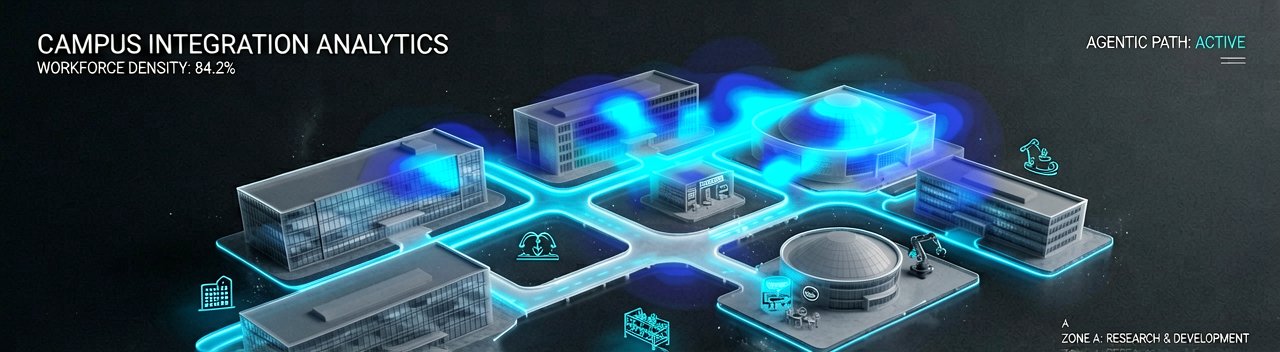
Behind the Scenes: The true hurdle for the Board of Regents isn't convincing professors to use ChatGPT; it's overhauled the archaic, highly fragmented data architecture that underpins public higher education. For decades, universities have operated as decentralized data silos, with admissions, financial aid, and individual department networks rarely speaking the same language. Implementing systemwide agentic AI tools requires unified, clean, and highly secure data streams. Without a massive, quiet modernization of backend servers and database management systems, even the most forward-thinking strategic objectives run the risk of becoming expensive, non-functional academic ornaments.
Stakeholder anxieties also run much deeper than simple tech-aversion. Faculty unions and department heads across regional campuses are quietly questioning the long-term impact of AI integration on academic labor and specialized curriculum funding. While administrative messaging naturally focuses on student marketability and workforce readiness, educators are rightfully protective of academic freedom and the human elements of mentorship. There is a delicate, politically charged tightrope to walk here, as university leaders must prove that automated administrative efficiencies won't eventually bleed into a devaluation of human expertise in humanity and liberal arts departments.
Historically, when public university systems attempt top-down technological mandates, the results often suffer from a severe implementation gap between elite research hubs and smaller regional campuses. In South Dakota, institutions like South Dakota Mines possess the engineering infrastructure to absorb and iterate on these technologies rapidly, whereas smaller campuses face much steeper uphill battles regarding specialized faculty recruitment. The success of this specific BOR initiative hinges entirely on a highly equitable distribution of resources, ensuring that infrastructural upgrades aren't disproportionately swallowed by the state's largest institutional brands.
Furthermore, the pressure from regional industry partners has reached a boiling point, effectively forcing the state's hand. Local employers in agriculture, healthcare, and financial services are no longer treating automated data analysis as an advanced specialty skill, but rather as a baseline operational competency. By anchoring the strategic pillars to direct workforce integration, the BOR is trying to insulate the local economy from severe brain drain, creating an immediate, localized ecosystem where tech-fluent graduates can walk straight from graduation stages into high-paying, future-proof regional careers.
Reading Between the Lines: The Friction Between Policy and Practice
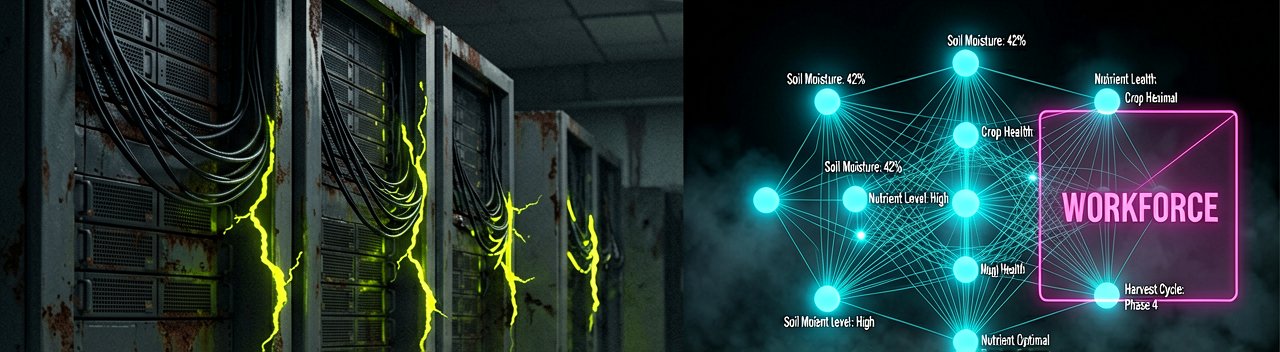
Reading Between the Lines: The grandest illusion of any systemwide technology mandate is the assumption that policy automatically dictates classroom reality. While the Board of Regents outlines a highly sophisticated vision of algorithmic literacy and agentic optimization, it glosses over the stark reality of institutional inertia. University bureaucracies are structurally designed to resist rapid, volatile disruption, and expecting overworked adjunct instructors and traditionalist tenure-track faculty to fundamentally transform their pedagogical frameworks overnight is an exercise in wishful thinking. A directive passed down from a boardroom in Pierre does not instantly translate into updated curricula, especially when those doing the heavy lifting are rarely given the corresponding financial or temporal relief to reinvent their workflows.
There is also a glaring philosophical contradiction embedded in the strategy's dual focus on academic integrity and automated utility. The BOR explicitly pushes for advanced AI research and student adoption of next-generation tools, yet individual university syllabi remain a chaotic, contradictory patchwork of punitive detection policies and hyper-restrictive guidelines. One classroom treats LLM assistance as an essential workforce skill, while the lecture hall next door treats it as an expellable offense. Until the system establishes a uniform, legally sound standard that explicitly defines where ethical assistance ends and intellectual dishonesty begins, this strategic ambiguity will continue to leave both students and faculty paralyzed by conflicting expectations.
Looking ahead, the long-term fiscal implications of this digital arms race could trigger an unwelcome reckoning for public education funding. Keeping pace with commercial artificial intelligence means constantly upgrading licensing agreements, expanding computational hardware, and securing proprietary data pipelines—costs that are notoriously volatile. Public university systems operate on rigid, tax-dependent state budgets that simply aren't built for the exponential, subscription-heavy pricing models of Silicon Valley. If the state legislature fails to continuously subsidize these ambitious technical ambitions, the financial burden will inevitably trickle down to the worst possible place: student tuition and fees.
"Ultimately, academia’s sudden scramble to embrace artificial intelligence feels a bit like a century-old railroad company trying to outfit its steam locomotives with jet engines. It is an admirable, forward-thinking spectacle, but everyone involved is quietly praying the passengers don't notice that the tracks beneath them are still made of wood."
Artūras Malašauskas is an AI Systems Integrator with 20+ years of production-grade web engineering experience. He has designed, shipped, and scaled enterprise Python/PHP systems for logistics, SaaS, and public-sector clients. For the past year, he has focused exclusively on AI integrations: deploying open-source LLMs, building generative media pipelines (image, audio, video), and engineering multi-agent workflows for real production environments. His standard: reproducibility, security, cost-efficient inference—no vaporware. He documents and evaluates emerging AI tooling, separating verified capabilities from marketing noise. Technical editor at: muza-ai.eu, ai-verslas.lt, ai-naujinos.lt Connect on LinkedIn
Comments