The Ghost in the Machine: Walking the Living, Breathing Factory Floor of 2026
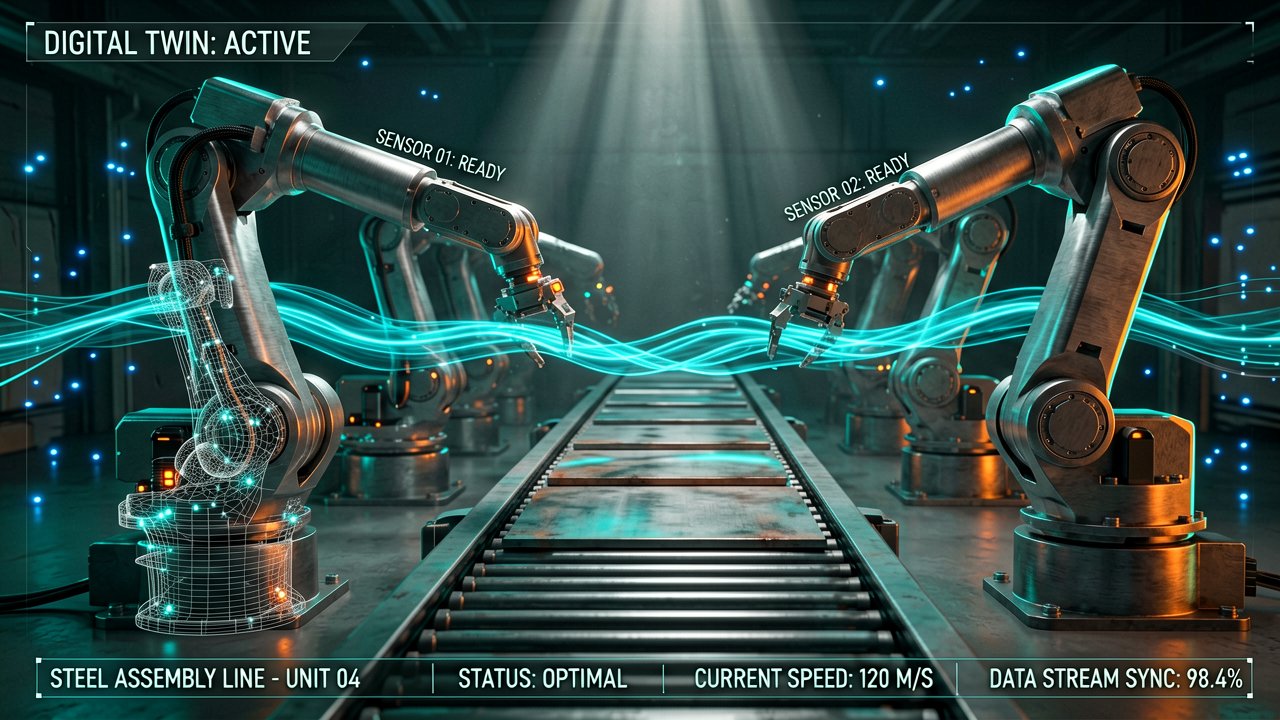
For decades, Hollywood told us the future of manufacturing would look like a cold, dystopian landscape of heavy steel and mindless robotic arms moving in terrifying, synchronized silence. Walking onto a modern assembly floor today reveals a reality that is far more fascinating, fluid, and frankly, alive. The air does not smell like scorched motor oil; instead, it hums with the invisible, frantic data exchange of an ecosystem operating in perfect harmony. It is a world where physical structures are merely a secondary manifestation of software. Industry is no longer just automated—it has become intelligent.
Step onto the floor and the first thing you notice is what is missing: the rigid assembly line. In its place, autonomous mobile robots dance a delicate ballet, ferrying custom modules and adjusting their speed based on localized floor vibration, tilt, and real-time load analytics. If a machine detects a fraction of a millimeter variance in a incoming steel panel, it does not stop the line to trigger a panicked human intervention. Instead, the surrounding machines adapt on the fly, applying compensatory micro-adjustments downstream. This is not the brute-force automation of the past; it is a cognitive industry that thrives on variability.
The Living Digital Twin
The true magic of modern production happens in a realm you cannot touch. Every physical bolt, robotic arm, and climate sensor has a hyper-precise digital counterpart operating in a shared virtual universe. Automakers like the BMW Group have moved their entire global production network into real-time 3D simulations powered by industrial metaverse platforms like NVIDIA Omniverse. Before a new vehicle model ever touches a physical assembly line, it is built thousands of times virtually.
This virtual testing eliminates weeks of physical debugging. Take automated collision checks, which used to require shutting down sections of a plant for a month to ensure a car frame would fit through the robotic welding stations. Today, engineers run those paths through 3D scans virtually, slashing that four-week headache down to a mere three days of server processing. It is an approach that treats heavy industry like scalable code, letting teams across different continents manipulate the same factory floor simultaneously.
Agentic AI and the Human Edge
We have also officially crossed the threshold from analytical AI into the era of agentic autonomy. The software running these spaces does not just hand humans a neat report of what went wrong at the end of a shift; it takes active, multi-step actions to optimize workflows itself. If a supply chain bottleneck delays a specific electronic component, the factory's core AI autonomously reshuffles the production schedule, alters inventory orders, and adjusts energy loads to keep output steady. According to insights shared by the World Economic Forum, this deep integration is fundamentally redefining industrial roles. Machines handle the repetitive, data-heavy, and physically punishing tasks, shifting human workers into specialized, knowledge-intensive roles focused on high-level orchestration, ethics, and system exceptions.
This shift represents the core philosophy of Industry 5.0—a return to human-machine collaboration where logic and empathy intersect. The factory of the future is not a barren wasteland devoid of humanity. It is an optimized, self-healing environment where technology elevates human craftsmanship to a completely unprecedented scale.
Behind the Scenes: The Invisible Friction of the Autonomous Shift
The glossy brochures for intelligent manufacturing usually showcase pristine floors and seamless automated transitions, but the view from the concrete looks wildly different. For the veteran plant managers who spent decades relying on gut instinct and audible machine cues, this evolution is a seismic cultural shock. They are moving from a world where you could diagnose a failing bearing by putting your hand on a machine casing to one where an algorithm preemptively orders a replacement part based on ultrasonic acoustic data. This creates an immediate friction point between traditional mechanical wisdom and the absolute dictate of predictive analytics, forcing teams to trust code over decades of physical intuition.
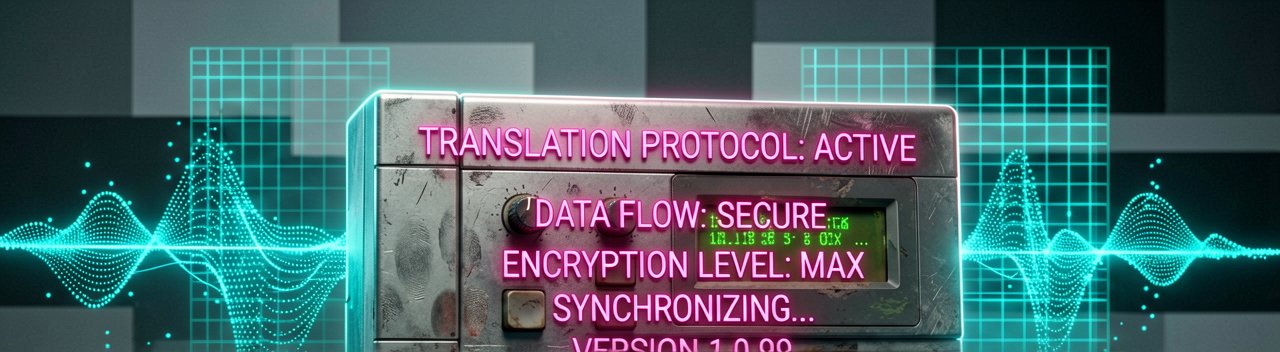
This cultural friction is compounded by a massive, underreported legacy tech debt. While greenfield factories can be built from the ground up with native internet-of-things sensors, the vast majority of global manufacturing still happens in brownfield facilities. These are legacy spaces where forty-year-old stamping presses operate alongside cutting-edge edge-computing nodes. Getting a proprietary, mid-1990s programmable logic controller to talk nicely with a modern enterprise cloud architecture requires a chaotic mix of custom middleware, translation protocols, and a lot of duct-tape engineering. It is an expensive, frustrating puzzle that keeps system integrators awake at night.
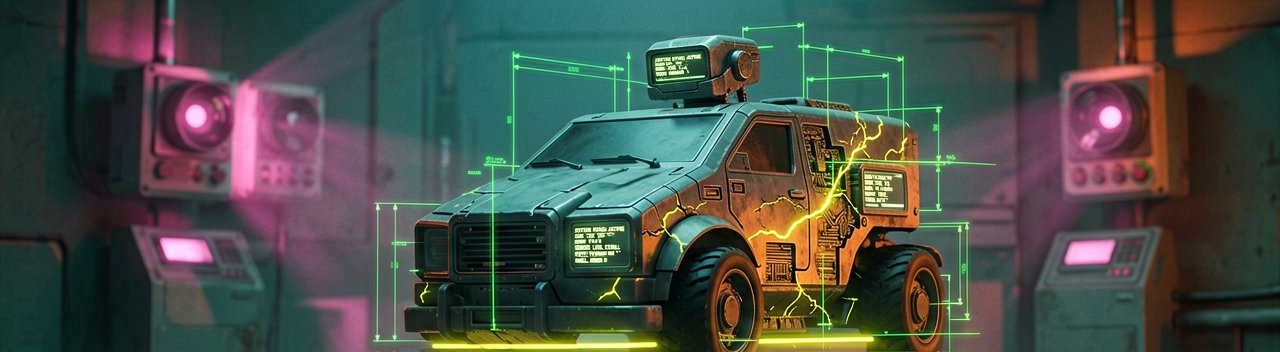
From a stakeholder perspective, the financial arithmetic of these upgrades is also undergoing a massive transformation. Chief Financial Officers are no longer just looking at traditional return on investment metrics like parts-per-minute or reduced scrap rates. Instead, the justification for these multi-million-dollar tech overhauls is increasingly tied to energy flexibility and regulatory compliance. With fluctuating grid pricing and tightening carbon accounting laws, a factory that can autonomously dim its heavy machinery during peak energy tariffs or perfectly track the carbon footprint of every individual component holds a massive competitive advantage that never shows up on a standard production line metric.
The workforce dynamic is shifting just as dramatically, though not in the way early automation doomers predicted. The real crisis on the factory floor is not mass unemployment, but an acute skills vacuum. Companies are finding that the ideal modern line worker needs a bizarrely hybrid skillset—part mechanical technician, part data analyst, and part software troubleshooter. This has sparked a quiet but intense global talent war, forcing industrial giants to partner with local technical colleges to create entirely new curricula just to keep pace with the software running their lines.
Ultimately, this deep digital integration reveals that the future of manufacturing is not a purely mechanical milestone, but a complex data management challenge. The factories that successfully navigate this era will be the ones that treat data as a raw material, just like steel or plastic. The transformation is messy, incredibly expensive, and deeply human, but it is fundamentally rewriting the economic rules of how things are made on this planet.
Reading Between the Lines: The High-Wire Act of Total Connectivity
The tech industry's unbridled enthusiasm for the fully autonomous factory conveniently glints past a chilling operational reality: the hyper-connected floor is an unprecedentedly massive cyberattack surface. In the old days of manufacturing, an air-gapped machine was physically safe from malicious code; today, a single compromised firmware update on a sub-tier supplier’s sensor can cripple an entire continental production network. Industrial operators are discovering that bringing consumer-grade software agility to heavy machinery means inheriting consumer-grade vulnerabilities, transforming what used to be a physical engineering problem into a high-stakes game of digital cat-and-mouse.
There is also an undeniable paradox at the heart of "flexible" intelligent manufacturing. While these systems are brilliant at altering production paths for minor product variations, they are remarkably fragile when confronted with macro black swan events. An AI model trained entirely on historical optimization parameters can easily hallucinate or freeze when global shipping lanes close or rare-earth mineral supplies dry up overnight. By ruthlessly stripping out human-held buffers and "inefficient" excess inventory in the name of algorithmic perfection, manufacturers are creating highly optimized ecosystems that are ironically far more brittle to unpredictable global shocks.
Furthermore, the industry's loud praise for environmental sustainability via smart optimization often ignores the staggering carbon footprint of the computing power required to run it. Operating thousands of real-time digital twins and continuous machine-learning training models requires massive server infrastructure that guzzles electricity and water for cooling. We risk entering an absurd loop where a factory proudly slashes its physical floor emissions by twelve percent, only to transfer that exact environmental burden—plus interest—to a data center three states away. True industrial efficiency cannot just be an accounting trick that shifts carbon from the assembly line to the cloud server.
We must also look skeptically at the promised democratization of manufacturing through cloud-based smart tools. The sheer capital required to deploy, maintain, and constantly license these advanced software ecosystems is widening the gulf between industrial titans and small-to-medium enterprises. Instead of leveling the playing field, the intelligent manufacturing revolution threatens to create a stark digital feudalism, where smaller machine shops are permanently relegated to low-margin tier-three supplier status because they cannot afford the algorithmic entry fee to play in the metaverse.
"We've spent billions of dollars and millions of engineering hours replacing the guy who used to kick the machine to make it work with a complex system of self-diagnosing, neural-network-driven sensors. Now, when the line stops, we just get a beautifully rendered, 3D digital twin of the machine telling us, in real-time and across six continents, that it still needs to be kicked."
Artūras Malašauskas is an AI Systems Integrator with 20+ years of production-grade web engineering experience. He has designed, shipped, and scaled enterprise Python/PHP systems for logistics, SaaS, and public-sector clients. For the past year, he has focused exclusively on AI integrations: deploying open-source LLMs, building generative media pipelines (image, audio, video), and engineering multi-agent workflows for real production environments. His standard: reproducibility, security, cost-efficient inference—no vaporware. He documents and evaluates emerging AI tooling, separating verified capabilities from marketing noise. Technical editor at: muza-ai.eu, ai-verslas.lt, ai-naujinos.lt Connect on LinkedIn
Comments