Clemson’s Launchpad Proves AI Isn’t Just a Silicon Valley Game

Silicon Valley doesn’t hold a monopoly on the future of generative tech, and anyone doubting that fact just needed to step into downtown Clemson. The Brook T. Smith Launchpad recently wrapped up its third annual Business of AI Symposium, turning the university’s 9,000-square-foot entrepreneurship hub into a high-octane mixer for tech executives, venture capitalists, and student founders. It wasn't just a day of academic theory either. Around 150 attendees packed the space to figure out exactly how artificial intelligence is changing the mechanics of starting and scaling a company in the real world.
What makes this particular event resonate is its deeply rooted network. Instead of importing outside tech evangelists to lecture the crowd, the event leaned heavily on its own. The panels featured 20 Clemson-affiliated speakers, including seasoned veterans who brought hard-earned perspectives from global heavyweights like Nvidia, Microsoft, and Amazon, as reported by Clemson News . Co-chaired by Michelle Wiltse, CEO of CompanAIn, and Marcus Detry of Top Tier Capital Partners, the conversations skipped the usual entry-level fluff. They dove straight into heavy-hitting territory, tackling everything from deploying machine learning inside legacy businesses to debating whether the current AI wave is a tech bubble or a genuine economic panacea.
From the Sandbox to the Pitch Stage
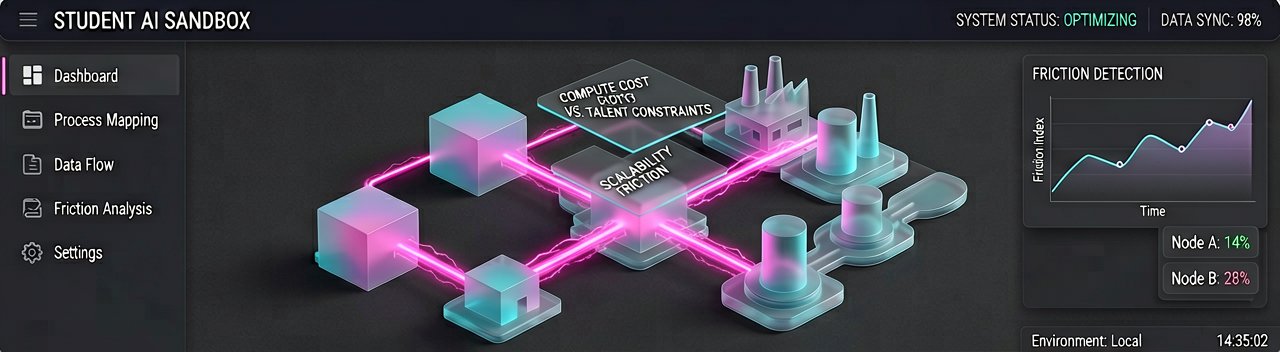
The real energy of the symposium, however, was anchored by the students who are actively building businesses while balancing a full course load. This isn't a passive exercise at Clemson. The Launchpad features an "AI Sandbox," a dedicated virtual and physical infrastructure where student teams train models specifically to iron out business inefficiencies. The culmination of that hands-on approach was on full display during a fierce student pitch competition that capped off the afternoon.
Twelve finalist teams from across the university took the stage, dangling their AI-driven business concepts before a discerning panel of judges for a shot at $10,000 in prize money. When the dust settled, the top spot went to Drive AI, a venture spearheaded by Danika Pfleghardt and Reid Turner. It’s a vivid reminder that the next generation of software enterprise is being built in the spaces between lectures, proving that regional university hubs are quietly becoming the vital lifeblood of practical tech innovation.
What Most Reports Miss: The Friction Behind the Fusion
Behind the Scenes: The shiny exterior of a university tech symposium often masks a persistent, systemic friction that traditional reporting completely overlooks. Bridging the gap between corporate AI behemoths and a collegiate sandbox is not a seamless process. Tech giants operate on compressed, quarterly product cycles that demand immediate monetization, while university ecosystems inherently move at a more methodical, educational pace. The true triumph of the Brook T. Smith Launchpad is not merely that it gathered high-profile alumni under one roof, but that it successfully translated enterprise-grade anxiety into actionable student curricula.
For the executives arriving from environments like Nvidia and Amazon, the primary concern keeping them awake at night is the severe talent bottleneck and the soaring cost of compute power. Conversely, student founders are operating in a resource-constrained environment where agility is their only real leverage. By forcing these two disparate worlds to collide in downtown Clemson, the symposium exposed students to the brutal realities of deployment. They quickly learned that having a clever algorithm is useless if the cloud architecture required to run it destroys your profit margins before your first seed round.
This reality check was particularly evident in the "AI Sandbox" discussions, where the focus shifted from theoretical capabilities to the messy logistics of data governance. Veteran stakeholders didn't sugarcoat the narrative, emphasizing that modern enterprise AI is less about pure coding genius and more about the legalities of proprietary training data and compliance. For the student teams, this meant rethinking their entire development strategy on the fly, moving away from generic wrappers toward highly specialized, vertically integrated solutions that solve hyper-local problems.
The historical context of Clemson's entrepreneurial push adds another layer of depth to this evolution. Over the past decade, regional tech hubs outside the traditional coastal enclaves have struggled with the "brain drain" phenomenon, where top-tier engineering talent flees to major tech corridors immediately upon graduation. The strategic placement of the Launchpad in a physical, downtown footprint is a deliberate countermeasure designed to anchor that intellectual capital locally. By providing immediate access to venture capitalists and high-value mentorship, the university is attempting to build a self-sustaining ecosystem where the next major enterprise software company doesn't just start in South Carolina, but stays there.

Ultimately, the $10,000 pitch competition served as a microcosm of this broader economic experiment. When teams like Drive AI take the stage, they are not just competing for a cash infusion; they are validating a model of distributed innovation. The judges were not looking for abstract science projects, but for viable, battle-tested business models that could survive the impending consolidation of the AI market. This shift from novelty to utility marks the true maturity of the regional tech scene, proving that the mid-Atlantic corridor is no longer just watching the AI revolution unfold from the sidelines.
Reading Between the Lines: The Valuation Gap
Reading Between the Lines: The celebratory atmosphere surrounding university AI pitch competitions often obscures a sobering macroeconomic reality. While student founders are busy dreaming up novel applications for machine learning, the broader venture capital landscape is undergoing a massive, painful correction. The days of securing a multi-million-dollar valuation based on a slick pitch deck and a handful of API calls are officially over. Today’s investors are plagued by a profound skepticism, hunting exclusively for proprietary data moats and concrete revenue models that most collegiate startups simply cannot provide in their infancy.
This creates a glaring contradiction within initiatives like the AI Sandbox. On one hand, students are encouraged to experiment freely, failing fast in a protected environment that rewards academic curiosity. On the other hand, the corporate sponsors and judges judging these competitions are operating under intense pressure to deliver immediate efficiency gains and cost reductions within their own organizations. The result is a widening disconnect between the idealistic, broad-stroke solutions pitched by enthusiastic undergraduates and the hyper-specific, unglamorous toolsets that the enterprise market actually wants to buy.
Furthermore, the assumption that regional tech hubs can easily retain this freshly minted talent remains highly questionable. While the Launchpad provides an exceptional launchpad for early-stage ideation, the gravitational pull of major tech ecosystems like Austin, Atlanta, or Charlotte is immense once a startup scales past its initial seed round. Clemson may successfully foster the initial spark of innovation, but without a robust, local secondary funding market and a dense network of mature tech companies to absorb mid-level talent, the risk of corporate migration remains an uphill battle that a $10,000 prize pool cannot fix.
Projecting the implications forward, the true test of Clemson's AI ecosystem will not be how many startups are born in the sandbox, but how many survive the impending wave of open-source commoditization. As foundational models become increasingly cheap and accessible, the software layer built on top of them becomes dangerously fragile. The student teams that will actually endure are those focused not on the underlying technology itself, but on the messy, human logistical bottlenecks that Silicon Valley frequently ignores, such as localized manufacturing pipelines or regional supply chain inefficiencies.
Building a tech startup in college is a lot like learning to drive on a simulator; it feels incredibly thrilling and high-stakes until you hit the actual highway and realize everyone else is driving a semi-truck and they aren't planning on braking for your prototype.
Artūras Malašauskas is an AI Systems Integrator with 20+ years of production-grade web engineering experience. He has designed, shipped, and scaled enterprise Python/PHP systems for logistics, SaaS, and public-sector clients. For the past year, he has focused exclusively on AI integrations: deploying open-source LLMs, building generative media pipelines (image, audio, video), and engineering multi-agent workflows for real production environments. His standard: reproducibility, security, cost-efficient inference—no vaporware. He documents and evaluates emerging AI tooling, separating verified capabilities from marketing noise. Technical editor at: muza-ai.eu, ai-verslas.lt, ai-naujinos.lt Connect on LinkedIn
Comments