The Quiet Disruption: How Ambient Intelligence is Rewriting the Rules of Healthcare Delivery
For decades, the loudest complaint in any hospital hallway has not been about the lack of cutting-edge pharmaceuticals or the precision of surgical steel. It has been about the brutal, soul-crushing weight of paperwork. Doctors and nurses have essentially been transformed into highly educated data-entry clerks, shackled to electronic health records (EHR) while trying to squeeze in fleeting moments of face-to-face patient care. But a profound shift is quietly taking over the medical landscape. Instead of replacing the physician, artificial intelligence is stepping into the role of the ultimate administrative buffer, radically transforming how care is managed, delivered, and experienced.
This is not a far-off futuristic concept or science-fiction hype. In fact, real-world data shows that leading healthcare systems are treating these intelligent tools as fundamental operational infrastructure rather than standalone gimmicks. According to a detailed global operations report by Intuition Labs, major medical institutions like Mass General Brigham have seen a staggering 40% reduction in physician burnout within mere weeks of deploying generative AI scribes. Think about that for a second. In an industry plagued by staffing shortages and unsustainable stress levels, a piece of software is pulling off a massive intervention just by listening to ambient room conversations and structuring the medical data automatically.
Flipping the Script on Administrative Fatigue
The core problem has always been integration. Early iterations of hospital software frequently introduced clunky pop-ups and endless drop-down menus that fragmented a clinician's attention. Today, native AI tools sit directly within the deep architecture of the EHR, reading past documentation, organizing billing codes seamlessly, and filling fields behind the scenes. This allows the human expert to do what they do best: focus entirely on the person sitting on the examination table.
Government infrastructure is leaning heavily into this sea change too. The U.S. Department of Veterans Affairs expanded ambient AI scribe technology across its national medical centers after an initial pilot saved over 15,700 hours of documentation in just one year. That is a massive chunk of recovered time that goes straight back into active patient care, shortening clinical queues and alleviating the strain on overworked diagnostic departments.

The Realities of the Automated Triage
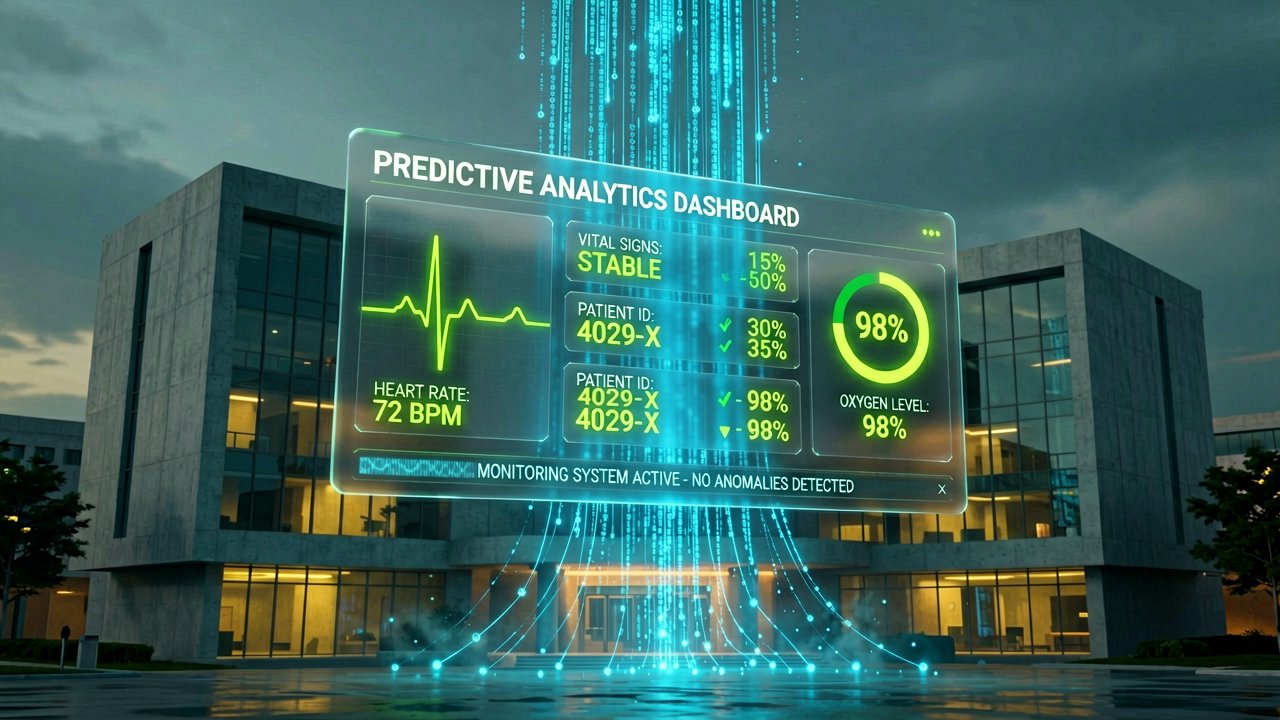
Of course, the disruption goes deeper than just typing up patient notes. AI algorithms are taking over predictive staffing, forecasting emergency room surges, and managing complex scheduling patterns that human administrators used to map out on convoluted spreadsheets. By utilizing predictive analytics, hospitals can align their staff schedules directly with anticipated patient influxes, reducing waiting room bottlenecks and driving down massive overhead costs without sacrificing service quality.
But the real test of discipline will be maintaining the delicate balance between automation and human intuition. When synthetic intelligence handles the paperwork, it leaves the uniquely human aspects of care—empathy, shared decision-making, and nuance—securely in the hands of the medical provider. The institutions that master this balance will dictate the standard of modern medicine, turning what was once a rigid data-entry bottleneck into an agile, patient-centric delivery model.
What Most Reports Miss: The Friction of True Clinical Integration
The glossy marketing brochures for medical artificial intelligence lean heavily on the promise of effortless, instant optimization. They show smiling clinicians effortlessly gliding through their rounds while invisible algorithms perfectly predict every patient need. But seasoned healthcare veterans know that the reality on the hospital floor is far more combative. The true battlefield of this disruption is not the elegance of the AI's code, but the stubborn, entrenched legacy infrastructure of modern health systems. Integrating a sophisticated machine learning model into a patchwork of decades-old software systems often requires a level of custom engineering that leaves IT departments completely overwhelmed.
This technological friction has created a deep ideological divide among healthcare stakeholders. On one side, hospital chief financial officers view automated triage and predictive administrative tools as a financial lifesaver, capable of trimming operational waste and maximizing bed turnover in an era of razor-thin margins. On the other side, frontline nursing staff and resident physicians frequently view these tools with a mix of exhaustion and deep skepticism. They have spent the last fifteen years adapting to poorly designed technology updates that promised to make their lives easier, only to add more clicks, more alerts, and more administrative boxes to check before they can discharge a patient.

Historically, medicine has always resisted rapid structural overhauls, and for good reason. The "move fast and break things" ethos of Silicon Valley does not translate well to an environment where breaking things means compromising patient safety. When an algorithm flags a patient for potential sepsis or automatically suggests a medication dosage, it alters the legal and ethical liability of the care team. Doctors are forced to constantly second-guess whether to trust their own hard-earned clinical intuition or the black-box recommendation of a proprietary software package, creating a novel form of psychological strain known as automation bias.
Furthermore, the data feeding these advanced models remains a massive point of vulnerability. Most hospital data is notoriously messy, fragmented, and siloed across different departments that refuse to communicate with one another. An AI model trained on pristine, heavily curated academic data often falters when deployed in a chaotic community hospital serving a diverse, underfunded population. If the underlying data reflects historical inequalities or fragmented charting habits, the AI simply automates and accelerates those existing flaws, disguised under the veneer of objective mathematical calculation.
To truly revolutionize care delivery, technology providers are learning they cannot just build smart tools; they have to design for the messy reality of human behavior. The ambient tools finding the most success are those that remain entirely invisible during the patient encounter, acting as a passive observer rather than an active chore. The future of healthcare delivery belongs to the systems that use technology to fade into the background, successfully restoring the sacred, uninterrupted space between the clinician and the patient.
Reading Between the Lines: The Mirage of Total Efficiency
The prevailing narrative surrounding healthcare automation assumes a perfectly linear relationship: reduce a doctor’s paperwork, and you automatically increase their time spent comforting patients. This assumption completely ignores the relentless, insatiable logic of modern corporate healthcare economics. In a market-driven medical system, saved time is rarely gifted back to the practitioner for deeper human connection. Instead, administrators view those newly cleared blocks on the digital calendar as open slots to squeeze in more patient appointments, accelerating the clinical assembly line rather than slowing it down to a human pace.
This reality exposes a glaring contradiction at the heart of the digital health revolution. We are told that artificial intelligence will cure clinician burnout by removing the mechanical burden of documentation. Yet, by optimizing every free second of the workday, these systems risk creating a different, more insidious form of exhaustion. A physician who used to use the quiet moments of typing notes to mentally decompress between high-stress cases is now pushed into back-to-back, high-intensity human interactions without a single cognitive breather. The administrative burden decreases, but the emotional velocity of the job increases exponentially.
There is also a profound irony in how we are choosing to solve the data crisis in medicine. Having spent billions of dollars over two decades building intentionally rigid, hyper-compliant electronic health record databases that humans hate using, the industry is now spending billions more on secondary layer software just to decipher those very same databases. We are essentially deploying highly sophisticated, energy-hungry neural networks to translate unstructured human speech into structured data, solely because our existing computer systems are too inflexible to handle normal human communication. It is a costly, circular fix for a self-inflicted systemic wound.
Looking ahead, the long-term dependency on these ambient assistants raises troubling questions about the deskilling of the medical workforce. Medical charting is not just an administrative chore; it is an exercise in clinical reasoning, forcing a practitioner to synthesize chaotic symptoms into a coherent, written diagnostic narrative. As the task of synthesizing this data is progressively outsourced to background algorithms, future generations of clinicians may lose the sharp documentation habits that historically sharpened their diagnostic focus. When the software does the thinking, the human mind naturally shifts into cruise control.
Ultimately, the disruption of healthcare delivery by artificial intelligence will not fail because the technology is too weak, but because our expectations of it are too naive. Technology can streamline a schedule, transcribe a conversation, and predict a bed shortage, but it cannot program empathy into a system that incentivizes volume over value. Until hospital leadership realizes that efficiency is a tool rather than the ultimate destination, the most advanced software in the world will simply allow us to make the same old institutional mistakes at a much faster, automated scale.
"We are spending billions to ensure an artificial intelligence can listen to a patient, summarize their pain, and perfectly file the insurance paperwork, all so the actual human doctor can spend an extra four minutes looking at the back of the patient's head while furiously clicking 'approve' on the algorithm's recommendations."
Artūras Malašauskas is an AI Systems Integrator with 20+ years of production-grade web engineering experience. He has designed, shipped, and scaled enterprise Python/PHP systems for logistics, SaaS, and public-sector clients. For the past year, he has focused exclusively on AI integrations: deploying open-source LLMs, building generative media pipelines (image, audio, video), and engineering multi-agent workflows for real production environments. His standard: reproducibility, security, cost-efficient inference—no vaporware. He documents and evaluates emerging AI tooling, separating verified capabilities from marketing noise. Technical editor at: muza-ai.eu, ai-verslas.lt, ai-naujinos.lt Connect on LinkedIn
Comments