Why An AI Clone Won't Kill GTA 6, According to Take-Two’s CEO
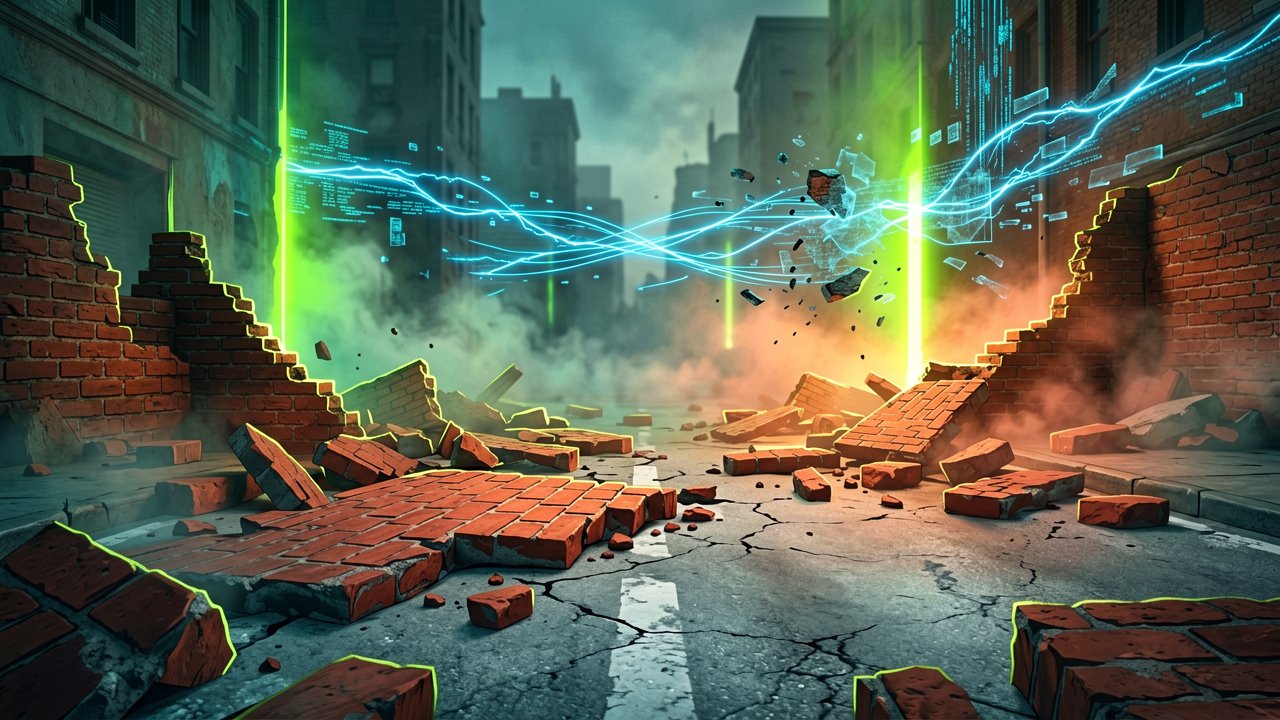
Selling the next Grand Theft Auto isn't the hardest marketing puzzle to solve, but replicating its magic with an algorithm is flat-out impossible. That is the verdict from Take-Two Interactive CEO Strauss Zelnick, who recently laid out exactly why Silicon Valley’s wildest dreams of automated game development fail to grasp how cultural hits are actually made. While the tech industry remains hyper-focused on generative tools that promise to synthesize entire virtual worlds with a few text prompts, Zelnick argues that great entertainment relies on something machines fundamentally lack: a forward-looking creative compass.
Speaking on a recent podcast appearance, the executive dismissed the existential threat of algorithmically generated copycats by drawing a sharp line between cheap mimicry and genuine artistry. Anyone can throw cash at software to build digital assets, but copying the code doesn't mean you can capture the cultural zeitgeist. According to a report by PC Gamer, Zelnick pointed out that developers have possessed the tools to clone GTA for years, yet those clones never sell because players can inherently sense a derivative product. Hits are unpredictable by their very nature, while machine learning models can only rehash what has already been done.
The Trap of Backward-Looking Data
The core limitation of generative AI stems from how it learns. Because large language models and neural networks are trained on existing datasets, they are trapped in a loop of historical information. They excel at recognizing patterns and optimizing workflows, but they cannot anticipate the unseen or deliver a profound sense of creative surprise. For a blockbuster like GTA 6, which thrives on subverting expectations and parodying contemporary society in real-time, relying on yesterday’s data is a recipe for a sterile, forgettable experience.
Handcrafted Worlds Beat Automated Code
This philosophy explains why Rockstar Games has intentionally walled off its upcoming flagship title from the generative AI hype train. Instead of leaning on procedural generation to automatically populate its sprawling version of Leonida, the development team has stuck firmly to its traditional, meticulous pipeline. As covered by The Next Web, the publisher confirmed that the game's environment is entirely handcrafted, built street by street and neighborhood by neighborhood to ensure every corner possesses human intentionality. While Take-Two routinely pilots AI internally to streamline back-end testing and accelerate technical asset creation, the actual soul of the game remains anchored to human taste, timing, and storytelling.

What Most Reports Miss: The True Cost of Creative Risk
The tech industry's obsession with generative AI often reduces game development to a mere math problem, assuming that more automated assets equal a better game. What mainstream financial analysts overlook is that a franchise like Grand Theft Auto does not succeed because of raw asset volume, but because of its willingness to take massive cultural risks. When Rockstar Games builds a world, it is investing hundreds of millions of dollars into human writers and directors who intentionally push societal boundaries, craft dark humor, and capture the subtle undercurrents of modern life. An algorithm trained on polite, sanitized corporate data cannot replicate the edgy, counter-culture spirit that defines the series.
Historically, the gaming industry has seen waves of automated trends fail to capture the public's imagination. From the procedural generation boom of the mid-2010s to the recent push for algorithmic radiant quests, players have consistently rejected experiences that feel hollow or repetitive. Game development executives who prioritize shareholder hype over creative authenticity often find out the hard way that consumers can instantly tell when a game lacks a human soul. Take-Two’s leadership understands this dynamic well, realizing that the real value of their property lies in the decades of brand trust built on meticulous, hand-crafted detail rather than optimized efficiency.
Inside the studios, the relationship with these new technologies is far more pragmatic than the public discourse suggests. Engineers and technical artists are not looking to AI to write scripts or design main characters; instead, they are quietly leveraging machine learning to automate the tedious, invisible tasks that slow down production. Toolsets that accelerate collision detection, automate lip-syncing for background characters across multiple languages, or compress texture files allow developers to spend less time on grunt work and more time polishing the core creative vision. The goal is to amplify human capability, not replace it entirely.
Ultimately, the upcoming release of GTA 6 will serve as a massive case study for the entire entertainment landscape. In an era where competing publishers are rushing to implement generative tools to cut costs and appease investors, Rockstar is doubling down on traditional, labor-intensive craftsmanship. The astronomical pre-orders and unprecedented hype surrounding the game prove that the audience is craving bespoke, high-fidelity art. By refusing to let algorithms dictate the creative direction of their most valuable asset, Take-Two is setting a firm precedent: in the business of making hits, human intuition remains the ultimate competitive advantage.

Reading Between the Lines: The Irony of the Automated Hype Train
There is a glaring contradiction in how the games industry talks about artificial intelligence, and Take-Two is right at the center of it. While executives publicly champion the irreplaceable value of human artistry to reassure anxious fans, they simultaneously soothe anxious Wall Street investors with promises of AI-driven cost reductions. It is a delicate corporate tightrope act. The reality is that the industry is desperate to cut ballooning development budgets, which have skyrocketed past the half-billion-dollar mark for single AAA titles. The corporate praise of the human spirit feels slightly hollow when paired with the industry's massive waves of recent layoffs and studio consolidations.
Furthermore, dismissing algorithmic competition as an impossibility might be a short-sighted luxury that only a behemoth like Grand Theft Auto can afford. While an AI clone certainly will not dethrone GTA 6 in the near future, the technology is rapidly shifting the baseline for smaller, independent developers. Budding creators who lack Rockstar’s infinite capital can now use generative tools to build sprawling, highly detailed environments that previously required hundred-person teams. By assuming that players will always prefer traditional human craftsmanship, major publishers risk misjudging a younger generation of gamers who are increasingly indifferent to how an asset is created, so long as the chaotic sandbox loop is sufficiently entertaining.
The ultimate implication of this technological shift is not the death of the blockbuster, but the polarization of the entire medium. We are moving toward a landscape divided into two extremes: ultra-expensive, handcrafted premium digital artifacts, and hyper-optimized, algorithmically generated live-service playgrounds. Take-Two is betting its entire corporate future on the idea that the premium model will always command a premium price tag. If they succeed, they validate the sanctity of human design; if they falter, they inadvertently prove to the rest of the industry that the machines should have been given the steering wheel a long time ago.
"In the end, the tech industry's grand promise to automate art has run directly into a wall of gamers who can spot a fake from a mile away. Turns out, you can teach a machine to write code and render photorealistic asphalt, but you still can't teach it how to make running over a virtual fire hydrant feel like a profound cultural statement."
Artūras Malašauskas is an AI Systems Integrator with 20+ years of production-grade web engineering experience. He has designed, shipped, and scaled enterprise Python/PHP systems for logistics, SaaS, and public-sector clients. For the past year, he has focused exclusively on AI integrations: deploying open-source LLMs, building generative media pipelines (image, audio, video), and engineering multi-agent workflows for real production environments. His standard: reproducibility, security, cost-efficient inference—no vaporware. He documents and evaluates emerging AI tooling, separating verified capabilities from marketing noise. Technical editor at: muza-ai.eu, ai-verslas.lt, ai-naujinos.lt Connect on LinkedIn
Comments