BriteCore Unveils AI Strategy for P&C Insurers, Launches First Wave of Embedded AI Copilots
The property and casualty (P&C) insurance technology landscape just took a definitive leap forward. In a major product expansion, cloud-native platform provider BriteCore has officially rolled out its enterprise AI strategy, headlined by the debut of eight embedded AI copilots engineered to automate painful, legacy operational bottlenecks across the underwriting, claims, billing, and servicing lifecycles. Rather than forcing insurers to bolt third-party generative software onto rigid, decades-old mainframes, this rollout embeds cognitive assistance directly into core operational workflows, signalling a structural shift in how carriers manage data and risk.
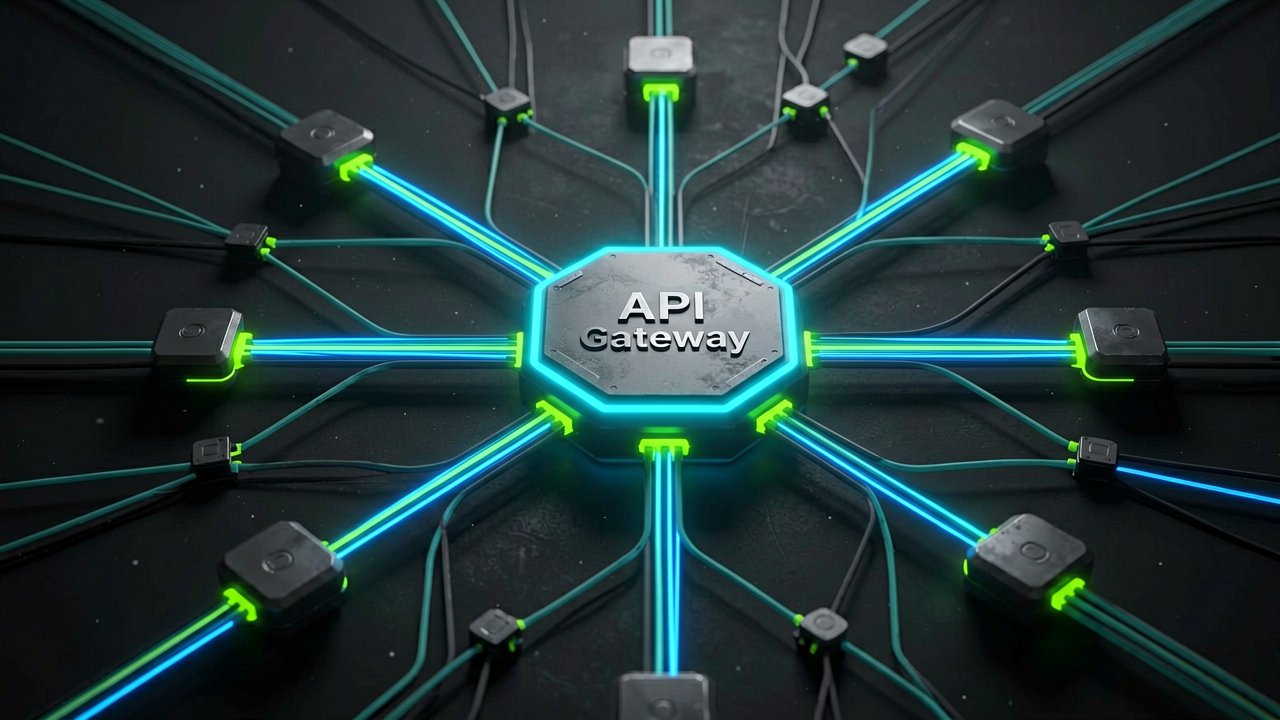
At the center of the technology release is a secure Model Context Protocol (MCP) service layer. It acts as a managed orchestration gateway connecting native copilots, carrier-built proprietary tools, and external AI agents directly to the platform's core APIs. Built from day one on Python—the dominant language of modern artificial intelligence—the platform uses this architectural layer to manage fine-grained access control, enforce human-in-the-loop governance, and isolate sensitive data within an insurer's controlled infrastructure. By utilizing an agile LLM provider layer that currently leverages frontier models like Anthropic's Claude Sonnet, the system remains entirely model-flexible, ready to swap in future open-source or highly specialized industry models as they mature.
Decoding the Eight Native Copilots
The initial wave of tools targets the most resource-intensive touchpoints of insurance administration. Chief among them is the Submission Intake & Readiness Copilot, which claims to reduce manual data extraction from unstructured forms by up to 90%. Other specialized tools include the Policy Summary and Claims Summary Copilots, designed to instantly generate comprehensive situational overviews for adjusters and underwriters, alongside an Invoice Explanation Copilot that translates complex billing lines into natural, consumer-friendly summaries. For operational agility, the Rate Change and Rules Intelligence Copilots let carriers tweak complex business rules and pricing models using natural language instructions, bypassing traditional, multi-week IT bottlenecks.
What Most Reports Miss: While the industry has spent the last few years breathlessly experimenting with standalone chatbots and pilot programs, the reality on the ground has been far less revolutionary. A massive chunk of mid-sized carriers and managing general agents (MGAs) have found themselves trapped in a state of paralysis, struggling to move beyond minor experimental use cases due to data silos and data privacy anxieties. BriteCore's move to integrate AI straight into the transactional core addresses a deep industry frustration: the fact that isolated AI tools are useless if they cannot safely interact with policies, billing ledgers, and claim files. By establishing a governed MCP layer, the provider isn't just offering a flashy feature; it is building a foundation for independent, interconnected agent-to-agent (A2A) communications.

A Shift From Pilot Programs to Agentic Reality
This launch reflects a broader tactical pivot from experimental generative AI toward functional, agentic automation. Legacy insurance systems are notoriously brittle, requiring expensive middleware or massive IT overhauls just to integrate basic modern data pipelines. By running localized agentic services that handle reasoning tasks via external large language models while keeping actual data parsing strictly inside the carrier's environment, the system offers a pragmatic compromise. It provides the competitive edge of advanced automation without asking conservative risk-mitigation organizations to sacrifice compliance, data ownership, or transactional security.
For mid-market insurers trying to defend their market share against hyper-scaled global carriers, the stakes are incredibly high. Early feedback from insurance stakeholders indicates that the true value of these embedded systems lies in operational velocity and better communication. Elevating core systems from passive electronic filing cabinets into active, intelligent partners allows human adjusters and underwriters to ditch repetitive clerical tasks and focus entirely on complex, high-impact claims. As the industry moves deeper into this automated era, the standard for a competitive insurance core is rapidly shifting from basic cloud storage to secure, cross-enterprise AI orchestration.
The property and casualty (P&C) insurance technology landscape just took a definitive leap forward. In a major product expansion, cloud-native platform provider BriteCore has officially rolled out its enterprise AI strategy, headlined by the debut of eight embedded AI copilots engineered to automate painful, legacy operational bottlenecks across the underwriting, claims, billing, and servicing lifecycles [1]. Rather than forcing insurers to bolt third-party generative software onto rigid, decades-old mainframes, this rollout embeds cognitive assistance directly into core operational workflows, signalling a structural shift in how carriers manage data and risk.
At the center of the technology release is a secure Model Context Protocol (MCP) service layer [1]. It acts as a managed orchestration gateway connecting native copilots, carrier-built proprietary tools, and external AI agents directly to the platform's core APIs [1]. Built from day one on Python—the dominant language of modern artificial intelligence—the platform uses this architectural layer to manage fine-grained access control, enforce human-in-the-loop governance, and isolate sensitive data within an insurer's controlled infrastructure [1]. By utilizing an agile LLM provider layer that currently leverages frontier models like Anthropic's Claude Sonnet, the system remains entirely model-flexible, ready to swap in future open-source or highly specialized industry models as they mature [1].

Decoding the Eight Native Copilots
The initial wave of tools targets the most resource-intensive touchpoints of insurance administration [1]. Chief among them is the Submission Intake & Readiness Copilot, which claims to reduce manual data extraction from unstructured forms by up to 90% [1]. Other specialized tools include the Policy Summary and Claims Summary Copilots, designed to instantly generate comprehensive situational overviews for adjusters and underwriters, alongside an Invoice Explanation Copilot that translates complex billing lines into natural, consumer-friendly summaries [1]. For operational agility, the Rate Change and Rules Intelligence Copilots let carriers tweak complex business rules and pricing models using natural language instructions, bypassing traditional, multi-week IT bottlenecks [1].
What Most Reports Miss: While the industry has spent the last few years breathlessly experimenting with standalone chatbots and pilot programs, the reality on the ground has been far less revolutionary. A massive chunk of mid-sized carriers and managing general agents (MGAs) have found themselves trapped in a state of paralysis, struggling to move beyond minor experimental use cases due to data silos and data privacy anxieties. BriteCore's move to integrate AI straight into the transactional core addresses a deep industry frustration: the fact that isolated AI tools are useless if they cannot safely interact with policies, billing ledgers, and claim files. By establishing a governed MCP layer, the provider isn't just offering a flashy feature; it is building a foundation for independent, interconnected agent-to-agent (A2A) communications [1].
A Shift From Pilot Programs to Agentic Reality
This launch reflects a broader tactical pivot from experimental generative AI toward functional, agentic automation. Legacy insurance systems are notoriously brittle, requiring expensive middleware or massive IT overhauls just to integrate basic modern data pipelines. By running localized agentic services that handle reasoning tasks via external large language models while keeping actual data parsing strictly inside the carrier's environment, the system offers a pragmatic compromise [1]. It provides the competitive edge of advanced automation without asking conservative risk-mitigation organizations to sacrifice compliance, data ownership, or transactional security.
For mid-market insurers trying to defend their market share against hyper-scaled global carriers, the stakes are incredibly high. Elevating core systems from passive electronic filing cabinets into active, intelligent partners allows human adjusters and underwriters to ditch repetitive clerical tasks and focus entirely on complex, high-impact claims. As the industry moves deeper into this automated era, the standard for a competitive insurance core is rapidly shifting from basic cloud storage to secure, cross-enterprise AI orchestration.
Reading Between the Lines:
The tech industry's obsession with 90% efficiency metrics often masks a uncomfortable operational truth. While automating unstructured data extraction sounds like an instant victory for overstretched underwriters, it simultaneously creates a dangerous data firehose effect. If a platform accelerates intake by an order of magnitude, it merely pushes the operational bottleneck further down the pipe, forcing human risk assessors to review ten times as many ready-to-quote policies in the same eight-hour shift. The real test of this architecture will not be how fast it digests a PDF, but how effectively it prevents cognitive fatigue among the human workers who still hold ultimate regulatory accountability.
Furthermore, the long-term economics of vendor-provided AI layers introduces a hidden conflict of interest regarding data isolation. Insurers are being promised complete sovereignty over their proprietary models and data pools via this new protocol layer, yet the underlying LLMs are fundamentally maintained by big tech giants outside the insurance software ecosystem. If an insurer's secret sauce—their proprietary underwriting logic—is constantly being processed by external model provider layers, the boundary between protected corporate IP and general public training data becomes incredibly thin. Carriers must watch whether these API connections quietly dilute their underwriting edge over time as broader foundational models grow smarter off the back of industry-specific prompts.
Finally, there is an inherent contradiction in using natural language interfaces to bypass traditional IT programming bottlenecks. Insurance pricing models and business rules are built on absolute, mathematical precision where a single misplaced decimal point can trigger regulatory fines or insolvency. Relying on an AI to interpret conversational prompts for rate changes introduces a layer of semantic ambiguity that traditional software code expressly prevents. The enterprise insurance world is built entirely on deterministic logic, meaning that introducing probabilistic, chat-based shortcuts into core rating systems will require an unprecedented level of human auditing that could easily cancel out the promised time savings.
"We are rapidly approaching an era where an AI agent will seamlessly draft an incredibly complex policy, another AI agent will instantly audit it for risk, and a third AI agent will write the billing summary—leaving humans to do what they do best: awkwardly explaining to a customer why their premium still went up anyway."
Artūras Malašauskas is an AI Systems Integrator with 20+ years of production-grade web engineering experience. He has designed, shipped, and scaled enterprise Python/PHP systems for logistics, SaaS, and public-sector clients. For the past year, he has focused exclusively on AI integrations: deploying open-source LLMs, building generative media pipelines (image, audio, video), and engineering multi-agent workflows for real production environments. His standard: reproducibility, security, cost-efficient inference—no vaporware. He documents and evaluates emerging AI tooling, separating verified capabilities from marketing noise. Technical editor at: muza-ai.eu, ai-verslas.lt, ai-naujinos.lt Connect on LinkedIn
Comments