Beyond the Buzzwords: How the University of New England is Operationalizing the AI Classroom
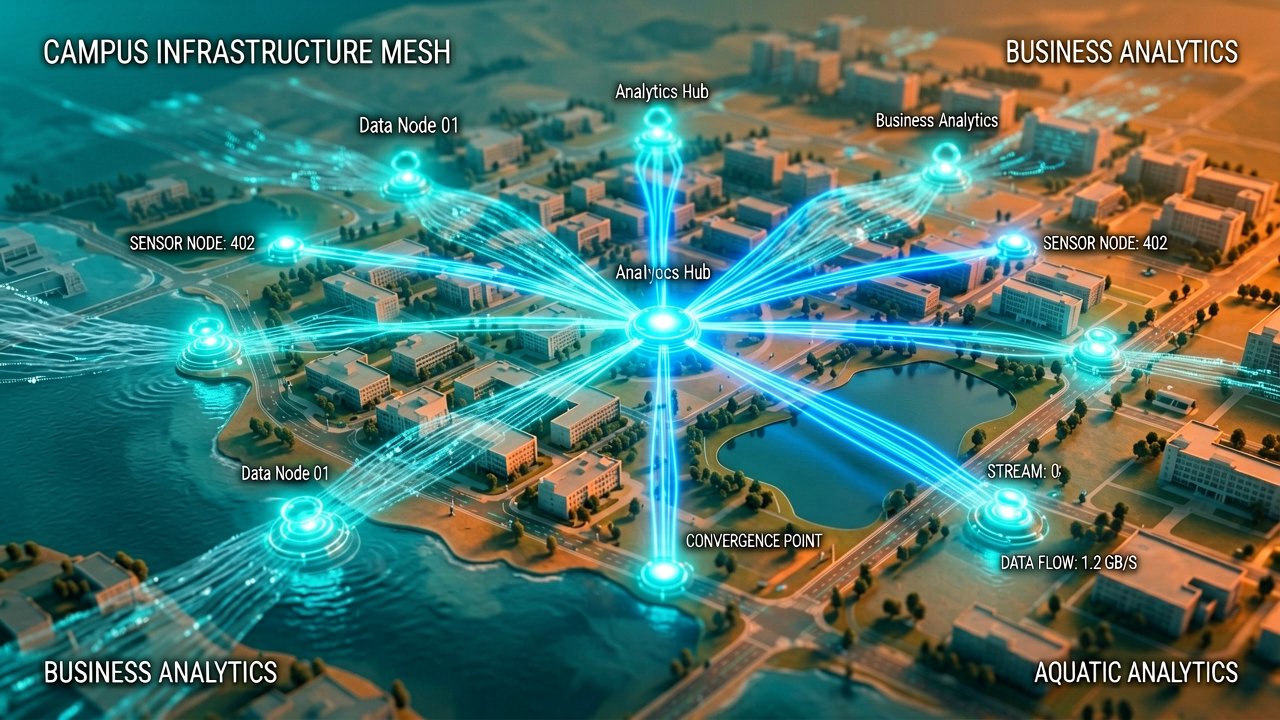
Higher education has spent the last few years stuck in a defensive crouch, treating artificial intelligence like a sophisticated plagiarism machine. We have seen endless debates over academic integrity, administrative hand-wringing over AI policies, and a general reluctance to integrate the technology. However, a shift is finally happening. The University of New England is taking a proactive approach by launching an interdisciplinary hub called the Center for Emerging Technologies to weave AI directly into the fabric of its academic programs, research, and campus operations.
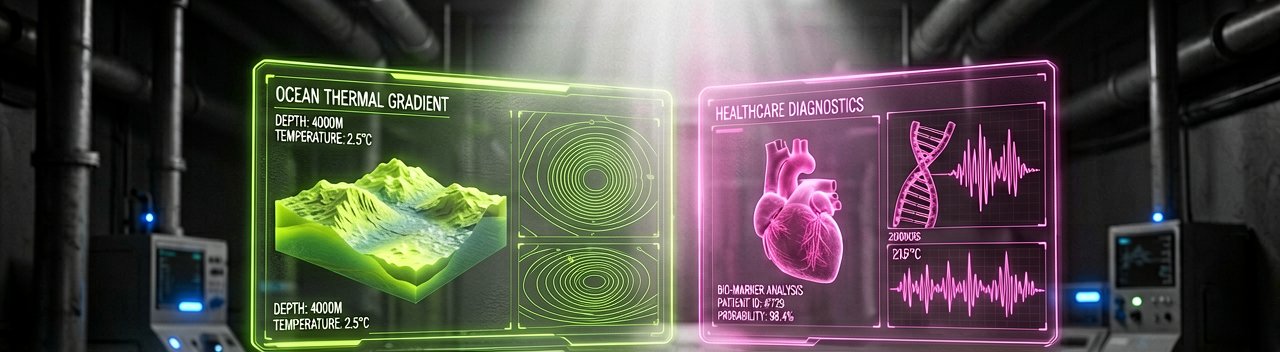
This initiative isn't just about giving students access to standard chatbots. According to a report by Mainebiz, the center intends to serve as a bridge connecting health sciences, marine biology, business, and biotechnology with automated infrastructure and environmental analytics. It represents a systemic overhaul designed to turn students into active operators of advanced technology before they hit the job market. They are moving past theoretical discussions and stepping into practical application.
A Shift Toward Future-Proof Classrooms
The push here focuses heavily on institutional agility. Academia moves notoriously slowly, but the pace of technical disruption doesn't allow for the luxury of decade-long curriculum updates. By treating AI as a foundational layer rather than an optional elective, the university is tackling a critical issue in workforce readiness. The center wants to establish deep industry partnerships and applied research pipelines, which will give undergraduates actual exposure to modern business tools.
UNE Provost Gwendolyn Mahon highlighted this requirement by stating that universities must prepare students to apply these tools thoughtfully rather than just understanding how they work. The strategy goes beyond simple computer literacy. It aims to develop a standard where students learn alongside automation, using data modeling and automated infrastructure to solve problems in fields like marine biology or healthcare delivery.
Breaking Down Academic Silos
The smartest aspect of this rollout is its cross-disciplinary structure. Instead of locking the advanced tech away in the computer science department, the new center treats automation as a universal skill set. A nurse learning gerontological care via virtual reality workflows needs to understand the underlying predictive data just as much as a business major needs to grasp algorithmic automation. It forces different departments to cooperate and builds a campus ecosystem where software engineers work directly with marine scientists.
This approach gives regional institutions an opportunity to establish a distinct footprint. While massive tech hubs dominate software development, regional universities can find their niche by specializing in the practical application of tech within specialized, localized industries. UNE is working to build a template for how a modern regional university can stay relevant in an automated landscape.
The Execution Blueprint: Where the Rubber Meets the Road
Behind the Scenes: The true test of any academic center lies not in its press release, but in its structural integration. University administrators frequently fall into the trap of announcing high-tech labs that end up functioning as glorified computer rooms with faster internet. To avoid this specific pitfall, the University of New England is structuring its Center for Emerging Technologies around a dual-purpose framework: immediate workforce insertion and collaborative faculty development. This model shifts the focus away from abstract computer science theory and places it squarely on applied technological fluency across all disciplines.
A major hurdle in this institutional transformation is the readiness of the faculty. Academic professionals face immense pressure to keep pace with industry developments while balancing heavy teaching loads and research demands. UNE plans to counter this friction by positioning the center as an internal accelerator for professors. Faculty members from various departments will undergo structured training to redesign their existing curricula, ensuring that predictive modeling, automated data analysis, and machine learning are naturally embedded into introductory and advanced coursework alike.
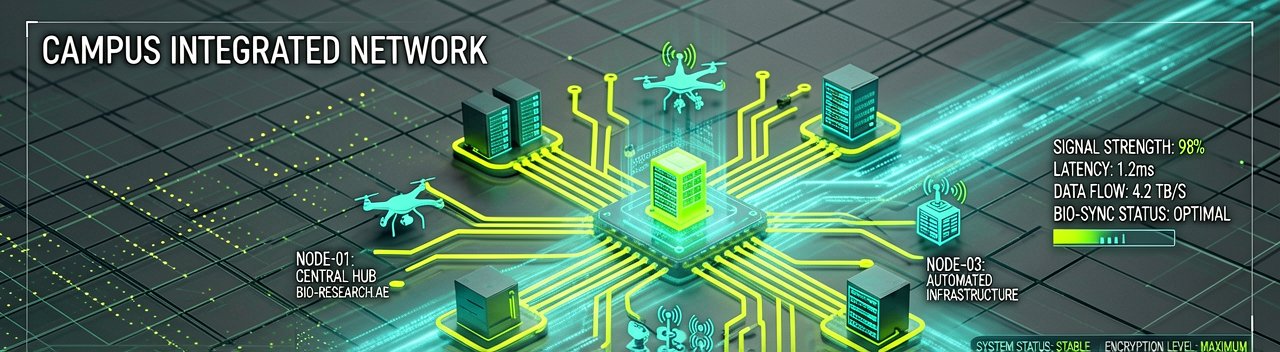
From a regional economic perspective, this operational shift addresses a pressing demand from local industries. Maine’s primary economic sectors, including healthcare networks, maritime commerce, and boutique biotechnology firms, are actively looking for professionals who can leverage automated infrastructure without needing a formal degree in software engineering. By consulting directly with regional business stakeholders during the foundational phase, the university ensures that its student pipelines match the immediate hiring requirements of local employers.
This localized strategy could serve as a valuable blueprint for other mid-sized universities trying to maintain their competitive edge. While elite institutions with multi-billion-dollar endowments can afford to fund speculative, purely theoretical research labs, regional universities must focus on direct utility. UNE's leadership is betting that by focusing on practical, day-one career readiness, they can offer a clear return on investment for students who want to enter the workforce with highly relevant, modern technical skills.
The Friction Points of Algorithmic Academia
Reading Between the Lines: The grand narrative of an AI-driven campus inevitably clashes with the stubborn realities of institutional inertia. While the University of New England’s proactive stance is a refreshing break from the usual academic foot-dragging, executing this vision requires navigating a minefield of systemic contradictions. The most glaring challenge is the shelf-life of the technology itself. Silicon Valley operates on a weekly upgrade cycle, whereas university curricula usually require months of bureaucratic review to alter a single syllabus. There is a distinct risk that by the time a specialized AI-driven course clears every internal committee, the underlying software tools will have been rendered completely obsolete.
Furthermore, the democratization of automation across diverse fields like marine science and healthcare introduces a tricky paradox regarding expertise. If a student relies heavily on automated data models to track ocean temperatures or diagnose patient trends, the boundary between genuine human competence and algorithmic reliance begins to blur. Faculty members will face the difficult task of evaluating whether a student has actually mastered the critical thinking required for a discipline, or if they have simply become highly adept at prompting a sophisticated software ecosystem. Striking a balance between teaching foundational, old-school principles and cutting-edge automation is much harder than it looks on paper.
We also have to consider the long-term financial sustainability of these specialized tech hubs at regional institutions. Maintaining state-of-the-art computational infrastructure, securing commercial software licenses, and retaining tech-savvy faculty members requires a continuous stream of capital. When the initial excitement and corporate seed funding eventually taper off, regional universities face the tough choice of either raising tuition or aggressively pursuing corporate sponsorships. This dynamic can quietly shift academic priorities away from pure instruction and toward the commercial interests of tech providers.
Ultimately, UNE’s ambitious experiment will serve as a bellwether for the rest of higher education. If the center successfully produces graduates who seamlessly integrate into automated workplaces, it will validate the idea that regional universities can outmaneuver slower, prestigious institutions. However, if the center gets bogged down by internal resistance, rigid administrative structures, or mounting tech debt, it will stand as a cautionary tale. The transition from a traditional classroom to an automated learning lab requires changing the entire cultural mindset of an institution, which is a much taller order than simply installing new software.
"Academia is finally embracing the automated future, which means we can look forward to students using cutting-edge predictive algorithms to determine the exact minimum amount of effort required to pass a mid-term exam."
Artūras Malašauskas is an AI Systems Integrator with 20+ years of production-grade web engineering experience. He has designed, shipped, and scaled enterprise Python/PHP systems for logistics, SaaS, and public-sector clients. For the past year, he has focused exclusively on AI integrations: deploying open-source LLMs, building generative media pipelines (image, audio, video), and engineering multi-agent workflows for real production environments. His standard: reproducibility, security, cost-efficient inference—no vaporware. He documents and evaluates emerging AI tooling, separating verified capabilities from marketing noise. Technical editor at: muza-ai.eu, ai-verslas.lt, ai-naujinos.lt Connect on LinkedIn
Comments