Algorithmic Gatekeeping: The Congressional Revolt Against Medicare’s WISeR Model

A high-stakes legislative battle is unfolding on Capitol Hill as lawmakers move to dismantle an artificial intelligence tool that critics say is strip-mining healthcare access for America’s elderly. Leading the charge, Representative Greg Landsman of Ohio and Representative Suzan DelBene of Washington have launched a Congressional Review Act resolution designed to forcefully overturn the controversial WISeR Model. Short for Wasteful and Inappropriate Service Reduction, the pilot initiative was rolled out earlier this year across six states—Ohio, New Jersey, Oklahoma, Texas, Arizona, and Washington—triggering immediate backlash over widespread treatment delays and arbitrary claim denials.
The intervention comes on the heels of a decisive finding by the nonpartisan Government Accountability Office, which determined that the Centers for Medicare & Medicaid Services implemented the model without the required congressional review. By bypassing lawmakers, the administration opened a legal vulnerability that Landsman and DelBene are actively leveraging. Their resolution aims to force an expedited vote, capitalizing on a narrow statutory window to strike down the automated prior authorization protocols before they can be permanently codified or expanded nationwide.
What Most Reports Miss: The Financial Incentives Powering the Black Box
Behind the Scenes: While mainstream coverage frequently treats the WISeR dispute as a routine partisan spat over government automation, a deep dive into the program's architecture reveals a deeply unsettling financial structure. According to a joint oversight letter spearheaded by Representative DelBene on her Official Congressional Portal, the federal government isn't just relying on internal code; it is actively contracting private entities to operate these AI gatekeepers. Shockingly, these outsourced tech firms are compensated on a contingency-fee basis, pocketing a direct percentage of the financial value attached to the medical services they reject. This design fundamentally shifts the corporate incentive structure from optimizing patient outcomes to aggressively suppressing care volume to maximize profit margins.
This algorithmic monetization has already translated into severe, real-world suffering for patients who previously relied on the predictable nature of Traditional Medicare. In public testimony and legislative debates, lawmakers have highlighted the plight of seniors left in administrative limbo, including individuals suffering from agonizing sciatic pain or advanced Parkinson's disease who have seen standard, physician-prescribed injections and therapeutic devices abruptly blocked by automated code. Unlike humans, these black-box models do not evaluate nuance or physical distress. They scan diagnostic codes for statistical anomalies, effectively transforming what should be an empathetic clinical decision into a cold, transactional math problem.
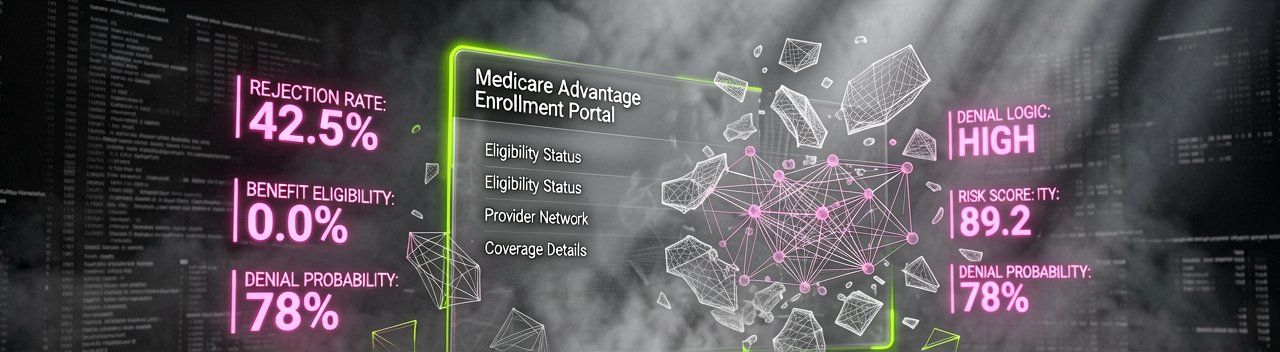
The defense mounted by federal health officials heavily relies on fiscal necessity, with Health and Human Services Secretary Robert F. Kennedy, Jr. arguing before the Senate Finance Committee that automated oversight is a vital tool to combat systemic billing fraud and curb runaway healthcare expenditures. However, policy analysts view the WISeR framework as a calculated "Trojan horse" designed to slowly privatize the public pillars of traditional safety nets. By importing the aggressive, algorithm-driven prior authorization schemes pioneered by private Medicare Advantage insurers, the current pilot effectively erodes the core distinction between public and commercial eldercare.
The legislative maneuverings of Landsman and DelBene build upon a broader defensive foundation laid late last year with the introduction of the Ban AI Denials in Medicare Act. As the Congressional Review Act resolution moves toward a high-pressure floor vote, the debate is transitioning from an abstract discussion on technological modernization into a fundamental referendum on medical autonomy. For healthcare providers and advocacy groups alike, the fight is less about the technical capabilities of artificial intelligence and more about drawing a hard line against allowing unfeeling, profit-incentivized code to dictate who qualifies for life-saving medical care.
Reading Between the Lines: The Illusion of Efficiency and the Reality of Cost Shifting
Reading Between the Lines: The central justification for the WISeR pilot rests on the seductive promise of digital efficiency, yet the economic reality reveals a profound structural contradiction. While proponents claim that automating the prior authorization process slashes administrative overhead for the federal government, they conveniently ignore how these costs are actually redistributed. In practice, the burden is simply offloaded onto the overextended billing departments of rural hospitals and independent clinics, which must now deploy specialized staff to endlessly appeal arbitrary, machine-generated rejections. Far from eliminating waste, the model merely shifts financial friction from the government’s ledger to the providers’ operating budgets, ultimately threatening the viability of community healthcare networks.
Furthermore, the political rhetoric surrounding this legislative showdown exposes a deep hypocrisy in how both parties approach artificial intelligence in governance. Lawmakers are quick to champion sweeping AI regulation in the abstract, yet they routinely authorize funding for federal agencies that deploy opaque, unvetted algorithmic tools under the guise of fiscal responsibility. The fact that the WISeR model bypassed congressional review in the first place suggests a systemic willingness within federal bureaucracies to use automation as a shield against public accountability. By delegating life-or-death coverage decisions to a proprietary black-box algorithm, officials effectively insulate themselves from the political fallout of unpopular rationing choices.

Looking ahead, the long-term implications of this dispute extend far beyond the immediate fate of Medicare recipients in the six pilot states. If the Congressional Review Act resolution fails and the WISeR framework is allowed to normalize automated denials within Traditional Medicare, it will establish a dangerous legal and operational precedent for the entire public sector. Social Security eligibility, veterans' disability benefits, and housing assistance programs could easily be subjected to similar cost-cutting algorithms. The unfolding battle in the House is not merely a debate over healthcare administration, but rather the opening salvo in a broader systemic conflict to determine whether American citizens retain a right to human-centric governance, or if they will be forced to negotiate their basic survival with an unaccountable corporate code.
"In the end, Washington’s grand vision for the future of healthcare seems to be an automated paradise where patients are diagnosed by an algorithm, denied by an algorithm, and then left to explain their human frailty to a very efficient, deeply apologetic chatbot."
Artūras Malašauskas is an AI Systems Integrator with 20+ years of production-grade web engineering experience. He has designed, shipped, and scaled enterprise Python/PHP systems for logistics, SaaS, and public-sector clients. For the past year, he has focused exclusively on AI integrations: deploying open-source LLMs, building generative media pipelines (image, audio, video), and engineering multi-agent workflows for real production environments. His standard: reproducibility, security, cost-efficient inference—no vaporware. He documents and evaluates emerging AI tooling, separating verified capabilities from marketing noise. Technical editor at: muza-ai.eu, ai-verslas.lt, ai-naujinos.lt Connect on LinkedIn
Comments