The Great Quantum Pivot: Why PsiQuantum Just Abandoned Its Billion-Dollar Airport Address
For two years, the tech world watched a vacant, 13-hectare plot of land behind the Brisbane Airport with bated breath and growing impatience. It was supposed to be the staging ground for a revolution—the site where Palo Alto-born startup PsiQuantum would build the world's first utility-scale, fault-tolerant quantum computer, backed by a massive Forbes Australia co-investment from the Australian and Queensland governments. Instead, the land sat entirely quiet, bogged down by the quicksand of major development approvals and looming public consultation mandates. Realizing that its aggressive 2027 operational deadline was rapidly slipping away, PsiQuantum pulled the plug on the airport and orchestrated a sudden, masterfully executed pivot to Moreton Bay Central.
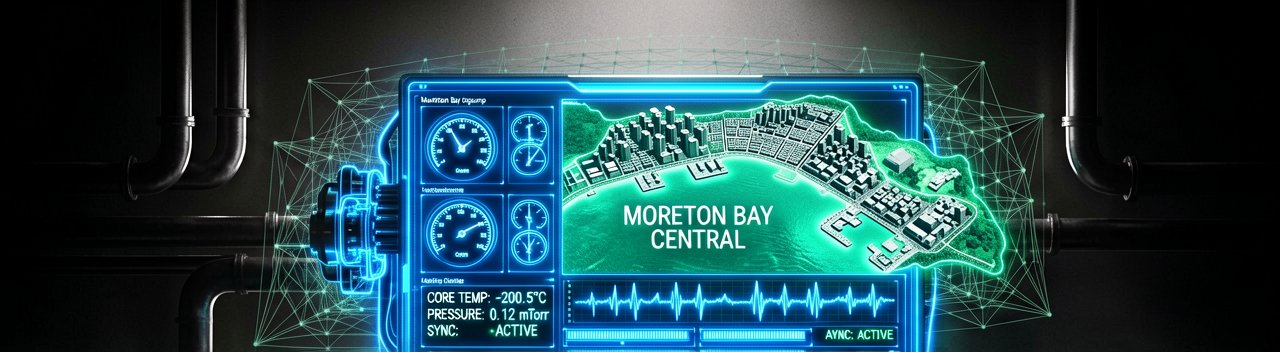
By shifting operations to the former Petrie Paper Mill site, roughly 22 kilometers north of Brisbane's central business district, the company is effectively bypassing the bureaucratic red tape that threatened to stall its progress indefinitely. The council-owned precinct offers a critical shortcut: pre-existing heavy industrial infrastructure, a freshly commissioned energy grid, and crucially, an accelerated approvals pathway that avoids a lengthy two-month public consultation process. Early site works have already commenced, and under the watchful eye of interim CEO Victor Peng, a formal groundbreaking is locked in for June. It is a classic move from the Silicon Valley playbook—sacrificing initial plans for the sake of speed and agility when the stakes are this high.
A Ready-Made Innovation Ecosystem
Moreton Bay Central is not just an empty field with a high-capacity power line. It is a rapidly developing innovation hub that puts PsiQuantum right in the middle of a built-in talent pipeline. The precinct already houses the University of the Sunshine Coast’s Moreton Bay campus and is slated to host a brand-new TAFE Centre of Excellence dedicated to advanced manufacturing. Adding a stadium-sized quantum supercomputer to the mix turns this area into a massive tech magnet ahead of the Brisbane 2032 Olympic and Paralympic Games. While the change of scenery might look like a retreat to some, it is actually a calculated play to embed the project into a broader, long-term commercial ecosystem.
The Realities of the 2027 Clock
Let us look at the bigger picture. PsiQuantum is playing an incredibly high-stakes game. Its photonic architecture—which relies on billions of custom silicon chips cooled to a chilly -269°C by specialized cryoplants—promises to solve massive computational problems in climate science and healthcare long before traditional competitors can. According to reporting by the Australian Financial Review, critics in the industry maintain that "utility scale" quantum machines are still a mid-2030s pipe dream. By dodging the airport's administrative hurdles, PsiQuantum is fighting tooth and nail to prove those skeptics wrong and keep its late-2027 timeline alive.

Building Momentum Beyond the Site
Despite the real estate drama, the company’s broader operations in the region are finally showing signs of life. Next week, PsiQuantum is set to open its highly anticipated Test and Validation Lab at Griffith University's Nathan campus. It is a vital milestone that will let engineers test high-capacity cryogenic systems and configure hardware long before the main facility's roof is even built. The relocation to Moreton Bay Central, detailed by Business Wire, proves that building frontier technology is just as much about navigating local politics and infrastructure as it is about mastering quantum physics. PsiQuantum just traded prestige for pace, and in the race for quantum supremacy, pace is the only thing that matters.
Behind the Scenes: The Political Gamble and the Infrastructure Grind
The sudden relocation to Moreton Bay Central lays bare the intense political and financial pressures weighing on this project. When the Australian Federal and Queensland governments committed nearly one billion dollars to PsiQuantum, the deal was heralded as a sovereign tech triumph. Yet, for two years, that massive investment was effectively trapped in neutral. Moving the project out of the Commonwealth-regulated Brisbane Airport precinct and onto council-owned land is a direct response to a ticking political clock, especially as taxpayers and industry watchdogs grow increasingly vocal about the lack of visible progress.
From an engineering standpoint, the former Petrie Paper Mill site is uniquely suited to handle the immense physical demands of a utility-scale quantum computer. These machines are not sleek, compact servers; they are sprawling, power-hungry industrial installations. They require massive cryogenic refrigeration units to keep photonic chips at near-absolute zero, alongside a rock-solid, uninterrupted power supply. Moreton Bay Central’s existing heavy industrial zoning and heavy-duty grid connectivity saved the company years of foundational engineering work, turning a logistical crisis into an infrastructure win.
This geographical shift also shakes up the local workforce dynamic. While the Brisbane Airport offered proximity to international transport links, Moreton Bay Central embeds PsiQuantum directly into an emerging educational corridor. Local policymakers are already leveraging the move to pitch the region as the Silicon Valley of the Southern Hemisphere. By positioning the facility next to the University of the Sunshine Coast and a planned TAFE Centre of Excellence, the company secures immediate access to a steady stream of local software engineers, technicians, and advanced manufacturing specialists.
However, the decision to bypass the standard two-month public consultation process has raised eyebrows among governance experts. While speed is vital in the global tech race, skipping these community touchpoints can sometimes trigger local friction down the road. Interim CEO Victor Peng and his executive team are betting that the promise of high-tech jobs and massive regional investment will outweigh any lingering community anxiety over the rapid, top-down approval of the site.
Ultimately, this move highlights the friction between the slow reality of heavy infrastructure and the breakneck speed of venture-backed tech. PsiQuantum is racing against well-funded rivals like IBM, Google, and Quantinuum, all of whom are corporate giants with established manufacturing pipelines. By prioritizing a ready-made industrial site over a prestigious airport address, PsiQuantum is acknowledging that the race for quantum supremacy will not be won by the company with the flashiest corporate office, but by the one that spins up its cooling fans first.
Reading Between the Lines: The Reality Check Behind the Quantum Hype
The tech industry loves a story of strategic agility, but PsiQuantum’s sudden relocation looks less like a nimble pivot and more like an act of desperation. Burning through two full years of a tight five-year timeline before realizing a site lacks the proper development approvals is a striking oversight for a project backed by nearly a billion dollars in public funds. The narrative that this move is a triumph of infrastructure ignores a glaring contradiction: the very same federal and state governments that bankrolled the startup also oversighted the suffocating bureaucracy at Brisbane Airport that ground the project to a halt in the first place.
Furthermore, the decision to dodge the standard two-month public consultation process under the guise of an "accelerated pathway" sets a problematic precedent for major tech investments. While the company secures its June groundbreaking, it does so by sacrificing transparency. This tactical evasion may fast-track the construction of the physical shell, but it risks alienating the local Moreton Bay community before the first cryogenic chiller is even plugged in. In the haste to meet a politically charged 2027 deadline, the project has traded long-term social license for short-term logistical convenience.
There is also the monumental technical gamble to consider. PsiQuantum's photonic architecture relies on the assumption that millions of entangled photons can be perfectly routed through silicon chips without catastrophic signal loss. While competitor systems from IBM and Google face major scaling issues with superconducting qubits, PsiQuantum's approach requires a level of manufacturing precision that has never been achieved at a commercial scale. Shifting the location of the factory does absolutely nothing to solve the underlying, unresolved physics problems that many industry experts believe will take another decade to master.
If the 2027 operational deadline slips—as many legacy quantum physicists quietly predict it will—the political fallout will be severe. The Australian government has tethered a massive portion of its national tech strategy to a single, foreign-born startup. By transforming Moreton Bay Central into a high-stakes testing ground, officials have left taxpayers holding the bill for an incredibly expensive infrastructure gamble that may ultimately yield a state-of-the-art facility with no functional computer to put inside it.
Building a world-first quantum computer turns out to be remarkably similar to building a suburban shopping mall: you can math your way around the laws of physics, but you still can't outsmart local zoning laws and a looming election cycle.
Artūras Malašauskas is an AI Systems Integrator with 20+ years of production-grade web engineering experience. He has designed, shipped, and scaled enterprise Python/PHP systems for logistics, SaaS, and public-sector clients. For the past year, he has focused exclusively on AI integrations: deploying open-source LLMs, building generative media pipelines (image, audio, video), and engineering multi-agent workflows for real production environments. His standard: reproducibility, security, cost-efficient inference—no vaporware. He documents and evaluates emerging AI tooling, separating verified capabilities from marketing noise. Technical editor at: muza-ai.eu, ai-verslas.lt, ai-naujinos.lt Connect on LinkedIn
Comments