LOBO Blurs the Line Between EV Manufacturing and Software with Major Claw AI Upgrades
Electric mobility company LOBO Technologies just proved it is serious about its dual-engine strategy of "Smart Manufacturing + AI Platform." The company announced a massive twin upgrade to its Claw AI Agent Platform, deploying a highly advanced, cross-model, multi-modal office document parsing module alongside a dedicated enterprise-wide Chief Legal Officer (CLO) Agent. It is an aggressive move for an EV builder, showing how traditional industrial players are rushing to build proprietary software layers to streamline complex backend operations. According to the official press release hosted on GlobeNewswire , these upgrades target the exact friction points companies face when dealing with cross-border compliance, multi-format business paperwork, and secure knowledge tracking.
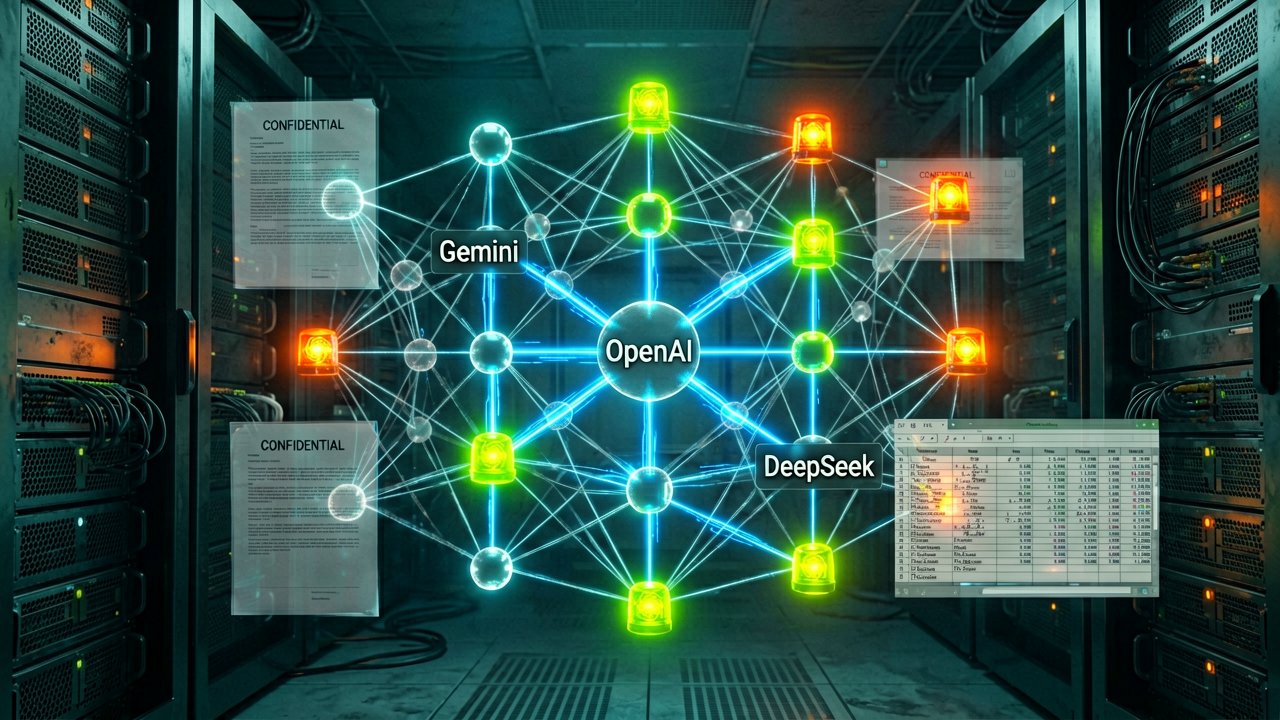
The newly unveiled document parsing module essentially untethers Claw AI from the constraints of single-model ecosystems. Users can drop standard office formats—including PDFs, Word documents, Excel sheets, and PowerPoint presentations—directly into the platform and let more than 44 built-in professional AI agents do the heavy lifting. Instead of forcing companies to stick to one provider, the module juggles underlying architectures from OpenAI, Google Gemini, and DeepSeek, delivering a true "upload to understand" workflow. The brilliance here is the elimination of messy third-party optical character recognition (OCR) services; everything happens inside the enterprise’s private cloud, ensuring data tracking remains tightly locked down.
Automating the C-Suite: Enter the CLO Legal Agent
If universal document handling is the foundation, the new corporate CLO Agent is the specialist built on top of it. LOBO engineered this specific agent to tackle the sluggish nature of multi-language contract reviews and cross-border legal compliance. In international trade and manufacturing, minor compliance oversight can pause entire supply chains, making automated, continuous legal screening a massive operational advantage. The platform balances this deep automation with a smart human-in-the-loop fallback mechanism, forcing the agent to route high-risk actions—like external document publishing or financial transfers—through an interactive user approval panel before execution.
A Manufacturing Pivot Driven by Hardware Realities
While software purists might wonder why an electric vehicle manufacturer is heavily investing in agentic AI, the financial backdrop paints a clear picture. Recent financial reporting highlighted by Investing.com shows that LOBO has been navigating typical manufacturing headwinds, including a tight 13.33% gross profit margin. By scaling out its self-developed Claw AI platform, LOBO isn't just looking to solve its own operational overhead in export manufacturing; it is actively transitioning into an intelligent solutions provider. Infusing standard enterprise workflows with cross-model AI capabilities gives LOBO a high-margin digital product line that offsets the capital-heavy realities of physical vehicle production.

Behind the Scenes: Inside the High-Stakes Bet to Software-Enable Industrial Supply Chains
The standard industry narrative paints a rigid boundary between heavy industrial manufacturing and cutting-edge artificial intelligence, treating software as a secondary layer bought off the shelf. LOBO’s rapid build-out of the Claw AI platform shatters this convention, signaling a deeper realization among forward-thinking manufacturing executives. Building micro-mobility hardware in a hyper-competitive global landscape is increasingly a game of operational margins won or lost in the back office. By developing specialized internal tooling that understands complex, multi-lingual shipping manifests, customs paperwork, and components blueprints, the company is cutting down on the soft administrative friction that historically bottlenecks hardware exports.
A major technical hurdle for global operations has always been the siloed nature of corporate documentation. Traditional optical character recognition (OCR) pipelines frequently stumble when confronted with messy, real-world combinations of scanned multi-lingual text, dense tables, and technical schematics. By orchestrating top-tier frontier models like OpenAI and Google Gemini alongside highly efficient open-source models like DeepSeek under a single roof, the new document parsing module shifts the workflow away from mere transcription toward genuine contextual comprehension. Senior operational engineers note that having an AI natively understand how a line item in an Excel sheet correlates with a clause in a legal contract fundamentally changes how rapidly an enterprise can pivot its supply lines during global disruptions.
The introduction of the corporate Chief Legal Officer (CLO) Agent addresses another structural pain point: the high cost and slow turnaround time of cross-border legal compliance. For an expanding enterprise dealing with fluctuating trade tariffs and evolving safety standards across different continents, waiting days for human legal teams to clear standard vendor agreements can halt momentum. Integrating this legal agent directly into the daily workspace allows non-legal staff to pre-screen routine documentation against internal benchmarks instantly. Industry analysts point out that this is not about replacing human attorneys, but rather filtering out the low-risk administrative noise so the internal legal team can focus exclusively on high-stakes strategic defense.
Crucially, this deep software integration reflects an acute awareness of corporate data privacy realities. Many enterprise leaders remain deeply hesitant to dump sensitive intellectual property, proprietary vehicle schematics, or confidential vendor pricing into public, consumer-facing AI prompts. LOBO’s approach prioritizes a tightly managed, private ecosystem where data tracking is auditable, and sensitive operations remain sandboxed. Keeping data local while utilizing external API intelligence through secure channels strikes the precise balance between corporate safety and technological agility that modern enterprise boards demand.

Ultimately, this development positions the company less like a traditional vehicle manufacturer and more like an agile technology ecosystem capable of licensing its own enterprise tools. As hardware margins continue to face pressure from global inflation and raw material costs, having a highly scalable, high-margin software suite becomes an incredibly attractive asset for the balance sheet. This dual-engine philosophy sets a compelling precedent for the broader industrial sector, proving that the future of competitive manufacturing relies just as heavily on code as it does on steel.
Reading Between the Lines: The Reality of AI Ambitions Meets Factory Floor Pragmatism
The corporate tech sector is currently awash in a sea of generic "AI agent" announcements, and it is easy to view LOBO’s latest foray into automated legal counsel with a healthy dose of skepticism. Transitioning from building electric tricycles and e-scooters to deploying multi-modal document parsers driven by OpenAI and DeepSeek is an extraordinarily wide logical leap. While the narrative of an automated corporate suite sounds incredibly sleek in a quarterly investor presentation, the messy, unformatted reality of global supply chain documentation frequently breaks even the most advanced algorithmic pipelines. There is a glaring contradiction in assuming that software capable of drafting standard vendor agreements can smoothly handle the hyper-specific, localized regulatory curveballs that constantly plague cross-border manufacturing.
Furthermore, relying on a cross-model architecture that strings together competing models introduces a delicate web of technical dependencies. Juggling Google Gemini, OpenAI, and DeepSeek simultaneously might optimize performance across different types of documentation, but it also multiplies the points of failure. API updates, shifts in corporate pricing structures, or sudden geopolitical restrictions affecting access to specific underlying models could easily disrupt Claw AI's seamless workflow. Relying heavily on proprietary third-party intelligence while simultaneously claiming the high ground on private cloud data governance creates a delicate tension that LOBO’s engineering team will have to constantly manage as the platform scales.
The human-in-the-loop fallback mechanism for high-risk financial and legal actions is another area where corporate theory meets operational friction. In a fast-moving enterprise, a bottlenecked human approval panel completely defeats the purpose of autonomous agentic speed. If managers find themselves constantly double-checking the CLO Agent’s work out of a justified fear of compliance liability, the system simply becomes an expensive, over-engineered notification layer. For this software expansion to truly justify its development costs, the AI must prove it can operate with high autonomy without exposing the core manufacturing business to crippling legal vulnerabilities.
If LOBO pulls this off, the strategic implication is a fundamental shift in how the market values industrial hardware companies. Transforming administrative overhead from a cost center into a proprietary software-as-a-service (SaaS) product line is the holy grail of modern corporate turnarounds. However, the tech landscape is littered with hardware companies that overextended into software development, only to realize that maintaining enterprise-grade AI platforms requires a completely different type of capital expenditure. Whether an EV builder can successfully convince external enterprise clients to trust its proprietary legal agent remains the ultimate wild card in this ambitious pivot.
"We may finally be entering the era where a company's most vital safety feature isn't the crumple zone on its electric vehicles, but the software filter preventing its AI legal agent from accidentally signing away the manufacturing plant to a third-party vendor."
Artūras Malašauskas is an AI Systems Integrator with 20+ years of production-grade web engineering experience. He has designed, shipped, and scaled enterprise Python/PHP systems for logistics, SaaS, and public-sector clients. For the past year, he has focused exclusively on AI integrations: deploying open-source LLMs, building generative media pipelines (image, audio, video), and engineering multi-agent workflows for real production environments. His standard: reproducibility, security, cost-efficient inference—no vaporware. He documents and evaluates emerging AI tooling, separating verified capabilities from marketing noise. Technical editor at: muza-ai.eu, ai-verslas.lt, ai-naujinos.lt Connect on LinkedIn
Comments