The Simulated Sanctuary: How AI Complicates Student Well-Being
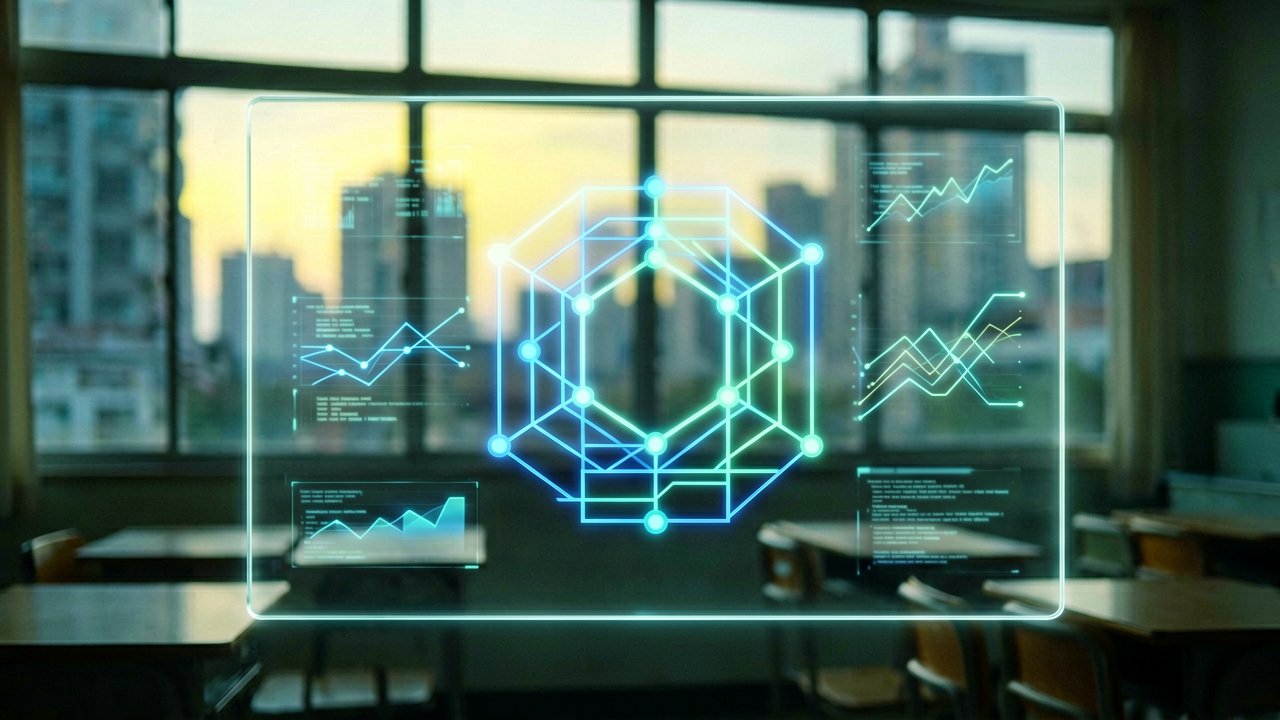
We’ve officially crossed the threshold where artificial intelligence isn’t just formatting bibliography pages or drafting outline points. It’s now creeping into the fragile ecosystem of student mental health, and the results are incredibly complicated. Schools everywhere are rushing to deploy automated tools to bridge the gap in their severely understaffed counseling departments, but this reliance on silicone empathy brings a heavy set of unintended consequences. While algorithms are great at crunching data, they struggle profoundly with the messy, nuanced reality of human emotion.
The core of the problem lies in a dangerous phenomenon called simulated empathy. In an extensive international study published by the WGBH, researchers highlighted that the risks of generative AI in K-12 education currently overshadow the benefits, raising major concerns about children's emotional well-being and cognitive development. When a student unburdens their anxieties to a conversational chatbot, they receive a flawlessly packaged, endlessly patient response. It feels like connection, but it’s just a hyper-optimized mirror. Over time, this replaces the messy, necessary friction of building real-world relationships, leaving students more isolated than before.
The Rise of Technostress and Plagiarism Anxiety
Beyond the therapeutic chatbots, the day-to-day academic environment has become an absolute pressure cooker due to pervasive AI monitoring. According to recent data from the HEPI, nearly universal adoption of AI tools has triggered a massive wave of student anxiety, specifically regarding false accusations of academic misconduct. Students are working under a cloud of constant suspicion, terrified that their authentic writing style will trigger an inaccurate algorithmic red flag from a detection tool.
This environmental anxiety breeds what psychologists call technostress. When every essay submitted feels like a gamble against an unyielding automated system, the joy of learning evaporates. Instead of fostering critical thinking, the current framework incentivizes students to game the system, creating a cycle of digital fatigue and deep alienation from their own education.
What Schools Must Do Next
Administrators need to stop viewing AI as a cheap, scalable substitute for human support systems. To safeguard student well-being, schools must establish transparent guardrails that clearly define where technology stops and human intervention begins. If a student is turning to a machine for companionship or mental health advice, it should trigger an immediate handoff to a licensed professional, not an endless loop of algorithmic text.
Furthermore, evaluation metrics need a complete overhaul to emphasize process over final output. By centering assessments on classroom dialogue, iterative drafting, and collaborative projects, schools can strip away the paralyzing fear of automated plagiarism detectors. Tech will keep evolving, but the fundamental human need for authentic, vulnerable connection cannot be coded into existence.
Behind the Screen: The Frictionless Trap
What most reports miss is that the true threat of AI to student well-being isn't a dramatic algorithmic failure, but rather its flawless, eerie perfection. When a student interacts with an AI counselor or companion, they experience a relationship completely stripped of human conflict, bad moods, or boundaries. This creates an artificially smooth interaction model that real-world peers simply cannot compete with. Human relationships require vulnerability, negotiation, and the tolerance of discomfort, which are the exact social muscles students fail to develop when they retreat into the predictable comfort of an algorithm.
Historically, educational technology was designed to automate tasks, not psychological support. The pivot toward emotional AI marks a radical shift that catching many school districts entirely unprepared. Administrators are frequently lured in by aggressive marketing from tech startups promising low-cost, 24/7 mental health triage. However, these systems lack the contextual awareness of a human educator who notices a student’s slumped posture in the hallway or a sudden change in their physical appearance. By outsourcing early intervention to software, schools risk missing the subtle, non-verbal cries for help that define adolescent distress.
The burden of this transition falls heavily on classroom teachers, who find themselves acting as reluctant buffers between students and systems. Educators report spending less time on actual mentorship and more time managing the psychological fallout of algorithmic policing. When a machine incorrectly flags a struggling student's work as AI-generated, the resulting breakdown of trust between teacher and student can take months to repair. This constant policing creates a toxic classroom culture rooted in mutual suspicion rather than mutual growth.
From a developmental perspective, the timing of this AI integration could not be worse. Students are already recovering from unprecedented levels of social fragmentation, and replacing human sounding boards with large language models risks permanently altering how a generation understands empathy. True empathy is a reciprocal exchange born out of shared lived experience. Because a machine has no feelings, its expressions of care are fundamentally hollow, leaving students with a profound, unplaceable sense of loneliness even after a lengthy conversation.
Ultimately, the push for AI in student wellness reveals a systemic desire for a quick fix to a deeply rooted human crisis. School boards must realize that technological efficiency is often the enemy of genuine psychological healing. Moving forward, funding must prioritize expanding human counseling staff and creating offline spaces where students can disconnect from the digital panopticon. Until educational leadership prioritizes human presence over algorithmic convenience, the mental health crisis in our schools will only continue to mutate.
Reading Between the Lines: The Efficiency Paradox
The tech industry's foundational assumption is that greater efficiency always yields better outcomes, but student mental health defies this logic entirely. Educational institutions are currently celebrating automated platforms that can scan thousands of student essays for distress keywords in milliseconds. This sounds like progress, yet it introduces a massive contradiction: by making the detection of suffering efficient, we make the response entirely transactional. A student flagged by an algorithm receives an automated email containing a list of mental health resources, transforming a deeply personal crisis into a completed compliance task on an administrator’s dashboard.
This systemic optimization creates a dangerous moral hazard for school districts. When software handles the heavy lifting of student surveillance and initial outreach, it creates an illusion of care while actively reducing human touchpoints. Administrators can confidently point to their software suites during school board meetings to prove they are tackling the wellness crisis, even as they cut budgets for actual human guidance counselors. The technology effectively serves as an institutional shield, absolving decision-makers of the costly responsibility to provide genuine, face-to-face support structures.
Furthermore, the long-term cognitive implications of living within this automated ecosystem are troubling. When students realize that both their academic outputs and their emotional inputs are being processed by machines, they adapt by flattening their own behavior. They begin writing to please the plagiarism detector and talking to please the wellness bot, adopting a sterile, risk-averse dialect designed to avoid triggering algorithmic anomalies. This represents a profound erosion of teenage self-expression, forcing young adults to self-censor and conform during their most critical formative years.
Projecting this trend forward suggests a deeply stratified educational landscape where human connection becomes a luxury good. Wealthier private academies will likely market themselves on their low tech-to-student ratios, promising parents that real humans are watching over their children’s development. Meanwhile, underfunded public school systems will be forced to rely on a fully automated, algorithmic safety net. In trying to democratize mental health support through artificial intelligence, we risk cementing a two-tier system where the privileged are listened to, and the underprivileged are merely processed.
We are rapidly approaching an educational utopia where a student can use an AI bot to write an essay, a teacher can use an AI tool to grade it, and a school counselor can use a chatbot to comfort the student about their lack of academic fulfillment—proving that while technology can easily eliminate the human element from schooling, it still requires humans to suffer the consequences.
Artūras Malašauskas is an AI Systems Integrator with 20+ years of production-grade web engineering experience. He has designed, shipped, and scaled enterprise Python/PHP systems for logistics, SaaS, and public-sector clients. For the past year, he has focused exclusively on AI integrations: deploying open-source LLMs, building generative media pipelines (image, audio, video), and engineering multi-agent workflows for real production environments. His standard: reproducibility, security, cost-efficient inference—no vaporware. He documents and evaluates emerging AI tooling, separating verified capabilities from marketing noise. Technical editor at: muza-ai.eu, ai-verslas.lt, ai-naujinos.lt Connect on LinkedIn
Comments