Don’t Fight the Machine: HSBC’s CEO Tells Staff to Embrace the AI Wave as Job Cuts Loom
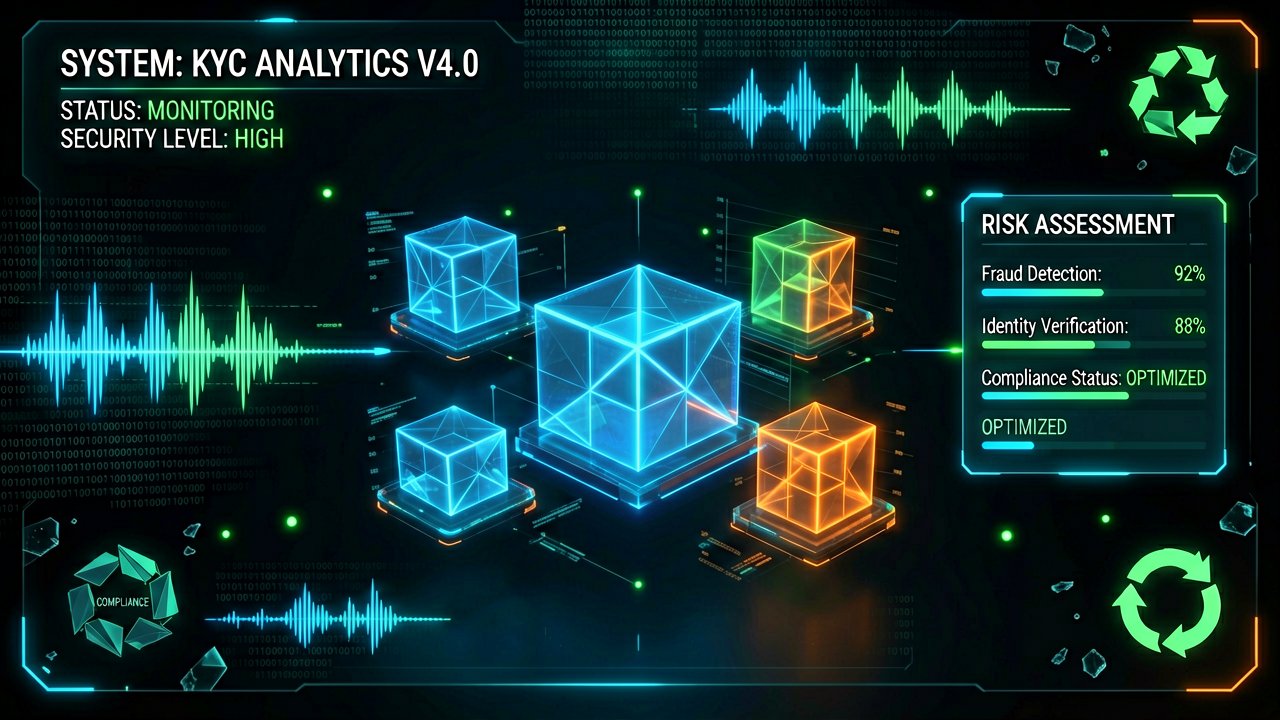
In an era where "digital transformation" has pivoted from a boardroom buzzword to a blunt instrument for restructuring, HSBC CEO Georges Elhedery has delivered a stark message to his 211,000-strong workforce: don't resist the rise of artificial intelligence. Speaking at a high-stakes investor event, Elhedery didn't sugarcoat the reality that generative AI will "destroy" certain roles, but he framed the shift as an evolution toward "more productive versions" of the staff who remain. It's a classic corporate tightrope walk—trying to rally the troops while the specter of automation-driven redundancies haunts the back office.
The timing of Elhedery’s appeal isn't accidental. It comes right on the heels of a far more abrasive reveal from rival Standard Chartered, where CEO Bill Winters sparked an internal firestorm by describing departing staff as "lower-value human capital." While Reuters reports that HSBC is leaning into retraining to avoid such PR disasters, the underlying arithmetic remains grim. Analysts at Bloomberg suggest that up to 20,000 positions at HSBC—roughly one in ten—could eventually be at risk as the bank automates everything from client onboarding to financial crime monitoring.
What Most Reports Miss: The Cultural War Inside the Vault
Behind the Scenes: While the headlines focus on the raw numbers, the real story is the psychological decoupling happening within global finance. For decades, the "back office"—the vast army of analysts in India, Poland, and Malaysia who handle KYC (Know Your Customer) and risk compliance—was the bank's operational spine. Now, these roles are being reclassified as "redundant workflows" by algorithms that don't need lunch breaks or healthcare. Elhedery’s plea for staff not to be "disenfranchised" or "anxious" is a recognition that a demoralized workforce can sink an AI rollout faster than a technical glitch.
There’s a historical irony here that a seasoned reporter can’t ignore. The banking industry spent the last decade outsourcing labor to lower-cost regions to save pennies on the dollar; now, they’re looking to eliminate those offshore hubs entirely in favor of silicon. The "journey" Elhedery describes is less of a shared expedition and more of a filtered migration. By appointing its first Chief AI Officer earlier this year, HSBC has signaled that its priority is no longer just managing money, but managing the data that replaces the people who used to manage the money.
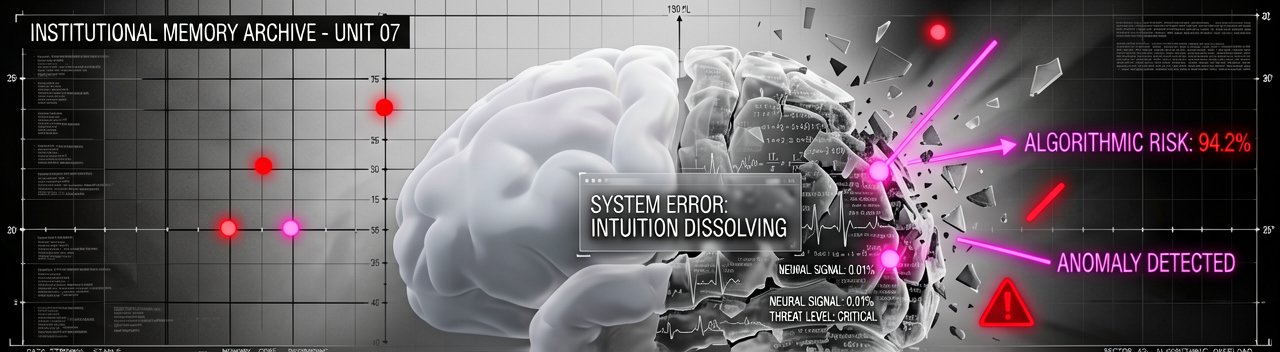
The friction isn't just about jobs; it's about the erosion of institutional memory. When you replace a mid-level analyst with a "Claude-style assistant," you lose the human intuition that catches the anomalies an LLM might categorize as standard noise. This is why academics at the Oxford Internet Institute have warned that banks risk over-correcting, potentially "melting" the middle office so thin that they lose the ability to innovate when the next financial crisis hits.
Ultimately, the banking sector is splitting into two camps. On one side, you have the "Standard Chartered approach," which views the workforce as a liability to be optimized. On the other, you have HSBC’s more diplomatic strategy of "colleague empowerment," which promises a 21st-century toolkit for those who survive the cull. However, as The Wall Street Journal notes, the end goal for both is identical: a leaner, more automated balance sheet where the most valuable assets are the ones that never ask for a raise.
In an era where "digital transformation" has pivoted from a boardroom buzzword to a blunt instrument for restructuring, HSBC CEO Georges Elhedery has delivered a stark message to his 211,000-strong workforce: don't resist the rise of artificial intelligence. Speaking at a high-stakes investor event, Elhedery didn't sugarcoat the reality that generative AI will "destroy" certain roles, but he framed the shift as an evolution toward "more productive versions" of the staff who remain. It's a classic corporate tightrope walk—trying to rally the troops while the specter of automation-driven redundancies haunts the back office.
The timing of Elhedery’s appeal isn't accidental. It comes right on the heels of a far more abrasive reveal from rival Standard Chartered, where CEO Bill Winters sparked an internal firestorm by describing departing staff as "lower-value human capital." While Reuters reports that HSBC is leaning into retraining to avoid such PR disasters, the underlying arithmetic remains grim. Analysts at Bloomberg suggest that up to 20,000 positions at HSBC—roughly one in ten—could eventually be at risk as the bank automates everything from client onboarding to financial crime monitoring.
What Most Reports Miss: The Cultural War Inside the Vault
Behind the Scenes: While the headlines focus on the raw numbers, the real story is the psychological decoupling happening within global finance. For decades, the "back office"—the vast army of analysts in India, Poland, and Malaysia who handle KYC (Know Your Customer) and risk compliance—was the bank's operational spine. Now, these roles are being reclassified as "redundant workflows" by algorithms that don't need lunch breaks or healthcare. Elhedery’s plea for staff not to be "disenfranchised" or "anxious" is a recognition that a demoralized workforce can sink an AI rollout faster than a technical glitch.
There’s a historical irony here that a seasoned reporter can’t ignore. The banking industry spent the last decade outsourcing labor to lower-cost regions to save pennies on the dollar; now, they’re looking to eliminate those offshore hubs entirely in favor of silicon. The "journey" Elhedery describes is less of a shared expedition and more of a filtered migration. By appointing its first Chief AI Officer earlier this year, HSBC has signaled that its priority is no longer just managing money, but managing the data that replaces the people who used to manage the money.
The friction isn't just about jobs; it's about the erosion of institutional memory. When you replace a mid-level analyst with a "Claude-style assistant," you lose the human intuition that catches the anomalies an LLM might categorize as standard noise. This is why academics at the Oxford Internet Institute have warned that banks risk over-correcting, potentially "melting" the middle office so thin that they lose the ability to innovate when the next financial crisis hits.
Reading Between the Lines: The Productivity Paradox
Reading Between the Lines: The corporate narrative suggests that AI will liberate workers from "drudgery," yet the reality looks more like a squeeze on the human elements of finance. Elhedery’s insistence that staff "embrace" the change assumes that workers have a choice in their own obsolescence. In truth, the bank is asking its employees to train their digital replacements under the guise of upskilling. This creates a fundamental contradiction where the most cooperative employees effectively accelerate their own redundancy, making "career longevity" a game of musical chairs played at the speed of a GPU.
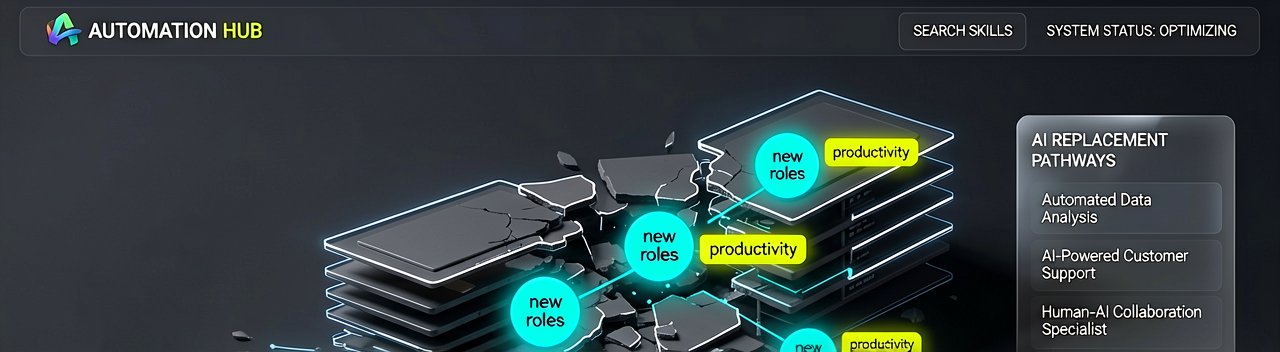
There is also a glaring skepticism required regarding the "new jobs" promised by AI. Historically, when technology disrupts an industry, the new roles created—data ethicists, prompt engineers, and AI auditors—require entirely different pedigree and training than the clerical or administrative roles being destroyed. HSBC is banking on a seamless transition that few other industries have successfully managed. If the bank fails to retrain its legacy staff, it faces a massive "talent debt" where it must hire expensive new specialists while paying out billions in severance to those who couldn't adapt.
The long-term implication is a banking sector that is more efficient but potentially more brittle. By removing the "human friction" that CEOs often complain about, they also remove the human gatekeepers who understand the nuances of local markets and client relationships. We are entering a phase of "algorithmic monoculture" where the top global banks will all use similar models to assess risk and value. When everyone is following the same automated script, the lack of human diversity in decision-making might just be the systemic risk that the next generation of CEOs has to answer for.
In the end, we’re witnessing the ultimate upgrade: a world where your banker never sleeps, never complains, and most importantly, never asks for a bonus—though it’s a bit of a shame the algorithm can’t take you out for a steak dinner to celebrate your mortgage approval.
Artūras Malašauskas is an AI Systems Integrator with 20+ years of production-grade web engineering experience. He has designed, shipped, and scaled enterprise Python/PHP systems for logistics, SaaS, and public-sector clients. For the past year, he has focused exclusively on AI integrations: deploying open-source LLMs, building generative media pipelines (image, audio, video), and engineering multi-agent workflows for real production environments. His standard: reproducibility, security, cost-efficient inference—no vaporware. He documents and evaluates emerging AI tooling, separating verified capabilities from marketing noise. Technical editor at: muza-ai.eu, ai-verslas.lt, ai-naujinos.lt Connect on LinkedIn
Comments