The Signal and the Noise: How AI Is Shattering Video Game Leak Culture

For as long as there’ve been message boards, the video game industry has been a sieve. We’ve spent decades chasing blurry polaroids of development kits and deciphering cryptic tweets from "insiders" who may or may not be the janitor at a major publisher. But the old guard of the hype cycle is currently being dismantled by something far more efficient than a disgruntled QA tester. Generative AI hasn't just entered the chat; it’s rewritten the entire script, turning the once-predictable leak economy into a hall of mirrors where the line between a genuine scoop and a deepfake is thinner than a speedrunner's margins. It's a pivot that has left enthusiasts and industry giants alike scrambling to figure out what's actually real.
We’re moving into an era where "seeing is believing" is no longer a viable strategy for the average gamer. While studios are beginning to experiment with AI to streamline their own pipelines, the same tools are being weaponized by clout-chasers to manufacture high-fidelity "gameplay" trailers out of thin air. This isn't just about a few doctored screenshots anymore; it's about neural rendering so advanced it can mimic the distinct aesthetic of a specific engine. According to reports from BBC News, the jump in real-time neural rendering is already edging into Hollywood-level realism, providing the perfect cover for sophisticated fakes that can set the internet on fire for days before a developer can even issue a denial.
The Death of the Reliable Source
The "leaker" persona used to be built on a foundation of historical accuracy and verified backchannels. Now, that reputation is being eroded by the sheer volume of AI-generated noise. When anyone can prompt a video of a "next-gen" protagonist walking through a photorealistic forest, the traditional gatekeepers of information lose their power. This saturation doesn't just annoy the fans; it creates a massive resource drain for companies. As noted by experts at Gamefile, developers are now looking into AI-driven watermarking and security tools specifically to combat this surge, hoping to distinguish their proprietary data from the flood of synthetic content. It’s an arms race where the prize is nothing less than the public's trust.
Studios Strike Back with Data Science
Ironically, the industry is fighting fire with fire. While AI makes it easier to fake a leak, it’s also giving publishers the tools to identify the source of actual data breaches with terrifying precision. New technologies, such as those being explored by , utilize invisible AI-generated markers within development builds. If a screenshot hits a forum, these "fingerprints" allow a studio to trace the leak back to the specific workstation or remote employee responsible within minutes. This shift from manual NDAs to algorithmic enforcement is a cold shower for the "leaker" community, fundamentally changing the risk-reward calculation for anyone thinking about sharing a peek behind the curtain.

Ultimately, we’re witnessing the end of an era where a single grainy image could define a console generation's expectations. The new normal is a chaotic mix of corporate-vetted AI marketing and fan-made AI fabrications. It’s a lot to process, and honestly, the only winners right now are the algorithms feeding on our collective uncertainty. For the rest of us, it might be time to stop refreshing those rumor subreddits and just wait for the official reveal—if we can even trust that those aren't just carefully curated AI hallucinations too.
The Hidden Architecture of the Breach
What Most Reports Miss: The shift isn’t just about the visual quality of fakes; it’s about the total automation of the "hype-to-outrage" cycle. In the old days, a leaker had to nurture a reputation on NeoGAF or Reddit, building social capital over months of verified hints. Today, a sophisticated actor can deploy an AI-generated suite—complete with a doctored LinkedIn profile, "leaked" internal emails, and a vertical slice of gameplay—all within a single afternoon. This efficiency has essentially democratized industrial espionage, allowing anyone with a GPU and a grievance to disrupt a multi-million dollar marketing roadmap without ever needing a physical mole inside the studio.
From the developer's perspective, this creates a psychological siege. When a fake leak gains traction, the creative team is often forced to address features or "cut content" that never actually existed. This puts leadership in an impossible bind: ignore the noise and let a false narrative harden into "fact," or engage with it and inadvertently legitimize the chaos. Long-time industry veterans recall the simplicity of the "Nintendo NX" era, where a fake controller was a physical object someone had to 3D print. Now, the deception is purely digital and infinitely more scalable, leaving PR departments to play a permanent game of whack-a-mole against hallucinations that look like reality.
Historical context tells us that secrecy has always been the industry's primary currency, but the gold standard of that currency is currently being debased. Major publishers like Rockstar and Ubisoft are pivotally shifting toward "dark" development cycles, where even internal access is siloed behind biometric AI security. We are seeing the death of the "mid-level" developer leak; the tech is becoming so granular that it can detect if a specific employee’s eye movements match the playback of a leaked clip. It’s a surveillance-heavy solution to a digital-native problem, and it’s turning once-collaborative studios into high-security bunkers.
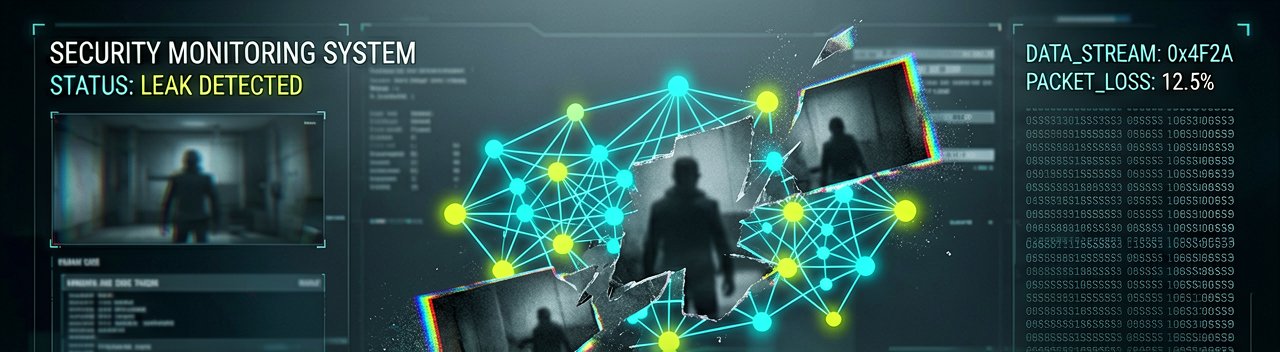
Furthermore, the stakeholder's interest in this AI-driven era is increasingly tied to the stock market. A convincing AI fake regarding a delay or a cancellation can cause a momentary dip in a parent company’s share price before the truth catches up. High-frequency trading algorithms aren't always great at spotting a generative AI artifact in a "leaked" trailer, meaning these fakes have real-world economic consequences that go far beyond fan disappointment. This elevates game leaks from a niche hobbyist concern to a legitimate cybersecurity threat that requires the attention of boardrooms and legal teams rather than just community managers.
The cultural fallout is perhaps the most lasting impact. As we lose the ability to collectively experience a "true" surprise, the community’s enthusiasm is being replaced by a cynical, reflexive skepticism. Every legitimate announcement is now met with "is this real?" or "this looks like AI," even when it’s the genuine fruit of years of labor. This erosion of trust doesn't just affect the leakers; it hurts the artists who find their legitimate work dismissed as synthetic. The human element of game development is being obscured by the very tools meant to simplify it, leaving us in a landscape where the only thing we can be sure of is that the signal is getting quieter and the noise is getting much, much louder.
The Paradox of Synthetic Transparency
Reading Between the Lines: There’s a delicious irony in the fact that the video game industry—a business built entirely on the creation of digital illusions—is now panicking over its inability to control those very illusions. We’ve spent years praising developers for pushing "photorealism" to its absolute limit, yet now that AI can mimic that aesthetic without the thousand-man-hour price tag, the industry is treating it like a pathogen. The assumption that more technology equals more security is being proven false in real-time. By automating the creative process, publishers have inadvertently lowered the barrier for bad actors to replicate their signature styles, essentially handing the keys to the kingdom to anyone with a prompt window and a decent internet connection.
The prevailing logic suggests that AI watermarking will be the silver bullet that saves the hype cycle, but this ignores the fundamental nature of the internet’s "attention economy." Most people consuming leaks aren't looking for a cryptographic signature of authenticity; they are looking for a hit of dopamine. A fake leak that looks incredible will always travel faster and further than a dry, text-based debunking from a corporate Twitter account. This creates a contradiction where the truth becomes irrelevant because the "vibe" of the leak fits the audience's preconceived notions. Even if a studio proves a video is synthetic, the damage to the narrative is already done, leaving the developer to fight a ghost that has already moved the goalposts of public expectation.
Looking ahead, we might be trending toward a "verified-only" ecosystem that ironically mirrors the very gatekeeping gamers once rebelled against. If studios move toward hyper-encrypted, closed-loop environments to prevent AI-assisted breaches, we lose the organic community engagement that once made gaming feel like a shared discovery. The skepticism we’re cultivating today will eventually turn inward; once we stop believing the leaks, we’ll start doubting the official trailers too. We’re reaching a tipping point where the industry’s obsession with total information control might actually result in a total loss of consumer interest. After all, if everything could be a lie, why bother getting excited at all.
Maybe the real endgame of AI in gaming isn’t smarter NPCs or better graphics, but finally achieving the industry’s oldest dream: a world where nobody knows what’s going on, the release dates are made up, and the only thing we can say for certain is that the day-one patch will be forty gigabytes.
Artūras Malašauskas is an AI Systems Integrator with 20+ years of production-grade web engineering experience. He has designed, shipped, and scaled enterprise Python/PHP systems for logistics, SaaS, and public-sector clients. For the past year, he has focused exclusively on AI integrations: deploying open-source LLMs, building generative media pipelines (image, audio, video), and engineering multi-agent workflows for real production environments. His standard: reproducibility, security, cost-efficient inference—no vaporware. He documents and evaluates emerging AI tooling, separating verified capabilities from marketing noise. Technical editor at: muza-ai.eu, ai-verslas.lt, ai-naujinos.lt Connect on LinkedIn
Comments