The New ‘Chief Legal Officer’ Isn't Human, and It Just Saved Your Export Deal

For decades, the back offices of global trade have been where speed goes to die. Between the dense legalese of export contracts and the pedantic scrutiny of Letters of Credit (LCs), human document review has always been a bottleneck—a complex, error-prone grind that costs financial institutions and exporters millions in delays. But we’ve officially hit a turning point. The arrival of specialized "Agentic AI" platforms, acting as a virtual Chief Legal Officer, is now automating the heavy lifting of trade finance. These aren't just fancy chatbots; they're sophisticated systems like those developed by Luminance, which recently launched dedicated compliance agents to handle the exact sort of cross-border friction that keeps supply chain managers awake at night.
The stakes in this space are massive because, in international trade, a single typo can be a deal-breaker. A Letter of Credit is essentially a bank's promise to pay, but that promise is only triggered if every comma in the shipping documents matches the original agreement. Historically, specialists had to manually cross-check up to 39 different document types against over 200 data elements. It was a recipe for "documentary discrepancy," the leading cause of payment refusals. Now, AI-driven transformation is flipping the script. According to industry analysis from KPMG International, these agentic systems can scrutinize LCs with a level of precision that humans simply can't maintain over an eight-hour shift, slashing processing times from days to mere hours.
From Redlines to Revenue
What makes this "AI CLO" different from previous automation attempts is its ability to understand context. Earlier tech could find keywords, but it couldn't tell you if a specific clause in a sales contract might jeopardize an export license or violate evolving sanctions. Today's tools, such as the suite offered by Spellbook, use generative models to draft and review high-quality trade agreements that align with specific jurisdictional regulations in real-time. By embedding institutional memory directly into the workflow, these platforms ensure that every new contract reflects the company's past successes and hard-learned lessons, effectively eliminating "enterprise amnesia."
The End of the Paper Chase
The real magic happens when you pair this legal oversight with the digitization of the trade lifecycle. When an AI can instantly verify a digital invoice against a complex LC clause, the risk of fraud or default drops significantly. High-profile deployments of similar technology at firms like JPMorgan have already demonstrated an 80% reduction in routine contract errors, proving that the tech is ready for the big leagues. As more companies adopt these autonomous legal agents, the traditional "paper chase" of global trade is starting to look like a relic of the past, replaced by a streamlined, AI-guarded corridor for global commerce.

Inside the Digital War Room: The Logistics of Trust
Beyond the Algorithm: What most surface-level reports miss is that the rise of the AI "Chief Legal Officer" isn't just about replacing a lawyer’s red pen; it’s about solving the "trust deficit" that has plagued international commerce since the days of the Silk Road. In the traditional model, a Letter of Credit acted as a fragile bridge of trust between a buyer in Hamburg and a seller in Ho Chi Minh City. This bridge was built on a mountain of physical paper, where a single missing stamp could freeze millions of dollars in capital. By implementing agentic AI, firms are moving toward a "zero-trust" architecture where the software verifies compliance in milliseconds, ensuring that the legal intent of a contract is mirrored perfectly in the financial execution.
Veteran trade bankers often point out that the real nightmare isn't the standard contract, but the "edge cases"—those rare, complex clauses involving transshipment prohibitions or specific port-of-entry certifications. Historically, these required a senior legal partner to spend hours billable time cross-referencing international chambers of commerce rules like the UCP 600. Modern AI agents are now pre-loaded with these global standards, acting as an instant, tireless repository of trade law. This shift allows human legal teams to move away from the "documentary triage" and focus instead on high-level strategy and geopolitical risk assessment, which no LLM can yet master.
From the perspective of the Chief Financial Officer, the ROI of an AI CLO is measured in the reduction of "Days Sales Outstanding" (DSO). When an AI can review and approve export documentation the moment it is generated, the time between shipping a product and receiving payment shrinks dramatically. This liquidity is the lifeblood of mid-sized exporters who previously lived and died by the speed of a bank's back-office clerks. We are seeing a democratization of trade where smaller players can now operate with the same legal sophistication and speed as a Fortune 500 multinational, simply by leveraging these digital legal suites.
However, the transition isn't without its cultural friction. Legal departments have long been the most conservative bastions of the corporate world, and there is a palpable tension between the "move fast" ethos of AI and the "risk-averse" nature of law. The most successful implementations are not those that attempt to fully automate the legal function, but those that use AI as a "Co-Pilot" for the human CLO. This hybrid model ensures that while the AI handles the 10,000-page audit of export logs, a human expert remains in the loop to handle the nuance of local business customs and the ethical dimensions of a deal.
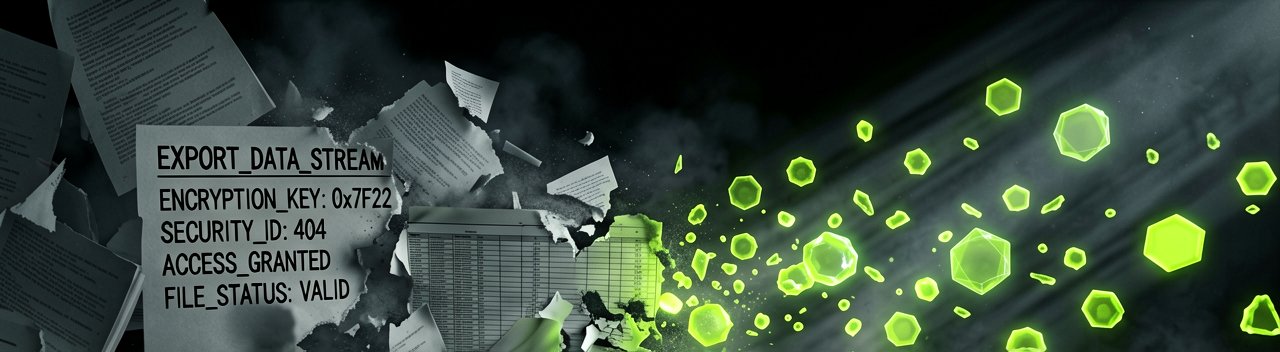
The historical context here is also telling. We are effectively moving from the "Analog Age" of the 1970s—where the fax machine was the height of tech—directly into an "Autonomous Age." This leap skips several intermediate steps of digitalization that other industries took decades to navigate. Because trade finance is so interconnected, the adoption of AI by one major player like HSBC or Standard Chartered forces the entire ecosystem to adapt. This creates a domino effect where the digital "Chief Legal Officer" becomes a mandatory requirement for any firm that wants to remain a viable link in the global supply chain.
Looking ahead, the integration of these AI agents with blockchain-based "Smart Contracts" could finally realize the dream of fully automated, self-executing trade. In this scenario, the AI doesn't just review the Letter of Credit; it authorizes the release of funds automatically once it verifies that the legal and logistical conditions have been met. We are witnessing the birth of a frictionless global market, governed by code that understands the law as well as any barrister, but works at the speed of light.
The Compliance Paradox: Efficiency vs. Accountability
Reading Between the Lines: The prevailing narrative suggests that the AI Chief Legal Officer is a panacea for the friction of global trade, but this optimism ignores a burgeoning legal grey area: the delegation of fiduciary responsibility to a "black box." While an algorithm can parse a Letter of Credit with superhuman speed, it lacks the professional liability—and the soul—of a human general counsel. If an AI misinterprets a nuanced sanction clause and triggers a multi-million dollar fine, the corporate entity cannot simply point to the software as a scapegoat. The industry is rushing toward automation before the courts have even begun to define where "algorithmic negligence" begins and human oversight ends.
There is also a glaring contradiction in the promise of "frictionless" trade. As export contracts become increasingly managed by AI on both sides of the transaction, we risk entering a cycle of "adversarial automation." Imagine a scenario where one company’s AI CLO drafts a contract designed to be hyper-favorable, only for the counterparty’s AI to identify and counter-patch those clauses in milliseconds. This could lead to a digital arms race where the complexity of contracts actually increases, rather than simplifies, as machines build ever-more intricate legal mazes that no human could ever hope to navigate, effectively locking human stakeholders out of their own negotiations.
Furthermore, the data hunger of these systems presents a quiet but significant security risk. To train a "Chief Legal Officer" capable of reviewing sensitive export documents, firms must feed it years of proprietary deal flow, pricing strategies, and private correspondence. This creates a high-value target for industrial espionage. A breach of a law firm’s server is catastrophic, but a breach of a trade-finance AI’s training weights could potentially reveal the entire strategic playbook of a multinational corporation. The trade-off for speed may well be the gradual erosion of corporate secrecy.
We must also weigh the "hallucination" risk against the backdrop of rigid international law. In a marketing email, an AI error is a punchline; in an export manifest, it is a felony. The current generation of Large Language Models is probabilistic, not deterministic, which is a polite way of saying they are prone to confident guesswork. Applying a probabilistic tool to the binary world of customs compliance is a high-wire act. Until these agents move toward a symbolic logic framework that prioritizes "zero-error" over "high-probability," the risk of a catastrophic compliance failure remains a mathematical certainty rather than a remote possibility.
Ultimately, the projection that AI will democratize trade for smaller players may be premature. While the software itself might become affordable, the infrastructure required to validate and insure AI-driven transactions will likely remain in the hands of the legacy banking giants. We may find that instead of leveling the playing field, the AI CLO simply creates a new type of digital gatekeeping, where only those who can afford the most expensive, "certified" legal algorithms are trusted to move goods across borders. The bottleneck isn't disappearing; it’s just moving from the mailroom to the server room.
The true test of a digital Chief Legal Officer won't be how many thousands of contracts it signs in a second, but how convincingly it can look a regulator in the eye—metaphorically speaking—and explain why a misplaced semicolon just cost the company its shipping license.
Artūras Malašauskas is an AI Systems Integrator with 20+ years of production-grade web engineering experience. He has designed, shipped, and scaled enterprise Python/PHP systems for logistics, SaaS, and public-sector clients. For the past year, he has focused exclusively on AI integrations: deploying open-source LLMs, building generative media pipelines (image, audio, video), and engineering multi-agent workflows for real production environments. His standard: reproducibility, security, cost-efficient inference—no vaporware. He documents and evaluates emerging AI tooling, separating verified capabilities from marketing noise. Technical editor at: muza-ai.eu, ai-verslas.lt, ai-naujinos.lt Connect on LinkedIn
Comments