America’s Schools Are Terrible at Catching Kids Up. How AI Can Help.
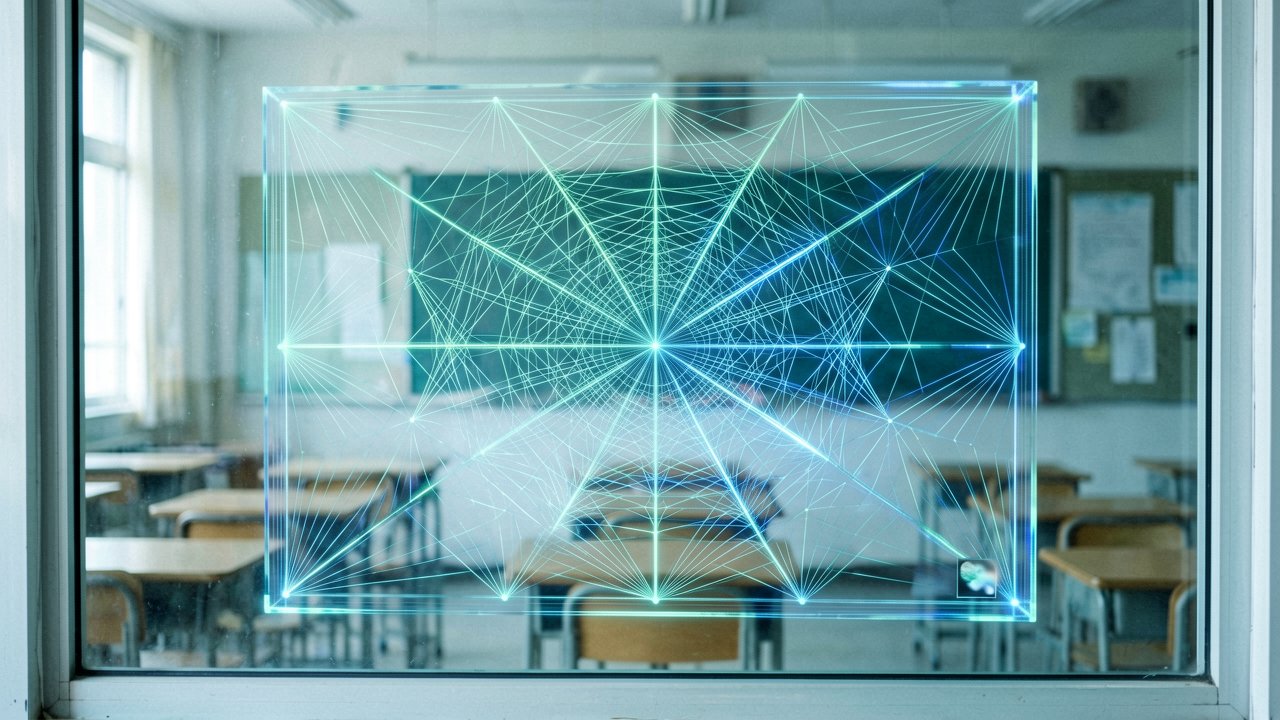
For decades, the American education system has operated on a "factory model" that assumes every child learns at the same speed. But when a student misses a foundational concept in third-grade math, the gap doesn't just sit there—it widens. By middle school, that minor misunderstanding has morphed into a debilitating barrier. Despite billions spent on intervention programs and diagnostic exams, The 74 reports that many of these efforts are poorly implemented, often segregating struggling students into low-expectation tracks that fail to bridge the achievement gap.
The problem isn't a lack of will; it’s a lack of scale. Human tutoring is the gold standard for learning recovery, but there simply aren't enough tutors to go around, and the cost is prohibitive for most public districts. This is where generative AI steps in, offering a version of "the privileged few's" private tutoring to the masses. Unlike the static "hints" of older software, modern AI tutors can engage in a Socratic dialogue, identifying exactly where a student’s logic falters and providing the specific scaffolding needed to climb back up. Recent data from Nature suggests that AI-powered pedagogy can significantly enhance learning outcomes, sometimes even outperforming traditional in-class active learning by providing a hyper-personalized feedback loop that a single teacher managing thirty students cannot replicate.
The Realities of the "Digital Tutor"
Behind the Scenes: The shift toward AI isn't just about replacing a textbook with a chatbot; it’s a fundamental rethinking of what "catching up" looks like. In the past, ed-tech failures like the $100 million InBloom initiative proved that simply aggregating data isn't enough to change how a child learns. Seasoned educators know that for a tool to work, it must protect what researchers call "productive struggle." If an AI simply gives a student the answer, it short-circuits the brain's ability to form lasting expertise. This is the "fork in the road" for the current generation of AI tools: using the technology to hollow out learning versus using it to light a spark.
Current pilots of platforms like Khanmigo have hit an unexpected hurdle: students often don't know what to ask. As noted by Chalkbeat, many students aren't seeking out help because they lack the metacognitive skills to identify their own gaps. This highlights a critical nuance that most reports miss—AI is not a "plug-and-play" savior. It requires a baseline of student engagement and, perhaps more importantly, a teacher who can guide that engagement. The most successful implementations aren't replacing humans; they are "co-pilot" models where AI assists the teacher in spotting trends across a classroom, allowing the human expert to intervene exactly where their empathy and intuition are needed most.

Historically, American schools have been a graveyard for "revolutionary" technology, from Thomas Edison’s failed 1922 prediction that films would replace textbooks to the "Year of the MOOC." The barrier has rarely been the technology itself, but rather the "double talk" of the system—saying we want innovation while maintaining rigid, outdated schedules and providing zero training for the teachers on the front lines. According to recent surveys, while over 90% of administrators think AI training is vital, only a quarter have actually provided it. This policy vacuum leaves teachers to navigate ethical minefields, like data privacy and algorithmic bias, on their own.
Moreover, the "efficiency" of AI can be a double-edged sword. While it can save teachers hours on administrative tasks, there is a risk of over-reliance that could diminish critical thinking if not carefully managed. Researchers at Stanford have found that the largest gains often come from lower-rated or less-experienced tutors who use AI to bolster their own instruction. This suggests that the real power of AI in schools might not be in teaching the kids directly, but in raising the "floor" of instructional quality across the board, ensuring that no matter which classroom a child walks into, they have access to high-level pedagogical support.
Ultimately, catching kids up requires more than just faster software; it requires a culture shift. AI provides the infrastructure for a "competency-based" model where students move forward only after they’ve mastered a concept, rather than when the calendar says it’s time. If we can move past the hype and focus on solving specific instructional problems—like visual representation in geometry or feedback on rough drafts—we might finally break the cycle of educational tech fads. The tech is finally here to make personalized learning a reality, but it will only work if we treat it as a partner to the human spark, not a replacement for it.
For decades, the American education system has operated on a "factory model" that assumes every child learns at the same speed. But when a student misses a foundational concept in third-grade math, the gap doesn't just sit there—it widens. By middle school, that minor misunderstanding has morphed into a debilitating barrier. Despite billions spent on intervention programs and diagnostic exams, The 74 reports that many of these efforts are poorly implemented, often segregating struggling students into low-expectation tracks that fail to bridge the achievement gap.

The problem isn't a lack of will; it’s a lack of scale. Human tutoring is the gold standard for learning recovery, but there simply aren't enough tutors to go around, and the cost is prohibitive for most public districts. This is where generative AI steps in, offering a version of "the privileged few's" private tutoring to the masses. Unlike the static "hints" of older software, modern AI tutors can engage in a Socratic dialogue, identifying exactly where a student’s logic falters and providing the specific scaffolding needed to climb back up. Recent data suggests that AI-powered pedagogy can significantly enhance learning outcomes, sometimes even outperforming traditional in-class active learning by providing a hyper-personalized feedback loop that a single teacher managing thirty students cannot replicate.
The Realities of the "Digital Tutor"
Behind the Scenes: The shift toward AI isn't just about replacing a textbook with a chatbot; it’s a fundamental rethinking of what "catching up" looks like. In the past, ed-tech failures like the $100 million InBloom initiative proved that simply aggregating data isn't enough to change how a child learns. Seasoned educators know that for a tool to work, it must protect what researchers call "productive struggle." If an AI simply gives a student the answer, it short-circuits the brain's ability to form lasting expertise. This is the "fork in the road" for the current generation of AI tools: using the technology to hollow out learning versus using it to light a spark.
Current pilots of platforms like Khanmigo have hit an unexpected hurdle: students often don't know what to ask. As noted by Chalkbeat, many students aren't seeking out help because they lack the metacognitive skills to identify their own gaps. This highlights a critical nuance that most reports miss—AI is not a "plug-and-play" savior. It requires a baseline of student engagement and, perhaps more importantly, a teacher who can guide that engagement. The most successful implementations aren't replacing humans; they are "co-pilot" models where AI assists the teacher in spotting trends across a classroom, allowing the human expert to intervene exactly where their empathy and intuition are needed most.
Historically, American schools have been a graveyard for "revolutionary" technology, from Thomas Edison’s failed 1922 prediction that films would replace textbooks to the "Year of the MOOC." The barrier has rarely been the technology itself, but rather the "double talk" of the system—saying we want innovation while maintaining rigid, outdated schedules and providing zero training for the teachers on the front lines. According to recent surveys, while over 90% of administrators think AI training is vital, only a quarter have actually provided it. This policy vacuum leaves teachers to navigate ethical minefields, like data privacy and algorithmic bias, on their own.
Moreover, the "efficiency" of AI can be a double-edged sword. While it can save teachers hours on administrative tasks, there is a risk of over-reliance that could diminish critical thinking if not carefully managed. Researchers at Stanford have found that the largest gains often come from lower-rated or less-experienced tutors who use AI to bolster their own instruction. This suggests that the real power of AI in schools might not be in teaching the kids directly, but in raising the "floor" of instructional quality across the board, ensuring that no matter which classroom a child walks into, they have access to high-level pedagogical support.
Ultimately, catching kids up requires more than just faster software; it requires a culture shift. AI provides the infrastructure for a "competency-based" model where students move forward only after they’ve mastered a concept, rather than when the calendar says it’s time. If we can move past the hype and focus on solving specific instructional problems—like visual representation in geometry or feedback on rough drafts—we might finally break the cycle of educational tech fads. The tech is finally here to make personalized learning a reality, but it will only work if we treat it as a partner to the human spark, not a replacement for it.
The Skeptic's Inventory
Reading Between the Lines: The evangelism surrounding AI tutors often ignores the looming "fiscal cliff" as pandemic-era federal relief funds, known as ESSER, officially sunset. While tech giants pledge millions in splashy pilot programs, EdWeek Market Brief highlights a staggering reality: only 6% of state ed-tech leaders have a plan to continue funding these initiatives once the federal stimulus dollars vanish. We are witnessing a collision between a massive technological surge and a hollowed-out budget reality, creating a scenario where "innovation" is increasingly reliant on the charity of Silicon Valley rather than sustainable public investment.
There is also a profound contradiction in the promise of equity. While proponents argue that AI democratizes elite tutoring, early data from 2026 suggests the "usage gap" is widening. In affluent districts, students are coached to use AI for high-level creation and synthesis; in under-resourced schools, the tool is often deployed as a digital babysitter for passive consumption and rote remediation. According to UNESCO, this doesn't just replicate existing inequalities—it automates them. If the pedagogical strategy remains weak, the most advanced AI in the world simply becomes a faster way to be distracted or, worse, a high-tech crutch that atrophies a student's ability to think without a prompt box.
Perhaps the most measured skepticism should be reserved for the "miracle" of efficiency. The assumption that AI saves teachers time is frequently debunked by the reality of implementation: teachers now spend hours vetting AI-generated outputs for "hallucinations" or managing the fallout of automated plagiarism accusations. A recent survey by the American Institutes for Research (AIR) found that as budgets tighten, some schools are even regressing from one-to-one device models back to shared computer labs. This creates a technical bottleneck that renders "anytime, anywhere" AI tutoring a luxury of the past rather than a standard of the future.
"We’ve spent a century trying to automate the classroom so teachers can finally have a coffee break, only to find that the more 'intelligent' our tools become, the more we realize that a teenager will still choose a broken calculator over a genius algorithm if the human at the front of the room isn't looking."
Artūras Malašauskas is an AI Systems Integrator with 20+ years of production-grade web engineering experience. He has designed, shipped, and scaled enterprise Python/PHP systems for logistics, SaaS, and public-sector clients. For the past year, he has focused exclusively on AI integrations: deploying open-source LLMs, building generative media pipelines (image, audio, video), and engineering multi-agent workflows for real production environments. His standard: reproducibility, security, cost-efficient inference—no vaporware. He documents and evaluates emerging AI tooling, separating verified capabilities from marketing noise. Technical editor at: muza-ai.eu, ai-verslas.lt, ai-naujinos.lt Connect on LinkedIn
Comments