Santander’s Getnet Bets Big on the Rise of ‘Invisible’ Payments
The global payments landscape is undergoing a quiet but radical shift, and Santander’s Getnet is positioning itself at the epicenter. In its latest whitepaper, the merchant acquiring giant argues that the most successful payment experiences in the coming years will be the ones that essentially vanish. By leaning into "invisible" payments—transactions seamlessly embedded into apps, connected devices, and digital ecosystems—Getnet isn't just looking to process more cards; it's aiming to become the underlying infrastructure for a market expected to hit $7.2 trillion by 2030, according to insights shared via Finextra.
This strategic pivot comes as Santander’s broader "Payments" division reports massive momentum, clocking a 50% profit jump in 2025 after adjusting for one-time charges. The goal is to move beyond the traditional role of a utility provider. Instead of a merchant simply needing a way to take money, Getnet is pitching payments as a core lever for customer loyalty and business performance. With active merchant numbers in some regions exploding—up nearly 900% for certain segments—the bank is betting that frictionless technology like "agentic commerce" will be the next frontier where AI systems handle buying and selling on behalf of users.
Behind the Scenes: The Invisible Infrastructure Play
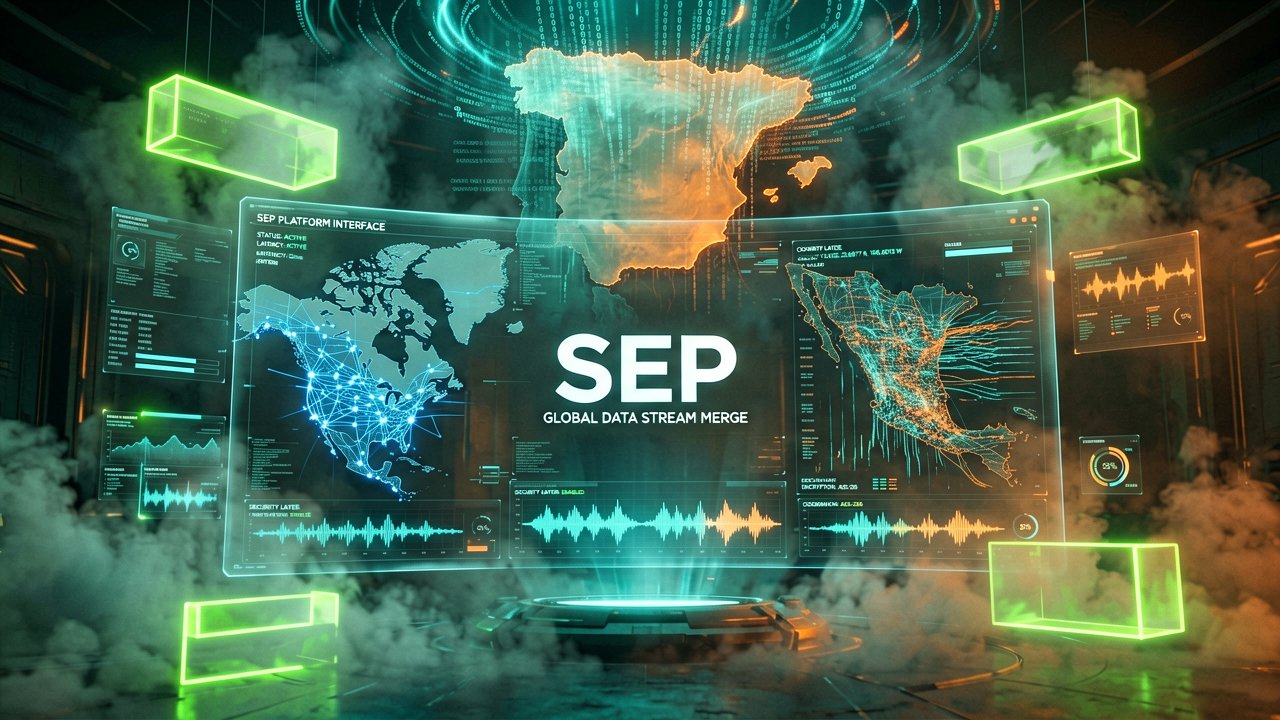
What Most Reports Miss: While many observers focus on the flashy front-end of mobile wallets, Getnet is quietly rebuilding the plumbing. For a seasoned reporter covering this space, the real story isn't just about "invisible" checkouts; it's about the aggressive consolidation of local fragments into a single, unified global engine. By launching tools like the Strategic Ecommerce Platform (SEP), Santander is effectively erasing the borders between markets like Brazil, Mexico, and Spain. This isn't just a tech upgrade; it’s a move to capture the massive "open market" revenue—income from merchants who aren't traditional Santander banking clients—which already accounts for over 20% of their payments turnover as reported by Business of Payments.
There is a nuanced tension at play here between speed and safety. As payments become more automated and "agentic," the window to catch fraud shrinks. Getnet’s response has been to integrate adaptive security that only slows things down when it absolutely has to, using AI to keep the low-risk "invisible" flow moving. This delicate balancing act is what industry insiders call "contextual commerce," where the payment method is secondary to the environment. Whether it's a car paying for its own fuel or a smart fridge ordering milk, the transaction is buried so deep in the user journey that it ceases to be a conscious step for the consumer.

The scale of this ambition is reflected in the sheer volume being pushed through the pipes. In 2025, Getnet processed over €238 billion, a figure that highlights its dominance in Latin America and growing footprint in Europe. By positioning itself as the "one-stop shop" for multinationals—a goal underscored by their recent expansion into Colombia—Santander is leveraging its 170 years of banking weight to act like a nimble fintech. They aren't just competing with local banks anymore; they are taking on global giants in a race to see who can make the payment process so seamless that the customer forgets it ever happened.
Looking at the broader roadmap, the shift toward real-time transactions is no longer a luxury but the baseline. With instant payments expected to represent nearly a quarter of all non-cash global volume by 2028, the infrastructure must be always-on and globally connected. Getnet's strategy involves more than just processing speed; it’s about the data intelligence that comes with it. By integrating sustainability-linked financing and real-time FX quotes directly into the merchant journey, they are turning a simple transaction into a high-value advisory relationship. This holistic approach suggests that while the payments themselves might be turning invisible, their impact on Santander's bottom line is becoming impossible to ignore.
The final piece of the puzzle is the push for personalization at scale. As digital ecosystems mature, a one-size-fits-all approach is a relic of the past. Getnet is betting that by offering industry-specific integrations—from micro-merchants using "Tap-on-Phone" tech to enterprise-level host-to-host solutions—they can maintain their grip on a rapidly evolving market. The focus is squarely on being "digital first" without losing the "relationship always" ethos that traditional banking provides. In an era where the hardware is disappearing, the trust in the institution handling the invisible data becomes the most valuable currency of all.
The global payments landscape is undergoing a quiet but radical shift, and Santander’s Getnet is positioning itself at the epicenter. In its latest whitepaper, the merchant acquiring giant argues that the most successful payment experiences in the coming years will be the ones that essentially vanish. By leaning into "invisible" payments—transactions seamlessly embedded into apps, connected devices, and digital ecosystems—Getnet isn't just looking to process more cards; it's aiming to become the underlying infrastructure for a market expected to hit $7.2 trillion by 2030, according to insights shared via Finextra.

This strategic pivot comes as Santander’s broader "Payments" division reports massive momentum, clocking a 50% profit jump in 2025 after adjusting for one-time charges. The goal is to move beyond the traditional role of a utility provider. Instead of a merchant simply needing a way to take money, Getnet is pitching payments as a core lever for customer loyalty and business performance. With active merchant numbers in some regions exploding—up nearly 900% for certain segments—the bank is betting that frictionless technology like "agentic commerce" will be the next frontier where AI systems handle buying and selling on behalf of users.
Behind the Scenes: The Invisible Infrastructure Play
What Most Reports Miss: While many observers focus on the flashy front-end of mobile wallets, Getnet is quietly rebuilding the plumbing. For a seasoned reporter covering this space, the real story isn't just about "invisible" checkouts; it's about the aggressive consolidation of local fragments into a single, unified global engine. By launching tools like the Strategic Ecommerce Platform (SEP), Santander is effectively erasing the borders between markets like Brazil, Mexico, and Spain. This isn't just a tech upgrade; it’s a move to capture the massive "open market" revenue—income from merchants who aren't traditional Santander banking clients—which already accounts for over 20% of their payments turnover as reported by Business of Payments.
There is a nuanced tension at play here between speed and safety. As payments become more automated and "agentic," the window to catch fraud shrinks. Getnet’s response has been to integrate adaptive security that only slows things down when it absolutely has to, using AI to keep the low-risk "invisible" flow moving. This delicate balancing act is what industry insiders call "contextual commerce," where the payment method is secondary to the environment. Whether it's a car paying for its own fuel or a smart fridge ordering milk, the transaction is buried so deep in the user journey that it ceases to be a conscious step for the consumer.
The scale of this ambition is reflected in the sheer volume being pushed through the pipes. In 2025, Getnet processed over €238 billion, a figure that highlights its dominance in Latin America and growing footprint in Europe. By positioning itself as the "one-stop shop" for multinationals—a goal underscored by their recent expansion into Colombia—Santander is leveraging its 170 years of banking weight to act like a nimble fintech. They aren't just competing with local banks anymore; they are taking on global giants in a race to see who can make the payment process so seamless that the customer forgets it ever happened.
Reading Between the Lines: The Friction of Frictionless
Reading Between the Lines: The industry’s obsession with "invisibility" often glosses over a fundamental psychological contradiction: consumers generally like to know when they are spending money. While Getnet paints a utopian picture of seamless background transactions, the removal of the "pain of paying" is a double-edged sword. For banks, more frictionless transactions translate directly to higher volume and fees, but for the average consumer, it risks a complete decoupling of value from consumption. There is a fine line between a convenient "invisible" payment and a predatory one that relies on buyer apathy to pad the bottom line.
Furthermore, Santander’s pivot highlights an identity crisis shared by many legacy institutions. They are desperate to be seen as tech companies, yet their primary competitive advantage remains their massive, highly regulated balance sheets. Getnet is essentially trying to have it both ways—wielding the agility of a startup to build "agentic commerce" tools while leaning on the heavy-duty compliance infrastructure of a global systemic bank. This hybrid model is expensive to maintain and creates an internal friction that no amount of fancy middleware can entirely erase, especially when competing against lean, cloud-native players who aren't carrying a century of legacy baggage.
The technical hurdles of a truly "invisible" world are also frequently underestimated in glossy whitepapers. Interoperability remains the industry's Achilles' heel; for your car to pay for its own parking "invisibly," every stakeholder in that ecosystem—from the city council to the payment gateway—must speak the same digital language. While Getnet is making strides with its unified platforms, the reality on the ground is still a patchwork of legacy systems and local regulations. The risk is that "invisibile payments" become just another proprietary silo, where convenience is locked behind whatever specific ecosystem a merchant has signed up for.
There is also the looming specter of data privacy. An "invisible" payment is, by definition, a data-rich payment. To make the transaction vanish, the system needs to know where you are, what you’re doing, and what you’re likely to want next. As Santander moves deeper into this space, they aren't just processing money; they are harvesting behavioral insights. In an era of increasing scrutiny over digital surveillance, the "friction" of a physical card swipe might eventually be rebranded by competitors as a "privacy feature," turning Getnet’s greatest strategic strength into a potential reputational liability.
The industry’s ultimate goal is a world where spending money is so effortless you barely notice your bank balance evaporating—it’s the financial equivalent of a "ghost kitchen" where you’re not quite sure who’s cooking, but you’re definitely paying for the delivery.
Artūras Malašauskas is an AI Systems Integrator with 20+ years of production-grade web engineering experience. He has designed, shipped, and scaled enterprise Python/PHP systems for logistics, SaaS, and public-sector clients. For the past year, he has focused exclusively on AI integrations: deploying open-source LLMs, building generative media pipelines (image, audio, video), and engineering multi-agent workflows for real production environments. His standard: reproducibility, security, cost-efficient inference—no vaporware. He documents and evaluates emerging AI tooling, separating verified capabilities from marketing noise. Technical editor at: muza-ai.eu, ai-verslas.lt, ai-naujinos.lt Connect on LinkedIn
Comments