The Invisible Engine: Why You’ve Stopped Noticing the AI in Your Pocket
There was a time, not so long ago, when every interaction with a chatbot felt like a deliberate experiment. We poked at the edges of Large Language Models to see where they’d stumble, treating them as a novelty rather than a utility. But a funny thing happened on the way to the "AI revolution"—the technology started getting quieter. According to a recent report by PYMNTS, we’ve officially entered the era of the "AI On-Ramp," where adoption is skyrocketing precisely because the software is fading into the background of our daily digital chores.
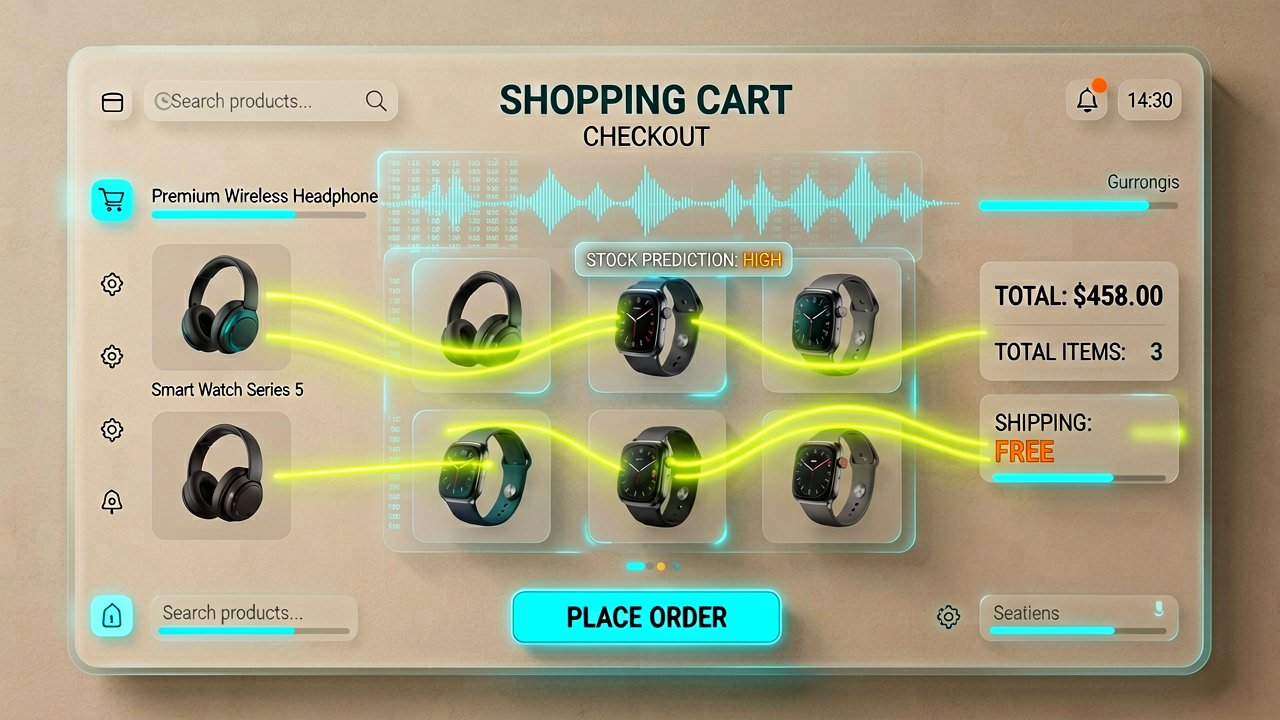
This shift represents a fundamental change in how we perceive technology. We don’t talk about "using electricity" when we flip a light switch, and we’re reaching that same point of mundane acceptance with artificial intelligence. The study reveals that the average active consumer now juggles nearly three distinct AI platforms, while power users are pushing toward four. However, these users aren't necessarily opening a dedicated app every time; instead, they’re encountering AI as a predictive layer in their shopping carts, a conversational tone in their customer service chats, and an invisible hand organizing their travel itineraries.
While the utility is undeniable, the "trust gap" remains a stubborn hurdle for the industry. Even as we grow more comfortable letting AI summarize our emails, many of us remain wary of how that data is handled. Data from Morning Consult suggests that while 41% of users say their view of AI has improved, over half still suspect these tools prioritize data exploitation over privacy. It’s a classic case of convenience winning out over caution—we might not entirely trust the machine, but we’ve become too addicted to the five minutes it saves us to actually turn it off.
What Most Reports Miss: The "Ambient Intelligence" Strategy
Behind the Scenes: The tech giants aren't just making AI better; they’re making it less obvious on purpose. In the early days, "AI" was a buzzword plastered across every marketing deck to attract investors. Now, industry veterans are shifting toward what’s known as "ambient AI"—systems that anticipate needs rather than waiting for a specific prompt. As experts at CX Dive point out, the goal is for the user to be the hero of the story, while the AI acts as the silent stagehand making the scenery move.

This invisibility strategy is particularly evident in retail and customer experience. Instead of a clunky "Ask our Bot" window, modern platforms are using "Invisible AI" as a connective tissue between digital and physical touchpoints. If you start a return on a mobile app and finish it in a physical store, the AI is the silent conductor ensuring the employee behind the counter already knows your name and your order history without you saying a word. It is less about "intelligence" and more about frictionless infrastructure.
The workforce is feeling this transition even more acutely. We’ve moved past the "robots are coming for your job" headlines into a reality where half of all U.S. employees are already using these tools to stay afloat. Recent Gallup data shows that 50% of the workforce has integrated AI into their routine, often just to handle the crushing volume of digital busywork that defined the last decade. For many, the AI hasn't replaced the worker; it has simply become the new "Shift" key—a standard tool that everyone is expected to know how to use.
There’s also a fascinating "invisible focus group" emerging in the corporate world. Rather than relying on slow, expensive human surveys, companies are now using "synthetic customers"—AI-enabled digital personas trained on vast behavioral datasets—to predict how real humans will react to a price hike or a new product launch. As PwC reports, these personas can simulate a Millennial parent or a Gen Z shopper with startling accuracy, giving brands a head start before a single real person ever sees the product.
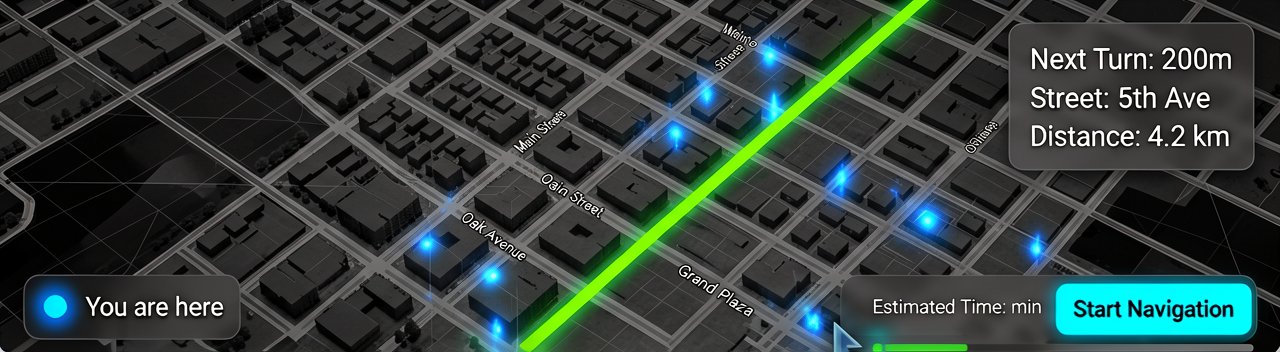
However, as AI becomes infrastructure, the risk of "cognitive offloading" grows. Critics argue that as we stop noticing the AI, we also stop questioning its logic. If a recommendation engine or a navigation app quietly nudges us toward a specific choice, we’re less likely to apply the critical thinking we’d use if a human were making the same suggestion. Academic researchers at MDPI have noted that this seamless integration can lead to a slow erosion of decision-making skills as we become increasingly reliant on the "invisible" suggestions that surround us.
Ultimately, the fact that we’ve stopped talking about AI is the greatest evidence of its success. Much like the cloud or the internet before it, the technology is moving from the "magical" phase to the "utility" phase. We are no longer amazed that the machine can speak; we’re just annoyed if it doesn't give us the right answer in under two seconds. The revolution didn't arrive with a bang—it arrived as a software update that we clicked "Accept" on without reading the fine print.
The Hidden Cost of Frictionless Living
Reading Between the Lines: The industry’s pivot toward "invisible" AI is less a triumph of user-centric design and more a strategic evasion of accountability. By tucking the algorithms behind the curtain, tech companies effectively bypass the friction of ethical scrutiny. When AI is overt, we can challenge its outputs; when it is baked into the foundation of a workflow or a shopping interface, it becomes an unquestioned reality. This transition suggests a future where the "opt-out" button isn't just hidden—it simply ceases to exist as the technology becomes inseparable from the service itself.
There is a glaring contradiction in the data regarding consumer trust and behavior. We claim to value privacy and transparency, yet our adoption rates suggest that a 15% discount code or a slightly faster checkout process is enough to buy our silence. Reports from analysts at Forrester indicate that while trust in AI providers is actually dipping, usage continues to climb. This creates a "convenience trap" where the user feels a growing sense of unease even as they become more dependent on the system’s efficiency. We are effectively sleepwalking into a digital environment where we no longer control the narrative of our own consumer choices.
Furthermore, the projection that AI will simply "enhance" the workforce ignores the reality of algorithmic management. As these tools become mundane, they also become a new metric for performance. It is no longer enough to be a competent writer or analyst; one must now be a high-velocity operator of multiple AI platforms to meet rising productivity benchmarks. This raises the floor of expected output while potentially lowering the ceiling for original, human-driven insight. We risk trading depth for volume, all under the guise of making our jobs "easier" through automation.
The long-term implication is a homogenization of the digital experience. When every travel itinerary, email draft, and product recommendation is filtered through the same handful of Large Language Models, the "quirks" of human preference are smoothed over by statistical averages. We are moving toward a world of "optimal" experiences that feel increasingly hollow because they are designed by a committee of tokens rather than a person with a perspective. The more we stop noticing the AI, the less we notice the gradual disappearance of the unexpected.
Ultimately, the "Invisible Engine" is a double-edged sword. It offers a level of personal assistance that was once the exclusive domain of the wealthy, yet it demands a constant stream of behavioral data as payment. As we integrate these systems into our lives, we must acknowledge that "frictionless" often means "unconscious." The challenge for the next decade won't be learning how to use AI, but learning how to maintain a healthy skepticism toward a technology that is trying its hardest to convince us it isn't even there.
"We spent decades worrying that AI would become self-aware and take over the world, only to find out that it’s actually much more effective to just quietly organize our grocery lists until we forget how to pick out a head of lettuce ourselves."
Artūras Malašauskas is an AI Systems Integrator with 20+ years of production-grade web engineering experience. He has designed, shipped, and scaled enterprise Python/PHP systems for logistics, SaaS, and public-sector clients. For the past year, he has focused exclusively on AI integrations: deploying open-source LLMs, building generative media pipelines (image, audio, video), and engineering multi-agent workflows for real production environments. His standard: reproducibility, security, cost-efficient inference—no vaporware. He documents and evaluates emerging AI tooling, separating verified capabilities from marketing noise. Technical editor at: muza-ai.eu, ai-verslas.lt, ai-naujinos.lt Connect on LinkedIn
Comments