Beyond the Buzzwords: How Apple Intelligence Is Quietly Revolutionizing Voice Accessibility
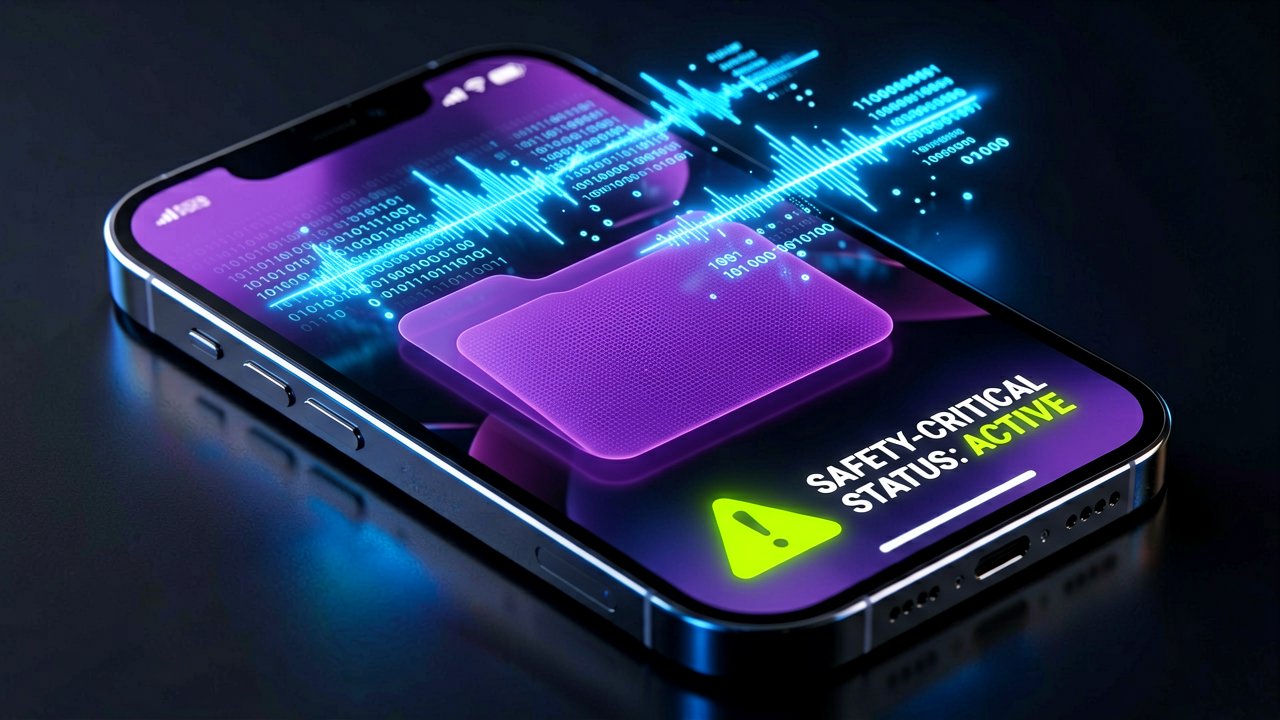
For months, the tech industry has treated generative AI as a glitzy playground for writing marketing copy or generating surreal images. Yet, Cupertino just turned that narrative completely on its head. In a recent rollout detailed by Apple Newsroom , the company quietly embedded its proprietary Apple Intelligence architecture directly into its suite of accessibility features. This isn't just a minor iteration; it's a profound shift in how users with vision, motor, and cognitive differences interact with consumer electronics.
By blending on-device machine learning with practical, daily workflows, Apple has bypassed the standard AI parlor tricks to solve real, human problems. The star of this upgrade is a fundamentally reimagined Voice Control ecosystem. Rather than forcing users with motor impairments to memorize strict, technical labels or awkward numbered grids, the system now relies on natural language. You can simply say what you see on the screen, like telling your tablet to "tap the purple folder," and the system understands the context instantly. It's a massive leap forward for digital autonomy.
Contextual Intelligence Meets the Viewfinder
The improvements stretch far beyond basic navigation commands. For users who are blind or have low vision, the classic VoiceOver feature has graduated from a literal text-to-speech tool into an analytical companion. Thanks to a new Image Explorer capability, the software can now parse the fine print of a scanned utility bill, identify complex layouts in a medical record, or describe a family photograph with startling depth.
Furthermore, this contextual smarts works in real time through the iPhone's physical hardware. A quick press of the Action button triggers Live Recognition through the viewfinder, allowing users to ask natural, conversational questions about their surroundings. If you point the camera at a dinner table, you can ask how many plates are set or where the water glass is, and follow up with natural language queries just as you would with a sighted assistant. Media analysts at Forbes noted that this particular integration demonstrates the real, unhyped potential of consumer-facing artificial intelligence.
A Unified Front for Inclusive Design
This deep software overhaul is accompanied by a broader push across Apple's entire ecosystem, proving that inclusive engineering isn't siloed in a single department. For instance, the Accessibility Reader can now automatically ingest messy, multi-column scientific papers and spit out on-demand AI summaries, completely changing the game for individuals with dyslexia or cognitive fatigue. Meanwhile, on-device speech recognition now privately generates automated subtitles for personal videos, a massive win for the deaf and hard-of-hearing community who frequently receive uncaptioned clips from friends.
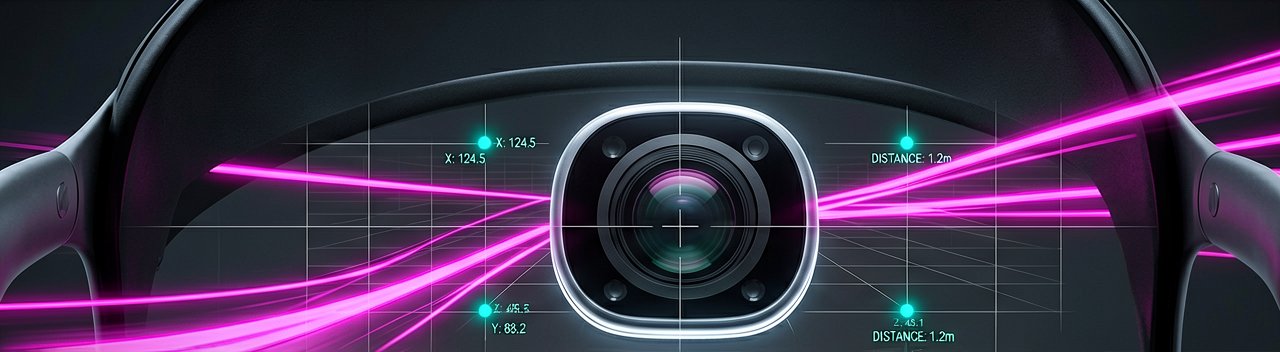
Even the company's newest spatial computing endeavors are getting a piece of the pie. Apple Vision Pro users can now navigate compatible power wheelchairs using precision eye-tracking tech, translating minimal physical movement into real-world mobility. While competitors scramble to figure out how to monetize quirky AI chatbots, Apple is systematically weaponizing its silicon to make the physical and digital world vastly more accessible.
What Most Reports Miss: The Private Silicon War for Inclusive AI
The glossy press releases heavily emphasize the user-facing magic of these new accessibility features, but they gloss over the monumental engineering hurdle that makes them possible. Running sophisticated multimodal AI models locally on a smartphone requires an immense amount of computational power. While competitors routinely offload these complex mathematical tasks to power-hungry cloud servers, Cupertino's engineering teams had to compress these massive models to fit snugly inside the thermal and battery constraints of a pocket-sized device. This isn't just a technical flex; it is a fundamental privacy mandate for the disability community, ensuring that highly personal data—like real-time video feeds of a user's home or scanned medical documents—never leaves the local hardware.
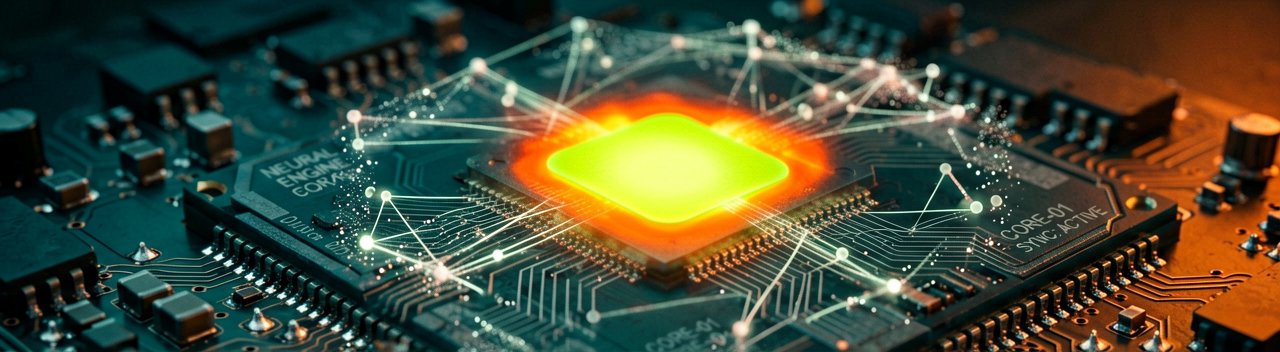
This localized approach also addresses a historical grievance that disability advocates have harbored against mainstream tech giants for years: reliability. Cloud-dependent assistive tools are notoriously fragile, prone to freezing or failing the exact moment a user steps into a cellular dead zone orboards a subway train. For someone relying on VoiceOver to navigate a chaotic city street or read a prescription label, a three-second cloud latency gap isn't just an inconvenience—it is a safety hazard. By baking Apple Intelligence directly into the physical Neural Engine of the silicon, the system guarantees sub-second response times regardless of network connectivity, transforming an erratic novelty into a dependable lifeline.
Behind the scenes, the development of these tools reveals a significant shift in how the tech industry approaches inclusive design. Rather than treating accessibility as an afterthought or a compliance checklist to be tackled at the end of a product cycle, engineers collaborated directly with neurodivergent individuals and disability advocates from the very beginning. This long-term co-design process is precisely why features like the localized speech-to-text algorithm can seamlessly adapt to unique speech patterns or stuttering without misinterpreting commands. It represents a mature understanding that human speech is a spectrum, not a rigid standard to be enforced by an unyielding algorithm.
From a broader industry perspective, this rollout sets a challenging new benchmark for the rest of Silicon Valley. For the past decade, accessibility software was often treated as a niche, philanthropic endeavor. By elevating these features to the absolute center of its core AI strategy, Apple has effectively reframed inclusive design as the ultimate testing ground for cutting-edge consumer tech. The message sent to competitors is loud and clear: true innovation is no longer measured by how well a chatbot can write a poem, but by how effectively an operating system can democratize the digital landscape for every single user.
Reading Between the Lines: The Parity Paradox and the Cost of Inclusion
While it is easy to applaud these advancements as a triumph of ethical engineering, a colder analytical look reveals a stark economic contradiction. Apple's narrative of democratic technology directly collides with its luxury-tier pricing structure. Because these sophisticated accessibility features require the heavy lifting of the latest on-device Neural Engines, they are strictly locked behind the company's most expensive, cutting-edge hardware. This creates a deeply uncomfortable paradox: the very individuals who stand to benefit the most from advanced cognitive and motor assistance are often the ones economically marginalized by the staggering cost of admission. Inclusion, it seems, remains a premium feature reserved for those who can afford the upgrade cycle.
Furthermore, this aggressive pivot toward on-device AI exposes the inherent vulnerability of relying on a closed, proprietary ecosystem for essential human needs. When an assistant tool is woven directly into the fabric of a single company's operating system, the user is effectively locked in for life. Transferring a highly customized voice-training profile or a specialized eye-tracking workflow to a competing platform is virtually impossible. As these tools become more indispensable for daily survival and autonomy, the switching costs skyrocket, transforming a benevolent accessibility feature into the ultimate tool for customer retention. It is a brilliant, if somewhat ruthless, masterclass in ecosystem stickiness disguised as corporate altruism.
There is also a risk of over-promising what machine learning can actually deliver in messy, real-world environments. Computer vision algorithms are notoriously susceptible to cultural biases and edge-case failures, such as misidentifying a complex medication label under poor lighting or misinterpreting a unique physical gesture. When a standard smartphone app glitches, the user is mildly annoyed; when a critical navigation tool misreads a street sign for a visually impaired pedestrian, the consequences can be catastrophic. Moving forward, the true test for Apple will not be the flawless execution of a staged keynote demo, but how gracefully their system fails when confronted with the unpredictable chaos of the real world.
Ultimately, this aggressive rollout forces a reckoning for the entire consumer tech landscape, shifting the conversation from what AI can do to who it actually serves. By tying its machine learning prowess to tangible, life-altering utilities rather than speculative productivity gimmicks, Cupertino has successfully exposed the superficiality of its rivals' AI strategies. However, maintaining this lead will require more than just technical superiority. It will demand a conscious effort to ensure that these life-changing tools do not become just another gilded feature designed to justify a thousand-dollar smartphone upgrade.
It turns out the killer app for artificial intelligence wasn't a chatbot that writes mediocre sonnets after all; it was simply giving a phone the basic manners to listen carefully and describe the room, though it still costs extra if you want the phone to be polite about it.
Artūras Malašauskas is an AI Systems Integrator with 20+ years of production-grade web engineering experience. He has designed, shipped, and scaled enterprise Python/PHP systems for logistics, SaaS, and public-sector clients. For the past year, he has focused exclusively on AI integrations: deploying open-source LLMs, building generative media pipelines (image, audio, video), and engineering multi-agent workflows for real production environments. His standard: reproducibility, security, cost-efficient inference—no vaporware. He documents and evaluates emerging AI tooling, separating verified capabilities from marketing noise. Technical editor at: muza-ai.eu, ai-verslas.lt, ai-naujinos.lt Connect on LinkedIn
Comments