Hive Mind: Com2uS Platform Takes the Global Stage at PlayX4 with AI and Expansion Tech

If you've been tracking the backend machinery of the mobile gaming world, you know that Com2uS Platform’s "Hive" has quietly become a bit of a juggernaut. This week at PlayX4 2026, they’re stepping out of the shadows and into the KINTEX spotlight in Ilsan. The goal? Showing developers exactly how to take a local hit and make it a global staple without drowning in the logistical nightmare of localized payments, translations, and infrastructure. It’s a bold pitch for a platform that already powers over 250 titles, but the real kicker this year isn't just about global reach—it’s about the "Model as a Service" (MaaS) AI integration they’ve cooked up.
For the first two days of the expo, May 21st and 22nd, Hive is opening up technical consultations that feel more like a masterclass in global scaling. According to reports from Inven Global, the platform is doubling down on its "all-in-one" reputation. We're talking support for 16 languages and a system that automatically swaps out terms of service based on the player’s country. It’s the kind of unsexy, essential work that usually takes a whole department to manage, but Hive is essentially packaging it as a plug-and-play solution for mid-sized and indie studios who’d rather spend their time on game loops than legal compliance.
The AI Integration: One API to Rule Them All
The most intriguing piece of the puzzle is their new AI service package, a collaborative effort with Tencent Cloud. In an era where every studio is scrambling to figure out how generative AI fits into their pipeline, Hive is offering a shortcut. Instead of wrestling with individual integrations for OpenAI, Google, or Anthropic, developers can now lean on a single API. This MaaS approach is clearly designed to lower the barrier for entry, allowing teams to experiment with cutting-edge LLMs without having to build their own sprawling AI infrastructure from scratch. It’s a savvy move that aligns perfectly with the current industry pivot toward efficiency over raw scale.
Leveling the Playing Field for Indies
What really makes Hive stand out in the crowded "Game Backend as a Service" (GBaaS) market is its pricing philosophy. At the event, the team is highlighting an on-demand model that charges based on actual usage—a godsend for indie developers who can't afford massive upfront licensing fees. By lowering the "initial adoption burden," as described by Digital Today, Com2uS is positioning Hive not just as a tool for their own internal hits like Summoners War, but as a democratic utility for the next generation of global creators. If they can successfully merge this accessibility with their new AI capabilities, the competition is going to have a very long weekend in Ilsan.

The Hidden Architecture of Global Dominance
Beyond the Booth: While the flashy AI demos at KINTEX draw the crowds, the real story lies in how Hive is fundamentally re-engineering the risk profile for game development. Historically, a Korean studio looking to crack the Western or Southeast Asian markets faced a "wall of friction"—a messy combination of disparate tax laws, fragmented payment gateways, and the sheer technical debt of integrating social logins across different regions. Hive’s 2026 iteration represents the culmination of a decade spent solving these exact headaches for Com2uS’s own billion-dollar properties. By externalizing this internal powerhouse, they are effectively selling "certainty" in an industry where launch day is usually a gamble.
The partnership with Tencent Cloud to deliver "Model as a Service" (MaaS) isn't just about adding a buzzword to their brochure; it’s a strategic play to centralize the fragmented AI landscape. For a developer, the nightmare isn't just using AI—it's the maintenance of dozens of different APIs that are constantly being updated or deprecated. Hive’s middle-layer approach acts as a shock absorber. It allows a studio to swap out the underlying LLM backend without rewriting their game's code, providing a future-proofed layer of abstraction that most standalone AI tools simply don't offer.
Stakeholders from the indie community are particularly vocal about the platform's shift toward a usage-based pricing model. In previous cycles, high-tier backend services were often gated behind "Enterprise" contracts that scared off anyone without a venture capital runway. By pivoting to a pay-as-you-go structure, Com2uS is betting on the long tail of the market. They are banking on the idea that if they lower the barrier for ten thousand small developers today, they will own the infrastructure for the one or two "black swan" hits that emerge tomorrow.
From a reporter’s lens, this move also signals a maturation of the "Game Backend as a Service" (GBaaS) sector. We are moving away from simple cloud hosting and toward "intelligent infrastructure." The fact that Hive now automates 16 languages and localizes legal compliance suggests that the technical gap between a solo developer and a global giant is shrinking. It’s no longer about who has the biggest server farm, but who has the smartest middleware. As the 2026 PlayX4 progresses, the consensus among industry veterans is that Hive is no longer just a support tool for Summoners War; it has evolved into a sovereign ecosystem.
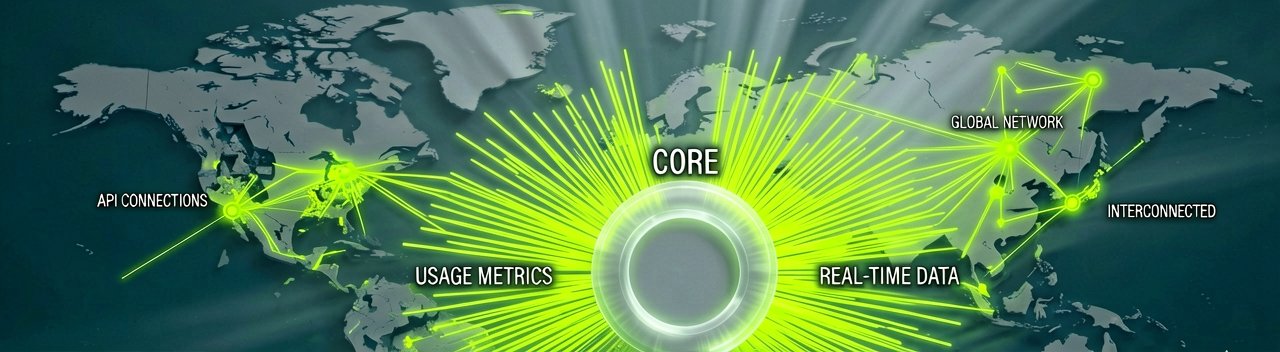
Ultimately, the success of this global expansion package hinges on trust. Com2uS is asking developers to hand over the keys to their data, their payments, and now their AI logic. In an era of increasing data sovereignty and privacy regulations, the "all-in-one" promise is a double-edged sword. However, by showcasing transparency and localized compliance tools at PlayX4, Hive is making a compelling argument that the benefits of a unified global pipeline far outweigh the risks of going it alone in an increasingly complex digital world.
The Paradox of Universal Accessibility
Reading Between the Lines: While Hive’s pitch at PlayX4 2026 suggests a utopian "plug-and-play" future for every developer, there is a fundamental friction in the promise of standardized global expansion. The industry often treats "localization" as a technical hurdle—swapping strings of text and adjusting currency symbols—but true global success is cultural, not just computational. By automating these processes through a singular platform, Com2uS risks creating a "homogenization of the mid-market," where indie titles start to look and feel remarkably similar because they are all drinking from the same architectural well.
There is also a notable tension in the reliance on "Model as a Service" (MaaS). While Com2uS promotes the convenience of a single API for multiple AI models, this convenience creates a new kind of platform dependency. Developers might avoid the headache of managing OpenAI or Google integrations directly, but they are essentially trading one form of vendor lock-in for another. If Hive becomes the gatekeeper for a game’s AI logic, the developer’s ability to pivot or negotiate costs is significantly diminished. The efficiency gained today could very well become the technical debt of 2028.
Furthermore, the push toward AI-integrated packages raises questions about the "black box" nature of automated compliance. Hive promises to handle 16 languages and local legalities automatically, but the legal landscape for AI-generated content and data privacy is shifting faster than any middleware can realistically patch. Relying on an "all-in-one" solution for legal safety assumes that Com2uS can stay ahead of global regulators in every jurisdiction simultaneously. It is a bold bet that places a massive amount of liability on the platform’s shoulders, and by extension, on the developers who trust it.
Despite these contradictions, the strategic shift toward a usage-based pricing model is a pragmatic acknowledgement that the old "gated community" of high-end game tech is dying. Com2uS isn't doing this out of pure altruism; they are reacting to a world where the next viral hit is just as likely to come from a bedroom in Jakarta as it is from a studio in Seoul. By democratizing their backend, they are effectively casting a massive net. They don't need every game to succeed; they just need to be the tax collector for the ones that do.
In the end, Hive is selling the dream that a developer can focus entirely on 'the art' while a machine handles the grueling reality of German tax law and AI hallucinations—a lovely sentiment that will remain true right up until the first time the API goes down and everyone remembers that 'the cloud' is just someone else's computer with better branding.
Artūras Malašauskas is an AI Systems Integrator with 20+ years of production-grade web engineering experience. He has designed, shipped, and scaled enterprise Python/PHP systems for logistics, SaaS, and public-sector clients. For the past year, he has focused exclusively on AI integrations: deploying open-source LLMs, building generative media pipelines (image, audio, video), and engineering multi-agent workflows for real production environments. His standard: reproducibility, security, cost-efficient inference—no vaporware. He documents and evaluates emerging AI tooling, separating verified capabilities from marketing noise. Technical editor at: muza-ai.eu, ai-verslas.lt, ai-naujinos.lt Connect on LinkedIn
Comments